
Cannabis affects everyone differently, and understanding what to expect can help you make informed decisions about whether weed is right for you. Within minutes of consumption, THC enters your bloodstream and crosses into your brain, triggering a cascade of effects that range from the pleasant euphoria many seek to potential anxiety or discomfort that catches some users off guard. Your experience depends on dozens of factors: the strain you choose, how much you consume, your method of intake, your body chemistry, and even what you ate that day.
The short-term effects typically include altered perception of time, heightened sensory experiences, increased appetite, dry mouth, and changes in coordination. Some people feel deeply relaxed and giggly, while others experience racing thoughts or paranoia. These immediate effects usually peak within 30 minutes to 2 hours and fade within several hours, though edibles follow a different timeline entirely.
Long-term regular use presents its own considerations. Research shows both therapeutic benefits for conditions like chronic pain and sleep disorders, and potential drawbacks including impacts on memory, motivation, and respiratory health when smoked. For developing brains under age 25, the risks carry additional weight.
As someone who’s navigated both the medical and recreational cannabis landscape in Canada, I’ve learned that knowledge truly is power. This guide breaks down exactly what happens in your body and mind when you consume cannabis, helping you understand the full spectrum of effects, make safer choices, and recognize when your relationship with weed serves you well or needs adjustment.
Understanding Cannabis: THC vs CBD Effects
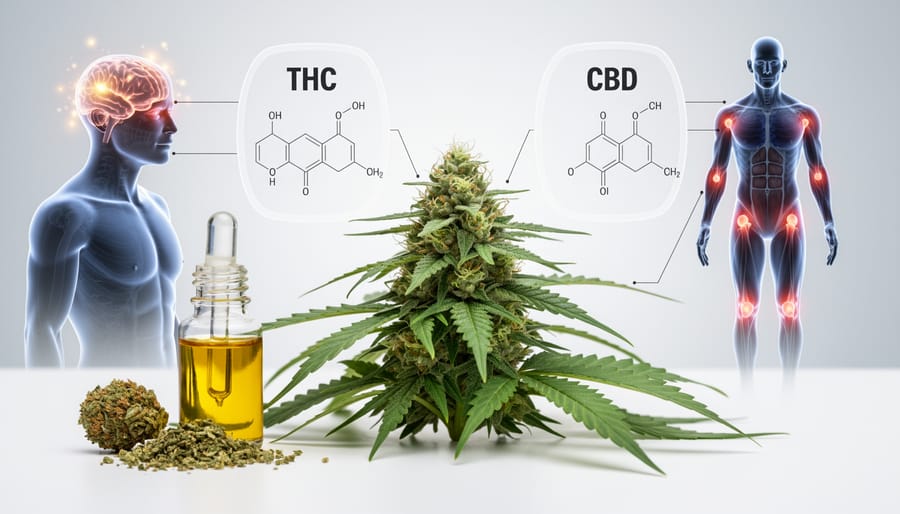
When you’re exploring cannabis, you’ll quickly encounter two main compounds: THC and CBD. Think of them as the two most important ingredients in the cannabis plant, each creating very different experiences in your body.
THC, or tetrahydrocannabinol, is the compound responsible for the “high” feeling people associate with marijuana. When you consume THC, it binds to receptors in your brain and nervous system, creating effects like euphoria, altered perception of time, increased appetite, and sometimes anxiety or paranoia. It’s what makes you feel intoxicated or impaired.
CBD, or cannabidiol, works completely differently. It doesn’t produce a high at all. Instead, CBD interacts with your body’s systems in ways that many people find calming and therapeutic. Users often report feeling relaxed without any mental fog or impairment. You can take CBD and go about your day completely clear-headed.
Here’s why understanding CBD vs THC matters: the ratio of these compounds in your cannabis product determines your entire experience. A product high in THC will create psychoactive effects, while a CBD-dominant product won’t get you high at all. Many products contain both compounds in different ratios, offering a middle ground.
When I first started exploring cannabis, I assumed all products would make me feel intoxicated. Learning about CBD opened up entirely new possibilities for managing stress without any impairment. This distinction is especially important in Canada, where both compounds are legal but serve different purposes for different people.
Your body also processes these compounds differently. THC can stay in your system longer and may affect your ability to drive or work, while CBD typically doesn’t interfere with daily activities. Understanding what you’re consuming helps you make informed choices about timing, dosage, and which products align with your wellness goals.
Immediate Effects: What Happens in the First Few Hours
Physical Sensations You’ll Notice
When you consume cannabis, your body responds in several noticeable ways, and understanding these physical sensations can help you feel more prepared and comfortable with the experience.
One of the most common effects is dry mouth, often called “cottonmouth.” This happens because cannabis temporarily reduces saliva production. Keep water nearby and sip regularly – I learned this the hard way during my first experience and now never start without a full water bottle at hand.
You’ll likely notice red eyes, which occurs because THC lowers blood pressure and dilates blood vessels, including those in your eyes. Over-the-counter eye drops can help if this bothers you, though it’s completely harmless.
Your heart rate may increase temporarily, typically by 20-50 beats per minute. This usually peaks within the first 10-20 minutes and normalizes after about 30 minutes. If you have heart concerns, discuss cannabis use with your healthcare provider first.
Many people experience increased appetite, commonly known as “the munchies.” THC interacts with receptors that regulate hunger signals. Having healthy snacks prepared beforehand can help you make better food choices.
You might also notice changes in coordination and motor skills. Your movements may feel slower or less precise, which is why driving or operating machinery should always be avoided after consuming cannabis.
To manage these effects comfortably, start with low doses, stay hydrated, eat beforehand to avoid blood sugar drops, and choose a comfortable environment where you can relax without responsibilities. Remember, these sensations are temporary and typically subside within a few hours.

Mental and Emotional Changes
When you consume cannabis, you’re likely to notice mental and emotional shifts fairly quickly. Most people experience a sense of euphoria or what’s commonly called feeling “high”—a pleasant, uplifted mood that can make everyday activities feel more enjoyable. You might find yourself laughing more easily or feeling deeply relaxed, which is why many Canadians turn to cannabis for stress relief after a long day.
Your perception may also change. Music might sound richer, colours could seem more vibrant, and time might feel like it’s moving slower or faster than usual. These altered perceptions are typically temporary and part of the experience many users seek.
However, it’s important to know that cannabis doesn’t affect everyone the same way every time. Some people, especially when consuming higher doses or strains with elevated THC levels, may experience anxiety or paranoia. If this happens to you, remember it’s temporary and will pass. Starting with lower doses and choosing products with balanced THC-to-CBD ratios can help minimize these uncomfortable feelings.
You’ll also likely notice effects on your thinking and memory. Short-term memory can be impacted while you’re under the influence, making it harder to remember what you just said or why you walked into a room. This is normal and your memory function returns as the effects wear off. Regular heavy use over time may have different implications, but occasional consumption typically doesn’t cause lasting cognitive problems.
Everyone’s experience is unique, so pay attention to how cannabis affects you personally.
How Different Consumption Methods Affect Timing
The method you choose for consuming cannabis dramatically impacts when you’ll feel effects and how long they’ll last. Understanding these differences helps you plan accordingly and avoid surprises, especially if you’re new to cannabis.
When you smoke or vape cannabis, effects typically begin within 2 to 10 minutes. This happens because cannabinoids enter your bloodstream directly through your lungs. Peak effects usually occur around 30 minutes in, and the entire experience generally lasts 2 to 4 hours. I remember the first time I vaped cannabis, I was surprised how quickly I noticed the relaxation wash over me, maybe five minutes after my first inhale. This rapid onset makes smoking and vaping easier to dose since you can gauge your response and decide whether to consume more.
Edibles follow a completely different timeline. Because they must pass through your digestive system and liver before entering your bloodstream, onset takes much longer, typically 30 minutes to 2 hours, though sometimes even longer depending on what you’ve eaten that day. The effects from edibles also last considerably longer, usually 4 to 8 hours, and can feel more intense. Many beginners in Canada make the mistake of consuming more edible product because they don’t feel immediate effects, which can lead to an overwhelming experience hours later.
Oils and tinctures taken sublingually (under the tongue) offer a middle ground, with onset between 15 to 45 minutes and duration of 4 to 6 hours. This method allows some cannabinoids to absorb directly through mouth tissues while others process through digestion.
The Positive Effects: Why People Choose Cannabis
Pain Relief and Physical Comfort
Many cannabis users turn to weed specifically for its physical comfort benefits, and there’s good reason for that. Cannabis contains compounds that interact with your body’s pain-signaling systems, potentially offering relief from various discomforts.
The analgesic properties of cannabis can help manage different types of pain, from chronic conditions to temporary aches. Many Canadians report finding relief from arthritis, migraines, and muscle soreness through cannabis use. The anti-inflammatory effects may also contribute to reducing swelling and discomfort associated with various conditions.
Muscle relaxation is another commonly reported benefit. Cannabis can help ease tension and spasms, which is why some people use it after workouts or long days of physical activity.
Danielle shares her experience: “I was skeptical about using cannabis for my chronic back pain, but after trying a balanced CBD-THC product, I noticed genuine relief within about 30 minutes. The tight knots in my lower back loosened up, and I could finally move without that sharp, shooting pain. It didn’t eliminate everything completely, but it made my evenings significantly more comfortable.”
Remember that individual responses vary considerably. What provides relief for one person may not work the same way for another, so finding your optimal approach often requires some patient experimentation with different products and dosages.
Anxiety and Stress Management
Many Canadians explore cannabis for anxiety and stress relief, and there’s good reason for this interest. CBD, in particular, has gained attention for its calming properties without the intoxicating effects. Research suggests CBD interacts with our body’s endocannabinoid system to promote relaxation and may help regulate stress responses.
I’ve personally found that CBD helps take the edge off during particularly stressful weeks, creating a sense of calm without affecting my ability to work or think clearly. Many users report similar experiences, feeling more centered and less overwhelmed by daily pressures.
However, it’s important to understand that THC affects people differently. While some find low doses of THC relaxing, others may experience increased anxiety, racing thoughts, or paranoia, especially at higher doses or if they’re predisposed to anxiety disorders. This reaction varies significantly based on individual tolerance, dosage, strain, and personal brain chemistry.
If you’re new to cannabis and considering it for stress management, starting with CBD-dominant products is often the safest approach. You can always explore THC later if desired, beginning with very low doses to see how your body responds. Under Canada’s legal framework, you have access to clearly labeled products that specify CBD and THC content, making informed choices easier.
Sleep and Appetite Support
Cannabis has long been recognized for its effects on sleep and appetite, which can be beneficial for certain individuals. Many people report that cannabis helps them fall asleep faster and may increase overall sleep duration. THC in particular has sedative properties that can assist those struggling with insomnia or sleep disturbances. However, it’s worth noting that while cannabis may help you drift off initially, some research suggests it might affect REM sleep patterns with regular use. If you’re exploring gentler options, CBD and sleep support approaches might offer benefits without the psychoactive effects.
The appetite-stimulating effects of cannabis, often called “the munchies,” are well-documented and can be particularly helpful for individuals dealing with reduced appetite due to medical treatments or certain health conditions. THC interacts with receptors in the brain that regulate hunger signals, making food more appealing and enjoyable.
In my experience speaking with Canadian cannabis users, those seeking sleep or appetite support often benefit from starting with lower doses in the evening and paying attention to strain selection. Indica-dominant varieties are traditionally associated with more sedating effects, though individual responses vary. Keep a simple journal noting what works best for your specific needs, and consider consulting with healthcare providers, especially if you’re managing underlying health conditions.

The Challenging Effects: What to Watch For
When Cannabis Causes Anxiety or Discomfort
While cannabis typically produces pleasant effects, some people experience anxiety, paranoia, dizziness, or nausea—especially when consuming too much or trying a high-THC product. I remember my first time with an edible that was stronger than expected. Within an hour, I felt intensely anxious and dizzy, convinced everyone could tell I was uncomfortable. It passed, but it taught me important lessons about dosing.
These challenging effects are more common with higher THC concentrations and in people who are new to cannabis or particularly sensitive. If you’re feeling anxious or paranoid, remind yourself that these feelings are temporary and will pass. Find a quiet, comfortable space, focus on slow breathing, and stay hydrated. Having a trusted friend nearby can provide reassurance.
To prevent discomfort, start with low-THC products or balanced THC/CBD strains, since CBD can help counteract THC’s anxiety-inducing effects. Always start with a small dose and wait before consuming more. Avoid mixing cannabis with alcohol, and don’t use it when you’re already feeling stressed or anxious, as your emotional state can influence your experience.
If you consistently experience negative effects, cannabis may not be right for you, and that’s perfectly okay. Everyone responds differently to cannabinoids.
Cognitive and Coordination Impacts
Let’s be honest about something important: cannabis does affect your cognitive function and coordination, at least temporarily. When you consume weed, you’ll likely notice changes in how quickly you think, react, and move. Your judgment might feel a bit off, reaction times slow down, and that hand-eye coordination you normally take for granted? It can become noticeably impaired.
I remember a friend sharing how they tried to cook a simple meal after consuming cannabis and suddenly found themselves completely confused by a recipe they’d made a hundred times before. It’s these everyday tasks that can become surprisingly challenging.
Here’s where Canadian law gets really clear: driving under the influence of cannabis is illegal, period. Police can conduct roadside sobriety tests, and the penalties are serious, including fines, license suspension, and criminal charges. Canada has strict impaired driving laws that apply equally to cannabis and alcohol.
Even if you feel fine, THC can stay in your system and affect your abilities for hours after consumption. Activities requiring focus, quick reflexes, or coordination—like driving, operating machinery, or even certain sports—should be avoided. The safest approach? Plan ahead. If you’re consuming cannabis, arrange alternative transportation and give yourself plenty of time before engaging in any activity that requires sharp mental or physical performance.
Potential Long-Term Considerations
If you’re using cannabis regularly, it’s worth understanding some potential long-term considerations. With repeated use, many people develop tolerance, meaning you might need more product to achieve the same effects you once experienced. This is completely normal and happens because your body’s endocannabinoid system adapts over time.
While cannabis is generally considered to have lower dependency potential than many substances, some regular users do develop psychological dependence. In Canada, research suggests about 9% of users may experience dependency concerns. Signs might include feeling like you need cannabis to relax, sleep, or cope with daily stress, or experiencing irritability when you haven’t used it for a while.
I’ve learned through conversations with long-term cannabis users that the key is establishing healthy patterns from the start. Taking occasional tolerance breaks, being honest with yourself about why you’re using cannabis, and maintaining activities and relationships that don’t involve consumption all contribute to a balanced relationship with cannabis.
If you’re concerned about your usage patterns, speaking with a healthcare provider familiar with cannabis can provide personalized guidance. Under Canada’s legal framework, there are resources available to support responsible use without judgment.

How Individual Factors Shape Your Experience
Dosage, Tolerance, and Strain Variations
Cannabis affects everyone differently, and several factors determine your experience. The amount you consume matters significantly—a small dose might produce gentle relaxation, while a larger amount could lead to intense effects or discomfort. If you’re new to cannabis, starting low and going slow is the golden rule I always share with friends who ask for advice.
Your tolerance level plays a crucial role too. Regular users often need more to achieve the same effects that beginners experience with minimal amounts. Taking breaks can help reset your tolerance if you find yourself needing increasingly higher doses.
Strain variations make a huge difference in your experience. Cannabis contains hundreds of compounds, and different strains have unique ratios of THC, CBD, and other cannabinoids. Generally, higher THC strains produce more intense psychoactive effects, while CBD-rich products offer therapeutic benefits with minimal intoxication. The terpene profile also influences effects—some strains feel energizing while others promote relaxation.
In my experience trying various legal products across Canada, I’ve learned that what works for one person might not work for another. Keep a simple journal noting the product type, amount consumed, and how you felt. This personal tracking helps you identify what works best for your needs and avoid uncomfortable experiences.
Your Body Chemistry and Environment Matter
Here’s something I learned early on: two people can consume the exact same amount of cannabis and have completely different experiences. Your body’s unique chemistry plays a huge role in how cannabis affects you.
Your metabolism speed determines how quickly your body processes THC and CBD. If you have a faster metabolism, effects might hit harder but fade more quickly. Body weight and body fat percentage also matter, since THC is fat-soluble and can be stored in fatty tissues, influencing both intensity and duration of effects.
Beyond biology, your environment and mental state are equally important. Cannabis tends to amplify whatever you’re already feeling. If you’re anxious or in an uncomfortable setting, those feelings might intensify. Conversely, being relaxed in a familiar, safe space with trusted people generally leads to more positive experiences.
I remember my first time trying cannabis at a loud party—it was overwhelming. When I later tried a similar amount at home with close friends, the experience was entirely different and far more enjoyable. Setting really does matter.
Consider your physical health too. Medications, hormonal changes, sleep deprivation, and even whether you’ve eaten recently can all influence your cannabis experience. Start low, go slow, and pay attention to how your unique body responds.
Consuming Responsibly: A Canadian Perspective
Start Low, Go Slow
If you’re new to cannabis, the golden rule is “start low, go slow”—especially with edibles. When I first tried cannabis products in Canada, I learned this lesson the hard way by being too impatient with an edible brownie. Unlike inhaled cannabis that takes effect within minutes, edibles can take anywhere from 30 minutes to 2 hours to kick in, sometimes longer depending on what you’ve eaten that day.
Begin with a low dose, typically 2.5 mg of THC or less. After consuming, wait at least 2 hours before considering more. proper dosing requires patience and self-observation. Keep a simple journal noting the dose, product type, timing, and how you felt. This helps you find your personal sweet spot.
For those starting with CBD products, you can generally be less cautious as CBD doesn’t produce intoxication, but titration still helps you identify the minimum effective dose for your needs.
Know Your Legal Rights and Responsibilities
Before you consume cannabis in Canada, it’s important to understand the legal framework. While cannabis is legal nationwide for adults 19 and older (18 in some provinces), there are important restrictions to keep in mind. You generally cannot consume cannabis in public spaces like parks, sidewalks, or near schools, though some provinces have designated areas. Each province sets its own rules, so check your local regulations.
One crucial point I always emphasize: impaired driving laws apply to cannabis just as they do to alcohol. Police can conduct roadside testing, and penalties include fines, license suspensions, and criminal charges. There’s no safe amount to consume before driving—THC affects everyone differently and can impair your reaction time and judgment for hours after use.
Workplace policies vary too. Even though cannabis is legal, many employers maintain zero-tolerance policies or restrict use before shifts. Understanding these responsibilities helps you consume safely and legally while respecting community standards.
When to Avoid Cannabis
While cannabis can offer benefits for many people, there are important situations where it’s best to avoid use entirely. If you’re pregnant or breastfeeding, cannabis can affect fetal development and pass through breast milk, so health experts strongly recommend avoiding it during this time.
Certain medications don’t mix well with cannabis, particularly blood thinners, sedatives, and some antidepressants. Always talk with your healthcare provider about potential interactions before combining cannabis with prescription medications.
If you have a personal or family history of psychosis or schizophrenia, cannabis use may increase risks of triggering these conditions. Similarly, if you’re experiencing severe anxiety or depression, cannabis might worsen symptoms for some people, though others find relief.
Those with heart conditions should exercise caution, as cannabis can temporarily increase heart rate and blood pressure. Young people under 25, whose brains are still developing, may be more vulnerable to potential cognitive effects from regular use.
Finally, avoid cannabis entirely before driving or operating machinery. Under Canadian law, impaired driving includes cannabis, and it’s simply not worth the safety risk to yourself or others.
Understanding how cannabis affects you is a personal journey, and there’s no one-size-fits-all answer. As we’ve explored throughout this article, the effects of weed consumption can vary dramatically from person to person, influenced by everything from your body chemistry and tolerance to the specific strain you’re using and the method of consumption you choose.
The key takeaway here is that knowledge empowers you to make informed decisions. Whether you’re experiencing the relaxation and creativity that many users enjoy, or navigating challenges like anxiety or grogginess, understanding what to expect helps you use cannabis more responsibly and effectively. Remember that what works beautifully for your friend might not be the right fit for you, and that’s completely normal.
Here in Canada, we’re fortunate to have legal access to cannabis, which means we also have access to regulated products with clear labelling and potency information. Take advantage of these resources. Start low and go slow, pay attention to how your body responds, and don’t hesitate to adjust your approach as you learn more about your own needs.
Personally, I’ve found that the most satisfying cannabis experiences come from experimentation and patience. It took me time to figure out which strains helped my evening wind-down routine versus which ones left me too foggy the next morning. Your perfect balance is out there too—you just need to give yourself permission to find it thoughtfully and at your own pace.