
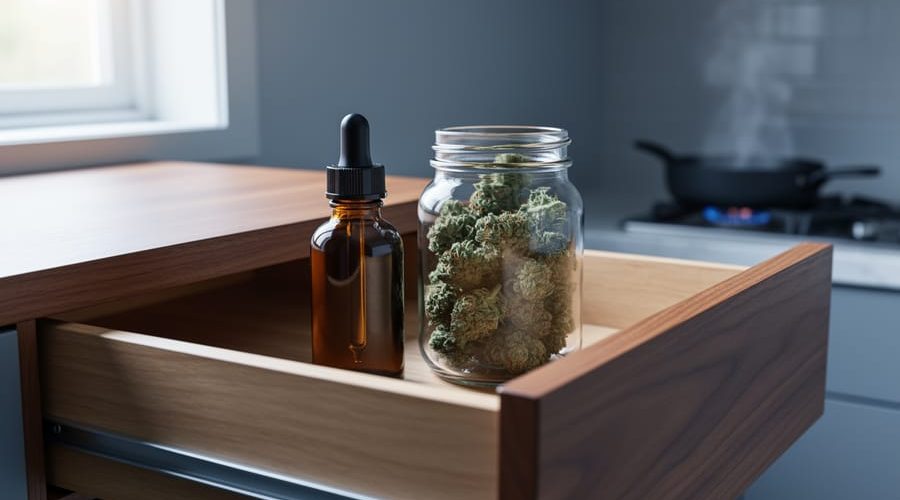
Store your CBD products in cool, dark places away from direct sunlight, ideally between 15-21°C, to prevent terpene degradation that can reduce effectiveness by up to 50% within months. Light and heat are the primary enemies of cannabinoid and terpene stability, breaking down these delicate compounds through oxidation and evaporation.
Keep containers tightly sealed between uses. Every time you open a bottle or jar, you expose your CBD oil or flower to oxygen, which accelerates deterioration. Air exposure causes terpenes to evaporate first—these are the aromatic compounds responsible for the entourage effect that many users rely on for maximum benefits.
Check expiration dates at purchase and track when you first open products. Most CBD oils remain stable for 12-18 months unopened, but once opened, aim to use them within 6 months for optimal potency. I learned this the hard way when a premium full-spectrum oil I’d stored in my bathroom cabinet for over a year lost its characteristic earthy aroma and seemed less effective.
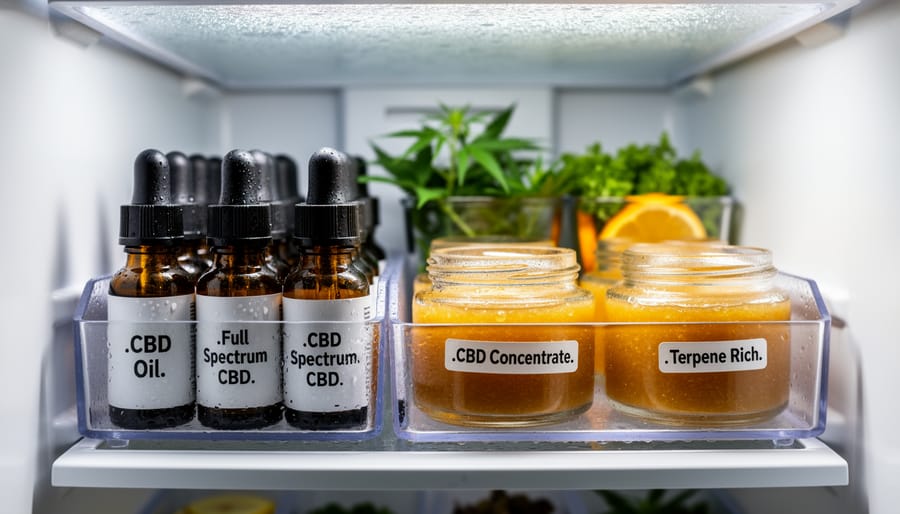
Consider refrigeration for long-term storage, particularly for products you won’t use daily. While this may thicken oils temporarily, it significantly slows degradation. Just bring refrigerated products to room temperature before use for easier dosing.
Avoid storing CBD in humid environments like bathrooms. Moisture can promote mold growth in flower products and compromise the integrity of oils. A bedroom drawer or kitchen cupboard away from the stove provides better conditions than most bathroom medicine cabinets, despite the convenient location.
What Happens When Terpenes Break Down
The Three Enemies of Terpene Stability
Think of terpenes like fresh herbs in your kitchen – they need proper care to maintain their potency. Three main culprits threaten the stability of terpenes in your CBD products, and understanding them can help you protect your investment.
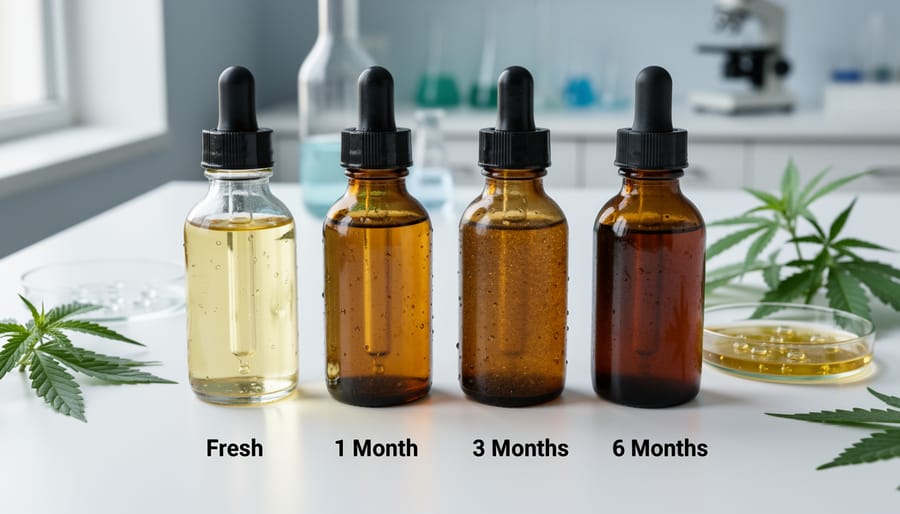
Light exposure is the first enemy. Just as sunlight fades curtains and bleaches photographs, UV rays break down the delicate molecular structure of terpenes. I learned this lesson the hard way when I left a bottle of CBD oil on my windowsill one summer. The liquid turned noticeably darker, and the once-vibrant citrus aroma became flat and almost stale. Even indirect sunlight can cause damage over time, which is why quality CBD products come in dark amber or cobalt blue bottles.
Heat is equally destructive. When terpenes are exposed to high temperatures, their molecular bonds literally start breaking apart. Leaving your CBD oil in a hot car during a Canadian summer – even just for an hour – can significantly compromise its terpene profile. I’ve had readers tell me they stored their products near heating vents or on top of appliances that generate warmth, only to notice the effects diminishing much faster than expected.
Finally, oxygen exposure triggers oxidation, the same process that turns a sliced apple brown. Every time you open your CBD product, oxygen rushes in and begins degrading those precious terpenes. This is why proper sealing after each use matters so much.
The good news? These enemies are entirely preventable with simple storage adjustments. By keeping your products in cool, dark, airtight spaces, you’re essentially hitting the pause button on terpene degradation.
How Long Do Terpenes Actually Last?
Spotting the Warning Signs of Degraded Terpenes
I’ve learned to trust my senses when checking my CBD products, and you can too. Your nose and eyes are excellent tools for detecting terpene degradation, though it takes a bit of practice to distinguish normal changes from concerning ones.
Start with a visual inspection. Fresh CBD oil should be clear to light amber, depending on the extraction method. A slight darkening over time is normal, especially after opening, but if your oil has turned significantly darker or developed cloudiness, the terpenes have likely degraded. Tinctures might show some sediment settling at the bottom, which is usually fine, but any mold or unusual particles signal a problem.
The smell test is your most reliable indicator. When I open a fresh bottle of CBD oil, the aroma should be distinct and pleasant, often earthy or citrusy depending on the strain. Degraded terpenes lose their complexity first. If your product smells flat, musty, or has developed an unpleasant rancid odour, those delicate terpene compounds have broken down. Some products naturally have a milder scent, but any sharp chemical smell or complete absence of aroma in a previously fragrant product indicates degradation.
For vape products and flower, freshness is even more critical. Dry, brittle flower that crumbles easily has lost both moisture and terpenes. Vape cartridges that taste harsh or produce unusual throat irritation, rather than smooth vapour with clear flavour notes, have likely oxidized.
If you’re noticing reduced effects from your usual dose, even without obvious sensory changes, degraded terpenes might be the culprit. The entourage effect relies on these compounds working together with cannabinoids.
Storage Strategies That Actually Work
The Refrigerator Question: When Cold Storage Makes Sense
Here’s a question I get constantly: “Should I keep my CBD oil in the fridge?” The answer isn’t as straightforward as you might hope, and honestly, refrigeration can sometimes do more harm than good.
Let’s start with what actually benefits from cold storage. High-concentration CBD oils, particularly those with minimal additives, can extend their shelf life in the fridge. The cooler temperature slows down oxidation and helps preserve those delicate terpenes we talked about earlier. Same goes for CBD edibles containing dairy or other perishable ingredients – those definitely belong in the cold.
But here’s the catch: refrigeration causes most CBD oils to thicken considerably, making them nearly impossible to dose accurately. I learned this the hard way when I stored my first bottle in the fridge and spent ten frustrating minutes trying to get a single drop out. You’ll need to warm it up to room temperature before each use, which kind of defeats the convenience factor.
For Canadian climates, consider your seasonal reality. During our sweltering summer months (yes, we have those!), keeping products in a cool, dark cupboard usually works perfectly fine. Winter heating systems can actually create more temperature fluctuation than outdoor cold, so consistency matters more than extreme cold.
Capsules, topicals, and vape products generally don’t need refrigeration at all. In fact, the humidity in your fridge can damage packaging and potentially introduce moisture where you don’t want it. A consistent room temperature spot away from light serves these products much better than battling condensation every time you open the container.
Smart Containers and Packaging Choices
Your packaging choices make a real difference in how long your CBD products maintain their terpene profiles. I learned this the hard way when I transferred some oil into a clear decorative bottle—within weeks, I noticed the aroma had noticeably faded compared to what remained in the original container.
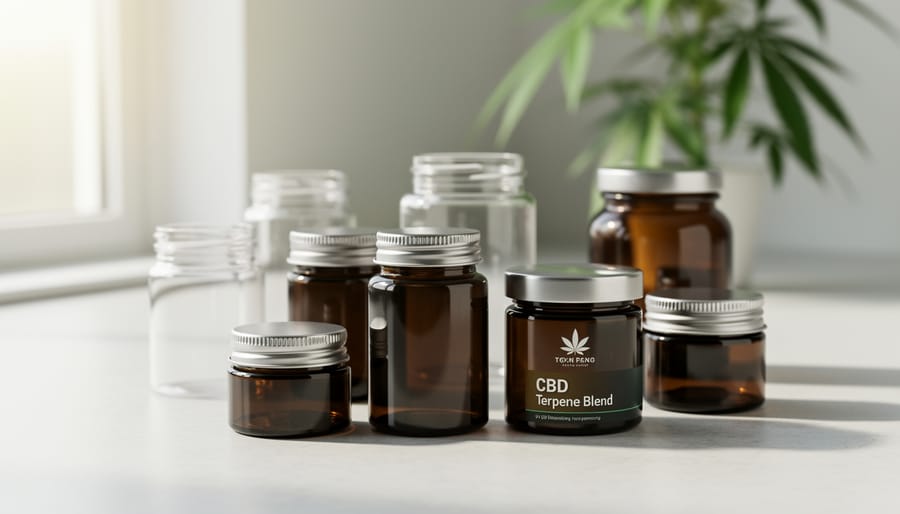
Amber or cobalt glass bottles are your best friends here. They block harmful UV rays that break down terpenes, while the glass itself doesn’t interact with the compounds inside. Look for containers with airtight seals—oxygen is another major culprit in terpene degradation. Some Canadian producers now use child-resistant caps that also create excellent airtight seals, serving double duty for safety and preservation.
Opaque containers work well too, especially for products you’ll use quickly. Metal tins can be effective for certain formats, though glass generally offers superior protection for oils and tinctures.
Should you transfer products? Generally, it’s best to stick with original packaging. Manufacturers design these containers specifically for product stability, and they’re sealed in controlled environments. If you must transfer, choose amber glass with airtight lids and minimize air exposure during the process.
Avoid clear plastic containers entirely—they offer minimal UV protection and can leach chemicals over time. Clear glass is better than plastic but still allows damaging light through. When shopping, consider packaging quality as part of your product evaluation.
Making Your CBD Investment Last Longer
Smart shopping habits can significantly extend the useful life of your CBD products and protect your investment. I learned this lesson the hard way when I excitedly bought three large bottles during a sale, only to realize the last bottle had lost much of its potency by the time I got to it. Now I’m much more strategic about my purchases.
The golden rule is to buy quantities that match your actual usage rate. If you typically use CBD daily, a one-month supply is ideal, while occasional users should consider smaller bottles even if the per-dose cost is slightly higher. The money you save buying in bulk means nothing if half the product degrades before you use it.
Always check batch or production dates before purchasing, especially when buying in-store where you can inspect the packaging. In Canada, licensed retailers are required to display this information. Products manufactured within the past three months are ideal, though anything under six months is generally acceptable for oils and tinctures. Don’t hesitate to ask staff when their next shipment arrives if current stock seems dated.
When shopping online from Canadian retailers, look for companies that clearly display production dates on their product pages or provide batch information upon request. Reputable sellers rotate their inventory properly and won’t keep old stock lingering. Some even offer freshness guarantees.
Consider product format when making purchasing decisions. CBD isolates and distillates generally have longer shelf lives than full-spectrum oils rich in terpenes. If you’re a slower user or want a backup supply, these more stable options make better candidates for stockpiling. Conversely, if you treasure those aromatic terpene-rich products, commit to smaller, more frequent purchases to enjoy them at their peak quality.
What Canadian Regulations Say About Terpene Stability
If you’ve ever wondered why your cannabis products have expiry dates, you can thank Health Canada’s regulatory framework. Under the Cannabis Act and its regulations, licensed producers must conduct stability testing to determine appropriate expiry dates for their products. This isn’t just bureaucratic red tape – it’s actually protection for you as a consumer.
Health Canada requires producers to demonstrate that their products maintain quality, potency, and safety throughout their shelf life. For cannabis products containing terpenes, this means testing how these aromatic compounds hold up over time under various storage conditions. The regulations mandate that products display a packaged-on date and cannot be sold beyond their expiry date, which is typically one year from packaging for dried cannabis and cannabis oils.
What does this mean for your shopping experience? First, those dates on your CBD products aren’t arbitrary guesses – they’re backed by actual testing data. When you see an expiry date, it indicates the period during which the producer guarantees the product will maintain its labeled potency and quality, including terpene content.
I’ve found that checking these dates before purchasing has saved me from buying products that might already be past their prime. Look for the packaged-on date and calculate how much time you have. If a product was packaged six months ago and you’re a casual user, consider whether you’ll use it before it expires.
The regulations also require proper labeling about storage conditions, which brings us back to those practical tips about cool, dark places. When producers recommend specific storage conditions, they’re drawing from their stability testing data – follow those guidelines to get the full benefit of your purchase.
Here’s the good news: protecting your terpene investment doesn’t require a complete lifestyle overhaul. The small changes we’ve covered truly do make a significant difference in how long your CBD products maintain their quality and effectiveness.
I’ll be honest about my own system. When I first started using CBD products regularly, I kept everything in a bathroom drawer. Big mistake. Now I have a simple routine that’s become completely automatic. My tinctures and vape cartridges live in a small cabinet in my bedroom closet, away from the bathroom humidity and kitchen heat. I keep a discreet reminder on my phone to check expiration dates every three months, and I rotate products so I’m always using the oldest ones first. It took maybe two weeks for these habits to feel natural.
You don’t need expensive storage solutions or complicated tracking systems. Start with one change: move your products to a cooler, darker spot. Check those expiration dates before purchasing. Keep lids tight. These basics alone will extend your terpene shelf life by months.
The effort is minimal, but watching your products maintain their aroma and effectiveness for their full lifespan? That’s genuinely satisfying, especially when you consider the investment you’ve made in quality CBD products.
