

Match your pain type to the right cannabinoid first: sharp, inflammatory pain responds best to CBD’s anti-inflammatory properties, while nerve pain often requires THC’s ability to alter pain perception, and chronic conditions frequently benefit from combining both compounds. The “best” cannabinoid isn’t universal—it depends entirely on your specific pain source, intensity, and tolerance for psychoactive effects.
CBD stands as Canada’s most accessible option for pain relief without intoxication. It works by reducing inflammation and calming overactive pain signals in your nervous system, making it ideal for arthritis, muscle soreness, and tension headaches. You’ll find it widely available in oils, topicals, and capsules across Canadian retailers, with no prescription required for products containing less than 0.3% THC.
THC delivers more powerful pain relief but comes with psychoactive effects that aren’t suitable for everyone. It excels at managing severe chronic pain, cancer-related discomfort, and conditions where CBD alone proves insufficient. In Canada, you can legally purchase THC products through provincial retailers or licensed online stores, though you’ll need to account for the cognitive effects in your daily routine.
Minor cannabinoids like CBG and CBN show promise for specific pain conditions. CBG demonstrates particular effectiveness for inflammatory bowel pain and bladder discomfort, while CBN may help pain-related sleep disturbances. These remain less researched but increasingly available in Canadian full-spectrum products.
The reality? Most Canadians experiencing significant pain find combination products containing multiple cannabinoids—the entourage effect—deliver superior results compared to isolated compounds. This article breaks down exactly which cannabinoid or combination addresses your specific pain type most effectively.
Understanding Cannabinoids and How They Address Pain
The Endocannabinoid System: Your Body’s Natural Pain Controller
Before we explore which cannabinoid works best for pain, let’s talk about why cannabinoids affect pain in the first place. Your body actually has a built-in system designed to interact with these compounds, and understanding it will help you make better choices.
The endocannabinoid system, or ECS for short, is like your body’s internal regulation network. Think of it as a communication system that helps keep everything balanced, from your mood and sleep to your immune response and yes, your pain levels. I remember when I first learned about the ECS, I was amazed that our bodies naturally produce their own cannabis-like compounds called endocannabinoids.
Here’s how it works in simple terms: Throughout your body, you have tiny receivers called cannabinoid receptors. The two main types are CB1 receptors, found mostly in your brain and nervous system, and CB2 receptors, located primarily in your immune cells and tissues. When you experience pain, your ECS jumps into action, releasing endocannabinoids that attach to these receptors to help manage the discomfort.
When you consume cannabinoids from cannabis or hemp, like CBD or THC, they interact with this same system. They can either directly activate these receptors or influence how your natural endocannabinoids work. This is why different cannabinoids can affect pain in different ways, depending on which receptors they interact with and how they influence your body’s natural pain management processes.
For Canadians exploring cannabinoid options, understanding this foundation helps explain why personalized approaches matter when addressing pain.

CBD: The Go-To Cannabinoid for Chronic Pain
What Science Says About CBD and Pain Relief
CBD has gained significant attention for pain management, but what does the science actually tell us? Here in Canada, Health Canada has approved CBD-containing medications like Sativex for specific pain conditions, which gives us some confidence in its potential. However, it’s important to understand that CBD works differently than THC when it comes to pain relief.
Research suggests CBD doesn’t directly block pain signals the way THC does. Instead, it appears to reduce inflammation and modulate how our nervous system processes pain. This makes it particularly interesting for chronic pain conditions where inflammation plays a key role, such as arthritis or neuropathic pain. A 2020 review of Canadian studies found that CBD showed promise for inflammatory pain, though researchers emphasized the need for more large-scale trials.
I’ve noticed many people in my community turn to CBD first because it doesn’t produce intoxication, making it easier to use during the day while maintaining normal activities. One friend with chronic back pain shared that while CBD alone didn’t eliminate her discomfort, it took the edge off enough that she could function better at work.
The challenge with CBD is that effectiveness varies considerably between individuals. Some people report significant relief, while others notice minimal effects. Most Canadian studies suggest CBD works best when combined with small amounts of THC, which is why many patients eventually explore balanced CBD:THC ratios. The key is starting with CBD if you prefer avoiding intoxication, then adjusting based on your response.
Best CBD Products for Pain in Canada
When it comes to managing pain with CBD in Canada, the product format you choose matters just as much as the cannabinoid itself. Different delivery methods offer varying onset times and duration of relief, so matching the right format to your pain type makes a real difference.
CBD oils and tinctures are incredibly popular for chronic pain conditions because they’re versatile and easy to dose. Taken sublingually (under the tongue), they typically take effect within 15-30 minutes and can last 4-6 hours. This makes them ideal for ongoing conditions like arthritis or fibromyalgia where you need consistent relief throughout the day. The advantage here is that you can adjust your dosage drop by drop until you find what works.
For localized pain like sore muscles, joint discomfort, or inflammation, topicals are your best friend. CBD creams, balms, and salves work directly at the application site without entering your bloodstream. I’ve heard from countless Canadians who swear by CBD topicals for post-workout recovery or managing knee pain during our long winters. The relief is targeted and won’t cause any systemic effects.
Capsules and softgels offer the most convenient option if you prefer a no-fuss routine. They take longer to kick in (usually 45-90 minutes) but provide extended relief, making them suitable for nighttime pain management or steady daytime coverage.
In Canada, all these products are legally available through provincial retailers and licensed online stores, though selection varies by province. Start with one format, track your results, and don’t hesitate to combine methods for comprehensive pain management.

THC: When You Need Stronger Pain Management
THC vs CBD for Pain: What’s the Difference?
When it comes to managing pain, understanding the differences between THC and CBD is essential for making the right choice for your needs.
THC is the psychoactive compound in cannabis that produces a “high,” but it’s also a powerful pain reliever. It works by binding directly to your body’s CB1 receptors in the brain and nervous system, which can effectively reduce pain signals. THC is particularly helpful for severe or chronic pain conditions like neuropathic pain, cancer-related pain, and muscle spasms. In Canada, THC products are legally available through licensed retailers, but they require understanding dosing to avoid unwanted intoxication.
CBD, on the other hand, doesn’t produce a high and works more indirectly on your endocannabinoid system. It reduces inflammation, modulates pain perception, and can ease anxiety that often accompanies chronic pain. CBD shines for conditions like arthritis, general inflammation, headaches, and pain where you want relief without cognitive effects. It’s ideal if you need to stay focused during work or daily activities.
I’ve found that many Canadians prefer starting with CBD because it allows them to function normally while managing pain. However, some conditions genuinely respond better to THC’s stronger effects.
The good news? You don’t always have to choose. Products containing both cannabinoids can offer balanced relief, combining THC’s direct pain-fighting power with CBD’s anti-inflammatory and anxiety-reducing benefits.
Legal Considerations for THC in Canada
In Canada, accessing THC for pain management is more straightforward than in many other countries, thanks to our dual legal framework. Since October 2018, adults can purchase THC products recreationally from licensed provincial retailers and online stores. You’ll find various options including dried flower, oils, capsules, and topicals, all clearly labeled with THC content to help you make informed choices.
If you’re considering THC specifically for medical purposes, you might benefit from the medical cannabis program. While recreational access is convenient, medical authorization from a healthcare practitioner gives you certain advantages: higher possession limits, potential tax deductions, and access to a wider range of products and dosages through licensed producers. Medical patients can also grow more plants at home if they choose that route.
I’ve found that many Canadians start with low-THC products from recreational dispensaries to test their tolerance, then consult with their doctor if they need stronger formulations. Remember that driving under the influence of THC remains illegal, and workplace policies vary considerably. Your employer may have specific rules about cannabis use, even if it’s for pain management, so it’s worth checking your company’s policy before starting any THC regimen.
CBG, CBN, and Other Emerging Cannabinoids for Pain
CBG: The ‘Mother Cannabinoid’ for Inflammation
CBG, or cannabigerol, is often called the “mother cannabinoid” because it’s the precursor that other cannabinoids like CBD and THC come from in the cannabis plant. While it’s less well-known than its offspring, CBG is gaining attention for its potential to address inflammatory pain conditions specifically.
Research suggests CBG may work differently than CBD when it comes to inflammation. It appears to interact with different receptors in the body’s endocannabinoid system, potentially offering relief for conditions like inflammatory bowel disease, arthritis, and other inflammation-driven pain. Some users report that CBG provides a more focused, clear-headed experience compared to CBD.
When I first tried CBG, I was surprised by how subtle yet effective it felt for my occasional joint discomfort. It didn’t make me drowsy like some CBD products can.
In Canada, CBG products are less common than CBD options and typically more expensive due to the difficulty of extraction. You’ll find CBG oils, capsules, and sometimes combined with CBD for enhanced benefits. If you’re curious about the differences, check out our comparison of CBG versus CBD to help you decide which might work better for your pain needs.
CBN: When Pain Disrupts Your Sleep
If pain keeps you awake at night, CBN (cannabinol) might become your new best friend. This lesser-known cannabinoid has earned a reputation as the “sleepy cannabinoid” because it offers mild sedative properties alongside its pain-relieving effects.
CBN forms when THC ages and breaks down, which is why older cannabis products tend to contain higher levels. While research is still emerging, early studies and anecdotal reports suggest CBN can help with both chronic pain and insomnia—a powerful combination for those whose pain intensifies at bedtime.
I’ve heard from readers dealing with arthritis and fibromyalgia who find CBN products particularly helpful for nighttime relief. Unlike stronger sedatives, CBN appears to promote restful sleep without leaving you groggy the next morning.
In Canada, you’ll find CBN in specialized tinctures, capsules, and gummies, often formulated specifically for nighttime use. Some products enhance CBN’s effects by combining melatonin and CBD, creating a comprehensive sleep-and-pain solution. Start with low doses in the evening to assess how your body responds before establishing your ideal dosage.
The Entourage Effect: Why Combining Cannabinoids Works Better
You’ve probably heard that whole cannabis plants work better than isolated compounds, but what does that actually mean? This is where the entourage effect comes in—and it’s a game-changer for pain relief.
The entourage effect is the idea that cannabinoids, terpenes, and other plant compounds work better together than they do alone. Think of it like a team: each player has their own strengths, but they’re more effective when they collaborate. When CBD, THC, CBG, and other cannabis compounds interact in your body, they can enhance each other’s benefits and potentially reduce unwanted side effects.
Here’s a practical example: CBD alone might help with inflammation, while THC targets pain signals in your brain. Together, they tackle pain from multiple angles. Plus, CBD can actually soften some of THC’s psychoactive effects, making the combination more comfortable for many people. You can learn more about the benefits of CBD and THC together and how this partnership specifically helps with pain management.
In Canada, you’ll find three main product types:
Full-spectrum products contain all the plant’s cannabinoids and terpenes, including trace amounts of THC (under 0.3% in CBD products, or higher amounts in cannabis products from licensed retailers).
Broad-spectrum products include multiple cannabinoids and terpenes but have THC completely removed.
Isolates contain only one cannabinoid, typically CBD or THC.
For pain relief, many people find full-spectrum or broad-spectrum products more effective than isolates. I’ve personally noticed better results with full-spectrum CBD oil for my chronic pain compared to when I tried a CBD isolate. The difference was noticeable—the relief felt deeper and lasted longer.

Matching Your Pain Type to the Right Cannabinoid
Inflammatory Pain (Arthritis, Autoimmune Conditions)
For inflammatory pain conditions like arthritis and autoimmune disorders, CBD paired with THC often provides the most relief. CBD’s anti-inflammatory properties work beautifully here, helping reduce the underlying inflammation that causes pain. In Canada, you have the advantage of accessing balanced CBD:THC products legally, which many people find particularly effective for chronic inflammatory conditions.
I’ve heard from readers who’ve had success with 1:1 CBD:THC oils taken daily as a preventative measure. The combination seems to address both the inflammation and the pain signals more comprehensively than either cannabinoid alone. CBG is also emerging as a helpful option since it may offer anti-inflammatory benefits without intoxication.
Start with CBD-dominant products during the day to manage inflammation without impairment, then consider adding a small amount of THC in the evening. Topical products can provide localized relief for specific joints. Remember that managing inflammatory pain often requires consistent daily use rather than taking cannabinoids only when pain flares up. Work with your healthcare provider to integrate cannabinoids into your overall treatment plan, as they may complement other anti-inflammatory medications you’re taking.
Neuropathic Pain (Nerve Damage, Fibromyalgia)
Nerve pain is notoriously difficult to treat, and I’ve heard from many Canadians who’ve tried countless medications with little relief. For neuropathic conditions like diabetic neuropathy, post-herpetic neuralgia, or fibromyalgia, a balanced CBD:THC ratio often works best. Studies suggest that combining these cannabinoids may be more effective than either alone for nerve pain.
Many people start with a 1:1 or 2:1 CBD:THC ratio, which provides pain relief while keeping psychoactive effects manageable. THC appears to help interrupt pain signals, while CBD reduces inflammation and may calm overactive nerves. In Canada, you can access these balanced formulas through licensed retailers or, with a prescription, through the medical cannabis program.
For those who want to avoid THC entirely, higher doses of CBD combined with CBG may offer modest relief, though the evidence is less robust. Some find topical applications helpful for localized nerve pain, while others need systemic relief through oils or capsules. Start low and adjust gradually, as nerve pain often requires consistent use over several weeks before noticing improvement.
Acute vs Chronic Pain Management
When dealing with acute pain—like a sports injury or post-workout soreness—you’re looking for fast-acting relief that you won’t necessarily need long-term. THC-containing products often work quickly for temporary pain, though they come with psychoactive effects. CBD can also help with acute inflammation, especially when applied topically, and won’t impair your daily activities.
Chronic pain management requires a different approach. Since you’ll be using cannabinoids regularly, many Canadians prefer CBD or CBD-dominant ratios to avoid building tolerance to THC or experiencing unwanted cognitive effects over time. I’ve spoken with folks managing arthritis or fibromyalgia who found that consistent CBD use, sometimes combined with low doses of THC at night, provided sustainable relief without disrupting their work or family life.
The key difference? Acute pain often calls for stronger, immediate intervention, while chronic pain benefits from gentle, consistent support your body can tolerate indefinitely. Consider starting with CBD for ongoing conditions, then adjusting based on your response.
Getting Started: Dosing and What to Expect
The ‘Start Low, Go Slow’ Approach
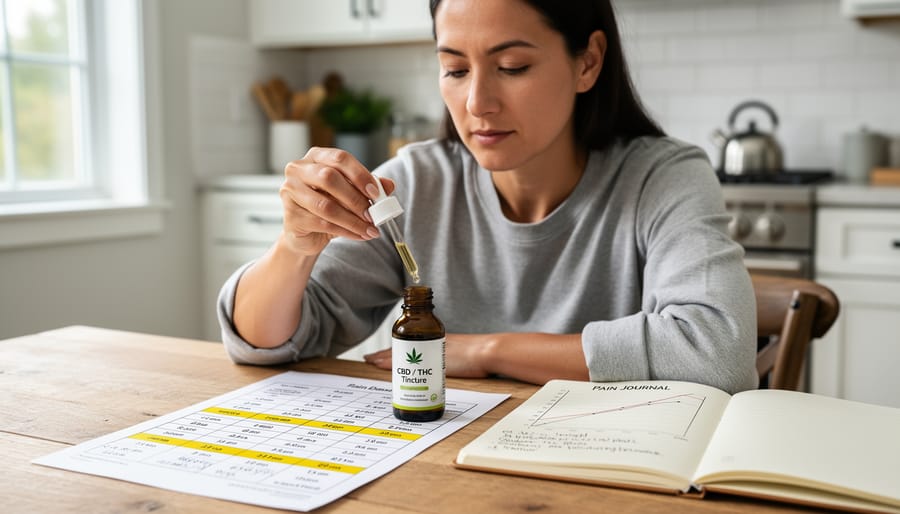
When I first started exploring cannabinoids for my chronic back pain, I made the mistake many beginners do—I took too much too quickly and felt uncomfortably groggy. That’s when my healthcare provider introduced me to the “start low, go slow” principle, which completely changed my experience.
This approach means beginning with the smallest possible dose and gradually increasing it over time until you find your sweet spot. For CBD, most experts recommend starting with 5-10mg daily. If you’re trying THC (where legal in Canada with a prescription or from licensed retailers), begin with even less—2.5mg or lower.
Here’s how to implement this strategy: Take your starting dose at the same time each day for at least 3-5 days before increasing. Keep a simple journal noting your pain levels, any side effects, and overall well-being. If you don’t notice improvement after five days, increase by small increments (5mg for CBD, 1-2.5mg for THC).
Understanding proper CBD dosing takes patience, but this methodical approach helps you avoid unwanted effects while finding the minimum effective dose for your pain. Remember, everyone’s endocannabinoid system responds differently, so what works for your friend might not work for you.
When to Expect Relief (And When to Adjust)
Pain relief timelines vary depending on the cannabinoid and delivery method you choose. When I first tried CBD oil for my chronic shoulder pain, I expected instant results and felt discouraged when nothing happened immediately. Here’s what I’ve learned about realistic expectations.
With CBD oil taken sublingually, most people notice relief within 30 to 90 minutes, with effects lasting 4 to 6 hours. Topicals work faster for localized pain, often within 15 to 30 minutes. THC products typically provide quicker relief, sometimes within 10 to 20 minutes when inhaled, though this method isn’t ideal for everyone.
Give your chosen cannabinoid at least one to two weeks of consistent use before making changes. Your endocannabinoid system needs time to respond, especially with CBD. Keep a simple pain journal noting your dosage, timing, and relief level.
Consider adjusting if you experience no improvement after two weeks at the recommended dose, if side effects outweigh benefits, or if relief is too short-lived. In Canada, you can consult with healthcare practitioners familiar with cannabis therapeutics for personalized guidance.
If one cannabinoid isn’t working, don’t give up entirely. Many Canadians find success by switching cannabinoids, trying combination products with different CBD to THC ratios, or exploring alternative delivery methods that better suit their pain type and lifestyle.
Safety Considerations and Potential Side Effects
While cannabinoids show promise for pain management, it’s important to understand potential side effects and safety considerations before starting any new treatment approach.
Common side effects vary by cannabinoid. CBD is generally well-tolerated, though some people experience drowsiness, dry mouth, changes in appetite, or mild digestive upset, especially when first starting or at higher doses. THC can cause more noticeable effects including dizziness, increased heart rate, anxiety, impaired coordination, and short-term memory issues. These psychoactive effects are why starting with low doses is particularly important with THC-containing products.
I remember when I first tried a CBD-THC blend for chronic back pain. Even though I’d researched thoroughly, I was surprised by how drowsy I felt initially. After adjusting my timing and taking it in the evening instead, the experience improved significantly. This taught me that finding your ideal approach often requires patience and adjustment.
Drug interactions deserve serious attention. Cannabinoids can interact with medications metabolized by certain liver enzymes, including blood thinners, some antidepressants, and seizure medications. If you’re taking prescription medications, discussing cannabinoid use with your healthcare provider isn’t just recommended—it’s essential for your safety.
Under Canadian regulations, licensed healthcare providers can authorize medical cannabis, and many are becoming increasingly knowledgeable about cannabinoid therapy. However, you should definitely consult a doctor if you’re pregnant or breastfeeding, have a history of mental health conditions, have cardiovascular issues, or are taking multiple medications.
Quality matters for safety too. In Canada, purchasing from licensed producers through legal channels ensures products meet safety standards for purity, accurate labeling, and contamination testing. Unregulated products may contain unlisted ingredients or incorrect cannabinoid concentrations.
Start low and go slow remains the golden rule, regardless of which cannabinoid you choose.
So, which cannabinoid is best for pain? The honest answer is that it depends on your unique situation. For many Canadians, a combination of CBD and THC offers the most comprehensive pain relief, as these cannabinoids work synergistically to address both inflammation and pain perception. If you’re new to cannabinoids or want to avoid psychoactive effects, starting with CBD is often the safest bet. Those dealing with severe, chronic pain may find THC-dominant products more effective, though you’ll need to work within Health Canada’s regulations and obtain the appropriate authorization.
Here’s what I’ve learned through my own journey: there’s no universal solution. What works beautifully for my friend’s arthritis might not touch your migraines. The key is starting low, going slow, and paying attention to how your body responds. Document your experience, adjust your approach, and give each cannabinoid a fair trial period of at least two weeks.
Remember that managing pain with cannabinoids is a marathon, not a sprint. You’re building a relationship with these plant compounds, learning how they interact with your unique endocannabinoid system. Be patient with yourself and realistic about outcomes. While cannabinoids can be incredibly helpful, they’re typically most effective as part of a broader pain management strategy that might include movement, stress reduction, and other therapies.
Ready to take the next step? Explore our comprehensive guides on choosing quality products and understanding Canadian cannabis regulations to make informed decisions for your wellness journey.