
Understanding edibles dosage limits stands as one of the most crucial safety considerations when making cannabis edibles at home. Health Canada’s regulations cap individual edible servings at 10mg THC per package, but responsible consumption often starts much lower. First-time users should begin with 2.5mg THC or less, while experienced consumers typically find their sweet spot between 5-10mg per dose. The effects of edibles can take up to two hours to manifest and may last 6-12 hours – significantly longer than other consumption methods.
Unlike smoking or vaping, edibles process through your liver, creating a more potent and longer-lasting experience that requires careful attention to dosing. Whether you’re crafting homemade treats or purchasing from licensed dispensaries, understanding these limits isn’t just about compliance – it’s about ensuring a safe, enjoyable experience that aligns with your personal tolerance and wellness goals.
Understanding THC Potency in Homemade Edibles
Calculating THC Content in Your Cannabis
Before making edibles, it’s crucial to know the THC content of your starting material. If you’re using dried cannabis, check the label for the THC percentage. For example, if your cannabis contains 20% THC, that means there are 200mg of THC per gram of flower.
When working with cannabis oil potency, you’ll typically find the concentration listed in mg/mL on the product label. This makes it easier to measure precise amounts for your recipes.
For homemade preparations, remember that the extraction process isn’t 100% efficient. A general rule of thumb is to estimate about 70-80% of the total THC will be extracted when using common methods. So, if you start with 1 gram of 20% THC cannabis, you can expect approximately 140-160mg of THC in your final extract.
To calculate your per-serving dose, divide the total THC content by the number of portions you plan to make. Always start with small amounts and carefully document your measurements for consistent results.
Converting THC Content to Milligrams
When making homemade edibles, calculating THC dosage is crucial for achieving consistent and safe results. Here’s a straightforward method to determine the total THC content in your recipe:
First, identify the THC percentage in your starting material. For example, if your cannabis flower contains 20% THC, this means there are 200mg of THC per gram. Multiply the number of grams used by the THC percentage (in mg) to get the total potential THC.
Remember that when infusing butter or oil, the extraction process isn’t 100% efficient. Most home infusions achieve about 60-80% extraction rates. To be conservative, multiply your total potential THC by 0.7 (70%) to estimate the actual THC content in your infusion.
Finally, divide the total THC content by the number of servings in your recipe. For instance, if your infusion contains 1000mg THC and you’re making 20 brownies, each brownie would contain approximately 50mg THC.
Always start with small portions and carefully document your measurements to ensure consistent dosing in future batches.


Recommended Dosage Limits for Different Experience Levels
Beginner Doses (1-5mg)
For those new to cannabis edibles, starting with 1-5mg THC is the safest approach. I always recommend my first-time clients begin with 2.5mg and wait at least two hours to assess the effects. At this range, you can expect mild relaxation and subtle mood enhancement while maintaining full functionality. These lower doses are perfect for daytime use or social situations where you want to remain clear-headed.
Remember that even 1mg can be noticeable for some people, especially if you have no prior cannabis experience. In my experience working with newcomers, starting at 2.5mg or less helps avoid uncomfortable experiences and builds confidence in understanding your personal tolerance. You can always take more in future sessions, but you can’t undo a dose that feels too strong.
Keep detailed notes about your experience at these beginner doses. This will help you make informed decisions about future consumption and find your ideal dosage sweet spot.
Intermediate Doses (5-15mg)
For experienced cannabis users, intermediate doses ranging from 5-15mg offer a more substantial experience while maintaining control. At this level, you can expect pronounced relaxation, enhanced sensory experiences, and potentially stronger euphoric effects. Regular users often find this range ideal for managing chronic pain or anxiety while still being able to function throughout their day.
I typically recommend starting at the lower end (5-7mg) if you’re moving up from beginner doses. Pay attention to how your body responds before gradually increasing. The effects at this level usually become noticeable within 30-60 minutes and can last 4-6 hours or longer.
Keep in mind that even within this intermediate range, the experience can vary significantly. A 15mg dose will feel quite different from a 5mg dose, and factors like your metabolism, tolerance, and whether you’ve eaten recently all play important roles.
For optimal results, maintain a dosing journal to track your experiences and identify your ideal range within these intermediate amounts. Remember that staying within legal possession limits is essential, even when preparing homemade edibles.
Experienced User Doses (15-30mg)
For those who have developed a higher tolerance through regular cannabis use, doses between 15-30mg may be more appropriate to achieve desired effects. However, it’s crucial to note that reaching this level should be gradual and based on consistent personal experience with lower doses. Even experienced users should exercise caution and avoid exceeding 30mg in a single session, as higher doses can lead to intense and potentially uncomfortable experiences.
Regular consumers often report that 20mg provides a balanced experience, offering pronounced effects while maintaining functionality. Some experienced users find that 25-30mg helps with specific therapeutic needs, particularly for sleep or chronic pain management. However, it’s worth noting that tolerance can fluctuate, and taking periodic breaks can help maintain effectiveness at lower doses.
Remember that individual responses can vary significantly, even among experienced users. It’s advisable to start at the lower end of this range when trying new products or after any break from cannabis use. Keep a personal dosing journal to track your experiences and optimal dosage levels.
Legal Considerations in Canada
In Canada, the Cannabis Act and its regulations set clear limits on THC content in edible cannabis products. Under federal law, each package of commercially produced edibles can contain a maximum of 10mg of THC, regardless of whether it’s a single piece or multiple servings. This limit applies to all edible cannabis products sold through licensed retailers across the country.
For those making edibles at home, it’s important to note that while home production is legal, the same principles of responsible dosing should apply. Health Canada recommends that new users start with products containing 2.5mg THC or less, and experienced users should generally not exceed 10mg per serving.
The strict 10mg limit was established based on extensive research and consultation with public health experts. The government’s approach prioritizes harm reduction and aims to prevent accidental overconsumption, particularly among new users who might be unfamiliar with cannabis effects.
Provincial regulations may add additional requirements for possession and use. For example, in most provinces, you can possess up to 30 grams of dried cannabis or its equivalent in public, which translates to 450 grams of edible product. However, these limits don’t override the 10mg THC per package restriction.
When purchasing edibles from licensed retailers, all products must display clear labeling indicating THC content, serving sizes, and ingredients. This standardization helps consumers make informed decisions about dosage and consumption. Products must also come in child-resistant packaging and cannot be appealing to young people in their design or marketing.
For medical cannabis users, different rules may apply when obtaining products through licensed producers with a valid medical document. However, the same 10mg THC limit generally applies to ready-made edible products, even in the medical stream.
Safety Tips and Best Practices
Proper Labeling and Storage
Proper labeling and storage of cannabis edibles isn’t just about organization – it’s a crucial safety practice. When making homemade edibles, always label your containers with the total THC content, serving size, and date of preparation. I recommend using child-resistant containers and creating clear, detailed labels that include warnings about the product containing cannabis.
Store your edibles in an airtight container in a cool, dark place away from direct sunlight. If you’re using a shared fridge or pantry, ensure your edibles are clearly marked and kept separate from regular food items to prevent accidental consumption. Consider using a locked box or high cabinet that’s inaccessible to children and pets.
From my experience working with cannabis consumers, I’ve found that using bright warning stickers or distinctive containers helps prevent mix-ups. Write down the recipe and potency calculations you used, and keep this information with your stored edibles for future reference.
When sharing edibles with other adults, provide them with the same detailed information about potency and serving size. It’s also helpful to portion your edibles into individual servings before storage, making it easier to control doses and track consumption.
Remember to check your stored edibles regularly for any signs of spoilage and always respect the expiration dates of your base ingredients.

Testing and Quality Control
Testing and measuring THC content in homemade edibles requires careful attention to detail and consistent methodology. While commercial producers use sophisticated laboratory equipment, home producers can achieve reasonable accuracy through careful documentation and basic math.
The most reliable method for home testing involves keeping detailed records of your starting material’s THC percentage and carefully measuring ingredients during preparation. For example, if you’re using cannabis with 20% THC content, you can calculate the total milligrams in your batch and divide it by the number of portions.
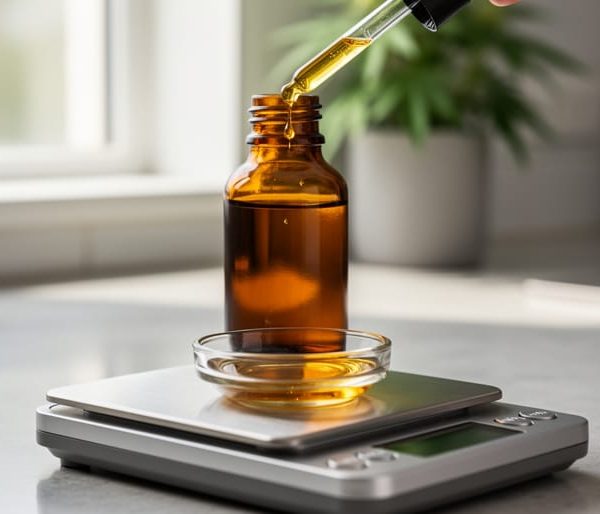
I always recommend using a digital scale accurate to 0.1 grams for weighing cannabis and a set of precise measuring cups and spoons for other ingredients. When making my own edibles, I’ve found that using a standardized recipe template helps maintain consistency between batches.
To ensure even distribution of THC throughout your preparation, thorough mixing is crucial. For baked goods, I suggest mixing dry ingredients separately from wet ingredients first, then combining them carefully. For candies or gummies, constant stirring during cooling helps prevent THC from concentrating in certain areas.
It’s good practice to label each batch with the approximate THC content per piece and date of production. Consider making a small test batch first and starting with a lower dose to gauge potency before scaling up production.
Remember that home testing isn’t as precise as laboratory methods, so always err on the side of caution when labeling THC content.
Understanding and respecting edible mg limits is crucial for a safe and enjoyable cannabis experience. As we’ve explored throughout this article, Canadian regulations cap THC content at 10mg per package for commercial edibles, which serves as a helpful benchmark for home preparation. This limit isn’t arbitrary – it’s designed to protect consumers while allowing them to experience the benefits of cannabis edibles responsibly.
Remember that everyone’s tolerance is different, and what works for one person may be too much for another. Starting with a low dose (2.5mg to 5mg of THC) and waiting at least two hours before consuming more remains the golden rule for both newcomers and experienced users. This patient approach helps you understand your personal limits and avoid uncomfortable experiences.
For those making edibles at home, careful measurement and proper labeling are essential safety practices. Keep detailed records of your recipes and calculations, and always store your creations in clearly marked, child-resistant containers away from regular food items.
The key to responsible edible consumption lies in respecting these limits, understanding your personal tolerance, and creating a safe environment for storage and consumption. By following these guidelines and staying informed about current regulations, you can enjoy cannabis edibles while maintaining control over your experience and ensuring compliance with Canadian law.
Remember, when in doubt, start low and go slow – it’s always better to take a conservative approach when it comes to edible cannabis consumption.