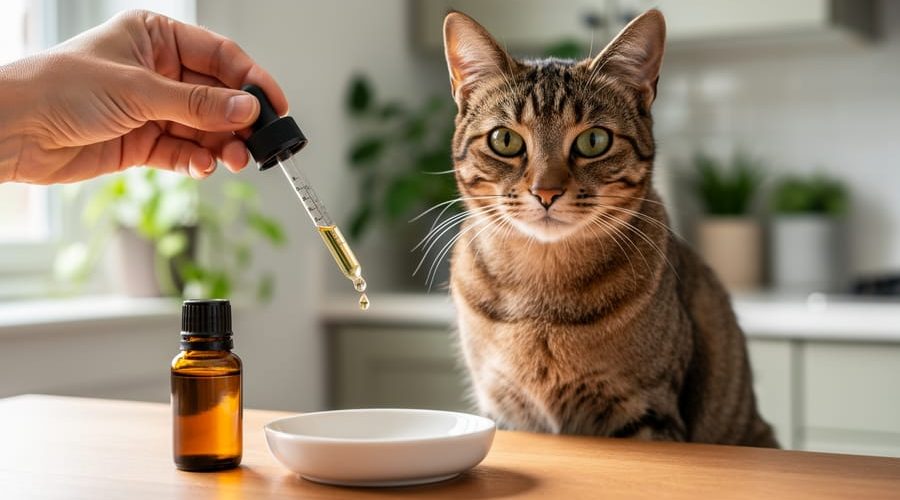
Calculate your cat’s CBD dose by multiplying their weight in pounds by 0.1-0.5 mg of CBD, then divide that number by your product’s concentration to get milliliters. A 10-pound cat typically needs 1-5 mg of CBD, which translates to 0.1-0.5 ml of a 10 mg/ml tincture, or 0.05-0.25 ml of a 20 mg/ml concentration.
Start with the lowest dose and observe your cat for 30-60 minutes before considering an increase. Cats metabolize CBD differently than humans, and their smaller size means even slight overdoses can cause excessive drowsiness or digestive upset. Check your product label for exact CBD concentration per ml, as this varies dramatically between brands—some contain 3 mg/ml while others pack 50 mg/ml into the same dropper.
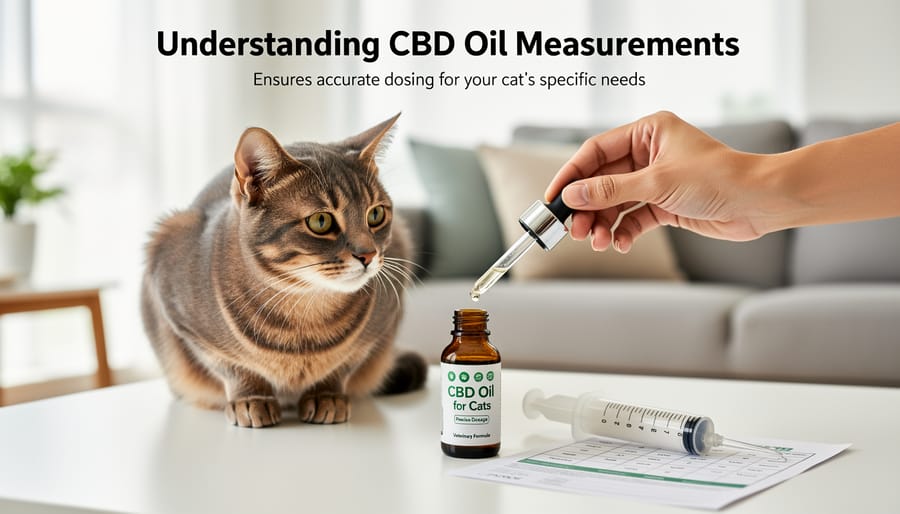
Measure doses using the graduated dropper that comes with your CBD oil, not kitchen measuring spoons. Most droppers have marked lines at 0.25 ml, 0.5 ml, 0.75 ml, and 1 ml increments. If your product doesn’t include a marked dropper, purchase a 1 ml oral syringe from any pharmacy for precise measurement.
Understanding Canadian regulations around pet CBD products helps ensure you’re purchasing safe, quality-tested options. While Health Canada doesn’t specifically approve CBD for veterinary use, many cat owners work with their veterinarians to find appropriate dosing protocols. I’ve personally navigated this gray area with my own cat, and the key is maintaining open communication with your vet while keeping detailed records of dosing and effects. This practical approach combines legal awareness with real-world application, giving you confidence in administering CBD safely.
Understanding CBD Measurements for Cats
What the Numbers on Your CBD Bottle Actually Mean
When I first started researching CBD for my own cat, I found myself staring at the bottle completely confused. Here’s what those numbers actually tell you.
The big number on the front—say, 300mg or 600mg—represents the total CBD content in the entire bottle. This is important for value comparison, but it doesn’t tell you how much CBD is in each dose.
What matters for dosing is the concentration, usually expressed as mg/ml (milligrams per milliliter). To calculate this, divide the total CBD by the bottle size. For example, a 30ml bottle with 300mg total CBD contains 10mg of CBD per ml (300 ÷ 30 = 10mg/ml).
Most droppers hold approximately 1ml when filled completely, but this varies by manufacturer. Check your product packaging or measure with a syringe for accuracy. If your dropper is 1ml and your concentration is 10mg/ml, then a full dropper contains 10mg of CBD.
For easier calculations, you can use our CBD oil calculator designed specifically for Canadian products. Understanding these numbers ensures you’re giving your cat the precise dosage they need, rather than guessing and potentially under or over-dosing.
Why Cat Dosing is Different from Humans
I learned this lesson the hard way when I first started exploring CBD for my senior cat, Oliver. I assumed that since I’d been taking CBD myself, I could simply scale down my dose based on his weight. That was a mistake that could have had serious consequences.
Cats metabolize substances completely differently than humans do. Their livers process compounds at different rates, and they’re far more sensitive to many substances we consume safely. What works for a 150-pound human cannot simply be divided down for a 10-pound cat. While CBD dosing by body weight provides a starting framework for humans, cats require their own specialized calculations.
Cats also lack certain enzymes that help humans break down various compounds, making them vulnerable to toxicity at levels that would be harmless to us. Their smaller size means even slight overdosing can lead to adverse effects like excessive sedation, digestive upset, or worse.
This is why veterinary-formulated CBD products and species-specific dosing charts exist. When it comes to our feline companions, we need to follow guidelines developed specifically for their unique physiology, not adapted human protocols.
The Cat CBD Dosage Chart: Start Here
Dosage by Cat Weight (With ML Conversions)
Here’s a straightforward chart to help you determine exactly how many milliliters of CBD oil to give your cat based on their weight and your chosen concentration. I’ve organized this by dosing strength, so you can start low and adjust as needed.
For a 150mg bottle (5mg CBD per ml):
5-10 lb cats: Low dose (0.5-1mg CBD) = 0.1-0.2ml | Medium dose (1-2mg CBD) = 0.2-0.4ml | High dose (2-3mg CBD) = 0.4-0.6ml
11-15 lb cats: Low dose (1-1.5mg CBD) = 0.2-0.3ml | Medium dose (2-3mg CBD) = 0.4-0.6ml | High dose (3-4mg CBD) = 0.6-0.8ml
16-20+ lb cats: Low dose (1.5-2mg CBD) = 0.3-0.4ml | Medium dose (3-4mg CBD) = 0.6-0.8ml | High dose (4-5mg CBD) = 0.8-1ml
For a 300mg bottle (10mg CBD per ml):
5-10 lb cats: Low dose = 0.05-0.1ml | Medium dose = 0.1-0.2ml | High dose = 0.2-0.3ml
11-15 lb cats: Low dose = 0.1-0.15ml | Medium dose = 0.2-0.3ml | High dose = 0.3-0.4ml
16-20+ lb cats: Low dose = 0.15-0.2ml | Medium dose = 0.3-0.4ml | High dose = 0.4-0.5ml
For a 500mg bottle (approximately 16.5mg CBD per ml):
5-10 lb cats: Low dose = 0.03-0.06ml | Medium dose = 0.06-0.12ml | High dose = 0.12-0.18ml
11-15 lb cats: Low dose = 0.06-0.09ml | Medium dose = 0.12-0.18ml | High dose = 0.18-0.24ml
16-20+ lb cats: Low dose = 0.09-0.12ml | Medium dose = 0.18-0.24ml | High dose = 0.24-0.3ml
Always start with the low dose range and observe your cat for 3-5 days before increasing. Most droppers have measurement markings, but for precise dosing with smaller amounts, consider using a 1ml oral syringe available at any pharmacy in Canada.
Starting Dose Recommendations
When introducing CBD to your cat, the golden rule is “start low and go slow.” This approach minimizes the risk of adverse reactions and helps you find the optimal dose for your specific cat. Think of it like introducing any new supplement—patience is key.
Most veterinarians and feline wellness experts recommend starting with 0.1 to 0.5 mg of CBD per pound of your cat’s body weight. For a 10-pound cat, this translates to 1-5 mg of CBD as your starting dose. If you’re feeling cautious (which I completely understand—I was nervous the first time I gave CBD to my own cat), begin at the lower end of this range.
Here’s where the ml conversion becomes important. If you have a 300 mg CBD tincture in a 30 ml bottle, you’re working with a concentration of 10 mg per ml. For that 10-pound cat starting at 1 mg, you’d administer 0.1 ml. Most droppers have measurement markings to help you get this right, but a 1 ml syringe from your pharmacy can provide even more precision.
Once you’ve established your starting dose, maintain it for 3-5 days while observing your cat’s response. Look for positive changes in the issues you’re addressing, whether that’s anxiety, pain, or inflammation. If you’re not seeing improvements after this initial period, gradually increase the dose by small increments—about 0.5-1 mg—waiting another few days between adjustments. This methodical approach, typically spanning 1-2 weeks, helps you identify the minimum effective dose without overshooting.
Adjusting Dosage Based on Your Cat’s Needs
Mild vs. Severe Conditions
Just as you wouldn’t take the same medication dose for a headache as you would for chronic migraines, your cat’s CBD dosing should reflect the severity of their condition. Understanding this distinction can help you use CBD more effectively and avoid giving too much or too little.
For mild conditions like occasional anxiety during thunderstorms or minor joint stiffness, start with the lower end of the dosing spectrum. A cat weighing 4 kg (about 9 pounds) might benefit from 1-2 mg of CBD, which could be as little as 0.1 ml depending on your product’s concentration. I remember when my friend’s cat showed signs of stress during a move—she started with a minimal dose and found it was enough to take the edge off without making her kitty too drowsy.
Moderate issues like chronic low-grade pain from arthritis or general anxiety typically require a middle-range approach. You might work up to 3-4 mg per dose, given once or twice daily. Monitor your cat’s response over several days before adjusting.
Severe conditions demand more careful consideration. For seizures, severe chronic pain, or inflammatory bowel disease, some cats may need 5 mg or more per dose under veterinary guidance. In Canada, it’s particularly important to work with a vet familiar with CBD use, as these conditions require consistent monitoring and potentially higher concentrations.
Always start low regardless of severity, then gradually increase every 3-5 days until you notice improvement. Keep a simple journal noting the dose in ml, the time given, and your cat’s response.
Signs Your Cat Needs More (or Less) CBD
Knowing whether your cat’s CBD dosage is working properly comes down to careful observation. If you’ve been giving CBD for 7-10 days without seeing any improvement in the symptoms you’re targeting—whether that’s anxiety, pain, or inflammation—it might be time to gradually increase the dose. I learned this with my own cat, Charlie, who showed no change in his anxiety at our starting dose, but responded well once we moved up.
On the flip side, watch for signs your cat is getting too much. Excessive sleepiness beyond normal cat napping, wobbliness when walking, or decreased appetite can indicate the dosage is too high. Some cats might also seem unusually lethargic or disinterested in their favorite activities. In Canada, where CBD products for pets aren’t as strictly regulated as human products, it’s particularly important to monitor your cat closely.
Keep a simple journal for the first few weeks, noting the dose, time given, and any changes in behavior. This helps you spot patterns and makes conversations with your veterinarian more productive. Remember, finding the right dose is a process, not an instant solution—patience and observation are your best tools.
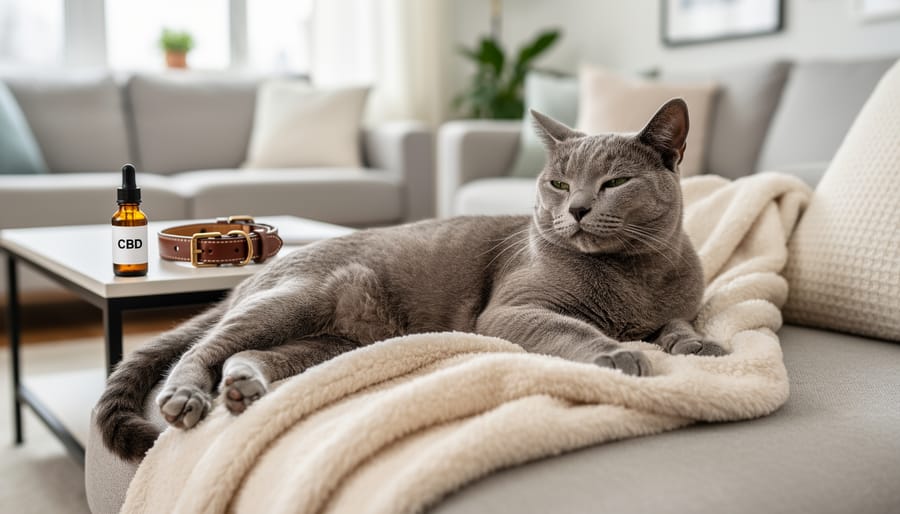
How to Safely Administer CBD to Your Cat
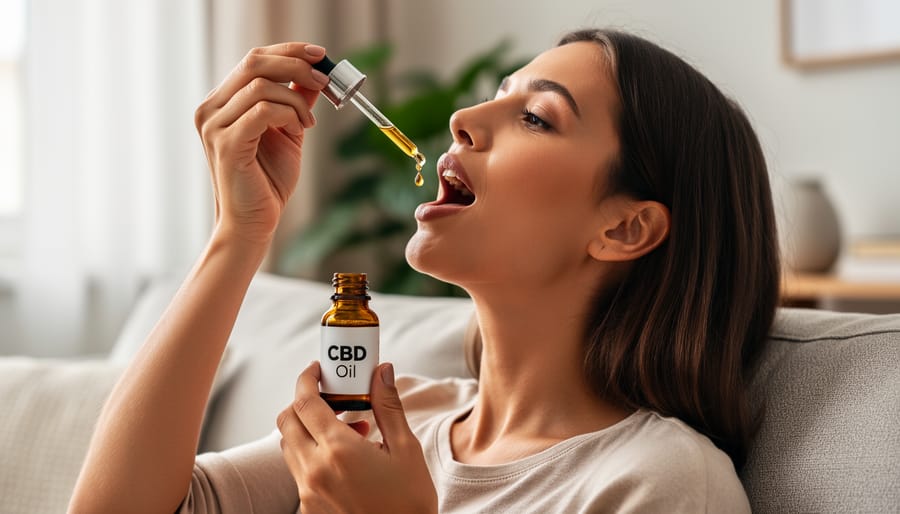
Administration Methods That Actually Work
Getting CBD into your cat effectively makes all the difference in whether it actually works. Through my conversations with cat owners across Canada, I’ve learned which methods deliver the most consistent results.
Direct oral application gives you the most predictable absorption. Using the dropper, gently place the measured dose directly into your cat’s mouth, aiming for the area between the cheek and gums. This method, similar to administering oil under the tongue in humans, allows the CBD to absorb through the mucous membranes. Yes, your cat will probably make a face and drool a bit, but the absorption rate is superior.
Mixing with wet food works well for cats who won’t tolerate direct application. Add the measured dose to a small amount of their favorite wet food to ensure they consume the entire portion. While this method takes longer to work since the CBD must pass through the digestive system, many pet parents find it less stressful for anxious cats.
CBD-infused treats offer convenience but make precise dosing trickier, especially if your cat doesn’t finish the entire treat. If you go this route, choose products specifically formulated for cats with clear mg per treat labeling.
For best results, stay consistent with your chosen method. Switching between administration techniques can make it harder to gauge effectiveness when adjusting doses.
Best Times to Give Your Cat CBD
Timing can make a real difference in how effectively CBD works for your cat. Most cats do well with once-daily dosing, typically given in the evening when they’re naturally more relaxed. However, if you’re addressing ongoing anxiety or chronic pain, splitting the dose into twice-daily administration (morning and evening) often provides more consistent relief throughout the day.
I’ve found with my own cat that giving CBD about 30 minutes before mealtime works beautifully. The slight hunger actually motivates her to take it more willingly, and the upcoming food helps with absorption. That said, some cats have sensitive stomachs, so if yours experiences any digestive upset, try administering CBD right after meals instead.
The most important factor is consistency. Cats thrive on routine, and their endocannabinoid systems respond best when CBD is given at roughly the same time each day. Pick a schedule that fits naturally into your daily routine—whether that’s with your morning coffee or during evening TV time—so you’re less likely to forget. Set a phone reminder if needed, especially during the first few weeks.
If you’re using CBD for situational stress like vet visits or travel, give it 45-60 minutes beforehand to allow proper absorption and optimal effect.
Safety Considerations and Red Flags
What to Watch For: Side Effects in Cats
Most cats tolerate CBD well, but it’s important to know what’s normal and what requires veterinary attention. When I first gave CBD to my cat, Luna, I noticed she seemed a bit sleepier than usual for the first day or two—totally normal and nothing to worry about.
Common mild side effects include drowsiness or increased sleepiness, especially when you’re just starting out or adjusting the dose. Some cats may experience dry mouth, which you might notice as increased thirst or water drinking. A few cats develop mild digestive upset like softer stools, though this typically resolves within a day or two. These reactions are generally temporary and often diminish as your cat’s system adjusts to the CBD.
However, some signs warrant immediate veterinary attention. If your cat becomes excessively lethargic and unresponsive, vomits repeatedly, loses coordination or seems disoriented, or shows signs of allergic reaction like facial swelling or difficulty breathing, contact your vet right away.
In Canada, while CBD products for pets aren’t federally regulated the same way human products are, it’s crucial to source quality products and start with conservative doses. Keep a simple journal noting the dose, time given, and any observations. This helps you identify patterns and gives your vet valuable information if concerns arise. When in doubt, always err on the side of caution and consult your veterinarian.
Canadian Legal Considerations for Pet CBD
In Canada, pet CBD products exist in a bit of a grey area that’s important to understand before purchasing. While CBD derived from hemp is federally legal for human consumption, Health Canada hasn’t officially approved CBD products specifically for animal use. This means you won’t find veterinary CBD products with official government approval stamps.
That said, many Canadian pet owners do use CBD products for their cats, typically choosing human-grade CBD oils that meet strict quality standards. When I first started researching this for my own cat, I learned to look for products from licensed Canadian cannabis producers or those that comply with Health Canada’s regulations for hemp-derived CBD.
What should you look for? Choose products that provide third-party lab testing results showing CBD concentration and confirming the absence of THC (which is toxic to cats). The label should clearly state the mg of CBD per ml, making dosing calculations straightforward. Reputable companies will be transparent about their sourcing and extraction methods.
Always consult with a veterinarian familiar with CBD before starting any new supplement, even though they may be limited in what they can officially recommend due to current regulatory restrictions.
Choosing the Right CBD Product for Accurate Dosing
Features That Make Dosing Easier
When I first started giving my cat CBD, I quickly realized that having the right product features made all the difference between guessing and getting it right. The most helpful products include clearly labeled concentrations that tell you exactly how many milligrams of CBD are in each milliliter—this takes the math out of dosing.
Look for bottles with calibrated droppers marked with measurement lines. These make it incredibly easy to measure 0.25ml or 0.5ml precisely, which matters when you’re working with small doses for cats. I’ve found that eyeballing it just doesn’t cut it when accuracy is important for your pet’s wellbeing.
Pet-specific CBD formulations are another game-changer. Unlike human products, these are designed with your cat’s needs in mind, often avoiding additional ingredients like xylitol or high THC levels that could be harmful. They’re typically flavored in ways that appeal to cats or remain neutral enough to mix with food.
Third-party lab testing is non-negotiable. These certificates of analysis confirm the actual CBD content matches the label and verify there are no contaminants. In Canada, this transparency helps build trust in products that may not yet be fully regulated for pets. If budget is a concern, some CBD assistance programs can help make quality-tested products more accessible.
Finding the right CBD dosage for your cat is truly a personalized journey, and there’s no one-size-fits-all answer. Every feline is unique, with different needs, sensitivities, and health conditions that influence how they respond to CBD. That’s why I can’t stress enough the importance of working closely with your veterinarian throughout this process, especially one familiar with cannabis therapies for pets.
When I first started helping cat owners navigate CBD dosing, I quickly learned that patience and observation are your best friends. Start with those lower doses we discussed, and give your cat’s system time to adjust before making changes. In Canada, veterinarians are becoming increasingly knowledgeable about CBD for pets, so don’t hesitate to have an open conversation about your interest in trying this natural supplement.
Here’s a practical tip that’s made a world of difference for many cat parents I’ve spoken with: keep a simple dosing journal. Write down the date, the exact ml amount you administered, the time of day, and any changes you notice in your cat’s behavior, appetite, or the specific issue you’re addressing. This record becomes invaluable for tracking what’s working and what needs adjustment.
Remember, finding the perfect CBD dosage takes time, but with careful observation and professional guidance, you’ll discover what helps your feline companion thrive.