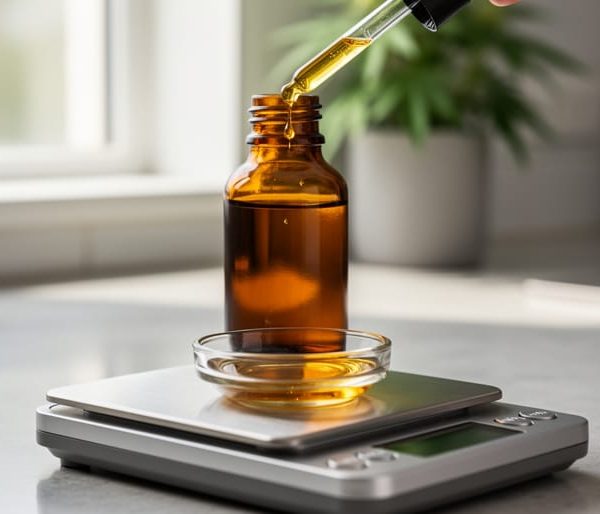

**Calculate your CBD starting dose using 0.25 mg per pound of body weight.** A 150-pound person would begin with approximately 37.5 mg daily, while someone weighing 200 pounds might start with 50 mg. This foundational calculation gives you a personalized baseline rather than guessing with generic recommendations that ignore your individual physiology.
**Divide your total daily dose into two or three smaller servings** taken morning, afternoon, and evening. Breaking up your intake maintains more consistent CBD levels in your system throughout the day, which often produces better results than taking everything at once. Start with this split dosing approach for at least one week before making any adjustments.
**Monitor your response for 3-7 days before increasing by small increments**—typically 5-10 mg at a time. CBD works subtly, and patience reveals whether your starting dose addresses your specific needs. Some people feel effects within hours, while others notice gradual improvements over several days as cannabinoids accumulate in their system.
**Choose full-spectrum or broad-spectrum products whenever possible** for enhanced effectiveness through the entourage effect, where multiple cannabis compounds work synergistically. Here in Canada, legally purchased CBD products must contain less than 0.3% THC, which won’t produce intoxication but contributes to overall therapeutic potential.
When I first started exploring CBD dosing myself, I made the common mistake of jumping in with random amounts. Understanding the weight-based approach transformed my experience from frustrating guesswork into a methodical, confidence-building process that actually delivered the benefits I was seeking.
Why Your Body Weight Matters for CBD Dosing
If you’ve ever taken children’s pain medication or had a doctor adjust your prescription based on your size, you already understand the basic principle behind weight-based CBD dosing. Your body weight directly influences how cannabinoids distribute throughout your system and how effectively they interact with your endocannabinoid system.
Here’s what happens: when you take CBD, it travels through your bloodstream and binds to receptors throughout your body. A person weighing 120 pounds has less body mass—and therefore less blood volume, fewer fat cells, and a different distribution network—than someone weighing 200 pounds. Think of it like adding food colouring to water: the same drop looks more concentrated in a small glass than in a large pitcher.
CBD is lipophilic, meaning it’s attracted to fat and gets stored in fatty tissues throughout your body. Individuals with more body mass typically need higher doses to achieve the same concentration in their bloodstream and tissues. This isn’t unique to CBD—many medications, from antibiotics to chemotherapy drugs, follow weight-based dosing protocols for exactly this reason.
When I first started exploring CBD for my chronic pain, I made the mistake of following a friend’s dosage recommendation. She weighed considerably less than me, and I wondered why I wasn’t experiencing the same relief. Once I adjusted my dose to account for my body weight, the difference was remarkable.
Understanding this relationship helps explain why your neighbour might rave about 10mg while you need 25mg for similar effects—it’s not about tolerance or quality, it’s simple biology. Weight-based dosing gives you a scientifically-grounded starting point rather than guessing blindly.

The Basic Formula: Calculating Your CBD Dose by Weight

Low Strength: Starting Conservative (1mg per 10 lbs)
Starting with 1mg of CBD per 10 pounds of body weight is the safest approach for beginners or those addressing mild symptoms like occasional stress, sleep difficulties, or minor discomfort. This conservative dose minimizes the risk of unwanted effects while you observe how your body responds.
Here’s how the calculation works: if you weigh 150 pounds, divide by 10 to get 15mg as your starting dose. Someone at 200 pounds would start with 20mg, while a 120-pound person begins at 12mg. You can use our CBD oil calculator to simplify these calculations.
This gentle introduction is particularly suitable if you’re new to CBD, sensitive to supplements generally, or managing wellness concerns rather than chronic conditions. When I first started my CBD journey, I began at this level despite my eagerness for results—and I’m glad I did. It gave me confidence in understanding my body’s response without feeling overwhelmed.
Take this dose once daily, preferably at the same time each day, and maintain it for at least 3-5 days before considering any adjustments. Keep notes about what you notice—changes in sleep quality, mood, or physical comfort. This baseline period is essential for making informed decisions about whether you need to increase your dosage later.
Medium Strength: The Sweet Spot for Most (3mg per 10 lbs)
This is where many regular CBD users find their “sweet spot”—the dose that delivers noticeable benefits without feeling overwhelming. At 3mg of CBD per 10 pounds of body weight, you’re working with a moderate strength that’s ideal for managing daily stress, mild to moderate discomfort, and sleep challenges.
Let’s look at practical examples: if you weigh 150 pounds, you’d calculate 45mg of CBD per dose (150 ÷ 10 × 3). Someone weighing 180 pounds would aim for 54mg. I found my own ideal dose in this range after starting lower—it took about two weeks of consistency before I noticed real improvement in my sleep quality.
This dosage tier works well for people who’ve tried low doses without sufficient relief, or those dealing with ongoing issues rather than occasional concerns. Many Canadians I’ve spoken with report this range effectively manages chronic tension and everyday anxiety without causing drowsiness during daytime use.
Remember, you might need the higher end of this range if you’re addressing physical discomfort, while mental wellness concerns often respond well to the lower-middle portion of this spectrum.
High Strength: For Serious Relief (6mg per 10 lbs)
Higher doses of CBD—around 6mg per 10 pounds of body weight—are typically reserved for managing more severe conditions like chronic pain, significant anxiety, or serious sleep disturbances. If you weigh 150 pounds, this translates to approximately 90mg of CBD per day.
I’ll be honest: when I first tried this strength level for persistent back pain, I was nervous. But under my healthcare provider’s guidance, I worked up to it gradually and found the relief I’d been searching for.
Here’s the thing about high-strength dosing—it’s not a starting point. You should only reach this level after establishing tolerance at lower doses and ideally after consulting with a healthcare provider familiar with CBD use. This is especially important if you’re taking other medications, as CBD can interact with certain prescriptions.
In Canada, while CBD is legal, Health Canada emphasizes the importance of medical supervision at higher doses. Watch for potential side effects like fatigue, changes in appetite, or digestive upset. If you experience any concerning symptoms, reduce your dose immediately and consult a healthcare professional.
Remember: more isn’t always better. Some people find their sweet spot at moderate doses and never need to go higher.
Quick Reference: CBD Dosage Chart by Weight
Looking at dosage charts used to intimidate me when I first started with CBD—so many numbers! But I’ve learned they’re actually incredibly helpful once you understand they’re just starting points, not rigid rules. Here’s a straightforward reference based on weight that you can bookmark and return to as you find what works for your body.
**CBD Dosage Chart by Weight**
| Weight Range | Low Strength (1mg per 10 lbs) | Medium Strength (3mg per 10 lbs) | High Strength (6mg per 10 lbs) |
|————–|——————————-|———————————-|——————————–|
| 100-125 lbs (45-57 kg) | 10-12 mg | 30-37 mg | 60-75 mg |
| 126-150 lbs (57-68 kg) | 13-15 mg | 38-45 mg | 76-90 mg |
| 151-175 lbs (68-79 kg) | 15-17 mg | 45-52 mg | 90-105 mg |
| 176-200 lbs (80-91 kg) | 18-20 mg | 53-60 mg | 106-120 mg |
| 201-225 lbs (91-102 kg) | 20-22 mg | 60-67 mg | 120-135 mg |
| 226-250 lbs (103-113 kg) | 23-25 mg | 68-75 mg | 136-150 mg |
**How to Use This Chart:**
Start with the low strength column, even if you’re tempted to jump ahead. I began at the medium level thinking I’d save time, but honestly, starting low helped me understand my body’s response without any guesswork about whether I’d taken too much.
Take your chosen dose consistently for 3-5 days before adjusting. CBD builds up in your system, so what feels subtle on day one might be exactly right by day three.
If you’re between weight ranges, round down initially. You can always increase, but you can’t un-take CBD once it’s in your system.
Remember that these are general guidelines based on anecdotal evidence and common practice within the Canadian CBD community—not medical prescriptions. Your ideal dose depends on factors beyond weight, including metabolism, the condition you’re addressing, and your individual body chemistry.
Beyond Weight: Other Factors That Affect Your Dose
Your Metabolism and Body Chemistry
Here’s the thing about CBD dosing—your weight gives you a starting point, but your metabolism is the real determining factor. I learned this firsthand when a friend with my exact weight needed nearly double my dose to feel the same effects.
Your liver processes CBD through enzymes, and some people naturally produce more or fewer of these enzymes. This means two Canadians weighing 70 kilograms might need completely different amounts. Fast metabolizers break down CBD quickly, requiring higher or more frequent doses. Slow metabolizers feel effects longer and often need less than the weight formula suggests.
Other factors matter too: your body fat percentage (CBD is fat-soluble), whether you’ve eaten recently, and even medications you’re taking can all influence how CBD works for you. This is why starting low and adjusting gradually is essential—you’re discovering your unique dosing sweet spot, not just following a calculator.
Consider the weight-based recommendation your baseline, then listen to your body’s response over several days before making changes.
What You’re Treating
Your body weight gives you a starting point, but what you’re actually treating matters just as much—sometimes even more. Someone using CBD for occasional sleep support will need a very different dose than someone managing chronic pain or severe anxiety.
For mild symptoms like general stress or minor sleep issues, most people find relief with lower doses in the 10-20mg range, regardless of weight. Moderate conditions such as persistent anxiety, inflammation, or regular pain typically respond to 20-40mg doses. More severe or chronic conditions—think debilitating pain, serious anxiety disorders, or epilepsy—may require 40mg or higher.
I’ve seen this firsthand with friends using CBD. One manages occasional work stress beautifully with 15mg, while another dealing with fibromyalgia needed to work up to 50mg twice daily before noticing meaningful relief.
Here’s the important part: symptom severity isn’t always obvious from the outside. What feels “mild” to one person might be significantly impacting another’s quality of life. Start with your weight-based calculation, then adjust based on how your specific condition responds. If you’re treating a diagnosed medical condition, especially something serious, discussing your CBD use with a healthcare provider familiar with cannabinoid therapy is always your safest bet.
Product Type and Delivery Method
The way you take CBD dramatically impacts how much actually enters your bloodstream—a concept called bioavailability. Understanding these differences is crucial for determining your effective dose based on weight.
CBD oils used through sublingual administration offer approximately 20-30% bioavailability. When you learn how to use cannabis oil properly under your tongue, more CBD bypasses your digestive system and enters directly into circulation.
Edibles like gummies or capsules have the lowest bioavailability at around 6-15%, since they must pass through your digestive tract and liver first. This means if you’re calculating dosage by weight, you’ll need a higher milligram amount in edible form compared to oils to achieve similar effects.
Vaping offers the highest bioavailability at 40-50%, but carries respiratory considerations. CBD isolate can be used in various delivery methods, each with different absorption rates.
Topicals work differently—they don’t enter your bloodstream significantly, so weight-based dosing doesn’t apply. They’re absorbed locally through skin receptors instead.
How to Find Your Perfect Dose: A Step-by-Step Approach
Step 1: Calculate Your Starting Point
The most common starting formula in Canada is 1-6 mg of CBD per 10 pounds of body weight. To find your baseline, simply divide your weight by 10, then start at the lower end of that range.
For example, if you weigh 150 pounds, that’s 15 units of 10 pounds. Your starting dose would be 15-90 mg daily, but I always recommend beginning with just 15 mg and observing how you feel. When I first tried CBD at 140 pounds, I started with 14 mg in the morning—far below the upper range—and it helped me gauge my body’s response without any guesswork. You can always increase gradually, but you can’t un-take a dose that’s too high. This conservative approach has served both myself and many Canadians I’ve spoken with well.
Step 2: Track Your Response
Starting a dosing journal is one of the smartest moves you can make when beginning CBD. I kept one myself during my first month, and it revealed patterns I wouldn’t have noticed otherwise—like how my afternoon dose worked better after eating lunch.
In your journal, track your daily dose (in mg), the time you take it, what you’re hoping to address, and any effects you notice. Also note factors like stress levels, sleep quality, and meals, as these can influence how CBD works for you.
Give each dose level at least 3-7 days before adjusting. CBD builds up in your system over time, so effects aren’t always immediate. Many Canadians find they notice the most significant changes around the two-week mark.
If you’re not experiencing the results you’re looking for after a week, increase your dose by small increments—typically 5-10mg. Remember, more isn’t always better. The goal is finding your personal “sweet spot” where you experience benefits without unnecessary expense.

Step 3: Adjust Gradually
Once you’ve started with your calculated baseline dose, patience becomes your best ally. I learned this the hard way when I first tried CBD—I increased my dose too quickly and ended up feeling unnecessarily drowsy. Now I recommend the “low and slow” approach that’s served me and countless others well.
Stick with your starting dose for at least 3-5 days before making any adjustments. This gives your body time to respond and helps you accurately assess the effects. Keep a simple journal noting your dose, timing, and how you feel throughout the day—it’s easier to spot patterns when you have written records.
If you’re not experiencing the relief you’re seeking after that initial period, increase your dose by just 5-10mg at a time. This gradual approach prevents overshooting your optimal amount and wasting product.
You’ll know you’ve found your sweet spot when you notice consistent benefits without unwanted side effects. For most Canadians I’ve spoken with, this looks like feeling noticeably calmer or experiencing reduced discomfort, without drowsiness or digestive upset. If you suddenly feel overly tired or notice diminishing returns, you may have gone slightly too high—simply dial back by 5mg and maintain that level.
Common Dosing Mistakes to Avoid
After helping hundreds of Canadians start their CBD journey, I’ve noticed patterns in the mistakes people make—and I want to help you avoid them.
**Starting with too high a dose** is the most common error I see. I get it—you’re eager for results and think more is better. But when readers tell me they felt dizzy or overly tired after their first dose, it’s almost always because they started at 50mg instead of the recommended 10-20mg. Your body needs time to adjust to CBD, just like it would with any new supplement.
**Inconsistent timing** is another big one. CBD works best when you give it a routine. Taking it randomly—Monday morning, Wednesday evening, Friday afternoon—makes it nearly impossible to assess what’s working. I learned this the hard way myself, wondering why I wasn’t seeing consistent results until I committed to taking it at the same time daily for two weeks.
**Not waiting long enough to increase** trips up many beginners. Three days isn’t enough time to evaluate a dose. Your endocannabinoid system needs at least 5-7 days to respond. I know waiting feels frustrating when you’re seeking relief, but patience here prevents wasting product and money.
**Ignoring product concentration** leads to accidental overdosing or underdosing. A full dropper of 300mg oil (10mg CBD) is very different from a full dropper of 1500mg oil (50mg CBD). Always calculate based on milligrams, not droppers.
Here’s the reassuring part: CBD has an excellent safety profile. You can’t overdose in a dangerous way. The worst that typically happens? You might feel sleepy or get a mild headache. These effects pass quickly, and you’ll know to reduce your next dose.

What Canadian Regulations Say About CBD Dosing
Here’s where things get a bit tricky in Canada. Health Canada regulates CBD products quite strictly, and understanding these rules will help you navigate what’s available and what dosing information you can legally receive.
First, the basics: CBD products in Canada fall into different categories. Natural health products containing CBD (under 10mg per day) can be sold over-the-counter with a Natural Product Number (NPN). These typically come with very conservative dosing recommendations—often just a few milligrams per serving. If you’re looking at our weight-based calculations from earlier sections, you’ll notice these OTC products may not provide enough CBD for many people’s needs.
For higher doses, you’ll need to look at cannabis-derived CBD products, which are regulated under the Cannabis Act. These are available through licensed retailers (both physical stores and online provincial retailers), and they can contain much higher concentrations. However—and this is important—Health Canada doesn’t provide specific dosing guidelines based on weight for these products.
When I first started exploring CBD, I found this regulatory gap frustrating. The legal framework exists, but personalized dosing advice can only come from healthcare practitioners, not from product packaging or retailers.
Prescription CBD products like Epidiolex exist for specific medical conditions, but most Canadians using CBD for general wellness will access it through recreational cannabis channels. This means you’re largely responsible for determining your own appropriate dose, which is why understanding weight-based starting points becomes so valuable for making informed decisions.
When to Adjust Your Dose (And When Not To)
Finding the right CBD dose isn’t always straightforward, and knowing when to adjust versus when to stay the course can be tricky. Here’s what I’ve learned through my own experience and conversations with regular CBD users across Canada.
Consider increasing your dose if you’ve been at the same level for at least two weeks and aren’t experiencing the relief you need. Your symptoms should guide you—if you’re still dealing with significant discomfort or anxiety after giving your current dose a fair trial, a modest increase (typically 5-10mg) might be appropriate.
However, before adding more CBD, ask yourself: are my expectations realistic? CBD isn’t a miracle cure. It works subtly for many people, and sometimes what feels like “nothing happening” is actually a reduction in symptoms you’ve stopped noticing. I remember increasing my dose unnecessarily because I expected a dramatic shift, when actually my baseline anxiety had already improved—I just hadn’t recognized it.
True tolerance to CBD is relatively rare compared to other supplements. If you feel like CBD has “stopped working,” consider other factors first: changes in stress levels, sleep quality, or even the product itself (different batches can vary slightly).
Reduce your dose if you experience side effects like drowsiness, dry mouth, or digestive upset. These signs indicate you may be taking more than your body needs.
For long-term users, periodic “dose checks” every few months can help ensure you’re not taking more than necessary, especially as your body and circumstances change.
Weight-based dosing offers a valuable framework to begin your CBD journey, but remember—it’s just the starting line, not the finish. Your ideal dose will depend on factors beyond the number on the scale, including your unique body chemistry, the condition you’re addressing, and the product you choose.
I’ve walked this path myself, and I know how frustrating it can be when you don’t experience immediate results. My advice? Start with those weight-based calculations we’ve discussed, then give yourself permission to experiment. Adjust gradually, keep notes, and trust your body’s feedback. There’s no “perfect” dose that works for everyone, and that’s perfectly okay.
Be patient with the process and advocate for yourself. If something doesn’t feel right or you’re not seeing improvements after a few weeks, don’t hesitate to adjust or consult with a healthcare provider familiar with CBD.
You deserve to find what works for *your* body, and I’m here to support that journey. For additional guidance on making CBD more accessible, check out our CBD assistance program and explore other dosing resources throughout the site.