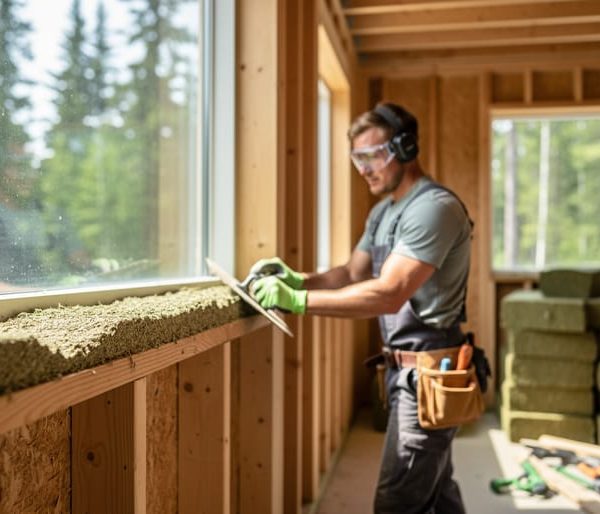

Rethink what’s hiding between your walls. Hemp insulation outperforms fiberglass in moisture resistance by 30% while sequestering carbon throughout its lifespan. Mycelium panels grow to fit irregular spaces in just two weeks, creating custom-fit thermal barriers from agricultural waste. Sheep’s wool naturally regulates humidity without chemical treatments, pulling moisture from air when levels exceed 65% and releasing it when conditions dry out.
Canadian builders face a unique challenge: finding sustainable insulation that withstands our temperature extremes without breaking renovation budgets. Traditional options like fiberglass and spray foam dominate the market, but they carry hidden costs—from manufacturing emissions to long-term health concerns about off-gassing. Meanwhile, unconventional materials derived from hemp, mushrooms, seaweed, and recycled textiles are proving their worth in real-world applications across the country.
I first encountered hemp insulation during a renovation project in British Columbia, where the installer explained how the same plant family providing CBD wellness benefits also creates superior building materials. That connection sparked my investigation into how industrial hemp and other plant-based options are reshaping sustainable construction in Canada.
This review examines the performance data, installation requirements, and true costs of seven unconventional insulation materials available to Canadian renovators and builders. You’ll discover which options meet National Building Code requirements, where to source them domestically, and how their R-values compare against conventional choices. Whether you’re planning a small renovation or a complete build, these alternatives offer practical pathways to reduce your project’s environmental impact without sacrificing thermal performance or durability in our demanding climate.
Why Hemp Belongs in Your Walls (Not Just Your Wellness Routine)
The Hemp-CBD Connection Canadians Need to Understand
Here’s something that surprises most Canadians: the hemp used for insulation is the same plant species as the hemp used for CBD products. Cannabis sativa is incredibly versatile, but the industrial hemp varieties grown for construction materials contain minimal THC (under 0.3% in Canada) and are specifically cultivated for their strong, fibrous stalks rather than their cannabinoid content.
When you’re installing hemp insulation in your walls, you’re using the woody core and fibers of the hemp plant—the structural parts. CBD, on the other hand, is extracted from the flowers and leaves. Think of it like using different parts of a tomato plant: the fruit for eating, the stems for composting. Same plant, different purposes.
In Canada, industrial hemp has been legal to grow since 1998, long before CBD products became widely available. Farmers need licenses from Health Canada to cultivate it, and those growing hemp for hempcrete construction material are focused on fiber quality and stalk density, not cannabinoid profiles. This distinction is important because it means hemp insulation materials are completely legal, non-intoxicating, and have nothing to do with cannabis regulations that apply to CBD products.
From my experience talking with Canadian builders, many are initially hesitant about hemp materials due to confusion about legality. Understanding that industrial hemp is simply a sustainable crop—like flax or wheat—helps demystify these innovative insulation options and opens doors to more environmentally conscious building choices.
What Makes Hemp Insulation Actually Work
Hemp insulation works so well because of the plant’s unique cellular structure. Each hemp fiber contains microscopic air pockets that trap heat, creating a natural thermal barrier. Think of it like wearing a down jacket – those tiny spaces slow down heat transfer, keeping your home warm in winter and cool in summer. In Canadian climate testing, hemp insulation typically achieves an R-value between 3.5 and 4.5 per inch, which puts it right in the competitive range with conventional options.
What really sets hemp apart is how it handles moisture. Unlike fiberglass that can trap dampness and lose effectiveness, hemp fibers can absorb up to 20% of their weight in water vapor without compromising their insulating properties. The fibers actually regulate humidity by absorbing excess moisture when it’s humid and releasing it when conditions are drier. This breathability prevents mold growth and improves indoor air quality – something particularly valuable in our humid Canadian summers and when homes are sealed tight during winter.
The science gets even more interesting when you look at hemp-based building materials combined with lime binders. This combination creates a material that continues to harden over time while maintaining flexibility. Hemp’s high silica content bonds with lime to form a durable composite that resists pests naturally without chemical treatments. The result is insulation that performs consistently for decades while managing moisture in ways synthetic materials simply cannot replicate.

Beyond Hemp: Unconventional Insulators That Actually Perform
Mushroom Mycelium: Growing Your Insulation
If you think insulation made from mushrooms sounds like something out of a science fiction novel, you’re not alone. But mycelium-based insulation is very real and surprisingly practical. Mycelium is the root structure of mushrooms, those thread-like networks that grow beneath the surface. When combined with agricultural waste like hemp stalks, wood chips, or corn husks, mycelium grows around the material, binding it together into a solid, lightweight block.
The production process is fascinating. Manufacturers pack agricultural waste into molds, introduce mycelium spores, and let nature do its work. Over about a week, the mycelium colonizes the material, creating a dense network that holds everything together. The blocks are then heat-treated to stop growth, resulting in a fire-resistant, moldable insulation material.
From a sustainability perspective, mycelium insulation checks impressive boxes. It’s completely biodegradable, uses waste materials that would otherwise go to landfills, requires minimal energy to produce, and actually sequesters carbon during growth. In Canada, several companies are exploring mycelium products, though availability remains limited compared to conventional options. The material performs well thermally and offers excellent soundproofing, making it worth considering for eco-conscious renovators willing to explore emerging technologies.

Sheep’s Wool: Natural Climate Control
Sheep’s wool insulation might surprise you as an option, but it’s been keeping homes comfortable for centuries in various forms. Here in Canada, wool insulation is becoming increasingly accessible through specialty suppliers and green building retailers, though it remains less common than plant-based alternatives.
What makes wool particularly effective is its natural ability to regulate both temperature and moisture. The crimped structure of wool fibres traps air pockets, creating excellent thermal resistance with R-values typically ranging from R-3.5 to R-4 per inch. Unlike many synthetic materials, wool can absorb up to 30% of its weight in moisture without losing insulating properties, then release that moisture when conditions change. This breathability helps prevent mold growth and maintains consistent indoor air quality.
Wool insulation is naturally fire-resistant without chemical treatments, and it contains lanolin, which helps repel pests. The material is also relatively easy to handle during installation, causing no skin irritation like fibreglass can. While premium pricing remains a consideration for Canadian buyers, typically ranging from two to three times the cost of conventional insulation, the longevity and performance characteristics make wool worth evaluating for your specific project needs.

Recycled Denim and Textile Waste
Before I discovered hemp insulation, I actually tried working with recycled denim in a small renovation project, and I was pleasantly surprised by how practical it turned out to be. Textile waste insulation has become increasingly popular across Canada as we look for ways to divert materials from landfills while creating comfortable, energy-efficient homes.
Recycled denim and cotton insulation is typically made from post-industrial textile scraps and recycled blue jeans that are shredded, treated with borate for fire and pest resistance, and formed into batts similar to traditional fiberglass. Products like UltraTouch Denim Insulation are readily available through Canadian building supply retailers and offer R-values comparable to conventional options, ranging from R-13 to R-30 depending on thickness.
What makes textile insulation particularly appealing is its ease of installation. Unlike fiberglass, it doesn’t irritate your skin, requires no special protective equipment, and can be handled safely. It’s also an excellent sound absorber, making it ideal for interior walls and home studios. The material naturally contains about 10 percent recycled polyester fibers, which help bind the cotton together without synthetic adhesives.
From a cost perspective, recycled textile insulation typically runs 10 to 15 percent higher than fiberglass but often costs less than spray foam alternatives. Canadian homeowners appreciate that it diverts approximately 500 pounds of textile waste per average home from ending up in landfills.
Seaweed and Algae-Based Options
Along Canada’s extensive coastline, researchers are exploring an unexpected insulation source: seaweed and algae. These fast-growing marine plants absorb carbon dioxide during growth and can be harvested sustainably without depleting ocean ecosystems, making them particularly interesting for maritime provinces like Nova Scotia, New Brunswick, and British Columbia.
Seaweed-based insulation panels combine dried kelp or other algae species with natural binders to create lightweight boards with decent thermal properties. The material naturally resists moisture and mold, which is crucial in humid coastal climates. Early testing shows R-values comparable to conventional fiberglass, typically around R-3 to R-4 per inch.
The challenge? Availability and processing infrastructure. While our coasts have abundant seaweed, we’re still developing efficient harvesting and manufacturing systems. A few pioneering companies are working on commercial production, but you won’t find these products at your local building supply store yet.
For Canadians in coastal areas, this represents an exciting future possibility rather than an immediate solution. The concept appeals to those interested in truly local, renewable materials that support regional economies. As someone who values plant-based solutions in other areas of life, I find the innovation here promising, though practical application remains a few years away for most residential projects.
The Real Performance Test: Do These Materials Actually Insulate?
Let’s be honest here – when someone mentions insulating their home with hemp or sheep’s wool, plenty of skepticism follows. I get it. We’ve been trained to trust the pink fiberglass stuff, so naturally you’re wondering: do these unconventional materials actually work in Canada’s harsh climate?
The short answer is yes, but with some important nuances.
Hemp insulation typically delivers an R-value between R-3.5 and R-4.0 per inch. To put that in perspective, traditional fiberglass batts provide about R-3.1 to R-3.7 per inch, while spray foam ranges from R-3.5 to R-6.5. So hemp actually performs competitively with conventional options. Sheep’s wool insulation offers similar performance at approximately R-3.5 to R-3.8 per inch. These aren’t dramatically inferior numbers – they’re playing in the same ballpark.
Where these materials genuinely shine is moisture management, which matters tremendously in Canadian climates where freeze-thaw cycles can wreak havoc on buildings. Hemp and wool naturally regulate humidity by absorbing and releasing moisture without losing insulating properties. Traditional fiberglass, by contrast, loses significant effectiveness when wet and can promote mold growth. I’ve spoken with several renovators in BC who’ve dealt with moisture disasters in older homes, and they consistently emphasize that breathable insulation could have prevented major problems.
Durability is another consideration. Hemp insulation doesn’t settle over time like some cellulose products, maintaining its R-value for decades. It’s also naturally resistant to pests and mold without chemical treatments. Sheep’s wool contains lanolin, which repels insects naturally and provides some fire resistance.
The main performance trade-off isn’t effectiveness – it’s cost and availability. These materials can run two to three times the price of fiberglass in Canada, and you won’t find them at every building supply store. However, when you factor in longevity, moisture resistance, and elimination of vapor barriers in some applications, the total cost equation shifts.
For Canadian climate zones, these unconventional materials meet building code requirements when properly installed. They won’t turn your home into a poorly insulated ice box. The real question isn’t whether they work – it’s whether their benefits align with your specific project needs and budget.

What It Actually Costs to Go Unconventional in Canada
Let’s talk real numbers, because pricing transparency matters when you’re making sustainable choices for your home.
Hemp insulation typically costs between $2.50 and $4.00 per square foot in Canada, compared to fibreglass at $1.50 to $2.50 per square foot. Yes, it’s more upfront, but here’s what I’ve learned through researching these materials: you’re paying for performance that actually lasts. Hemp insulation doesn’t settle or compress over time like some conventional options, meaning you won’t need to top it up in ten years.
For a typical 1,500 square foot home insulation project, expect to budget around $4,500 to $6,000 for hemp insulation materials alone. Installation costs vary widely depending on your region and whether you’re tackling sustainable DIY projects or hiring professionals. Professional installation adds another $2 to $3 per square foot.
Other unconventional options like sheep’s wool run slightly higher at $3.50 to $5.00 per square foot, while cork insulation can reach $5.00 to $7.00 per square foot. Cellulose, made from recycled paper, offers a more budget-friendly alternative at $1.75 to $3.00 per square foot.
Here’s the encouraging part: Canada Greener Homes Grant offers up to $5,000 for energy-efficient retrofits, which can include insulation upgrades. Some provinces offer additional rebates. In British Columbia, the CleanBC Better Homes program provides extra incentives. Ontario’s Save on Energy programs also support insulation improvements.
Long-term savings matter too. Hemp insulation’s superior moisture management and thermal performance can reduce heating costs by 15 to 25 percent annually. For a home with $2,000 yearly heating bills, that’s $300 to $500 saved each year. Over twenty years, those savings essentially pay for the material premium while giving you better indoor air quality and peace of mind about environmental impact.
Navigating Canadian Building Codes and Regulations
Navigating Canada’s building code requirements for unconventional insulation materials can feel overwhelming, but understanding the framework makes the process much smoother. The National Building Code of Canada sets baseline standards, but remember that each province and territory has its own specific regulations and approval processes.
The key thing to know is that unconventional materials like hemp insulation, mycelium panels, or sheep’s wool typically need special evaluation before installation. Most provinces require these materials to meet the same thermal resistance (R-value), fire safety, and moisture management standards as conventional options. Your provincial building authority will want documentation proving these materials comply with safety standards.
Here’s where it gets practical: before purchasing any unconventional insulation, request Canadian Construction Materials Centre (CCMC) evaluation reports or equivalent provincial approvals. These documents are your best friend when dealing with building inspectors. I learned this the hard way when helping a friend explore hemp insulation for their renovation project. We assumed approval would be straightforward, but the inspector needed specific documentation we hadn’t prepared.
Working with contractors experienced in sustainable building materials saves considerable time and frustration. Ask potential contractors about their familiarity with unconventional insulation and whether they’ve successfully navigated approval processes in your municipality. Many progressive builders now specialize in green construction and understand the documentation requirements.
Provincial variations matter significantly. British Columbia, for example, has different moisture management requirements than Alberta due to climate differences. Quebec has its own distinct building code system. Always verify requirements with your local building department early in the planning phase.
When meeting with inspectors, bring technical specifications, test results, and installation guidelines for your chosen material. Being prepared demonstrates professionalism and often speeds up approval. Many inspectors appreciate learning about innovative materials when you present credible information clearly.
Consider hiring a building envelope consultant for complex projects. This investment often pays for itself by preventing installation errors and ensuring compliance from the start.
Where to Actually Buy These Materials in Canada
Finding these unconventional insulation materials in Canada can feel like detective work, but I promise it’s getting easier as demand grows. When I first started researching hemp insulation for a small renovation project, I spent hours calling suppliers only to discover most shipped from the U.S. with hefty fees. Things have improved significantly since then.
For hemp insulation specifically, several Canadian distributors now carry products from manufacturers like Hempitecture and IsoHemp. Nature Fibres in Ontario stocks hemp batts and ships across Canada, though expect higher costs for shipments to remote areas. In British Columbia, Green Building Supply in Vancouver carries multiple hemp-based options and can provide technical support for installation. Alberta residents might check with Harvest Hemp Products, which occasionally stocks building materials alongside their other hemp goods.
Mycelium insulation remains trickier to source. Currently, no major Canadian retailers carry ready-made mycelium panels, but companies like MycoWorks are developing distribution networks. Your best bet is contacting specialty green building suppliers directly and asking about special orders.
Cork and wood fiber insulation have better availability. ECOHOME Building Supply serves Ontario and Quebec with cork products, while Building Green in Nova Scotia offers wood fiber boards. Many provincial eco-building stores can special-order these materials even if not in regular stock.
Sheep’s wool insulation is available through Havelock Wool, which ships to Canada from the U.S., though you’ll pay border fees and shipping costs that can add 30-40 percent to your total. Some agricultural co-ops in rural areas occasionally sell locally-sourced wool batts, worth investigating if you’re outside major cities.
I recommend calling ahead to verify current stock and getting shipping quotes before committing, as availability fluctuates seasonally and costs vary widely by province.
When I first started exploring CBD here in Canada, I never imagined it would lead me down a path toward understanding the broader environmental impact of hemp cultivation and its applications beyond wellness. But that’s exactly what happened. The same plant that helps so many Canadians manage their daily challenges is also quietly revolutionizing how we can build more sustainable homes.
Hemp insulation represents just one example of how our growing interest in CBD and hemp products connects to larger environmental conversations. When we choose to learn about and support hemp-based solutions, whether it’s a tincture for anxiety or insulation for our homes, we’re participating in a shift toward more plant-based, sustainable living practices.
What strikes me most is the interconnectedness of it all. The same Canadian farmers growing hemp for CBD oil are contributing to a supply chain that could transform our building industry. The same regulations that govern cannabis products are helping establish quality standards for construction materials. It’s a reminder that our choices, from the hemp-based home products we use to the insulation we install, create ripples far beyond our immediate needs.
As you continue your CBD journey, I encourage you to stay curious about hemp’s other applications. Sustainable building materials might seem distant from your wellness routine, but they’re part of the same story: one plant, countless possibilities, and a greener future for all Canadians.