Living with chronic pain changes everything—from how you sleep to whether you can play with your kids or enjoy a simple walk. If you’ve been researching natural alternatives to traditional pain medications, you’ve likely encountered CBD pain relief gummies as a potential solution. But do they actually work, or is this just another wellness trend promising more than it delivers?
The reality is more nuanced than most articles suggest. CBD gummies have helped thousands of Canadians manage various types of pain, from arthritis to post-workout soreness, but they’re not a magic cure-all. Understanding how they interact with your body’s endocannabinoid system, what realistic expectations look like, and how to choose quality products makes the difference between disappointment and genuine relief.
As someone who’s navigated Canada’s CBD landscape extensively, I’ve seen firsthand how these products can fit into a comprehensive pain management approach. My friend Danielle, who struggled with fibromyalgia for years, was skeptical until she tried her first CBD gummy. She didn’t experience instant relief, but after consistent use over three weeks, she noticed she could finally sleep through the night without waking from pain.
This guide cuts through the marketing hype to give you evidence-based information about CBD pain relief gummies, real Canadian experiences, and practical steps for determining whether they’re right for your specific situation. You’ll learn what the science actually says, how to navigate Canadian regulations, and what to expect during your first month of use.
What Makes CBD Gummies Different for Pain Relief
How CBD Interacts with Pain Signals
Your body has a built-in system called the endocannabinoid system (ECS) that helps regulate pain, mood, and inflammation. Think of it as your body’s internal control centre. When you experience pain, your nervous system sends signals through various pathways, and this is where CBD enters the picture.
CBD (cannabidiol) doesn’t directly stop pain signals like traditional painkillers do. Instead, it works more subtly by interacting with receptors throughout your ECS. These receptors, called CB1 and CB2 receptors, are found in your brain, nervous system, and immune cells. When CBD engages with these receptors, it can influence how your body perceives and responds to pain.
What makes CBD for chronic pain particularly interesting is its potential anti-inflammatory properties. Many types of pain stem from inflammation, and CBD may help reduce this inflammatory response without causing the side effects associated with traditional anti-inflammatory medications.
According to peer-reviewed research on CBD, these interactions also support your body’s natural endocannabinoids, helping them work more effectively. It’s not about overwhelming your system but rather supporting what’s already there.
For Canadians exploring CBD gummies for pain relief, understanding this mechanism helps set realistic expectations. CBD works gradually with your body’s systems rather than providing instant relief like conventional painkillers.
The Gummy Advantage: Slow Release and Convenience
CBD gummies offer some unique advantages when it comes to managing pain, particularly in how they deliver cannabidiol to your system. Unlike oils or vapes that enter your bloodstream quickly but fade faster, gummies work through your digestive system. This means they take longer to kick in—usually 30 to 90 minutes—but the trade-off is worth it for many people: the effects can last anywhere from four to eight hours.
I’ve found this extended relief particularly helpful for overnight pain management. Taking a gummy an hour before bed means I’m not waking up at 3 a.m. uncomfortable and searching for relief. The slow, steady release keeps cannabidiol circulating in your system at consistent levels, which can be more effective for chronic pain than the peaks and valleys you might experience with faster-acting methods.
Beyond the slow-release benefit, gummies are remarkably convenient. Each gummy contains a pre-measured dose—no droppers, no guessing, no math. You know exactly how much CBD you’re taking every time. They’re also discreet and portable. I keep a small container in my bag without worrying about spills or breakage, making it easy to maintain my routine whether I’m traveling or just running errands around town.
Real Stories: Canadians Finding Relief with CBD Gummies
Chronic Pain Management
Living with ongoing pain changes everything—your sleep, your mood, your ability to enjoy everyday moments. Many Canadians dealing with conditions like arthritis, fibromyalgia, and persistent back pain have turned to CBD pain relief gummies as part of their management strategy, though it’s important to set realistic expectations.
Sarah, a 52-year-old from Vancouver with rheumatoid arthritis, shared that CBD gummies didn’t eliminate her pain entirely but made it more manageable. “After about three weeks of consistent use—25mg twice daily—I noticed I could grip my coffee mug without wincing,” she explained. Her experience aligns with what many report: gradual improvement rather than instant relief.
For chronic pain relief, consistency matters more than immediate results. Most people find it takes 2-4 weeks to notice meaningful changes. James from Ontario, who has dealt with lower back pain for eight years, started with 20mg gummies each morning and found his pain levels decreased from a constant 7 out of 10 to around 4 or 5 after six weeks.
I’ve personally found that CBD gummies work best alongside other pain management approaches—physio, gentle movement, stress reduction. They’re not a magic solution, but they can be a valuable piece of your overall strategy.
Remember that Health Canada hasn’t approved CBD specifically for pain treatment, so you’re working with your own body’s response. Starting low, being patient, and tracking your experience helps determine whether CBD gummies might support your particular pain condition.
Acute and Situational Pain Relief
Many Canadians turn to CBD gummies for temporary pain situations rather than daily use, and their experiences offer valuable insights. Exercise recovery is one of the most common applications. After intense workouts or weekend warrior activities, users report taking one or two gummies to help manage muscle soreness. I’ve personally found that taking a CBD gummy within an hour after a tough gym session seems to ease that next-day stiffness, though I can’t say definitively whether it’s the CBD or simply giving my body extra attention and rest.
Menstrual cramps represent another situation where people experiment with CBD gummies. Several women I’ve spoken with in Canadian online communities mention keeping CBD gummies on hand specifically for their cycle. They appreciate the discreet, portable format compared to oils or topicals. Results vary considerably, with some finding noticeable relief within 30-60 minutes, while others notice minimal effect. The delayed onset compared to traditional pain relievers means planning ahead is important.
Temporary injuries like minor strains, dental discomfort, or headaches also prompt situational CBD gummy use. The key consideration here is timing. Since gummies take 30 minutes to two hours to work, they’re not ideal for sudden, acute pain requiring immediate relief. Many users combine them with other approaches, like ice packs or stretching, rather than relying solely on CBD.
The situational approach allows you to assess CBD’s effectiveness for your specific pain type without committing to daily supplementation, which can be more cost-effective while you’re still determining what works for your body.
What to Look for in Pain Relief CBD Gummies
CBD Concentration and Dosing for Pain
Finding the right CBD dosage for pain relief isn’t one-size-fits-all, but there are some helpful starting points. Most experts recommend beginning with 10-15 mg of CBD per day for mild to moderate pain, while those dealing with more severe chronic pain might eventually need 20-40 mg or higher.
When I first tried CBD gummies for my back pain, I started with just 10 mg in the evening. It felt almost too cautious, but I’m glad I did—it gave me a chance to see how my body responded without overdoing it. After a week with no adverse effects but only mild relief, I gradually increased to 20 mg, which made a noticeable difference.
The “start low and go slow” approach is particularly important in Canada, where many products contain precise CBD concentrations clearly labeled on packaging. Look for gummies with 5-10 mg per piece initially, making it easier to control your intake.
For pain severity guidance: mild occasional discomfort often responds to 10-20 mg daily, moderate chronic pain typically needs 20-40 mg, and severe pain may require 40 mg or more. Remember that CBD affects everyone differently based on body weight, metabolism, and pain type. Give each dosage level at least 3-5 days before adjusting, and keep notes on what works best for your specific situation.
Additional Ingredients That Help (or Don’t)
Many CBD gummies designed for pain relief include additional ingredients that work alongside CBD to enhance its effects. Understanding what these ingredients do can help you choose products that align with your specific needs.
Turmeric and curcumin are popular additions because of their well-documented anti-inflammatory properties. When combined with CBD, they may provide more comprehensive relief for inflammatory pain conditions like arthritis. Ginger works similarly, offering both anti-inflammatory benefits and digestive support, which can be helpful since some people experience stomach upset with pain.
For those dealing with pain that interferes with rest, look for gummies containing melatonin. These products combine pain relief with sleep support, addressing two common issues simultaneously. If you’re curious about how CBD affects sleep quality, our guide on CBD for sleep provides detailed insights.
Some products include vitamins B12 or D3, which support nerve health and may complement CBD’s pain-relieving effects. Omega-3 fatty acids are another beneficial addition, particularly for joint-related discomfort.
However, not all ingredients are equally helpful. Watch out for excessive sugar content, which can cause energy crashes and inflammation. Artificial colours and flavours aren’t necessarily harmful, but they don’t add therapeutic value. Be cautious with gummies containing multiple active ingredients if you’re new to CBD, as it becomes harder to determine what’s actually helping.
I’ve found products with simpler ingredient lists often work just as well as those with numerous additions, making it easier to identify what truly benefits your pain relief journey.
Navigating CBD Gummy Options in Canada
Legal Purchasing Options and Requirements
In Canada, purchasing CBD pain relief gummies requires understanding our unique regulatory framework. Health Canada oversees all cannabis products, including CBD edibles, which means you need to buy from licensed sources to ensure safety and legality.
You can only purchase CBD gummies from provincially licensed retailers. Each province operates differently—some have government-run online stores and physical locations, while others allow private retailers. For example, in Ontario, you’ll shop through the Ontario Cannabis Store (OCS) online or visit authorized private shops. British Columbia operates through a mix of government and private stores.
The minimum age requirement varies by province. Most provinces set the legal age at 19, though Quebec requires purchasers to be 21, and Alberta permits purchases at 18. You’ll need to show valid government-issued ID when buying in-store or verify your age online.
When I first started exploring CBD gummies for my chronic pain, I was surprised by how straightforward the purchasing process actually is once you understand the system. Licensed retailers display clear signage and their staff can guide you through product selection.
Remember, purchasing from unlicensed sources isn’t just illegal—it’s genuinely risky. Licensed products undergo mandatory testing for potency, contaminants, and pesticides, giving you confidence in what you’re consuming. Always check that your retailer holds a valid provincial license before making any purchase.
Reading Labels and Third-Party Testing
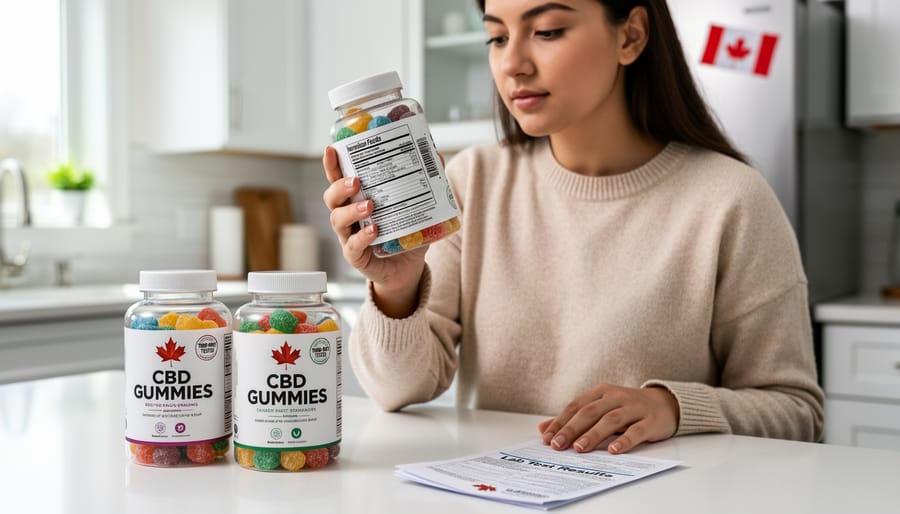
When shopping for CBD pain relief gummies in Canada, checking labels carefully is your first line of defense. Licensed products must display Health Canada authorization numbers and specific CBD content measured in milligrams. Look for clear dosing information that tells you exactly how much CBD is in each gummy, not just the entire package.
Third-party lab testing is crucial for quality assurance. Reputable brands provide Certificates of Analysis showing cannabinoid levels, potential contaminants like heavy metals or pesticides, and confirmation that THC levels stay within legal limits. These reports should be easily accessible, either printed on packaging or available through QR codes or company websites. When I started using CBD gummies, I learned to always request these lab results before purchasing. If a company hesitates to provide them, that’s a red flag.
Canadian regulations require accurate labeling, but understanding what you’re reading matters. Check manufacturing and expiry dates, ingredient lists for potential allergens, and storage instructions. The CBD supplement research landscape emphasizes transparency, so prioritize brands that openly share testing data and clearly explain their extraction methods. This diligence ensures you’re getting exactly what you’re paying for and helps you make informed choices about your pain management approach.
Getting Started: Your First Week with CBD Pain Relief Gummies
Starting your CBD journey for pain relief doesn’t have to feel overwhelming. When I first tried CBD gummies, I remember feeling uncertain about whether I was doing it right, so let me walk you through those important first days with some practical guidance.
Begin with a low dose, typically 5-10mg of CBD per gummy. Most Canadian products clearly label their CBD content, making it easy to start small. Take your first gummy in the evening when you’re home and can observe how your body responds without pressure or time constraints. This allows you to notice any effects, positive or subtle, without worrying about being at work or driving.
Give each dose at least 1-2 hours to take effect before considering more. CBD gummies need time to digest and enter your bloodstream, so patience is essential. Unlike pain medications that work quickly, CBD’s effects build gradually.
Keep a simple journal during your first week. Note the time you take your gummy, the dosage, when you notice effects beginning, any pain reduction, and how long relief lasts. Also track your sleep quality and overall mood, as these often improve alongside pain management. I found tracking incredibly helpful for recognizing patterns I might have otherwise missed.
During week one, maintain the same dosage and timing to establish a baseline. You might notice mild effects immediately, or it could take several days as CBD accumulates in your system. Both experiences are normal.
If after five to seven days you’re not experiencing adequate relief, consider increasing by 5mg increments. Wait another few days before adjusting again. Remember, finding your ideal dose is a personal process, and there’s no rush. Most people find their sweet spot within two to three weeks of consistent use.
CBD pain relief gummies can be a valuable addition to your pain management toolkit, but it’s important to keep your expectations grounded in reality. As we’ve explored throughout this guide, these products aren’t miracle solutions that will eliminate all discomfort overnight. Instead, they work best when viewed as one piece of a broader approach to wellness that might include physical therapy, lifestyle modifications, and consultations with healthcare professionals.
What makes CBD gummies particularly appealing is their accessibility and ease of use, especially for those of us in Canada who appreciate clear legal frameworks and quality-tested products. I’ve personally found that having realistic goals, like managing daily discomfort rather than expecting complete pain elimination, leads to much more satisfying experiences with CBD.
Remember that everyone’s body responds differently. What works wonderfully for your friend might not have the same effect on you, and that’s completely normal. Start low with your dosage, be patient with the process, and pay attention to how your body responds over several weeks rather than days.
If you’re considering trying CBD pain relief gummies, approach the decision thoughtfully. Research Canadian-licensed retailers, read those certificates of analysis, and don’t hesitate to reach out to customer service teams with questions. Your pain management journey is uniquely yours, and CBD might just be the supportive companion you’ve been looking for.
We’d love to hear about your experiences with CBD gummies. What has worked for you? What surprised you? Sharing our stories helps build a more informed, supportive community for everyone exploring CBD as a wellness option.