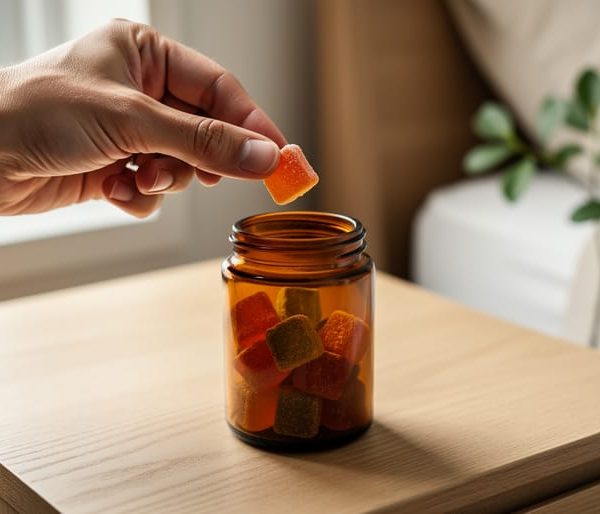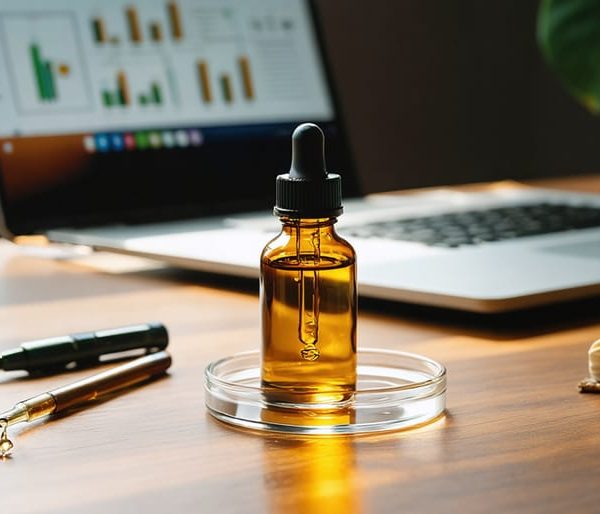

Start with 5-10mg of CBD oil taken 1-2 hours before bedtime, allowing enough time for your body to process it. Choose a full-spectrum product when possible—the combination of cannabinoids and terpenes often works more effectively than CBD isolate for sleep support.
Track your sleep patterns for at least two weeks before and after starting CBD. Note when you take it, the dosage, how long it takes to fall asleep, and how many times you wake during the night. This data helps you identify what’s actually working versus placebo effect.
Combine CBD with solid sleep hygiene practices—it’s not a magic bullet. Keep your bedroom cool and dark, avoid screens for an hour before bed, and maintain consistent sleep and wake times. I learned this the hard way after expecting CBD alone to solve years of tossing and turning.
In Canada, purchase only from federally licensed retailers or provincial cannabis stores to ensure you’re getting lab-tested products with accurate CBD concentrations. Health Canada regulations mean these products meet safety standards that grey-market options can’t guarantee.
Expect subtle improvements rather than instant results. Most people notice easier sleep onset within a week or two, but CBD won’t knock you out like prescription sleep aids. It works by reducing anxiety and promoting calmness—creating better conditions for natural sleep rather than forcing unconsciousness. If you see no changes after 3-4 weeks of consistent use at adequate doses, CBD might not be your solution.
Understanding Insomnia: More Than Just ‘Can’t Sleep’

The Real Cost of Sleepless Nights
If you’ve been lying awake at 3 AM staring at the ceiling, you know insomnia isn’t just about feeling tired. It’s the mental fog that makes simple tasks feel impossible, the irritability that strains your relationships, and the worry about what chronic sleep deprivation is doing to your long-term health.
I remember showing up to work after another sleepless night, forgetting basic details in meetings and snapping at colleagues who didn’t deserve it. The frustration compounds when you’ve already tried everything—melatonin, chamomile tea, meditation apps, blackout curtains, that $200 weighted blanket gathering dust in your closet. Your medicine cabinet becomes a graveyard of failed solutions.
Beyond the daily struggle, the health implications are real. Poor sleep is linked to weakened immunity, increased anxiety and depression, weight gain, and higher risks of serious conditions like heart disease. When prescription sleep medications come with their own concerns—dependency, grogginess, side effects—many Canadians are searching for gentler alternatives that work with their body’s natural rhythms rather than forcing sleep artificially.
How CBD Actually Affects Your Sleep

What the Research Actually Says
Let’s be honest: the research on CBD and sleep is still in its early stages, but what we do have is cautiously promising.
Several studies suggest CBD may help with sleep, though most have been relatively small. A 2019 study published in *The Permanente Journal* found that 66.7% of participants experienced improved sleep scores within the first month of CBD use. Another study showed that CBD at doses of 160mg helped participants sleep longer compared to placebo.
The catch? We’re still figuring out the “how” and “when.” Research indicates CBD might work best for sleep when insomnia is caused by anxiety, chronic pain, or stress rather than being a standalone sleep disorder. It appears to address underlying causes rather than acting as a traditional sedative.
What scientists believe is happening: CBD may interact with receptors in our endocannabinoid system that regulate our sleep-wake cycle, reduce anxiety that keeps us awake, and potentially influence REM sleep patterns. Some research also suggests it might help regulate cortisol, the stress hormone that can spike at night.
Here’s what we don’t know yet: optimal dosing (studies vary wildly from 25mg to 1,500mg), long-term effects of nightly use, and whether CBD works equally well for all types of insomnia. Most existing studies are short-term, lasting just a few weeks.
I’ve personally noticed that CBD helps me fall asleep when my mind is racing, but it’s not a magic knockout pill. Some nights it works beautifully; others, not so much. That variability is actually reflected in the research too—responses are quite individual.
The bottom line? CBD shows real potential, but if you’re expecting pharmaceutical-strength results, you might be disappointed. It’s more subtle than that.
CBD vs Traditional Sleep Aids: What’s Different?
When I first started exploring CBD for sleep, I was already familiar with the standard options—and their drawbacks. Traditional sleep aids fall into a few categories, each with distinct considerations.
Prescription medications like benzodiazepines and Z-drugs (zopiclone, for example) work quickly and effectively, but they come with significant dependency risks. Many people find themselves unable to sleep without them after regular use. They can also cause grogginess the next day, memory issues, and potentially dangerous interactions with alcohol or other medications.
Over-the-counter options like diphenhydramine (found in many sleep aids) might seem safer, but they often leave you feeling foggy in the morning. Plus, your body builds tolerance quickly, meaning they become less effective over time.
This is where CBD presents a different approach. Unlike traditional sleep medications, CBD doesn’t sedate you directly. Instead, it works with your body’s endocannabinoid system to address underlying issues like anxiety or discomfort that might be keeping you awake. It’s non-habit forming, which was a huge relief for me after hearing so many stories about prescription sleep aid dependency.
That said, CBD isn’t a magic bullet. It typically takes longer to notice effects compared to prescription options, and results vary significantly between individuals. In Canada, CBD is legal and regulated under the Cannabis Act, giving you access to quality-tested products—something worth considering when choosing natural alternatives.
The choice ultimately depends on your specific situation, but understanding these differences helps you make an informed decision.
Choosing the Right CBD Product for Sleep

Full Spectrum vs Isolate: Does It Matter for Sleep?
When I first started exploring CBD for sleep, I was overwhelmed by the choices: full spectrum, broad spectrum, isolate—what did it all mean? Here’s what I learned through my own trial and error.
**Full spectrum CBD** contains all the naturally occurring compounds from the hemp plant, including trace amounts of THC (up to 0.3% in Canada), along with other cannabinoids like CBN and CBG, plus terpenes. These compounds work together in what’s called the “entourage effect,” potentially enhancing CBD’s effectiveness.
**CBD isolate** is pure CBD—nothing else. It’s ideal if you’re concerned about THC showing up on drug tests or simply prefer a single-compound approach.
**Broad spectrum** sits in the middle, offering multiple cannabinoids and terpenes but with THC removed.
For sleep specifically, research suggests the entourage effect may provide stronger benefits. Minor cannabinoids like CBN have their own sedative properties, while terpenes such as myrcene and linalool can promote relaxation. I personally noticed better sleep quality with full spectrum products compared to isolate, though everyone responds differently.
That said, isolate isn’t ineffective—it simply works through CBD alone. Some people find it perfectly adequate for their sleep needs, especially at higher doses.
My advice? If you’re new to CBD and not concerned about trace THC, start with full spectrum. If you’re subject to drug testing or prefer maximum control over what you’re consuming, isolate is your safer bet. Both are legal in Canada when derived from licensed sources.
What to Look for on Canadian CBD Labels
When shopping for CBD products in Canada, understanding labels is your first line of defense against low-quality products. Health Canada requires all cannabis products to display specific information, but knowing what else to look for makes all the difference.
Start with the basics: the label should clearly state the CBD content in milligrams (not just percentages), THC levels, and the product’s lot number. Licensed producers must include their license number, which you can verify on Health Canada’s website.
Here’s where it gets important for sleep—look for a Certificate of Analysis (COA). This third-party lab report confirms what’s actually in the bottle. A good COA will show cannabinoid content, confirm the absence of pesticides, heavy metals, and solvents, and verify there are no microbial contaminants.
I learned this the hard way when I initially grabbed the cheapest option without checking. The product had inconsistent effects, and I later discovered the company didn’t provide COAs. Now I won’t purchase without one.
Also check the extraction method—CO2 extraction is generally preferred—and the carrier oil used. MCT oil is common and well-absorbed, which matters when you’re trying to get quality sleep at a reasonable hour.
Finding Your Sleep-Supporting CBD Dose
When to Take CBD for Better Sleep
Timing your CBD intake can make a real difference in how well it works for your sleep. If you’re using CBD oil or tinctures, I’ve found that taking them about 30-60 minutes before bedtime works best—this gives the CBD time to absorb into your system. For capsules, bump that up to 60-90 minutes since they need to pass through your digestive system first.
The type of sleep issue you’re dealing with also matters. If you struggle to fall asleep initially (sleep onset insomnia), taking CBD right before bed is your best bet. But if you find yourself waking up at 3 a.m. and can’t get back to sleep (sleep maintenance insomnia), you might benefit from taking CBD earlier in the evening—around dinnertime—so it’s working throughout the night.
When I first started experimenting with CBD for my occasional sleepless nights, I made the mistake of taking it too early and felt sleepy during my evening routine. Now I’ve dialed in my timing, and it’s become part of my wind-down ritual. Keep a simple sleep journal for the first week or two to track what timing works best for your body—everyone’s different, and finding your sweet spot takes a bit of trial and error.

What to Expect: Real Talk About CBD and Sleep
Troubleshooting When CBD Isn’t Working
If CBD hasn’t been helping your sleep after a couple of weeks, don’t give up just yet. There are several common reasons why it might not be working as expected.
**Product quality matters more than you might think.** In Canada, look for products with clear third-party lab testing and a National Product Number (NPN) or Health Canada authorization. I learned this the hard way when a budget product I tried did absolutely nothing—turns out the CBD content was nowhere near what the label claimed.
**Your dose might be off.** If you started low (which is smart), you may need to gradually increase it. Conversely, some people find that less is actually more with CBD. Try adjusting your dose up or down in small increments every few days.
**Timing is crucial.** Taking CBD too early might mean it wears off before bedtime. Most people find that taking it 30-60 minutes before bed works best, but experiment to find your sweet spot.
**Consider what else is going on.** CBD isn’t a magic bullet. If you’re drinking coffee at 4 PM, scrolling your phone in bed, or dealing with unmanaged stress, CBD alone probably won’t solve your sleep issues. Think of it as one tool in your sleep toolkit.
**Give it proper time, but know when to pivot.** While some people notice improvements within days, others need 2-4 weeks. If you’ve tried quality products at various doses for a month with zero improvement, it might be worth exploring other options or consulting a healthcare provider about underlying sleep disorders.
Maximizing CBD’s Sleep Benefits: Beyond Just Taking It
CBD isn’t a magic pill that works in isolation—it’s most effective when you support it with good sleep habits. Think of CBD as one helpful tool in your sleep toolkit rather than the whole solution.
Start with your bedroom environment. Keep it cool (around 18°C is ideal), dark, and quiet. I learned this the hard way after wondering why my CBD wasn’t working as well—turns out my room was way too warm and my phone notifications were disrupting my sleep cycles throughout the night.
Consistency matters tremendously. Try to take your CBD at the same time each evening, about 30-60 minutes before your target bedtime. This helps establish a routine that signals your body it’s time to wind down. Pair this with other calming activities like reading, gentle stretching, or meditation.
Screen time is a big one. The blue light from phones and tablets can counteract CBD’s calming effects by suppressing melatonin. I’ve found setting a “phone curfew” an hour before bed makes a noticeable difference in how well my CBD works.
Also consider caffeine timing. Even if CBD helps you relax, that afternoon coffee can still interfere with sleep quality. Try cutting off caffeine by 2 PM and see if your CBD becomes more effective.
Finally, be patient with yourself. These complementary practices work together with CBD to create better sleep conditions. Some nights will be better than others, and that’s completely normal.
Safety Considerations and When to Talk to Your Doctor
While CBD is generally well-tolerated, it’s not without considerations—especially when you’re dealing with something as important as your sleep health.
CBD can interact with certain medications, particularly those that carry a “grapefruit warning.” This includes some blood thinners, heart medications, and antidepressants. CBD affects the same liver enzymes that process these drugs, potentially changing how your body metabolizes them. If you’re taking any prescription medications, a conversation with your doctor or pharmacist before starting CBD isn’t just recommended—it’s essential.
Certain groups should exercise extra caution. If you’re pregnant or breastfeeding, current research doesn’t provide enough safety data to recommend CBD use. People with liver conditions should also consult their healthcare provider, as CBD is processed through the liver. Additionally, if you’re taking other sedating medications or supplements, combining them with CBD could enhance drowsiness beyond what’s safe for activities like driving.
Here’s my take from experience: I initially thought I could just try CBD without mentioning it to anyone. But when I went for my regular check-up and casually mentioned my CBD routine, my doctor pointed out a potential interaction I hadn’t considered with another supplement I was taking. That conversation was invaluable.
If you’ve been dealing with insomnia for more than a few weeks, or if your sleep issues are significantly impacting your daily life, professional guidance matters. Chronic insomnia can sometimes signal underlying health conditions that need addressing. A healthcare provider can help determine whether CBD is appropriate for your situation, suggest an appropriate starting dose based on your health profile, and monitor how it’s working for you.
In Canada, you’re fortunate to have healthcare providers who are increasingly knowledgeable about cannabis products, so don’t hesitate to have that conversation.
If you’re lying awake right now, reading this article at 2 AM, I want you to know that CBD might help—but it’s not a magic pill. After years of writing about cannabis and CBD in Canada, and dealing with my own occasional sleep struggles, I’ve learned that finding what works for insomnia is deeply personal.
CBD shows genuine promise for sleep issues, particularly if anxiety or discomfort keeps you awake. The research is still emerging, but many Canadians report meaningful improvements in their sleep quality. That said, CBD works best as part of a broader sleep strategy—good sleep hygiene, consistent routines, and addressing underlying issues remain essential.
If you decide to try CBD for insomnia, start low (5-10mg) and go slow. Give each dose at least a week before adjusting. Keep a simple sleep journal. And please, talk with your healthcare provider, especially if you’re taking other medications.
Remember that what works for your friend or neighbour might not work for you. Some people find relief with full-spectrum oils, others prefer isolates or specific ratios with THC. It may take experimentation to find your formula.
The beauty of Canada’s legal framework is that you have access to regulated, tested products and the freedom to explore safely. Whether CBD becomes a nightly ritual or just an occasional tool, you’re taking an active role in your sleep health—and that matters. Be patient with yourself, stay curious, and don’t give up on finding rest.