
Traveling to Canada with your dog requires navigating federal import regulations that become significantly more complex when your pet uses CBD products. Canadian Border Services Agency classifies CBD as a controlled substance, meaning even veterinarian-prescribed CBD oil in your dog’s system or luggage can trigger border complications, potential product confiscation, and entry delays.
Standard entry requirements mandate your dog must be at least eight months old, have current rabies vaccination documentation, and appear healthy upon inspection. The rabies certificate must include vaccination date, vaccine product information, duration of immunity, and your veterinarian’s signature. Dogs arriving from countries with endemic rabies face additional scrutiny, though most U.S. entries proceed smoothly when documentation is complete.
The CBD complication centers on possession rather than metabolism. You cannot legally transport CBD products across the Canadian border, even with prescriptions. This creates a critical planning challenge: maintaining your dog’s therapeutic regimen while complying with federal law. Some pet owners stop CBD treatment weeks before travel to avoid trace amounts triggering concerns, while others research Canadian veterinary alternatives immediately upon arrival.
Understanding Canada’s zero-tolerance approach to unauthorized cannabis products protects you from preventable border issues. Whether your dog uses CBD for anxiety, pain management, or seizure control, advance planning ensures both legal compliance and your pet’s wellbeing. This guide clarifies baseline entry requirements, explains CBD-specific restrictions, and provides practical solutions for maintaining your dog’s health throughout your Canadian stay.
Canada’s Basic Requirements for Bringing Dogs Across the Border
Required Documentation You’ll Need at the Border
When you arrive at the Canadian border with your dog, having the right documentation organized and easily accessible can make the crossing smooth and stress-free. Here’s exactly what you’ll need to have on hand.
The most critical document is your dog’s rabies vaccination certificate. This must be an original signed certificate from a licensed veterinarian, not a photocopy. The certificate needs to show your dog’s breed, age, sex, colouring, and any distinguishing marks. Importantly, the rabies vaccine must have been administered at least 30 days before your entry into Canada, and it must still be valid. Most rabies vaccines are good for one to three years, so double-check the expiration date well before your trip.
You’ll also want to bring your dog’s complete veterinary health records. While not always required at the border, having documentation of recent health checks and vaccinations can be helpful if questions arise. This is especially important if your dog appears unwell or if border officers have concerns.
Here’s a practical tip from experience: create a dedicated travel folder or plastic sleeve for all your dog’s documents. Keep it separate from your personal travel documents so you can hand it over quickly when asked. I learned this the hard way during a stressful border crossing where I was fumbling through multiple bags while cars lined up behind me.
Make copies of everything and store them separately from the originals. Take photos of all documents on your phone as a backup. This redundancy has saved travelers when documents were accidentally misplaced during the journey.
What Happens During the Actual Border Inspection
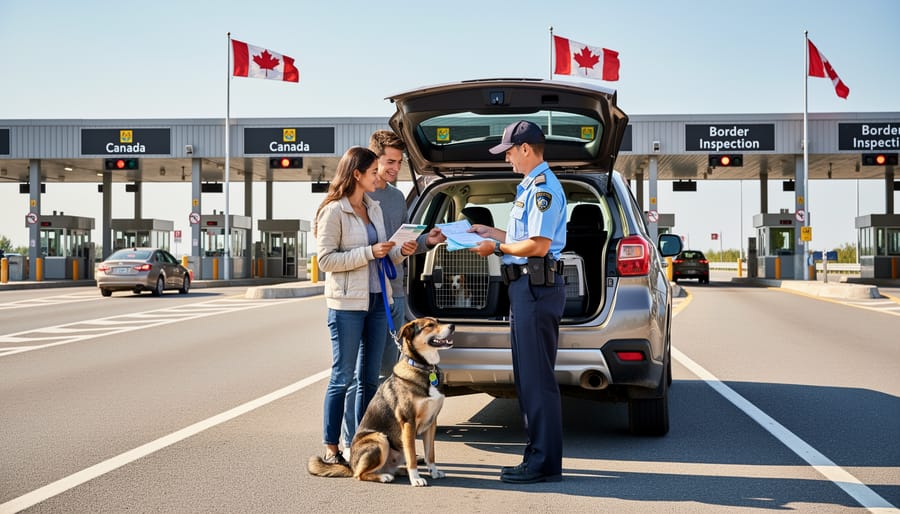
When you arrive at the Canadian border with your dog, the inspection process is typically straightforward but thorough. Border officials will ask to see your dog’s rabies vaccination certificate, which must show the vaccine was administered at least 30 days before entry (for adult dogs). They’ll verify your dog appears healthy and matches the description on the documentation.
Expect questions like: “How long has your dog had this vaccination?” “Where are you traveling from?” and “Is your dog currently on any medications?” This last question is where CBD use becomes relevant. While officials may not specifically ask about CBD, if your dog is visibly using a product or you volunteer the information, it could trigger additional scrutiny.
The actual physical inspection is usually brief. Officers will look at your dog to confirm they appear in good health, free from obvious signs of illness or distress. They’re primarily concerned with rabies prevention and ensuring animals don’t pose health risks.
Here’s my personal observation from talking with travelers: most border inspections take just five to ten minutes for pets with proper documentation. However, mentioning CBD or having visible CBD products can extend this considerably, as officials determine whether the product contains THC or violates cannabis import regulations. The key is having all required documents readily accessible and being prepared to answer basic health-related questions about your pet.
The CBD Complication: Can You Bring Pet CBD Products Into Canada?
Understanding Canada’s Cannabis Act and Pet Products
When I first started researching CBD products for pets, I was surprised to learn how strictly Canada’s Cannabis Act regulates these items, even for our furry companions. Understanding these rules is essential if you’re planning to bring your dog and their CBD products across the border.
In Canada, pet CBD products fall under the same federal cannabis legislation that governs human consumption. This means any CBD product, regardless of whether it’s for people or pets, must contain less than 0.3% THC to be legal. However, here’s where it gets tricky: most CBD products marketed for pets in other countries often aren’t licensed for sale in Canada, even if they meet the THC threshold.
Licensed cannabis retailers in Canada are the only legal source for CBD products, and currently, there are very few specifically formulated and approved for animal use. The products that do exist must come from licensed producers who follow strict quality control and testing protocols. This regulatory framework ensures product safety but creates a significant gap in the market for pet-specific CBD options.
What does this mean for travelers? Essentially, you cannot legally bring CBD pet products across the Canadian border, even if they’re legal where you’re coming from. Cannabis products, including CBD, cannot be transported internationally into Canada under any circumstances. Border officials take this seriously, and attempting to bring these products could result in confiscation, fines, or more severe consequences that could affect your entry into the country.
The Practical Reality at the Border
Let’s talk honestly about what happens when you arrive at the Canadian border with your CBD-using dog. This is where theory meets reality, and the situation requires careful consideration.
When border agents ask if you’re bringing any medications or supplements for your pet, you face a decision point. Some travelers choose not to mention CBD products, particularly if they’ve already discontinued use before travel. However, this approach carries risks. Border agents have authority to search vehicles and luggage, and undeclared cannabis products—even those legal in your departure location—can result in serious consequences including denial of entry, vehicle seizure, or bans on future Canadian travel.
The safer approach is transparency, but understand that declaring CBD pet products may trigger additional questioning and delays. Border agents will likely examine the product labels, THC content documentation, and may confiscate items even if they technically meet legal thresholds. The practical reality is that discretion lies with individual officers, and their interpretation of cannabis regulations can vary.
From my conversations with pet owners who’ve made this crossing, those who discontinued CBD products at least a week before travel and packed documentation of their pet’s health conditions had the smoothest experiences. They could honestly state they weren’t bringing cannabis products while having veterinary records explaining their pet’s treatment history.
Consider this a risk-versus-benefit assessment. The consequences of complications at the border—missed reservations, travel bans, legal expenses—often outweigh the benefits of continuing CBD during travel. Most pets can safely pause CBD therapy for short periods, particularly with veterinary guidance and alternative comfort measures in place.
Veterinary Documentation for Pets on CBD Therapy
What Your Vet Can Document About CBD Use
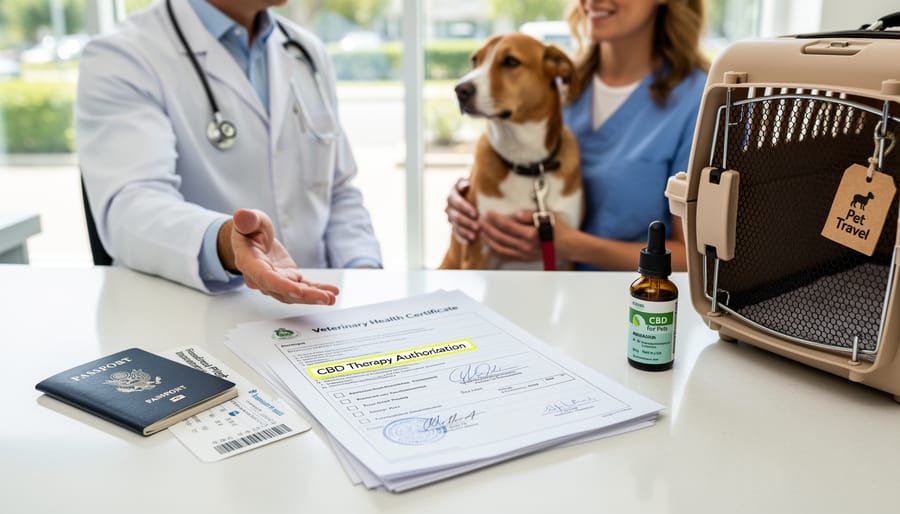
Your veterinarian plays an important role in documenting your dog’s health for border crossing, but there are some limitations when it comes to CBD. Most Canadian veterinarians cannot legally prescribe CBD for animals, as it’s not currently approved by Health Canada for veterinary use. However, your vet can still provide valuable documentation that supports your travel plans.
What your veterinarian can document includes your dog’s underlying health condition that you’re managing with CBD, such as anxiety, arthritis, or seizures. They can note your dog’s overall health status, current medications they have prescribed, and confirm that your pet is fit to travel. If your dog has been using CBD under your own management, your vet can acknowledge this in their records without endorsing or prescribing it.
When requesting documentation, ask your vet for a letter on official letterhead that includes your dog’s diagnosis, conventional medications or treatments they’ve recommended, and a statement that your dog is healthy enough for international travel. Keep the focus on the medical condition rather than the CBD treatment itself.
I’ve found that most vets are willing to provide honest, straightforward documentation about your dog’s health status, even if they cannot officially recommend CBD. This approach gives you legitimate veterinary support while respecting the current regulatory limitations around cannabis products for pets in Canada.
Alternative Documentation Strategies
If your dog uses CBD for health support, you might be wondering how to handle documentation when crossing the border. The good news is that you can focus on your pet’s underlying condition rather than the specific treatment method.
Work with your veterinarian to obtain documentation that describes your dog’s health needs in general terms. For example, if your dog uses CBD for anxiety, your vet certificate can note “anxiety management” or “behavioral support” without listing specific therapies. Similarly, conditions like arthritis or inflammation can be documented as such, focusing on the diagnosis rather than the treatment protocol.
Keep a general health summary that outlines your dog’s medical history and any ongoing health concerns. This approach gives border officials the information they need about your pet’s wellbeing without raising unnecessary questions about controlled substances. I’ve found that border agents are primarily concerned with preventing disease transmission and verifying rabies vaccination, not conducting detailed reviews of ongoing therapies.
Consider discussing with your vet whether alternative supplements available in Canada might support your dog’s needs during your stay. Having this conversation before you travel gives you time to research options and potentially transition your pet if necessary.
Smart Strategies: Ensuring Your Pet’s CBD Needs Are Met in Canada
Where to Buy Veterinary CBD Products in Canada
Once you’ve arrived in Canada with your dog, you may want to continue their CBD therapy or explore options if you’re planning an extended stay. The good news is that Canada has a well-regulated market for pet CBD products, though availability and selection can vary significantly by province.
In Canada, veterinary CBD products are available through several channels. Some veterinary clinics now carry CBD products specifically formulated for pets, and your vet can provide guidance on appropriate dosing and product selection for your dog’s specific needs. Many pet specialty stores also stock CBD treats, oils, and supplements, though quality can vary considerably. For the widest selection and most reliable products, you’ll want to seek out licensed CBD retailers who source from Health Canada-approved suppliers.
When shopping for CBD for dogs in Canada, look for products that include third-party lab testing results, clear ingredient lists, and proper dosing information. Canadian regulations require that pet CBD products contain less than 0.3% THC, so always verify this on the label.
I’ve personally found that establishing a relationship with a local veterinarian who understands CBD therapy can be incredibly helpful, especially if you’re traveling from another country. They can review your dog’s existing treatment plan and recommend comparable Canadian products or adjustments if needed. Many vets are becoming more open to CBD as research continues to support its benefits for various conditions in pets.
Finding CBD-Friendly Veterinarians in Canada
Once you’ve arrived in Canada with your dog, finding a supportive veterinary team becomes essential, especially if your pet relies on CBD therapy. Start by searching online directories and reading reviews specifically mentioning CBD or holistic approaches. Many CBD-friendly veterinarians now openly list cannabis therapy as part of their practice offerings.
When I first moved to Ontario, I called several clinics directly and asked if they had experience with CBD products for pets. Don’t be shy about this conversation—veterinarians knowledgeable about CBD therapy appreciate clients who are proactive about their pet’s care. Ask about their familiarity with dosing, product quality considerations, and any monitoring protocols they recommend.
Canadian veterinary associations have been increasingly open to discussing cannabis therapy, making it easier to find informed practitioners. Look for vets who attend continuing education on cannabinoid medicine or who are members of holistic veterinary groups. Some provinces have more progressive attitudes than others, so urban areas typically offer more options.
Remember that even CBD-supportive veterinarians must work within Health Canada’s regulatory framework, so they can only recommend products approved for veterinary use in Canada. Building this relationship before you need urgent care ensures continuity in your dog’s wellness plan.
Province-Specific Considerations and Regional Variations
While Canada’s federal regulations govern overall pet entry requirements, it’s worth noting that your experience may vary slightly depending on which province you’re entering and where you’ll be staying with your dog.
The major entry points—Toronto Pearson International Airport in Ontario, Vancouver International Airport in British Columbia, and Montreal-Trudeau International Airport in Quebec—all follow the same federal CFIA guidelines. However, the availability of veterinary services that are knowledgeable about or open to CBD varies considerably by region. In my experience speaking with pet owners across the country, major urban centers like Toronto, Vancouver, and Montreal tend to have more veterinarians who are at least familiar with CBD discussions, even if they can’t legally recommend it.
If you’re planning to stay in a more rural area or smaller province, finding a veterinarian who’s comfortable discussing CBD alternatives or holistic approaches may require more research. I’d recommend connecting with local Facebook groups or pet owner communities in your destination province before you arrive to get recommendations for open-minded veterinary clinics.
Additionally, some provinces have stricter enforcement attitudes toward cannabis products generally, which could theoretically impact how border services officers approach CBD pet products, though this remains speculative. What doesn’t vary is the legal reality: CBD pet products aren’t approved anywhere in Canada, regardless of province. Your safest approach is consistent across all regions—arrive with proper documentation for your dog and a plan that doesn’t rely on bringing CBD products across the border.
Common Questions From Pet Owners Planning to Visit Canada
I’ve traveled across the border with nervous pets before, and I know the questions that keep you up at night before a trip. Let me address the concerns I hear most often from pet owners planning Canadian adventures with CBD-using dogs.
What happens if my dog needs emergency vet care in Canada and they’re on CBD?
Be upfront with Canadian veterinarians about your dog’s CBD use. While you can’t bring CBD products into Canada, vets need accurate medication histories to provide safe treatment. Canadian veterinarians are professionals who prioritize animal welfare over enforcement concerns. Document your pet’s CBD dosage, frequency, and reason for use before traveling. If your dog experiences withdrawal symptoms or a flare-up of the condition CBD was managing, this information helps vets provide appropriate alternative care. Many Canadian clinics have experience with pets transitioning off CBD or managing similar conditions with legal alternatives.
How long can I stay in Canada with my dog?
Most visitors can stay up to six months, but your dog’s health needs should influence this decision. If your pet relies heavily on CBD for a serious condition, shorter visits reduce the risk of symptom recurrence. For dogs using CBD preventatively or for mild issues, longer stays are more manageable with proper planning. Consider scheduling a vet consultation within your first week in Canada to establish care and discuss management strategies for your pet’s condition while you’re visiting.
Can I bring my dog back to the US without issues?
Returning to the US is straightforward from a legal perspective, as CBD pet products remain legal there. US Customs primarily focuses on what you’re bringing into the country, not your pet’s prior supplement use. You can resume CBD therapy immediately upon return. Keep your veterinary records accessible in case questions arise about your pet’s health during travel.
What if border officials confiscate CBD products?
Surrender them cooperatively. Arguing won’t change the outcome and creates unnecessary stress. Confiscation doesn’t typically result in fines for first-time travelers with small personal-use quantities, especially when you’re forthcoming about the products. Consider this a known cost of traveling to Canada with a CBD-using pet, and plan your pet’s care accordingly rather than risking legal complications.
Bringing your dog into Canada doesn’t have to be stressful, even when CBD is part of the picture. As we’ve covered, the standard entry requirements for healthy dogs are refreshingly straightforward: proof of rabies vaccination and a health certificate are typically all you need. Where things get trickier is when your pet is on CBD therapy, which can’t legally cross the Canadian border due to cannabis regulations that apply even to hemp-derived products.
The good news? With some planning ahead, this challenge is absolutely manageable. You have solid options. If your dog needs to continue CBD therapy during your Canadian stay, finding a veterinarian in Canada who can prescribe appropriate products is your best route. Canadian vets are increasingly familiar with cannabinoid therapies, and legal CBD products formulated specifically for pets are available here. Alternatively, consulting with your current veterinarian about temporary treatment adjustments or alternatives might work for shorter trips.
I can’t stress enough how important it is to be upfront at the border. Trying to bring CBD products across, even unintentionally, can create serious complications that are entirely avoidable. Border officers appreciate honesty, and knowing the rules protects both you and your pet.
From my experience helping Canadians navigate CBD regulations, I’ve learned that informed travelers are confident travelers. Yes, CBD adds an extra layer to your planning, but thousands of pet owners successfully manage this situation every year. Do your research, connect with a Canadian vet if needed, and pack your patience along with your dog’s favorite toys. You’ve got this.