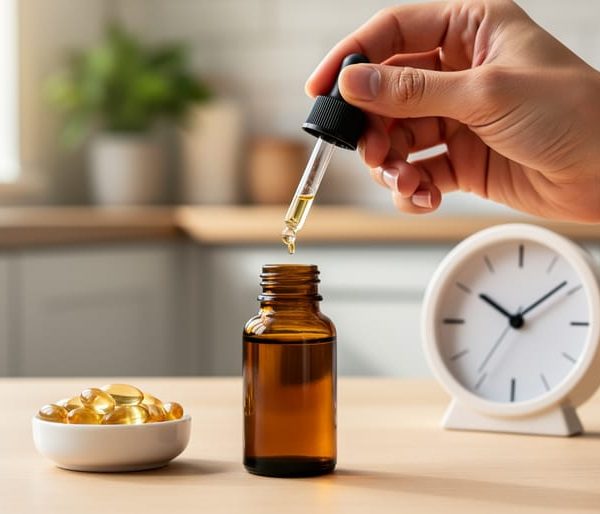
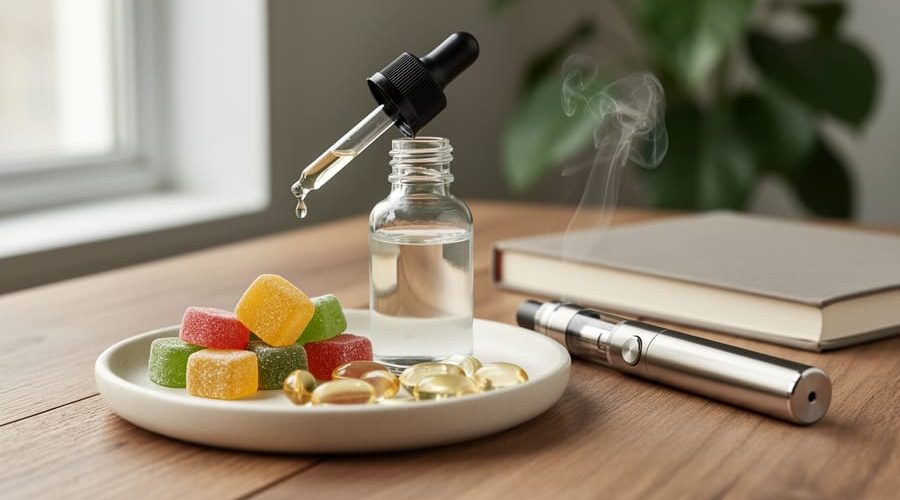
Start with one-quarter of the dose listed on your product label, wait two hours, and assess how you feel before taking more. This conservative approach protects you from overconsumption while helping you discover your personal threshold—because CBD dosing isn’t one-size-fits-all, and what works for your friend might be completely wrong for you.
Your delivery method determines how much CBD actually reaches your bloodstream. When you vape CBD, up to 56% enters your system within minutes. Take that same amount as a gummy, and only 6-15% makes it through your digestive system over the next two hours. This bioavailability difference explains why a 10mg vape session feels stronger than a 25mg edible, and why following generic dosage advice often leads to disappointing results.
Canadian regulations require products to display total CBD content, but they don’t tell you how to adjust doses between delivery methods. I learned this the hard way when starting your CBD journey five years ago—I assumed my sublingual oil dose would translate directly to capsules. It didn’t. I felt nothing for three days until I doubled my capsule dose and finally experienced the calm focus I’d been seeking.
Track your doses in a simple journal or phone note. Record the delivery method, exact milligrams, time taken, and effects felt within four hours. After one week, patterns emerge. You’ll notice your morning sublingual dose might differ from your evening topical application, or that your optimal edible dose sits higher than your tincture dose.
This article breaks down precise starting doses and adjustment protocols for each delivery method available in Canada, removing the guesswork from your CBD routine.
Why Delivery Method Changes Everything About CBD Dosage
Here’s something I wish someone had told me when I first started using CBD: the delivery method you choose matters just as much as the dose itself. I learned this the hard way after wondering why my 25mg CBD capsule felt completely different from my friend’s 25mg vape experience.
The key concept here is CBD bioavailability, which is simply the amount of CBD that actually makes it into your bloodstream where it can work. Not all the CBD you consume gets absorbed—your body’s filtering systems, digestive processes, and the product format all play a role in determining how much actually becomes available for use.
When you swallow CBD in an oil or capsule, it travels through your digestive system and liver before reaching your bloodstream. This journey significantly reduces the amount that survives—typically only 6-15% of what you consumed. So if you take a 50mg CBD capsule, your body might only use about 5-8mg of actual CBD.
Compare that to vaping or inhaling CBD, where the compounds enter your bloodstream directly through your lungs, bypassing digestion entirely. Bioavailability jumps to around 30-40% with this method, meaning a 10mg vaped dose could deliver similar effects to that 50mg capsule.
This explains why product labels in Canada show such varying concentrations across different formats. Health Canada requires clear labeling of CBD content, but doesn’t account for bioavailability differences on packaging. A tincture held under your tongue (sublingual) offers 20-30% bioavailability because it absorbs through mucous membranes, while topicals work locally and don’t enter your bloodstream at all.
Understanding these differences completely changed my approach to dosing. Instead of feeling frustrated that products weren’t working, I realized I needed to adjust my expectations and doses based on the delivery method. In Canada, you’ll find CBD products ranging from 1mg to 30mg per dose depending on the format, and now those varying concentrations make perfect sense.
The bottom line: your delivery method determines how much CBD your body can actually use, which means identical milligram amounts can produce very different experiences.
CBD Oil and Tinctures: The Most Flexible Dosing Option
Starting Doses for CBD Oil (Canadian Products)
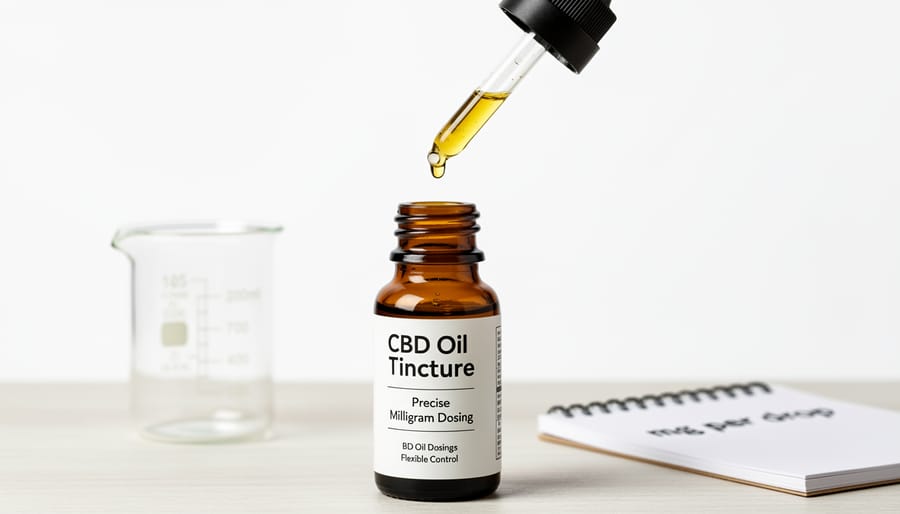
When I first started exploring CBD oils available in Canada, I was overwhelmed by the different concentrations and bottle sizes. Most Canadian CBD oils fall within the 10mg-25mg per milliliter concentration range, which is actually perfect for beginners because it allows for gradual increases without dramatic jumps.
Let’s break down how to actually measure your dose. Most CBD oil bottles come with a dropper, and here’s what you need to know: a full dropper typically holds about 1 milliliter of liquid. If you have a 10mg/mL oil, one full dropper gives you 10mg of CBD. For a 25mg/mL oil, that same full dropper delivers 25mg.
For absolute beginners, I recommend starting with 5-10mg once daily. With a 10mg/mL oil, this means filling your dropper halfway (0.5mL) to get 5mg, or using a full dropper for 10mg. If you’re using a stronger 25mg/mL concentration, you’ll want to use less—about one-quarter to one-third of a dropper to achieve that 5-10mg starting range.
Here’s a practical tip I learned through trial and error: hold the oil under your tongue for 60-90 seconds before swallowing. This sublingual method allows for better absorption and more consistent effects.
Take this starting dose at the same time each day for at least three days before adjusting. Pay attention to how you feel, and if you’re not noticing the desired effects, increase by 5mg increments every few days. Most Canadians find their sweet spot somewhere between 10-40mg daily, though everyone’s different.
How to Adjust Your Oil Dosage Week by Week
Finding your ideal CBD dose is a gradual process, not an instant solution. The key is patience and consistency. Here’s a practical week-by-week approach that works for most people.
Start with your chosen delivery method’s recommended beginner dose and stick with it for 3-5 days before making any changes. This waiting period is crucial because it takes time for your body to respond, especially with oils and capsules. Many people make the mistake of increasing too quickly, then can’t tell what dose actually helped.
After your initial trial period, assess how you’re feeling. If you’re noticing some improvement but not quite where you want to be, increase by 2-5mg. For oils, this typically means adding one extra drop. If you’re using a 1000mg oil, each drop contains roughly 1-2mg of CBD, depending on the bottle size. For capsules, you might move from a 10mg to a 15mg option.
When I started my CBD journey, I was admittedly impatient. I began with 10mg of oil twice daily for my sleep issues. After three days of no noticeable change, I jumped to 25mg, which left me feeling slightly foggy. I stepped back to 15mg and stayed there for a full week. That’s when I noticed I was falling asleep faster and waking less frequently. After two weeks at 15mg, I tried 20mg and found my sweet spot.
Continue this pattern, increasing every 5-7 days if needed, until you notice meaningful improvement. Most Canadians find their optimal dose between 15-40mg daily, though your personal target may differ based on individual factors.
Why Holding It Under Your Tongue Actually Matters
When I first started using CBD oil, I’d just swallow it right away—and wondered why I wasn’t getting the results people raved about. Turns out, the way you take CBD oil dramatically affects how much your body actually absorbs. Proper sublingual absorption techniques can make a 30-40% difference in bioavailability, which means you might need significantly less product to achieve the same effects.
Here’s what happens: the tissue under your tongue is rich in blood vessels that allow CBD to enter your bloodstream directly, bypassing your digestive system where much of it gets broken down. When you hold the oil under your tongue for 60-90 seconds, you’re maximizing this direct absorption pathway. Swallow immediately, and you’re forcing your CBD through the digestive route where stomach acid and liver enzymes reduce how much actually reaches your bloodstream.
This is why someone who properly uses sublingual method might need only 15mg to feel effects, while someone swallowing the same product might require 25mg. Master the technique first, then adjust your dose accordingly.
CBD Edibles and Capsules: When Patience Pays Off
Starting Doses for Edibles and Capsules
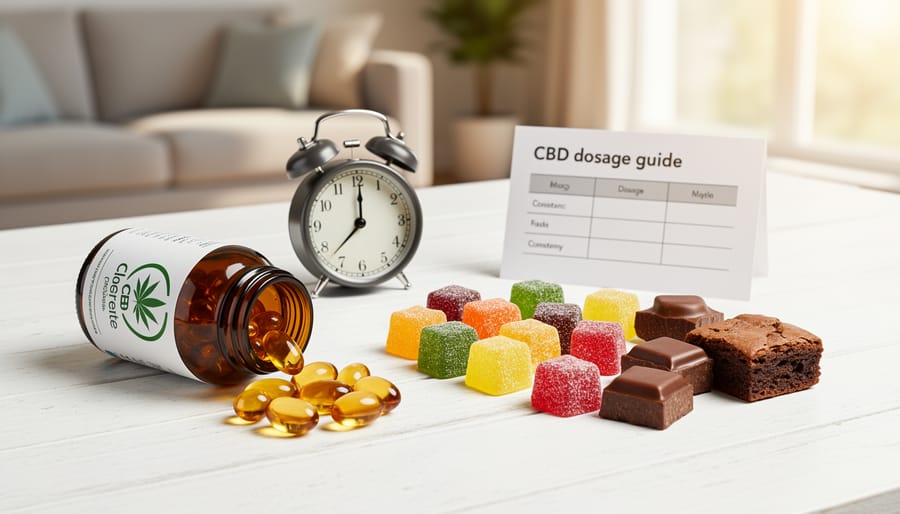
When it comes to edibles and capsules, patience really is a virtue. These CBD products travel through your digestive system before entering your bloodstream, which means they undergo significant breakdown along the way. Because of this lower bioavailability compared to oils or vaping, you’ll typically need a higher starting dose to feel effects.
For most beginners, I recommend starting with 20-40mg of CBD in edible or capsule form. If you’re particularly sensitive to supplements or have a smaller body weight, begin at the lower end of that range. Those with more experience using other CBD delivery methods might lean toward 40mg as their starting point.
Timing is everything with edibles and capsules. Plan to take your dose with food, preferably something containing healthy fats, as this can enhance absorption. Then, settle in for the wait. The onset period typically ranges from 1-2 hours, though I’ve personally experienced effects taking up to 90 minutes depending on what I’d eaten that day.
During this waiting period, resist the temptation to take more. I can’t stress this enough because it’s where most newcomers go wrong. Set a timer if needed, and track how you feel throughout the process. Keep notes on when you took the dose, what you ate, and when effects began.
The effects from edibles and capsules also last considerably longer than other methods, often 6-8 hours, making them ideal for sustained relief throughout your day or night.
The Food Factor: Why What You Eat Changes Your Dose
Here’s something I learned the hard way: I was carefully tracking my CBD dosage for weeks, getting inconsistent results, until I realized I was sometimes taking it with breakfast and other times on an empty stomach. That inconsistency was throwing everything off.
CBD is fat-soluble, which means it absorbs much better when you take it with fatty foods. Research shows that consuming CBD with fat can increase absorption by 3 to 5 times compared to taking it on an empty stomach. This isn’t just a minor detail – it can dramatically affect how much CBD you actually need.
For practical application, try pairing your CBD with foods containing healthy fats like avocado, nuts, yogurt, or even just a spoonful of peanut butter. If you take CBD oil in the morning, have it with your breakfast rather than before. When using capsules, take them with a meal instead of between meals.
The key to finding your optimal dose is consistency. Choose one approach – either always with food or always without – and stick with it for at least two weeks while you’re adjusting your dosage. Once you find what works, maintain that routine. If you’ve been taking CBD without food and want to switch to taking it with meals, you’ll likely need to reduce your dose by about half to account for the increased absorption.
Adjusting When Effects Last Too Long (Or Not Long Enough)
If your CBD edible effects wear off too quickly, or they’re lasting uncomfortably long, you’re not stuck with that experience. When effects fade within 2-3 hours instead of the typical 4-6, try increasing your dose by 2.5-5mg at your next session. I learned this the hard way when my initial 5mg dose barely lasted through my morning, leaving me reaching for a second dose by lunchtime.
On the flip side, if effects linger too long or feel too intense, reduce your next dose by half. Some Canadians find success with splitting their daily amount into smaller doses throughout the day rather than taking one larger serving. For example, instead of 10mg once daily, try 5mg in the morning and 5mg in the afternoon. This approach maintains steadier levels without the peaks and valleys.
Keep a simple log noting your dose, timing, and how long effects lasted. After three consistent trials at the same dose, you’ll have enough data to make informed adjustments. Remember that edibles metabolize slowly, so resist the urge to redose within 4 hours, even if effects seem minimal. Building your ideal dosing schedule takes patience, but the personalized results are worth it.
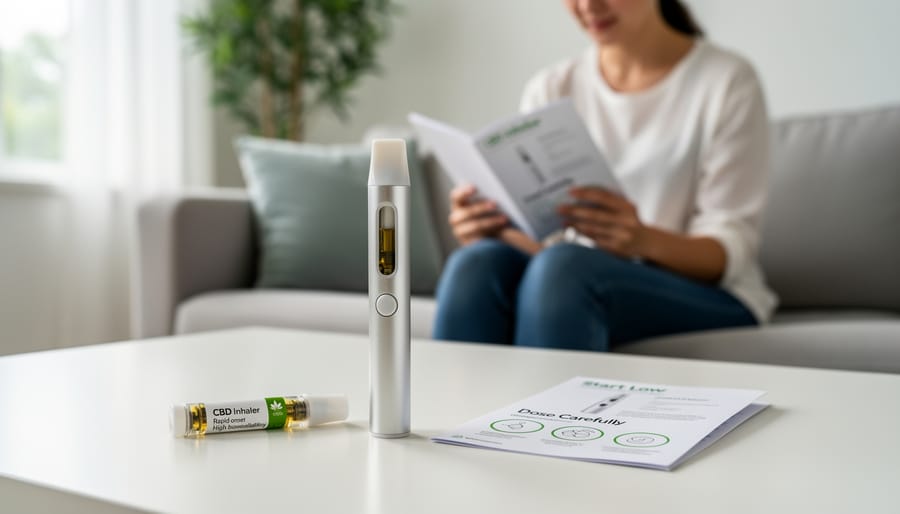
Vaping and Inhalation: Fast Relief, Careful Dosing
Starting Low with Inhalation (It Hits Harder)
When I first tried vaping CBD, I made the rookie mistake of treating it like an oil tincture. Big mistake. Inhalation delivers CBD directly into your bloodstream through your lungs, bypassing your digestive system entirely. This means you’ll feel effects within minutes, but it also means the dose hits much harder than you’d expect from the same milligram amount in other forms.
Start with just 5-10mg per session, even if that seems ridiculously low compared to what you might take orally. Here’s a practical approach: most CBD vape cartridges or dried flower contain somewhere between 50-200mg total CBD. If you’re using a 100mg cartridge, for example, aim for just 1-2 small inhalations to start. Count them out. Seriously, count them.
Take your initial dose, then wait a full 10-15 minutes before considering more. I know that feels like forever when you’re seeking relief, but inhalation effects peak quickly. If you take another hit at the five-minute mark, you might stack doses and end up feeling more drowsy or spacey than intended.
After that waiting period, assess how you feel. Still need more? Add just one more inhalation and wait again. This methodical approach helps you find your sweet spot without overshooting it. Keep notes on your phone about how many inhalations worked for you, especially when trying new products, since CBD concentration varies significantly between different vapes and flower strains available in Canadian licensed retailers.
Canadian Legal Considerations for Vaping CBD
In Canada, CBD vaping products must comply with the Cannabis Act, which means they’re only legally available through provincially licensed retailers or federally licensed online sellers. When you’re shopping for vape products, you’ll notice that THC concentration limits are strictly regulated, with most recreational products capped at 10 mg/mL for vape liquids, though CBD itself doesn’t have the same restrictions.
I’ve learned through experience that purchasing from licensed sources isn’t just about following the law—it’s about safety. Licensed products undergo mandatory testing for contaminants, accurate cannabinoid labeling, and quality control. While you might find cheaper options through unlicensed channels, you’re taking a real risk with what you’re actually inhaling.
Each province has different retail systems, so your purchasing options will vary depending on where you live. Some provinces offer government-run stores, others have private retailers, but all legal sellers will require age verification. When calculating your vaping dosage, remember that licensed products clearly label CBD and THC content, making it much easier to track your intake accurately and adjust as needed for your specific wellness goals.
Managing the Shorter Duration
If your vaping effects fade within 2-3 hours, you’re not alone. I’ve found this timeline frustrating when needing consistent relief throughout the day. The simplest approach is scheduling additional doses every few hours, but this isn’t always practical when you’re at work or on the go.
A more sustainable strategy involves combining vaping with longer-acting methods. Try taking a CBD oil in the morning for baseline support (effects last 4-6 hours), then using your vape pen for immediate relief when symptoms spike. This layered approach reduces how often you need to vape while maintaining steady CBD levels.
Start by establishing your oil routine first, giving it a week to stabilize. Then introduce vaping only as needed, typically at lower doses than if you were using it alone. For example, if you normally vape 10mg at once, try 5mg when you’ve already taken oil that morning. This prevents overconsumption while extending your coverage throughout the day. Many Canadians find this combination gives them both rapid relief and sustained support without constantly reaching for their vape.
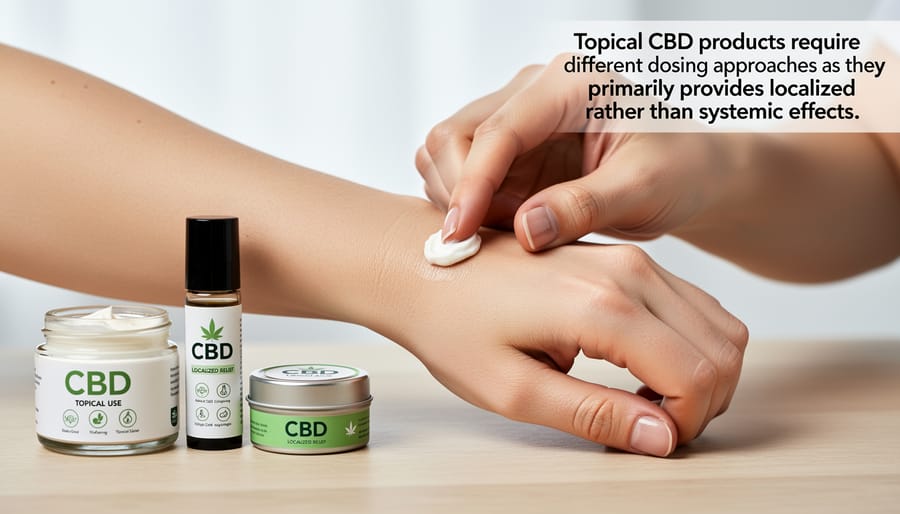
Topicals and Transdermal Products: Local vs. Systemic Dosing
How Much to Apply and How Often
When it comes to topical CBD products like creams, balms, and salves, dosing looks quite different from other delivery methods. Instead of measuring in milligrams, you’ll typically measure in applications, which makes the process much more intuitive.
For topical application, start with a small amount, about the size of a pea or nickel, depending on the area you’re targeting. Apply it directly to clean, dry skin over the specific area where you’re seeking relief. Unlike oils or edibles, topicals work locally rather than systemically, so you’re only applying to the spot that needs attention.
Most people find success applying topicals two to three times daily. I’ve personally found that consistency matters more than quantity. When I first started using a CBD balm for my shoulder tension, I applied it morning and evening after my shower, which became an easy routine to maintain.
You can reapply as needed throughout the day. Since topicals don’t enter your bloodstream, there’s less concern about building up too much CBD in your system. However, give each application about 15 to 30 minutes to absorb before deciding whether you need more.
One practical tip from my experience: apply topicals right after a warm shower or bath when your pores are open. The warmth helps with absorption, and I’ve noticed better results this way compared to applying to cold skin.
If you’re not seeing results after a week of consistent twice-daily application, consider trying a product with a higher CBD concentration rather than applying more frequently. Quality matters significantly with topicals, so choosing a reputable Canadian brand makes a real difference.
Transdermal Patches: The Exception to Topical Rules
Here’s something that surprised me when I first learned about transdermal patches: unlike the topical creams and balms I’d been using for muscle soreness, these patches actually deliver CBD into your bloodstream for whole-body effects. They’re not just working at the surface level.
Transdermal patches use special technology to carry CBD molecules through your skin layers and into your circulation. This means they work more like edibles or oils than traditional topicals, but with one major advantage: they provide steady, controlled release over an extended period, typically 24 hours.
Most patches available in Canada contain between 10-20mg of CBD, designed to release gradually throughout the day. This slow-release method means you’re getting approximately 0.4-0.8mg per hour, which creates stable blood levels without the peaks and valleys you might experience with other methods.
For dosing purposes, treat patches like you would oral products rather than topical applications. Start with a lower-dose patch (around 10mg) and monitor how you feel over the full 24-hour period. Because the delivery is so gradual, you might not notice immediate effects, but many users report sustained benefits that build throughout the day.
Patches work particularly well for people seeking consistent support for issues like chronic discomfort or sleep concerns, where maintaining steady CBD levels matters more than quick relief.
Combining Delivery Methods: Your Personalized CBD Protocol
Once you’re comfortable with individual delivery methods, you can actually combine them strategically throughout your day for more consistent effects. I started doing this myself about two years ago when I realized my morning oil wasn’t quite carrying me through to evening, but I didn’t want to increase my dose too much.
The key principle here is thinking about onset time and duration. Fast-acting methods like vaping provide quick relief but wear off faster, while oils and capsules take longer to kick in but last several hours. By layering these thoughtfully, you can maintain steadier CBD levels throughout your day.
Here’s a sample protocol that works well for many Canadians managing general wellness: Start your morning with 10-15mg of CBD oil sublingually. This gives you a baseline that lasts 4-6 hours. If you experience afternoon stress or discomfort, use a faster method like vaping (5-10mg) or a topical for localized issues. For evening relaxation, add another 10mg of oil or a capsule about an hour before bed.
When combining methods, your total daily dosage is simply the sum of all methods used. So in the example above, you’d be taking 25-35mg total per day. Start conservatively and track how each method contributes to your overall experience.
One important consideration: if you’re combining an inhalable method with an oral method, don’t just double your usual dose right away. Begin with half your typical dose of each method, then adjust based on results. I learned this the hard way when I felt overly drowsy after taking my full oil dose and then vaping my usual amount later.
Remember that under Canadian regulations, you’re working with legal cannabis products, so keep detailed notes about timing, dosages, and effects. This helps you refine your personal protocol and provides valuable information if you’re working with a healthcare provider. Your ideal combination might look completely different from someone else’s, and that’s perfectly normal.
Safety Considerations and When to Adjust Your Approach
While CBD is generally well-tolerated, it’s important to approach dosing thoughtfully and know when to adjust your strategy. Health Canada has approved several CBD products, but there isn’t a universal maximum dose that applies to everyone. Most research suggests that doses up to 1500mg daily are well-tolerated, though most people find their sweet spot well below this threshold.
Different delivery methods come with different considerations. Inhaled CBD works quickly but can irritate your respiratory system if overused. Edibles are gentler on your lungs but may cause digestive discomfort at higher doses. Topicals rarely cause systemic side effects, though skin irritation can occur with sensitive skin types. Sublingual products offer a middle ground but may taste unpleasant to some users.
The most common side effects across all methods include drowsiness, dry mouth, changes in appetite, and occasional digestive issues. If you experience persistent side effects, it’s a sign to reduce your dose rather than push through.
CBD can have potential interactions with certain medications, particularly those metabolized by the liver’s cytochrome P450 enzyme system. This includes some blood thinners, antidepressants, and seizure medications. Always consult your healthcare provider before starting CBD if you’re taking prescription medications.
When I first started using CBD, I learned this lesson the hard way by not mentioning it to my doctor during a routine appointment. Now I always recommend being transparent with healthcare professionals.
You should definitely consult a healthcare provider if you’re pregnant, breastfeeding, have liver conditions, or are managing serious health concerns. Your doctor can help you navigate dosing safely within your specific health context.
Finding the right CBD dosage truly is a personal journey, and I can’t stress enough how much your chosen delivery method shapes that experience. After years of helping Canadians navigate their CBD options, I’ve learned that the biggest mistake people make is jumping between different methods without giving any single approach enough time to work. My advice? Pick one delivery method that aligns with your lifestyle and needs, then commit to it for at least two weeks before making any changes.
This is where a dosing journal becomes your best friend. I know it sounds tedious, but trust me on this one. Jot down the method you’re using, the exact dose, the time you took it, and how you felt an hour later, three hours later, and the next morning. Include notes about what you ate that day, your stress levels, even your sleep quality. These details create a roadmap that helps you understand your unique response patterns. I still keep one myself, especially when I’m trying a new product or adjusting my routine.
Remember, there’s no universal right answer here. What works beautifully for your neighbour might do nothing for you, and that’s completely normal. The experimentation process requires patience, but I promise it’s worth the effort. You’re not just finding a dose; you’re discovering how your body processes CBD through different pathways. Give yourself permission to adjust, to try again, and to trust what your body tells you. The perfect dosage for you is out there, and with careful attention and consistent tracking, you’ll find it.