
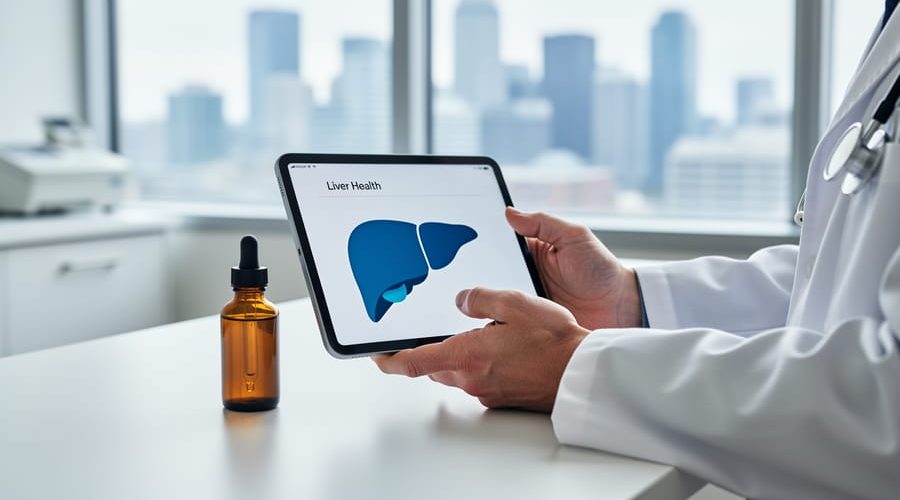
Understand that the FDA hepatic impairment guidance provides the scientific framework that shapes how CBD products should be evaluated for liver safety, even though this U.S. regulatory document doesn’t directly govern Canadian CBD use. Health Canada references similar pharmacokinetic principles when assessing natural health products, making this guidance relevant for understanding potential risks if you have existing liver conditions or take medications metabolized by your liver.
Review your current medications with a healthcare provider before starting CBD, particularly if you take drugs processed through the CYP450 enzyme system—the same liver pathways CBD uses. The FDA guidance specifically requires drug manufacturers to test how their products behave in people with varying degrees of liver impairment, from mild to severe, because compromised liver function can dramatically increase blood concentrations of substances like CBD.
Recognize that CBD itself carries hepatotoxicity warnings at high doses, primarily evidenced in clinical trials using prescription-grade cannabidiol (Epidiolex) at 10-20 mg/kg daily—substantially higher than typical wellness doses available in Canadian CBD oils and capsules. The guidance recommends monitoring liver enzymes (ALT and AST blood tests) when using therapeutic doses, especially during the first few months.
Start with significantly lower doses than product labels suggest if you have any degree of liver compromise, whether from fatty liver disease, hepatitis, cirrhosis, or chronic alcohol use. Canadian CBD products aren’t required to provide hepatic impairment dosing adjustments, so this becomes your responsibility in consultation with your doctor. The FDA framework suggests dose reductions of 50-75% for moderate to severe impairment may be necessary to prevent accumulation and potential liver stress.
Understanding Hepatic Impairment and Why It Matters for CBD Users
What Is Hepatic Impairment? (In Plain English)
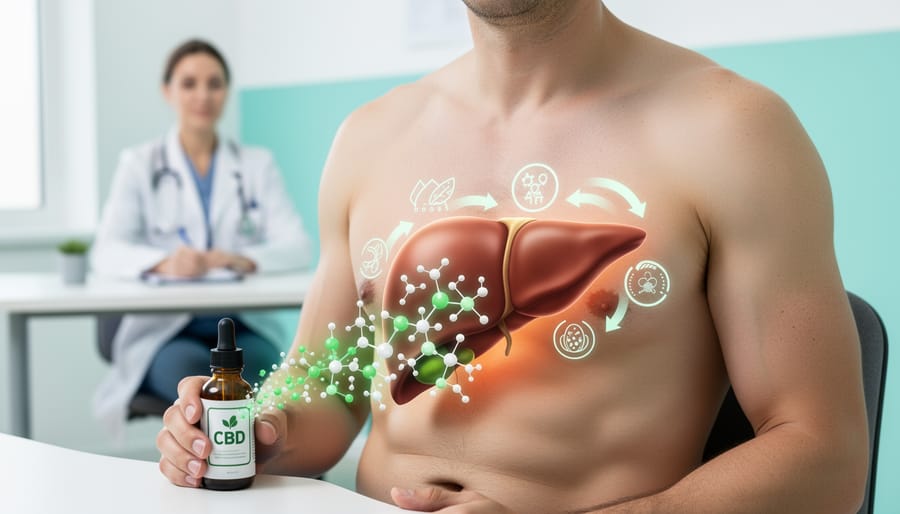
Hepatic impairment is simply a medical term for reduced liver function or liver damage. Your liver acts as your body’s processing plant, breaking down everything from medications to supplements like CBD. When your liver isn’t working properly, it can’t process substances as efficiently as it should.
Common causes include chronic alcohol use, hepatitis infections, fatty liver disease (which is becoming increasingly common in Canada), and certain medications taken over long periods. Some people are born with liver conditions, while others develop them over time.
Here’s why this matters for CBD users: your liver produces enzymes that break down cannabinoids. When your liver is compromised, CBD stays in your system longer and at higher concentrations than intended. This can increase the risk of side effects or interactions with other medications you’re taking.
I’ve spoken with several Canadians who discovered they had mild liver impairment only after experiencing unexpected reactions to supplements. It’s a reminder that what seems like a minor health condition can significantly impact how your body handles substances like CBD. Understanding your liver health isn’t just about following FDA guidance—it’s about making informed choices that protect your wellbeing.
How Your Liver Processes CBD
When you take CBD, your liver becomes the primary workstation for breaking down and processing this compound. The heavy lifting happens through a group of enzymes called cytochrome P450, or CYP450 for short. Think of these enzymes as your liver’s processing crew—they metabolize not just CBD, but many medications and supplements you might take.
CBD primarily interacts with two specific enzymes: CYP3A4 and CYP2C19. Here’s where it gets important for your safety: CBD can temporarily slow down these enzymes, which means other substances that rely on the same processing pathway might build up in your system more than expected. This is why understanding how CBD affects liver function matters so much for proper dosing.
For most healthy individuals, this process works smoothly. But if your liver isn’t functioning optimally—whether from existing conditions, medication use, or other factors—the standard CBD dose might be too much. Your liver essentially works overtime, and that’s precisely why hepatic impairment guidance exists. It helps determine safer starting doses and monitoring protocols based on your liver’s actual capacity, rather than following one-size-fits-all recommendations.
Breaking Down the FDA Hepatic Impairment Guidance
What the FDA Guidance Actually Says
The FDA’s hepatic impairment guidance might sound intimidating, but it’s actually quite straightforward once you break it down. Essentially, the FDA requires drug developers to study how medications behave in people with varying degrees of liver damage before they can be marketed widely.
The guidance divides liver impairment into three categories: mild, moderate, and severe. This classification system, called the Child-Pugh score, looks at factors like bilirubin levels, albumin levels, and the presence of conditions like ascites or confusion. What the FDA wants to know is whether a medication needs dose adjustments for each category.
Here’s the practical part: the guidance recommends pharmacokinetic studies to measure how the liver processes a substance differently when it’s not functioning optimally. This includes looking at how much of the drug stays in the bloodstream, how long it takes to be eliminated, and whether toxic metabolites might build up.
For CBD users in Canada, understanding this framework matters because many CBD products haven’t undergone this rigorous testing. While the FDA guidance applies to pharmaceutical drugs in the United States, it represents the gold standard for safety research. Health Canada uses similar principles when evaluating substances, though CBD’s regulatory path here has been quite different from traditional pharmaceuticals.
When I first started researching this for my own CBD use, I was surprised to learn how few CBD products have actually been tested using these protocols. It reinforced why consulting with healthcare providers familiar with liver function is so important, especially if you’re already managing any liver concerns.
Why U.S. FDA Guidance Matters in Canada
You might wonder why we’re talking about FDA guidance when you’re in Canada looking for CBD information. Here’s the thing: Health Canada doesn’t operate in a vacuum. The FDA’s hepatic impairment guidance has become a gold standard that influences regulatory bodies worldwide, including our own.
When I first started researching CBD safety protocols, I was surprised to learn how closely Health Canada monitors FDA research. The FDA’s extensive pharmacokinetic studies on how substances behave in people with liver impairment often inform Canadian clinical guidelines and medical practice. This is especially true for newer therapeutic areas like CBD, where research is still evolving.
Canadian healthcare providers frequently reference FDA studies when making treatment decisions because the research methodology is rigorous and the datasets are substantial. While Health Canada has its own approval processes and regulations for cannabis products, the underlying safety science often draws from the same body of evidence that shapes FDA recommendations.
For Canadians with liver concerns considering CBD, this interconnection is actually beneficial. It means you’re getting the advantage of extensive U.S. research applied within our Canadian regulatory framework. Understanding the FDA’s hepatic impairment guidance helps you grasp the scientific foundation behind your doctor’s recommendations and the safety warnings you’ll see on licensed Canadian CBD products.
CBD Clinical Protocols for Hepatic Impairment in Canada
Health Canada’s Position on CBD and Liver Health
While the FDA has issued hepatic impairment guidance that impacts CBD oversight in the United States, Health Canada takes its own distinct regulatory approach. Currently, Health Canada classifies CBD products differently based on their intended use and concentration. Cannabis-derived CBD falls under the Cannabis Act, while products making therapeutic claims require authorization as Natural Health Products or prescription drugs.
When it comes to CBD and liver health, Health Canada has been monitoring emerging safety data closely. The department acknowledges potential liver enzyme elevation concerns identified in clinical trials, particularly at high doses. However, unlike the FDA’s specific warnings about Epidiolex and liver injury, Health Canada hasn’t issued standalone hepatotoxicity advisories for consumer CBD products.
That said, licensed producers are required to follow Good Production Practices and report adverse events. Health Canada’s approach emphasizes that individuals with pre-existing liver conditions should consult healthcare providers before using CBD products. The regulatory body also requires that products making health claims undergo rigorous safety assessments.
As someone who’s navigated Canada’s CBD landscape for years, I’ve noticed that clear liver-specific guidance remains somewhat limited compared to our American neighbours. This creates a responsibility for Canadian consumers to stay informed and proactive. Health Canada does provide general safety information through its cannabis health effects portal, encouraging users to start with low doses and monitor for unusual symptoms. The department continues evaluating international research, including FDA findings, to inform future Canadian safety standards and consumer advisories.
Clinical Considerations for CBD Use with Liver Concerns
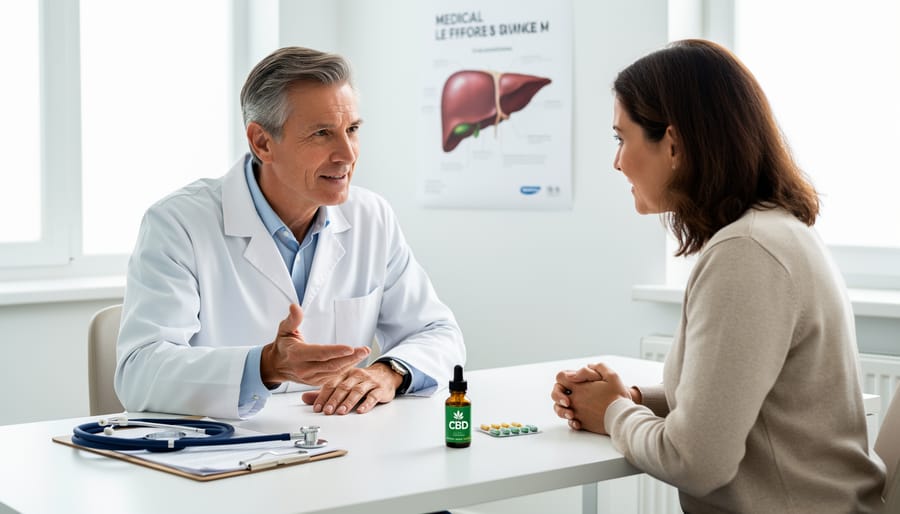
When I first started researching CBD for my own wellness journey, I quickly learned that liver health isn’t something to take lightly. Canadian healthcare providers approach CBD recommendations for patients with hepatic impairment with particular caution, and for good reason.
In Canada, physicians and nurse practitioners typically start by assessing the severity of liver impairment before making any CBD recommendations. They often use the Child-Pugh classification system to determine how compromised the liver is. For patients with mild impairment, dosing adjustments might be relatively modest, perhaps starting at 25-50% of standard doses. However, those with moderate to severe impairment may require even lower starting doses or might be advised against CBD use entirely.
Healthcare providers in Canada emphasize the importance of baseline liver function tests before beginning CBD. These typically include ALT, AST, and bilirubin levels. Regular monitoring is then scheduled, often at two-week intervals initially, then monthly for the first few months. I’ve spoken with several Canadian physicians who won’t prescribe CBD to patients with liver concerns without this monitoring protocol in place.
The concern isn’t just about CBD itself but also CBD drug interactions. Since the liver processes most medications through the cytochrome P450 enzyme system, and CBD can interfere with this process, patients taking multiple medications face compounded risks.
Canadian practitioners also consider the CBD product format carefully. They tend to favor pharmaceutical-grade products with precise dosing over unregulated options, as consistency matters tremendously when monitoring liver response. Some recommend avoiding high-dose CBD products altogether for this population, sticking instead to lower concentrations that allow for gradual titration and careful observation of both therapeutic effects and potential hepatic stress.
The Research Behind CBD and Liver Function
Studies Showing Potential Concerns
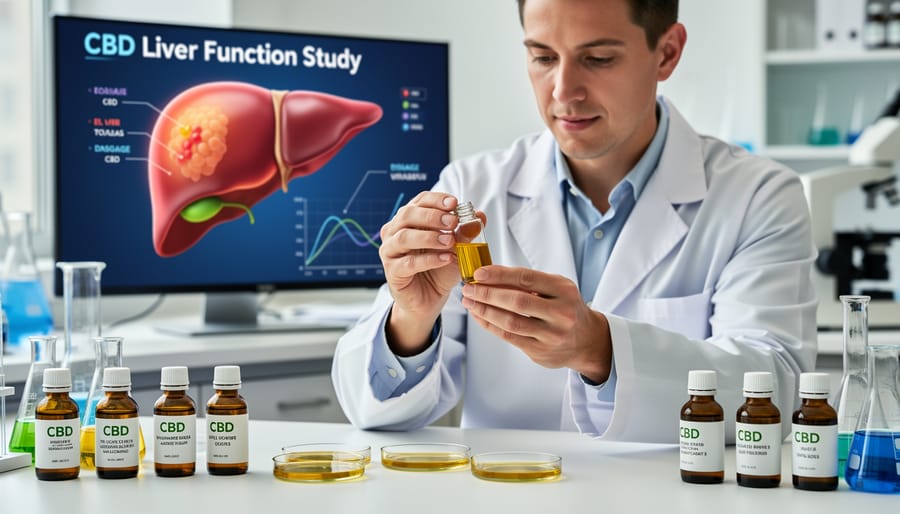
It’s important to look at the research honestly, and some studies have raised legitimate questions about CBD and liver health. The FDA’s concern primarily stems from clinical trials of Epidiolex, a pharmaceutical-grade CBD product used for severe epilepsy. In these trials, some participants experienced elevated liver enzymes, which can indicate liver stress.
Here’s the context that matters: the doses involved were extremely high. We’re talking about 10 to 20 milligrams of CBD per kilogram of body weight daily. For perspective, that’s roughly 700 to 1,400 milligrams daily for a 70-kilogram adult. Most CBD users in Canada take between 10 and 50 milligrams per day, which is dramatically lower.
The enzyme elevations were more common in participants who were also taking valproate, an epilepsy medication known to affect the liver. When CBD was used alone at these high doses, liver issues were less frequent but still occurred in some cases.
I remember when these studies first made headlines, and honestly, it caused some panic in the CBD community. But talking with my healthcare provider helped me understand that typical wellness doses are nowhere near these pharmaceutical levels. The research doesn’t suggest that standard CBD use causes liver problems in healthy individuals, but it does highlight why monitoring is important for anyone taking higher doses or combining CBD with other medications.
This is exactly why Health Canada’s cautious approach and the FDA’s guidance on hepatic impairment exist—to protect those who might be at higher risk.
The Safety Profile at Typical Doses
Here’s what the research actually shows about CBD safety at the doses most Canadians use. The FDA’s hepatic impairment guidance primarily examined doses used in clinical trials—often 10-20 mg/kg per day for conditions like epilepsy. That translates to roughly 700-1400 mg daily for an average adult, which is exponentially higher than typical wellness use.
Most Canadian CBD users take between 10-50 mg daily, a fraction of clinical trial amounts. At these commonly used doses, research hasn’t demonstrated the liver enzyme elevations that concerned FDA reviewers. A 2020 systematic review found that adverse liver effects appeared almost exclusively at doses exceeding 300 mg daily, and even then, primarily in individuals already taking hepatotoxic medications or those with pre-existing liver conditions.
When I first learned about the dose differences, I felt relieved. I’d been taking 25 mg daily for sleep and worried I was unknowingly harming my liver. Understanding the context—that concerning effects occurred at doses fifteen times what I used—changed my entire perspective on risk assessment.
Canadian clinical protocols for CBD recognize this dose-dependent relationship. Health Canada’s product monographs typically recommend starting with 5-10 mg and slowly increasing, keeping most users well below thresholds associated with liver concerns.
That said, “typical doses are generally safe” doesn’t mean zero risk. Individual factors matter tremendously, which is why personalized assessment remains crucial even at lower doses.
Practical Guidance for Canadian CBD Users with Liver Concerns
When to Talk to Your Doctor First
If you have any existing liver condition—whether it’s hepatitis, cirrhosis, fatty liver disease, or even elevated liver enzymes discovered during routine blood work—talking to your doctor before trying CBD isn’t just recommended, it’s essential. The FDA’s hepatic impairment guidance emerged partly because high-dose CBD can affect liver function, and your liver is already working harder when it’s compromised.
I learned this firsthand when a friend with non-alcoholic fatty liver disease asked me about CBD for her chronic pain. Her doctor ran baseline liver function tests before approving CBD use and scheduled follow-up testing to monitor any changes. That proactive approach made all the difference in her confidence using the product safely.
You should also consult your healthcare provider if you’re taking any prescription medications, especially those metabolized by the liver. Understanding medication interactions with CBD is crucial—certain combinations can increase the risk of liver stress or alter how your medications work.
In Canada, your family doctor or a walk-in clinic physician can order simple liver function tests and review your medication list to assess potential risks before you start incorporating CBD into your wellness routine.
Safe Dosing Considerations
If you’re considering CBD and have liver concerns, starting conservatively is your best approach. Healthcare professionals familiar with both FDA hepatic impairment guidance and Canadian clinical practice typically recommend beginning with the lowest possible dose—often 5mg or less daily—particularly if you have any degree of liver dysfunction.
I remember speaking with a naturopath in Vancouver who worked with patients managing chronic conditions alongside liver health. She emphasized that patience matters more than aggressive dosing. For someone with mild liver impairment, she’d often suggest starting at just 2.5mg daily and waiting a full week before considering any increase. This cautious approach allows your body to reveal how it processes CBD without overwhelming your liver’s detoxification pathways.
Monitoring becomes essential when liver function is compromised. Before starting CBD, request baseline liver enzyme tests from your doctor—specifically ALT and AST levels. Follow-up testing at 30 days, then every three months for the first year, helps catch any concerning changes early. Some Canadian clinics now include these panels as standard protocol for patients using CBD therapeutically.
Dosage adjustments should always happen gradually. If you’re tolerating your starting dose well after two weeks, increases of no more than 2.5mg at a time make sense. However, anyone with moderate to severe hepatic impairment should consider doses 50-75% lower than standard recommendations and extend monitoring intervals.
The most important consideration? Never adjust doses without professional guidance if you have confirmed liver disease. Your healthcare provider understands your complete medical picture and can interpret how CBD fits within your broader treatment plan.
Choosing CBD Products When You Have Liver Concerns
Product Types and Liver Metabolism
Not all CBD products interact with your liver the same way, and this matters significantly if you have hepatic concerns. When you consume CBD oil sublingually (under the tongue), a portion absorbs directly into your bloodstream through the mucous membranes, bypassing some of the initial liver processing. However, what you swallow still travels through your digestive system and undergoes first-pass metabolism in the liver.
Edibles like gummies or capsules take a different route entirely. They must pass through your stomach and intestines before reaching the liver, where enzymes break down a substantial portion of the CBD before it enters your bloodstream. This process, called first-pass metabolism, means your liver works harder and you’ll need higher doses to achieve similar effects compared to sublingual oils. For individuals with hepatic impairment, this increased liver workload could be problematic.
Topical CBD products applied to your skin generally don’t enter the bloodstream in significant amounts, meaning they place minimal burden on your liver. When I started learning about CBD safety, understanding these differences helped me appreciate why dosing recommendations vary so dramatically between product types. If you’re concerned about liver health, discussing these delivery methods with your healthcare provider becomes especially important for making informed choices.
Quality and Purity Considerations
When you have liver concerns, product quality becomes absolutely critical. Your liver works hard to process everything you consume, so avoiding contaminants isn’t just good practice—it’s essential for protecting an already vulnerable organ.
Third-party testing verifies that CBD products contain what they claim and nothing harmful. Look for certificates of analysis (COAs) from independent laboratories that test for heavy metals, pesticides, residual solvents, and microbial contaminants. These substances can place additional stress on compromised liver function.
In Canada, licensed producers must follow strict Health Canada regulations, but not all CBD products available online meet these standards. I’ve learned through experience that asking for recent COAs before purchasing is a non-negotiable step, especially if you’re managing liver health.
For Canadians with hepatic concerns, prioritize products from licensed producers displaying their Health Canada license number. Medical cannabis options accessed through healthcare providers often undergo more rigorous quality control than some over-the-counter CBD products.
Choose full-spectrum or broad-spectrum products from reputable Canadian companies that voluntarily exceed minimum testing requirements. Brands that test every batch rather than periodically demonstrate stronger commitment to safety. Consider starting with oils or capsules rather than vapes, as inhaled products may contain additional substances your liver must process.
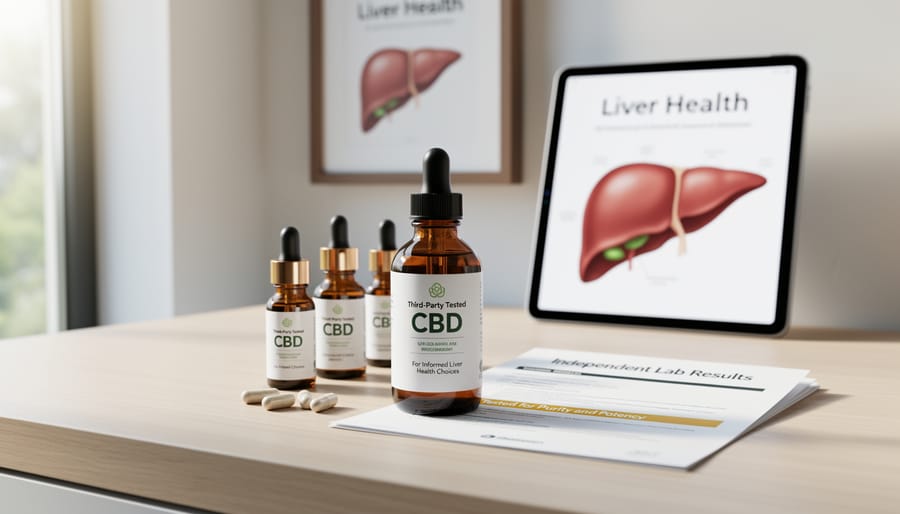
Understanding how FDA hepatic impairment guidance applies to CBD use in Canada might seem complex at first, but the key takeaway is straightforward: liver health matters when considering CBD, and you deserve to make informed choices. While the FDA’s research and recommendations aren’t directly applicable to Canadian regulations, they provide valuable scientific insights that healthcare providers here often reference when assessing patient safety.
If you have existing liver concerns or take medications that affect your liver, consulting with your doctor before starting CBD isn’t just recommended—it’s essential. This doesn’t mean CBD is off-limits for everyone with mild liver issues. In fact, many people with minor hepatic concerns use CBD safely under medical supervision, often with adjusted dosing and regular monitoring.
From my perspective, the most empowering aspect of understanding this guidance is that it removes guesswork from your wellness decisions. When I first learned about the importance of liver function in CBD metabolism, it completely changed how I approached product selection and dosing recommendations. Knowledge isn’t meant to discourage you—it’s meant to protect you.
The Canadian CBD landscape offers quality products and evolving regulations that prioritize consumer safety. By staying informed about research like the FDA’s hepatic impairment studies, choosing reputable brands, being transparent with your healthcare provider, and listening to your body, you can confidently navigate CBD use. Remember, safe CBD consumption isn’t about perfection—it’s about being thoughtful, patient, and proactive with your health decisions.