Understanding B&F Capital Markets requires examining how investment firms and financial institutions funnel money into Canada’s CBD industry, directly affecting which products reach your shelves and at what price point. When venture capital groups and private equity firms invest in CBD companies, they influence everything from extraction methods to distribution networks, ultimately determining whether you’re buying from a well-funded operation with rigorous testing protocols or a cash-strapped startup cutting corners on quality assurance.
Financial backing shapes the CBD marketplace more than most Canadian consumers realize. Companies with strong capital support can afford Health Canada compliance costs, invest in third-party laboratory testing, and maintain consistent product availability. Conversely, underfunded operations may struggle with supply chain disruptions, inconsistent potency levels, or sudden market exits that leave you searching for replacement products.
The capital markets landscape affects your purchasing power through pricing structures and product innovation. Well-capitalized CBD companies often achieve economies of scale, passing savings to consumers while simultaneously funding research into improved delivery methods and formulations. Meanwhile, companies facing financial pressure may raise prices unexpectedly or compromise on ingredient quality to maintain profit margins.
This financial ecosystem operates behind every bottle, tincture, and topical you consider purchasing. Recognizing these market forces helps you make informed decisions about which brands demonstrate financial stability, sustainable business practices, and genuine commitment to product excellence rather than short-term profit extraction before potential market exit.
What is B&F Capital Markets? (A Canadian Perspective)
If you’re a CBD user in Canada, you’ve probably never thought much about capital markets—and that’s completely understandable. But here’s the thing: companies like B&F Capital Markets actually play a bigger role in your CBD shopping experience than you might realize.
So, what exactly is B&F Capital Markets? In simple terms, they’re a financial services firm that helps cannabis and CBD companies raise money and navigate the complex world of business finance. Think of them as financial advisors and deal-makers for the CBD industry. When a CBD company wants to expand their product line, open new facilities, or improve their quality control processes, they often need significant funding. That’s where firms like B&F come in—they connect these companies with investors and help structure financial deals.
Why should you care about this as a CBD consumer? Well, the financial health of CBD companies directly affects what ends up on store shelves. When companies have proper financial backing and guidance, they can invest in better extraction methods, more rigorous testing, and consistent product quality. On the flip side, when companies face CBD company financial struggles, you might notice products disappearing from shelves, quality becoming inconsistent, or brands shutting down entirely.
Capital markets firms like B&F also help bring transparency to the industry. When CBD companies go through proper financial processes—like public offerings or major investment deals—they’re required to disclose information about their operations, testing standards, and business practices. This creates more accountability in an industry that’s still building consumer trust.
For Canadian consumers specifically, understanding these financial connections helps you make smarter purchasing decisions. Companies with stable financial backing are more likely to maintain consistent quality, honor warranties, and stay compliant with Health Canada regulations. While you don’t need to become a finance expert, knowing that solid financial partnerships often signal reliable CBD brands can guide your choices at the checkout.

Why CBD Companies Need Financing (And Why You Should Care)
When I first started exploring CBD products, I honestly never thought about where companies got their money or how they stayed in business. I just wanted effective products at reasonable prices. But here’s what I’ve learned: the financial health of CBD companies directly affects what ends up on your shelf and in your shopping cart.
Think about it this way. When a CBD company secures proper financing, they can afford to do things right. They can invest in third-party lab testing for every batch, ensuring you’re getting exactly what the label promises. They can source higher-quality hemp from reputable growers. They can invest in proper extraction equipment that produces cleaner, more consistent products. Without adequate funding, corners get cut, and guess who pays the price? You do.
I’ve seen this play out firsthand. A few years ago, one of my go-to CBD brands suddenly started having inconsistent products. Batches varied wildly in effectiveness. Turns out, they were struggling financially and had to switch to cheaper suppliers and reduce their testing protocols. Within six months, they were gone from the market entirely, leaving loyal customers scrambling to find alternatives.
Well-funded companies also drive innovation. They can afford to research new delivery methods, develop better formulations, and create products that actually address specific needs. That CBD cream that finally helped your sore muscles? That probably came from a company with resources to invest in product development rather than one barely keeping the lights on.
Financing also impacts CBD product availability across Canada. Companies with strong financial backing can maintain consistent inventory, expand distribution networks, and weather seasonal fluctuations in demand. They’re less likely to suddenly disappear from your local retailer’s shelves because they couldn’t afford their next shipment.
Even pricing connects back to financing. Companies with stable funding can order raw materials in bulk, negotiate better rates, and pass savings along to consumers. They’re not constantly raising prices to cover cash flow problems.
The bottom line? When CBD companies have access to proper financing, whether through capital markets or other sources, it creates a ripple effect that benefits Canadian consumers through better quality, more consistent availability, and fair pricing.
Recent B&F Capital Markets Activity in the CBD Space
Financing Deals That Impact Canadian CBD Access
Let me share what I’ve learned about how financing deals directly affect what you find on store shelves here in Canada. When B&F Capital Markets arranges funding for CBD companies, these transactions ripple through to real-world impacts on product availability and pricing.
A clear example involves private placement deals where B&F has helped Canadian-focused CBD companies raise capital through equity offerings. When a company secures $5-10 million through these arrangements, they typically use funds to scale production facilities or expand distribution networks. This often means more consistent product availability in your local stores and online retailers. I’ve noticed this personally—brands that secured significant financing suddenly appeared in more locations across Ontario and British Columbia.
However, financing deals can also signal challenges. When companies require frequent capital raises at discounted share prices, it may indicate cash flow problems. This ties directly to company financial health, affecting their ability to maintain quality standards or keep products stocked. I’ve seen situations where brands disappeared from shelves for months following failed financing attempts.
Pricing is another consideration. Companies paying higher interest rates on debt financing often pass those costs to consumers. Conversely, successful equity raises sometimes allow companies to offer promotional pricing as they compete for market share. Understanding these financing patterns helps you anticipate which brands might offer better value or face supply disruptions. It’s about connecting those financial headlines to your practical shopping decisions.
M&A Activity: When CBD Companies Merge or Get Acquired
The CBD industry in Canada has seen considerable merger and acquisition activity over recent years, and it directly affects the products you see on shelves. When larger companies acquire smaller CBD brands, it’s often about expanding product lines, accessing new distribution channels, or gaining innovative formulations. From a consumer perspective, this consolidation can feel unsettling—you might wonder if your favourite brand will change or disappear entirely.
In many cases, acquired brands continue operating under their original names, at least initially. Companies understand that brand loyalty matters, especially in the CBD market where trust is essential. However, formulations might gradually shift as parent companies standardize manufacturing processes or ingredient sourcing to achieve economies of scale. This isn’t necessarily negative—larger operations sometimes mean better quality control and more rigorous testing—but it can also mean less uniqueness between brands.
The consolidation trend does reduce overall market diversity. When B&F Capital Markets and similar firms facilitate these deals, fewer independent companies remain, which can limit truly innovative products reaching Canadian consumers. On the positive side, merged companies often have stronger financial backing, making them less likely to suddenly exit the market and leave you searching for alternatives.
My advice? If you love a particular CBD product, stock up when acquisition news breaks, then gradually try the reformulated version to compare. Watch for changes in ingredient lists and third-party lab results. Consolidation doesn’t automatically mean compromised quality, but staying informed helps you make choices aligned with your needs and values as a Canadian CBD consumer.
How Capital Markets Influence CBD Product Quality and Safety
When I first started exploring CBD products in Canada, I noticed huge differences between brands—some had detailed lab reports readily available, while others provided barely any information about what was actually in the bottle. What I didn’t realize then was that many of these quality differences trace back to something most consumers never think about: how well-funded the company is.
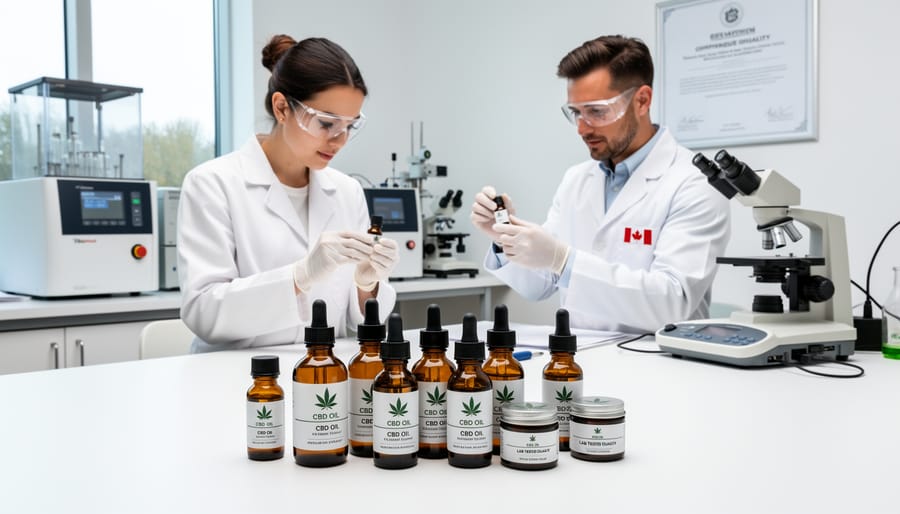
Here’s the reality: proper quality control isn’t cheap. Third-party lab testing for potency, contaminants, pesticides, and heavy metals can cost thousands of dollars per batch. Companies with strong capital backing can afford to test every production run, while underfunded competitors might cut corners or test less frequently. This directly impacts what ends up in your hands as a consumer.
Well-capitalized CBD companies can also invest in better manufacturing facilities that meet Good Manufacturing Practices standards. These aren’t just fancy certifications—they represent consistent production processes that ensure the CBD oil you buy in January has the same quality and potency as what you purchase in July. I’ve experienced this inconsistency firsthand with smaller brands that seemed great initially but later delivered products that felt completely different.
Regulatory compliance is another area where funding matters enormously. Health Canada’s regulations around CBD products require specific labeling, testing, and documentation. Companies with adequate financial resources can hire regulatory experts and maintain compliance teams, reducing the risk of products being pulled from shelves or containing mislabeled information. This contributes to overall CBD market stability, which benefits everyone.
Transparency also costs money. Building user-friendly websites with accessible lab reports, maintaining customer service teams, and creating educational content all require investment. When capital markets provide funding to CBD companies, they’re indirectly enabling these consumer-focused features.
For Canadian CBD users, this connection between financing and quality means that understanding a company’s financial health can actually inform your purchasing decisions. Established companies with solid backing are generally better positioned to maintain consistent quality, stay compliant with regulations, and provide the transparency you deserve. While smaller companies can certainly produce excellent products, financial stability often correlates with the resources needed to prioritize consumer safety and product excellence consistently.
What Canadian CBD Users Should Watch For
When I first started exploring CBD products in Canada, I wished someone had told me that a company’s financial health can tell you a lot about what you’re actually buying. Let me share what I’ve learned about spotting the difference between stable, trustworthy CBD companies and those that might be cutting corners.
Green flags that signal a well-funded, stable company include transparent business practices. Look for brands that clearly display their Health Canada licensing information and make their third-party lab results easily accessible on their websites. Companies with solid financial backing typically invest in comprehensive testing and aren’t afraid to share those results. They’ll also have consistent product availability—if your favourite CBD oil is always in stock and the company regularly introduces quality new products, that’s a good sign they have the resources to maintain proper operations.
Another positive indicator is professional customer service. Well-funded companies can afford knowledgeable staff who answer questions promptly and thoroughly. They also tend to have clear return policies and honour their guarantees without hassle.
On the flip side, watch for red flags. Be cautious of companies making exaggerated health claims that go beyond what’s legally permitted in Canada. This often indicates either desperation for sales or a lack of understanding about regulatory compliance—neither bodes well. Frequent out-of-stock notices, especially on core products, might suggest cash flow problems affecting their supply chain.
Suspiciously low prices compared to competitors can be concerning too. While we all love a deal, CBD products require significant investment in quality cultivation, extraction, and testing. If a price seems too good to be true, the company might be cutting costs in areas that matter to your safety and product effectiveness.
Check how long the company has been operating in the Canadian market. Established brands with staying power have demonstrated they can navigate the complex regulatory environment and maintain financial stability. Newer companies aren’t necessarily bad choices, but they require more careful vetting of their credentials and practices.
Danielle’s Take: Why I Follow CBD Industry Financing
I’ll be honest with you—when I first started reviewing CBD products, I focused almost entirely on what was in the bottle. Ingredients, extraction methods, lab testing. All important stuff, for sure. But I kept noticing patterns I couldn’t quite explain. Why did some promising brands suddenly disappear? Why were certain products inexplicably out of stock for months? Why did prices fluctuate so dramatically?
That’s when I started paying attention to the business side of things, including financing activities from firms like B&F Capital Markets. It was eye-opening. I realized that understanding how CBD companies get funded and stay financially stable actually helps me make better recommendations for you.
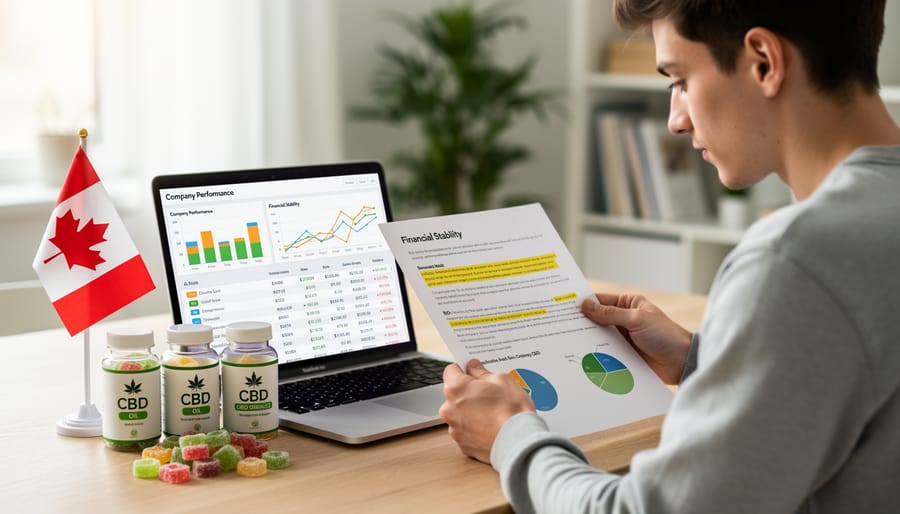
Here’s what changed for me: Now when I evaluate a brand, I don’t just ask if their product is good today—I consider whether they’ll still be around next year. A company backed by solid financing is more likely to maintain consistent quality control, keep products in stock, and honour their customer service commitments. They’re also less likely to cut corners when times get tough.
This knowledge isn’t about turning you into a financial analyst. It’s about giving you the tools to spot red flags and recognize green lights. When you understand that a well-financed company has the resources to invest in better testing, maintain supply chains, and weather regulatory changes, you’re empowered to make smarter choices about where you spend your money. That’s why I follow these industry developments—so you don’t have to, but you still benefit from the insights.
Understanding how financing and capital markets work might seem disconnected from your daily CBD purchasing decisions, but as we’ve explored, companies like B&F Capital Markets play a meaningful behind-the-scenes role in shaping the Canadian CBD industry. When brands have access to stable funding and financial support, they’re better positioned to invest in quality testing, sustainable sourcing, and transparent business practices—all factors that directly impact what ends up in your medicine cabinet.
As someone who’s navigated the CBD space for years, I’ve learned that staying informed about industry stability isn’t just for investors. It helps you make smarter choices about which brands to trust. Companies backed by sound financial practices tend to weather market fluctuations better, maintain consistent product quality, and stick around long enough to build genuine reputations.
My advice? Before trying any new CBD product, take a few minutes to read verified reviews, check for third-party lab testing, and research the company’s track record. Bookmark reliable Canadian CBD resources and make it a habit to stay updated on industry news. The CBD market continues evolving rapidly, and being an informed consumer means you’ll always find products that truly meet your needs. Your wellness journey deserves that level of care and attention.