

Document your child’s current CBD dosage, administration schedule, and specific product details in a shared digital file both parents can access immediately. This creates the foundation for consistency your child needs, regardless of which home they’re in.
Establish written consent from both legal guardians before any CBD treatment begins or changes, as Health Canada regulations require parental agreement for children using CBD products. Without this documentation, you risk legal complications and potential custody disputes that could disrupt your child’s care.
Choose child-appropriate CBD formats that work identically in both households—measured oils, pre-dosed capsules, or precisely formulated gummies eliminate the guesswork that leads to dosing errors during transitions. When I spoke with families navigating this situation, the ones who succeeded always prioritized products with clear, repeatable measurements over convenience.
Create a simple handoff protocol that includes transferring the current CBD product, updating the shared log with the last dose given, and briefly noting any observations about your child’s response. This fifteen-second exchange prevents dangerous double-dosing and ensures neither parent misses a scheduled administration.
Address storage requirements explicitly in your co-parenting agreement, specifying that CBD products must be kept in cool, dark locations away from children’s independent access in both homes. Canadian law holds both parents accountable for safe storage, and inconsistent practices create liability issues.
Build in quarterly review sessions to assess whether your child’s CBD regimen still serves their needs, adjusting dosages or products as they grow and their condition evolves. Co-parenting CBD care isn’t a set-it-and-forget-it arrangement—it requires ongoing collaboration, clear communication, and a shared commitment to your child’s wellbeing above parental conflict.
Why Consistent CBD Care Matters in Shared Custody

The Science Behind Consistency
To understand why consistency matters so much in your child’s CBD routine, it helps to know a bit about how CBD interacts with the body. CBD, or cannabidiol, works primarily through something called the endocannabinoid system—a network of receptors throughout the body that helps regulate things like mood, sleep, pain sensation, and immune response.
Think of it like this: when your child takes CBD regularly, it gradually builds up in their system and helps support this natural balancing network. The therapeutic effects don’t typically happen immediately after a single dose. Instead, CBD accumulates over time, creating a steady presence that can help maintain the benefits you’re hoping to achieve, whether that’s reduced anxiety, better sleep, or relief from discomfort.
This is why predictable dosing is so important, especially in co-parenting situations. When CBD is given inconsistently—skipping days, varying doses significantly, or using different products between households—the levels in your child’s system fluctuate. These ups and downs can reduce effectiveness and make it harder to determine whether CBD is actually helping.
From my conversations with other Canadian parents, I’ve learned that once they established a consistent routine across both homes, they noticed more reliable results. One mom told me it took about three weeks of truly consistent dosing before she could accurately assess whether the CBD was making a difference for her daughter’s sleep issues. That consistency is the foundation everything else builds on.
What Happens When Routines Differ
When parents aren’t on the same page about their child’s CBD care, real problems can emerge quickly. I’ve heard from several parents in my community who’ve faced these challenges firsthand, and the stories highlight just how critical coordination really is.
One mother shared with me that her daughter was receiving CBD oil for anxiety management at her home, but her co-parent didn’t believe in its effectiveness and would stop administration during his parenting time. The result? The child experienced increased anxiety symptoms every time she transitioned between households, creating unnecessary distress and making it impossible to assess whether the CBD was actually helping.
Another common scenario involves dosing inconsistencies. One parent might give CBD gummies in the morning while the other administers oil drops at night, resulting in irregular blood levels and unpredictable effects. Without clear communication, neither parent has accurate information about what’s actually working.
Product switching creates additional complications. When each household uses different CBD brands or formulations, you’re essentially conducting two separate experiments simultaneously. This makes it nearly impossible to identify which product works best or whether side effects are related to the CBD itself or the specific formulation.
Communication gaps can also lead to missed doses or accidental double-dosing during custody exchanges, particularly problematic when parents aren’t tracking administration consistently. These situations aren’t about blame, they’re simply the reality of managing medical care across two homes without a solid plan in place.
Legal Considerations for CBD Use in Canadian Co-Parenting
Getting Both Parents on the Same Page Legally
When both parents agree on CBD care for your child, getting everything properly documented isn’t just good practice—it’s essential protection for everyone involved. In Canada, verbal agreements might work day-to-day, but when it comes to medical treatments like CBD, you need paper trails.
Start by having your child’s healthcare provider document the CBD treatment plan in their medical records. This should include specific product recommendations, dosing instructions, and the medical rationale. Request copies for both households. If your child sees multiple practitioners, ensure they’re all aware of and supportive of the CBD regimen.
Next, incorporate CBD care into your formal custody agreement or parenting plan. Work with a family law professional who understands that CBD, while legal in Canada, still carries complexities. Your agreement should specify which parent makes final decisions about CBD products, how costs are shared, and what happens if one parent wants to discontinue treatment. I’ve seen situations where parents assumed they were aligned, only to hit roadblocks months later when circumstances changed.
Consider obtaining written consent from both parents for any healthcare providers administering or monitoring CBD treatment. Some clinics and schools require this documentation on file. Keep a shared digital folder with product receipts, lab reports, and medical documentation—this transparency builds trust and provides evidence if questions arise.
If disagreements emerge despite initial agreement, Canadian family courts generally prioritize the child’s best interests and medical evidence. Having thorough documentation strengthens your position and demonstrates responsible parenting, regardless of which side of a potential dispute you’re on.
When Co-Parents Disagree About CBD
Disagreements about CBD use happen, even with the best intentions. If you and your co-parent can’t find common ground, remember that you’re not alone in this situation. Many Canadian parents navigate similar challenges.
Start with open dialogue. Share the medical evidence that supports your child’s CBD treatment, including documentation from your healthcare provider. Sometimes having your child’s doctor explain the therapeutic benefits directly to both parents can help bridge the gap.
If conversations stall, consider engaging a family mediator who understands medical cannabis issues. Mediation offers a neutral space to discuss concerns without the adversarial atmosphere of court. Some mediators in Canada now specialize in health-related parenting disputes and can help you explore compromises, like starting with lower doses or agreeing to a trial period with regular check-ins.
When necessary, family court can provide direction. Judges in Canada typically prioritize the child’s best interests, and medical evidence carries significant weight. Document everything: your child’s symptoms, improvements, healthcare provider recommendations, and any research supporting CBD use for your child’s specific condition. This preparation demonstrates your commitment to informed, responsible care and strengthens your position regardless of the resolution path you choose.
Creating Your CBD Co-Parenting Plan
Essential Information to Document
When creating a co-parenting plan for your child’s CBD care, thorough documentation is your best friend. Think of it as creating a detailed roadmap that both households can follow, ensuring your child receives consistent care no matter which parent they’re with.
Start by documenting complete product details. Write down the exact brand name, product type (oil, capsule, topical), and the specific CBD concentration. This prevents mix-ups between products that might look similar but have different formulations. I’ve spoken with parents who learned this lesson the hard way when one household accidentally used a different strength product.
Dosage information needs to be crystal clear. Record the exact amount (in milliliters or milligrams), how many times per day, and the specific times of administration. If your child takes 0.5ml of CBD oil twice daily at 8am and 8pm, spell that out explicitly. Include any instructions about taking it with food or on an empty stomach.
Administration methods matter more than you might think. Does your child take the oil sublingually, mixed in food, or applied topically? Document the exact technique that works best for your child, as consistency in delivery can affect how well the CBD works.
Storage requirements are essential to include. Most CBD products need to be kept in cool, dark places, away from direct sunlight. Note the temperature range and whether refrigeration is necessary. This ensures product integrity at both homes.
Keep your prescribing physician’s contact information readily available, including their name, clinic address, phone number, and after-hours contact details. Add emergency contacts, including poison control (1-800-268-9017 in Canada) and your child’s pediatrician.
Finally, note the pharmacy name and location where you fill prescriptions, along with any relevant prescription numbers. This information streamlines refills and ensures both parents can access medication when needed.
Communication Protocols Between Parents
When you’re co-parenting a child who uses CBD, clear communication isn’t just helpful—it’s essential for your child’s wellbeing. The good news is that several tools and strategies can make this coordination much smoother, even when emotions run high.
Digital tools designed for co-parenting can be game-changers. Apps like OurFamilyWizard or Talking Parents create a documented, neutral space for all discussions about your child’s CBD treatment. These platforms allow you to share dosage schedules, track effectiveness, note any side effects, and store important documents like prescriptions or healthcare provider notes. The built-in calendar features help both parents stay on top of administration times, refill dates, and upcoming medical appointments.
For those preferring simpler solutions, a shared Google Doc or spreadsheet works well too. Create a running log where both parents can record when CBD was administered, the dosage, and any observations about your child’s response. This shared visibility prevents double-dosing and ensures nothing gets missed during transitions between homes.
Regular check-ins matter tremendously. Consider scheduling a brief weekly call or message exchange specifically about your child’s CBD care—separate from other co-parenting discussions. Keep these conversations child-centered and factual. Instead of “You’re not following the plan,” try “I noticed Emma seemed more anxious on Tuesday. Did anything change with her evening dose?”
Remember, your healthcare provider can also facilitate communication. Some parents find it helpful to have joint appointments or copy both parents on medical communications, ensuring everyone receives the same information directly from the source.
The goal is consistency for your child, not perfection in your co-parenting relationship. Even small improvements in communication can make a significant difference.
Building in Flexibility
Life doesn’t stand still, and neither will your child’s CBD needs. A good co-parenting plan anticipates change while maintaining the stability kids need.
Start by scheduling regular check-ins with your co-parent, perhaps monthly at first, then quarterly once things stabilize. These conversations create space to discuss what’s working and what isn’t without the pressure of immediate decisions. I’ve found that parents who build in these review points experience less conflict when adjustments become necessary.
Document any changes you both agree to make. If you’re increasing the dose or trying a new product format, write it down with the date and reason. This creates a shared record that prevents misunderstandings and helps you track what actually improves your child’s symptoms.
Consider seasonal variations too. Some children need different approaches during stressful periods like back-to-school or holidays. Planning for these predictable transitions helps both households stay coordinated.
Under Canadian law, significant treatment changes may require revisiting custody agreements, especially if one parent objects. Building flexibility into your plan doesn’t mean making unilateral decisions. It means creating a framework where both parents can respond to your child’s evolving needs while respecting the consistency that makes CBD therapy effective across two homes.

Product Selection for Simplified Co-Parenting
Best Product Types for Shared Custody
When CBD needs to travel between two homes regularly, certain product formats simply work better than others. I’ve learned through conversations with co-parents that the biggest challenges are keeping track of doses and ensuring products don’t get damaged in transit.
Oil tinctures are often the go-to choice for shared custody situations. They’re compact, sealed tightly, and offer precise dosing with the included dropper. A single bottle can easily move in a child’s bag without taking up much space, and most Canadian-available oils come with clear measurement markings. The key advantage here is consistency—both parents can follow the exact same dosing instructions without confusion.
Capsules present another practical option, particularly for older children who can swallow pills. Pre-measured doses eliminate any guesswork, and there’s no risk of spills during transport. Some Canadian retailers offer capsules in various strengths, making it easier to match your child’s specific needs.
For younger children, some parents find success with CBD-infused topicals or balms, especially for localized concerns like muscle soreness or skin conditions. These products are straightforward to use and nearly impossible to misdose.
Whatever format you choose, consider purchasing duplicate products for each household when budget allows. This eliminates the transportation concern entirely and reduces the chance of forgotten doses. Many Canadian online retailers offer subscription services or bulk purchasing options that can make maintaining two supply locations more affordable.
The most important factor isn’t which product type you select, but rather that both parents can administer it consistently and confidently.
Duplicate Products vs. Sharing
When it comes to CBD products in a co-parenting situation, you’ll face a practical decision: should each household keep its own supply, or should products travel back and forth with your child?
Duplicating products at both homes offers significant advantages. There’s no risk of forgetting crucial items during transitions, which can be stressful for everyone involved. Your child experiences consistency in their routine without the added responsibility of packing and tracking their CBD products. From a cost perspective, many parents find this approach worthwhile for the peace of mind it provides, especially for daily-use items like tinctures or topicals.
However, sharing products between households can be more economical, particularly for expensive CBD items or those used less frequently. This approach works well when parents live close together and have excellent communication. You might establish a simple tracking system, perhaps using a shared app or notebook that travels with the products.
Consider a hybrid approach: duplicate the everyday essentials like daily tinctures at both homes, but share specialty items such as bath products or higher-dose formulations used occasionally. This balances convenience with cost-effectiveness while maintaining treatment consistency.
Whatever you choose, document your decision in your co-parenting plan and revisit it periodically as your child’s needs and your circumstances evolve.
Practical Tips for Both Households
Setting Up Your CBD Station
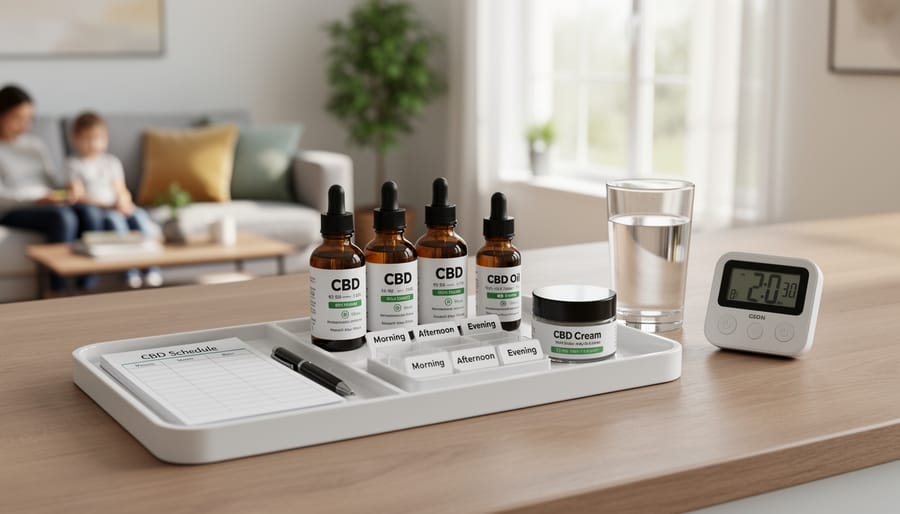
Creating a dedicated CBD station in each home helps maintain consistency and reduces the chance of missed doses or confusion. Start by designating a specific cabinet or drawer in both households—somewhere cool, dark, and out of direct sunlight to preserve product quality. In Canada’s climate, avoid storage near heating vents or windows where temperature fluctuations could affect CBD oil potency.
Keep identical supplies at each location: the CBD product itself, a dosing syringe or dropper, a notebook for tracking doses and observations, and any relevant documentation from your child’s healthcare provider. I’ve found that using matching containers or organizers in both homes creates visual consistency that helps children feel more secure about their routine.
Safety is paramount, especially with multiple children in the home. Store CBD products on high shelves or use child-resistant locks, clearly labeling everything. Consider keeping a laminated instruction sheet with dosing information, emergency contacts, and your co-parent’s number easily accessible. If siblings are curious, age-appropriate explanations about medication safety help prevent accidental access.
Take photos of your setup to share with your co-parent, ensuring both stations mirror each other. This visual reference makes it easier to troubleshoot any confusion and demonstrates your commitment to consistency across households.
Tracking and Monitoring Together
Keeping accurate records of your child’s CBD use across both households is essential for tracking what’s working and catching potential issues early. I learned this the hard way when my co-parent and I realized we were both giving different doses because we weren’t communicating clearly about timing.
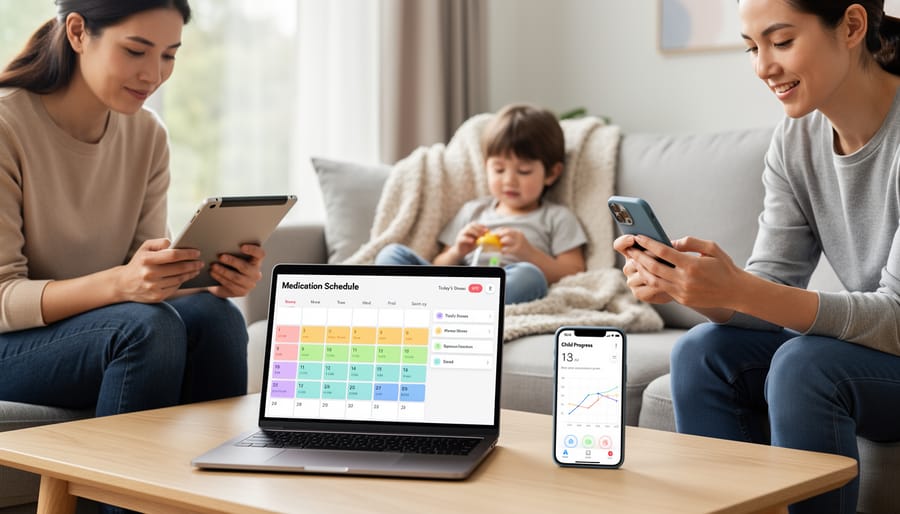
Consider using shared digital tools like Google Sheets or specialized apps such as OurFamilyWizard or Cozi, which allow both parents real-time access to dosing schedules. Track the date, time, product used, dosage amount, and any observed effects or side effects. Note changes in symptoms you’re addressing, whether that’s sleep quality, anxiety levels, or pain management.
A simple shared journal works too. Some parents keep a small notebook that travels with their child, though digital options reduce the risk of it being forgotten during transitions.
Document both positive and negative observations. Did your child seem more settled after their evening dose? Was there any stomach upset? This information becomes invaluable during follow-ups with healthcare providers and helps both parents make informed adjustments.
Remember, consistency in tracking is just as important as consistency in dosing. When both parents commit to recording information regularly, you create a comprehensive picture of how CBD is supporting your child’s wellbeing, regardless of which home they’re in.
Troubleshooting Common Co-Parenting CBD Challenges
When a Parent Forgets or Misses a Dose
Life happens, and missed doses are almost inevitable in any co-parenting situation. The key is having a clear, blame-free protocol in place before these moments occur.
If you realize a dose was missed, first assess the timing. If it’s been less than two hours past the scheduled time, you can typically give the dose right away. Beyond that window, it’s usually better to skip it and resume the regular schedule with the next dose. Never double up doses to “make up” for what was missed unless specifically directed by your child’s healthcare provider.
Communication is essential here. Send a quick, factual message to your co-parent: “Hey, I realized I missed the 3pm dose today. Planning to continue with tomorrow morning’s dose as usual.” Keep it simple and solution-focused rather than apologetic or defensive.
I’ve found that parents who track doses together using a shared app or chart have fewer missed doses overall. It provides that extra accountability without feeling like surveillance.
To prevent future lapses, consider setting phone alarms on both parents’ devices, even for the days when your child isn’t with you. This keeps the routine fresh in everyone’s mind. Some families also place the CBD products in highly visible spots, like near the coffee maker or toothbrushes, as visual reminders.
Remember, an occasional missed dose doesn’t undo your child’s progress. What matters most is getting back on track quickly and learning from the experience to strengthen your system.
Managing Different Household Rules
Co-parenting often means navigating different household rules, from bedtimes to screen time limits. When it comes to your child’s CBD routine, though, consistency matters more than compromise. I’ve spoken with divorced parents who’ve found success by treating CBD administration like medication: even if one household is stricter about sugar and the other more relaxed, both agree to follow the same CBD dosing schedule and product.
Start by identifying what must stay consistent for your child’s wellbeing. This includes the CBD product itself, dosage amounts, timing, and how you track effects. These are non-negotiables that should appear in your co-parenting agreement. Other aspects, like whether CBD is given with breakfast or a snack, can flex between households if needed.
Under Canadian law, both parents with custody rights must agree on medical decisions, including CBD use. If your parenting styles differ significantly, consider working with a family mediator who understands cannabis therapeutics. They can help you focus discussions on your child’s needs rather than household philosophy differences.
Document everything in writing. When both homes follow the same CBD protocol, you’re not just maintaining treatment effectiveness, you’re showing your child that their health comes first, regardless of which parent they’re with that week.
Creating a co-parenting plan for your child’s CBD care might feel overwhelming at first, but I want you to know that it’s absolutely achievable. Throughout my years of helping Canadian families navigate CBD use, I’ve seen countless co-parents successfully coordinate treatment even when they didn’t agree on much else. The key is remembering that this isn’t about winning or being right. It’s about giving your child the consistency they need to benefit from their CBD routine.
Start small if you need to. You don’t have to have everything perfectly mapped out from day one. Begin with the basics: agree on the same product, dosage, and timing. Share a simple tracking method, even if it’s just a shared note on your phones. These small steps build the foundation for more detailed coordination down the road.
The beautiful thing about establishing this consistency is that your child will feel it. They’ll experience fewer disruptions to their wellness routine, and they’ll see both parents working together for their benefit. That sense of stability matters more than you might realize, especially during transitions between households.
If you’re facing resistance from your co-parent, take a breath and try approaching the conversation from a place of shared concern for your child’s wellbeing rather than from a position of conflict. Sometimes it helps to involve a neutral third party like a family counselor or mediator who understands CBD use in Canada.
Remember that co-parenting with CBD treatment gets easier with practice. What feels complicated now will become routine. You’re taking important steps to support your child’s health, and that dedication deserves recognition. Trust the process, stay focused on your child’s needs, and give yourself credit for doing the hard work of co-parenting thoughtfully.