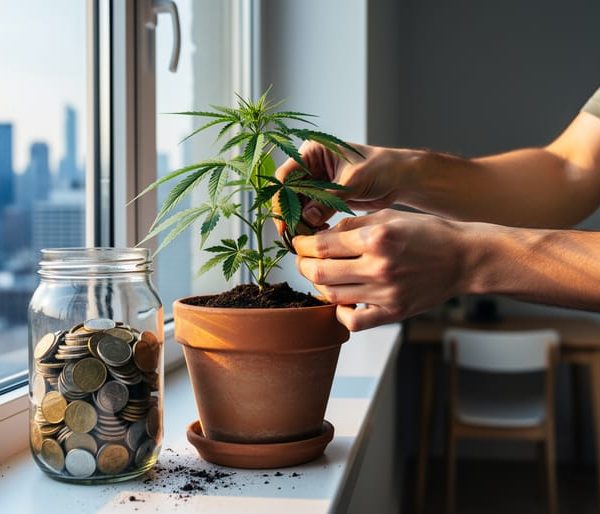
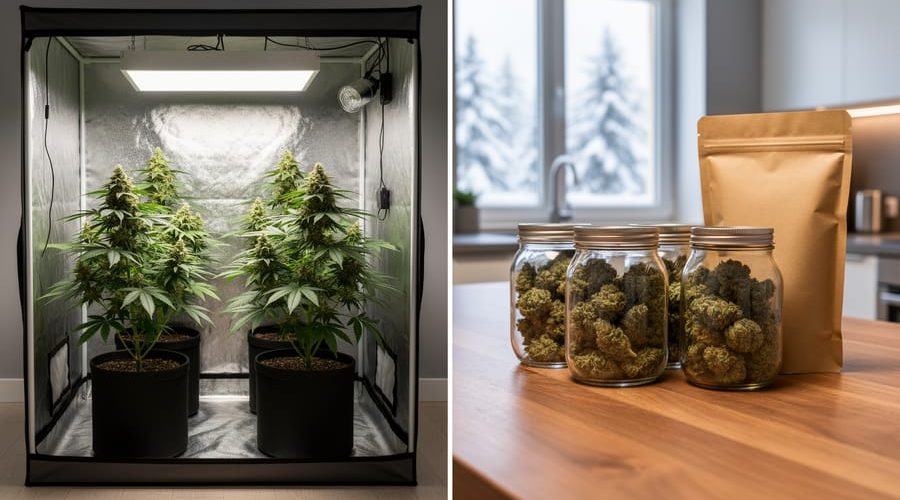
Calculate your monthly cannabis consumption in grams and multiply by your local dispensary’s average price per gram—typically $7-12 across Canada—to establish your annual baseline cost. This number becomes your comparison point for evaluating whether home cultivation makes financial sense for your situation.
Determine your startup investment for growing at home, which ranges from $200 for a basic tent setup to $2,000+ for premium equipment including grow lights, ventilation, nutrients, and quality seeds. Factor in ongoing electricity costs of approximately $30-50 monthly for indoor grows, plus water and replacement supplies. Most first-time growers yield 100-300 grams per plant under Canada’s four-plant limit, meaning a single successful harvest could supply moderate users for six months to a year.
Compare your break-even timeline by dividing total setup costs by monthly dispensary savings. Light consumers spending under $100 monthly at dispensaries may never recoup their investment, while daily users spending $300+ monthly often break even within 3-6 months. Remember that Canada’s legal framework permits adults to grow up to four plants per household for personal use, making this a legitimate option worth exploring financially.
Consider the hidden costs beyond dollars: the 3-4 month growing cycle requires consistent attention, learning curves often reduce first harvest yields by 30-50%, and quality control rests entirely on your developing skills. Growing offers unmatched cost savings for regular users, but occasional consumers typically benefit more from dispensary convenience. Your consumption level ultimately determines which path makes practical financial sense.
The True Cost of Growing Cannabis at Home
Initial Setup Investment
Before you can start growing cannabis at home in Canada, you’ll need to invest in some essential equipment. The good news? There’s a setup for virtually every budget. Let me walk you through what you’ll actually need and what it’ll cost you.
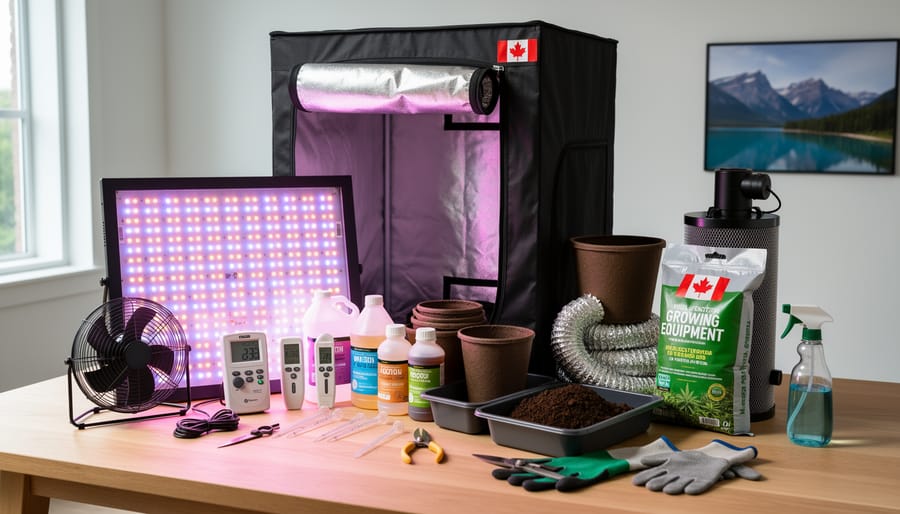
At the heart of your setup is the grow tent, which creates a controlled environment for your plants. Budget-friendly tents (2×2 or 2×4 feet) start around $80-$120, while mid-range options run $150-$250. If you’re going premium with larger spaces and better materials, expect $300-$600.
Lighting is arguably your most important investment. Budget LED grow lights suitable for small spaces cost $60-$120. Mid-range full-spectrum LEDs, which I’d honestly recommend for most beginners, range from $150-$350. Premium quantum board or high-output LEDs can set you back $400-$800, though they’re more energy-efficient long-term.
Ventilation keeps your plants healthy and your home odor-free. A basic inline fan with carbon filter costs $80-$150 for budget setups, $180-$300 for mid-range, and $350-$600 for premium systems with advanced climate control.
You’ll need pots or containers, which are surprisingly affordable. Fabric pots are popular and run $15-$40 for a budget set, $50-$80 mid-range, or $100-$150 for premium self-watering systems.
Growing medium is another consideration. Basic soil costs $20-$40 for your first grow, while premium organic or coco coir setups run $60-$120.
Finally, there’s seeds or clones. Legal seed purchases in Canada typically cost $40-$80 for budget feminized seeds, $100-$150 for mid-range genetics, or $200+ for premium strains from reputable breeders.
Adding it all up, a bare-bones starter setup runs approximately $300-$550. Most beginners find the sweet spot around $700-$1,200 for mid-range equipment that’ll serve them well. Premium setups easily reach $1,500-$2,500 or more.
Remember, this is just your initial investment. We’ll look at ongoing costs separately, but understanding these upfront expenses helps you determine whether growing makes financial sense for your situation.
Ongoing Monthly Costs
Once your grow setup is running, you’ll face regular monthly expenses that add up quickly. Understanding these recurring costs helps you calculate your true break-even point compared to buying from dispensaries.
Electricity typically represents your largest ongoing expense. A modest two-plant grow using LED lights will consume approximately 150-300 watts during the flowering stage. Based on average Canadian electricity rates, expect $25-45 per month in Ontario, $15-25 in Quebec where rates are lower, and $40-60 in Alberta. If you’re running a larger four-plant setup with higher-wattage equipment, these numbers can easily double.
Water costs remain relatively minimal, usually adding just $5-10 monthly even with regular watering schedules. However, nutrients become a significant consideration. Quality cannabis-specific nutrients for soil or hydroponic systems typically cost $30-50 per month for a small grow. You’ll need different formulations for vegetative and flowering stages, plus potential pH adjusters and supplements.
Replacement supplies create another expense category many new growers overlook. Growing medium needs refreshing between grows, filters require regular replacement, and you’ll occasionally need pest management products. Budget approximately $20-30 monthly for these miscellaneous items.
From my experience speaking with Canadian home growers, realistic total monthly costs range from $80-150 for a basic two-plant setup, climbing to $150-250 for four plants with premium nutrients and equipment. These figures assume you’re growing continuously with plants at different stages.
Remember that seasonal variations affect costs too. Winter growing in colder provinces might reduce cooling needs but increase heating expenses, while summer grows require better ventilation. Provincial electricity rate differences significantly impact your bottom line, making Quebec and Manitoba particularly economical for home cultivation compared to the Atlantic provinces.
Hidden Costs Nobody Talks About
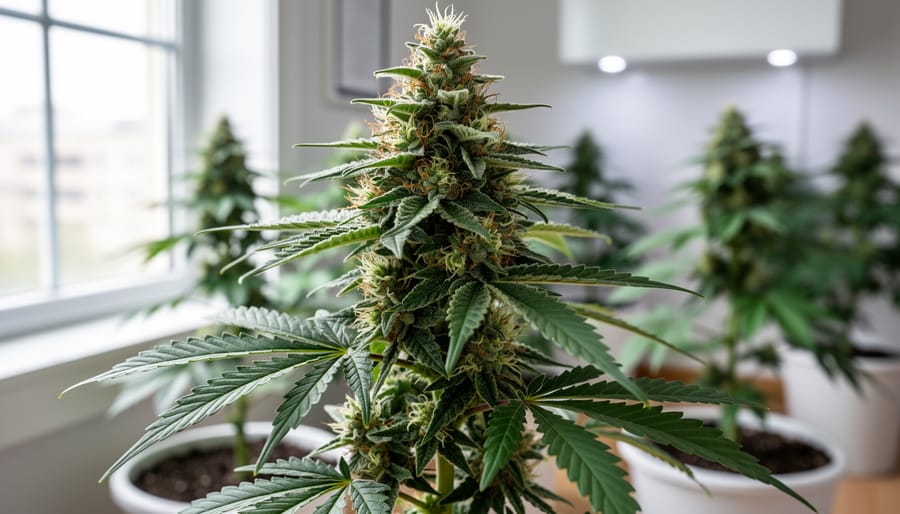
When I first considered growing at home, I thought the startup costs were the whole story. I quickly learned there’s much more to budget for. Your first grow will likely yield less than expected—beginner mistakes like overwatering, nutrient burns, or lighting issues are incredibly common. You might invest $500 in your setup only to harvest barely usable product the first time around.
The time investment is substantial but rarely discussed in dollars-and-cents terms. Between daily monitoring, watering, training plants, and harvesting, you’re looking at 10-15 hours per grow cycle minimum. If you value your time at even $20 per hour, that’s $200-300 in opportunity cost.
Then there’s the learning curve. Quality growing guides, online courses, or consultation with experienced growers can add $50-200 to your initial investment. Some homeowners also discover their insurance premiums increase once they disclose home cultivation, though policies vary across Canadian providers.
Property considerations matter too—grow setups can cause moisture issues, odours that bother neighbours, and increased electricity usage that might raise questions. These hidden factors can significantly impact whether home growing makes financial sense for your situation.
What You’ll Actually Spend Buying from Dispensaries
Average Consumer Spending Patterns
Understanding how much you’ll spend on cannabis products is essential when deciding whether buying or growing makes more sense for your situation. Let me break down what typical consumers in Canada are spending at dispensaries right now.
Light users, consuming about 1-2 grams of dried flower per week, generally spend between $20 to $40 monthly. At current market prices, quality dried cannabis ranges from $7 to $12 per gram at legal retailers, though bulk purchases can bring costs down to $5 per gram. For these occasional users, annual spending sits around $240 to $480. If you prefer CBD products instead, light users might spend $30 to $50 monthly on oils or capsules, as these products typically cost more per dose than dried flower.
Moderate users consuming about 3-5 grams weekly see their monthly expenses climb to $60 to $150, or roughly $720 to $1,800 annually. Many moderate users find better value purchasing in larger quantities like half-ounces, which can reduce per-gram costs significantly. I’ve noticed that folks in this category often mix their purchases between dried flower for evening use and CBD oils for daytime wellness needs.
Regular users going through 7-14 grams per week face monthly costs between $140 to $350, totaling $1,680 to $4,200 annually. At this consumption level, buying ounces becomes the most economical option at dispensaries, with prices dropping to $120 to $180 per ounce for mid-range quality products. Regular users particularly benefit from loyalty programs many Canadian retailers offer, though these savings still leave substantial annual expenses.
These figures represent legal market prices in 2024, which have become more competitive as the industry matures. However, when you’re spending over $1,500 annually, the growing-versus-buying calculation becomes particularly worth examining.
The Quality and Variety Factor
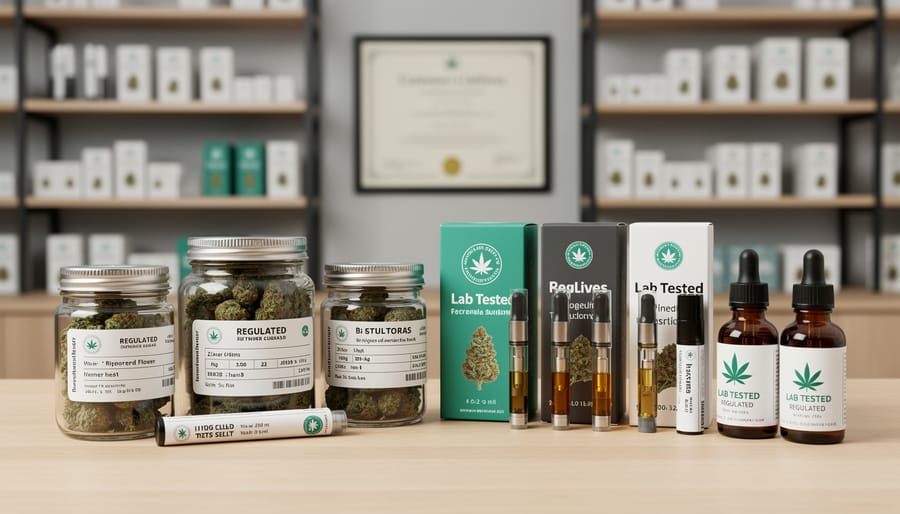
When you purchase cannabis from a licensed dispensary in Canada, you’re paying for more than just the product itself—you’re investing in quality assurance and convenience that’s difficult to replicate at home.
One of the biggest advantages of buying from legal retailers is consistency. Licensed producers must follow strict Health Canada regulations, which means every product undergoes rigorous testing for potency, contaminants, pesticides, and heavy metals. You’ll know exactly how much THC and CBD you’re getting, which is especially important if you’re using cannabis for specific therapeutic purposes. This level of certainty simply isn’t possible with home-grown cannabis unless you’re willing to pay for third-party lab testing, which can cost hundreds of dollars per sample.
The variety available at dispensaries is honestly impressive. Beyond different strains of flower, you’ll find oils, capsules, edibles, topicals, vapes, and even beverages—all precisely dosed and ready to use. If you’re someone who prefers edibles or topicals over smoking, creating these products at home requires additional equipment, ingredients, and considerable trial and error. I’ve spoken with many Canadians who appreciate being able to try different consumption methods without the commitment of making them themselves.
Convenience is another factor worth considering. Dispensaries offer immediate access to products whenever you need them, without waiting months for plants to mature. You can also purchase small quantities to try new strains without growing an entire plant that might not suit your preferences.
For many people, especially those newer to cannabis or with limited consumption needs, the reliability and peace of mind that comes with purchasing tested, regulated products makes it a worthwhile investment, even if the per-gram cost is higher than growing your own.
The Break-Even Point: When Growing Becomes Cheaper
Conservative Scenario Analysis
Let’s be honest: your first cannabis grow probably won’t be Instagram-worthy. When I first helped my neighbour set up his grow tent, we had such high hopes for those four plants. Reality check? Two didn’t make it past seedling stage, and the survivors yielded about half what we’d optimistically calculated.
For a conservative financial analysis, let’s assume you’re growing four plants (the legal limit in most Canadian provinces) with beginner-friendly results. Your initial setup costs around $800 for basic equipment: a modest tent, LED light, ventilation, soil, nutrients, and seeds. First-time growers typically harvest 15-30 grams per plant, so let’s work with 80 grams total from your first grow.
If you typically purchase cannabis at $10 per gram from a dispensary, that 80-gram harvest saves you $800 – essentially breaking even on your first grow. However, factor in the learning curve: maybe you need to replace dead plants ($50), buy pH testing equipment you forgot ($30), or address a pest issue ($40). Your real break-even might stretch to your second harvest.
The good news? Your second and third grows will cost significantly less – mainly just nutrients, electricity, and seeds. Most beginners see substantial improvement by their third attempt, often doubling their yield as they learn proper watering, lighting schedules, and when to harvest. If you consume 10-15 grams monthly, you’re looking at genuine savings by month six to eight, assuming you stick with it through the initial fumbles.
Experienced Grower Economics
Once you’ve developed your green thumb and consistently produce healthy plants, the economics shift dramatically in your favor. Under Canadian law, you can grow up to four plants per household, and experienced growers typically harvest between 100 to 200 grams per plant indoors, or even more with outdoor growing during the summer months.
Let’s say you’re getting a modest 150 grams per plant with four plants. That’s 600 grams per harvest, and many growers manage two harvests per year. At 1,200 grams annually, you’re looking at producing enough to cover regular use without constantly buying from dispensaries where prices average $7 to $12 per gram.
Your ongoing costs drop significantly once you’ve mastered the basics. You’re no longer replacing expensive equipment or dealing with failed crops. Annual expenses typically include electricity (around $200 to $400 per year for indoor growing), nutrients and soil ($100 to $150), and occasional maintenance like replacing grow bulbs ($50 to $100). That’s roughly $350 to $650 in yearly operating costs.
Compare this to buying that same 1,200 grams from a dispensary at $10 per gram, which would cost you $12,000 annually. Even factoring in your initial setup investment, most experienced growers see their costs drop to less than $1 per gram produced.
The financial advantage becomes undeniable at this stage, especially if you’re a regular consumer. You’ve essentially created your own sustainable, cost-effective supply that pays dividends year after year.
What the Numbers Don’t Tell You
Time, Skill, and Lifestyle Considerations
Beyond the dollars and cents, growing cannabis at home requires a genuine commitment that often catches newcomers off guard. When I first spoke with friends who’d made the leap to home growing, they all mentioned one thing: the learning curve was steeper than expected.
Cannabis plants need consistent attention. You can’t just water them occasionally and hope for the best. During the growing cycle, you’ll need to monitor pH levels, adjust lighting schedules, watch for nutrient deficiencies, and stay alert for pests or mold. This isn’t a fifteen-minute weekly hobby—especially during your first few grows when everything feels unfamiliar. Many growers estimate spending 30-60 minutes daily tending their plants, plus several hours during harvest and curing.
The lifestyle fit matters tremendously. If you travel frequently for work, have an unpredictable schedule, or simply prefer minimal home responsibilities, growing might feel more stressful than rewarding. There’s also the reality that your living space will smell strongly during flowering, which some people love but others find overwhelming (and neighbours might notice in apartments or shared housing).
What surprised me most in researching this topic was how many experienced growers described their early harvests as disappointing—lower yields than anticipated, or product quality that didn’t match dispensary standards until their third or fourth attempt. The financial break-even point we discussed earlier assumes successful grows, but that learning period is real.
Growing works beautifully for people who genuinely enjoy gardening, have stable home routines, and view the process itself as rewarding rather than merely transactional.
Legal Compliance in Canada
Before you decide whether home growing makes financial sense, it’s essential to understand what’s actually legal in Canada. Under federal law, adults can grow up to four cannabis plants per household for personal use. Notice I said per household, not per person—this trips up a lot of people. If you’re sharing a home with roommates or family members who also consume cannabis, you’re still limited to those four plants total.
Provincial regulations add another layer, and they vary significantly. Quebec and Manitoba have banned home cultivation entirely, so if you’re in those provinces, this comparison unfortunately doesn’t apply to you. Most other provinces stick with the federal four-plant limit, though some have additional rules about where you can grow (indoors only, away from public view, etc.).
The penalties for exceeding these limits aren’t trivial. Growing more than four plants can result in fines or even criminal charges depending on the number of plants. When calculating your costs and potential savings, remember that staying within legal boundaries isn’t optional—it’s part of the investment. You can’t simply scale up production to maximize savings if it means breaking the law. This legal framework is actually why home growing might not make sense for heavier users who would need more production capacity than four plants can reasonably provide.
Making the Right Choice for Your Situation
So how do you actually decide whether buying or building makes more sense for you? Let me walk you through a practical framework that’s helped many Canadians I’ve spoken with make this decision.
Start by honestly assessing your monthly consumption. If you’re using less than 30 grams per month, the math typically favors purchasing from dispensaries. The upfront investment in growing equipment and the ongoing electricity costs rarely justify themselves at lower consumption levels. However, if you’re a medical user or someone who regularly consumes more than 60 grams monthly, growing your own becomes increasingly attractive from a pure dollars-and-cents perspective.
Budget flexibility is another crucial factor. Can you comfortably allocate $800 to $2,000 upfront without straining your finances? Growing requires that initial investment before you see any returns, and your first harvest won’t arrive for three to four months. If that timeline doesn’t work with your current financial situation, there’s absolutely no shame in continuing to purchase while you save toward that goal.
Consider your lifestyle honestly. Do you travel frequently for work? Do you have young children or pets who might access your growing space? Are you comfortable with the time commitment of 30 minutes to an hour daily during peak growing periods? I’ve learned through conversations with growers that commitment level matters more than many people initially realize.
Your living situation plays a significant role too. Renters need explicit permission from landlords under Canadian law, and condo dwellers may face additional restrictions in their building bylaws. Homeowners have more flexibility but should still consider factors like available space, ventilation options, and whether they’re planning to sell their property soon.
Finally, think about your personal interest in the cultivation process itself. Some people genuinely enjoy the hobby aspect of growing, finding it meditative and rewarding beyond the cost savings. Others simply want convenient access to cannabis without additional responsibilities. Neither approach is wrong.
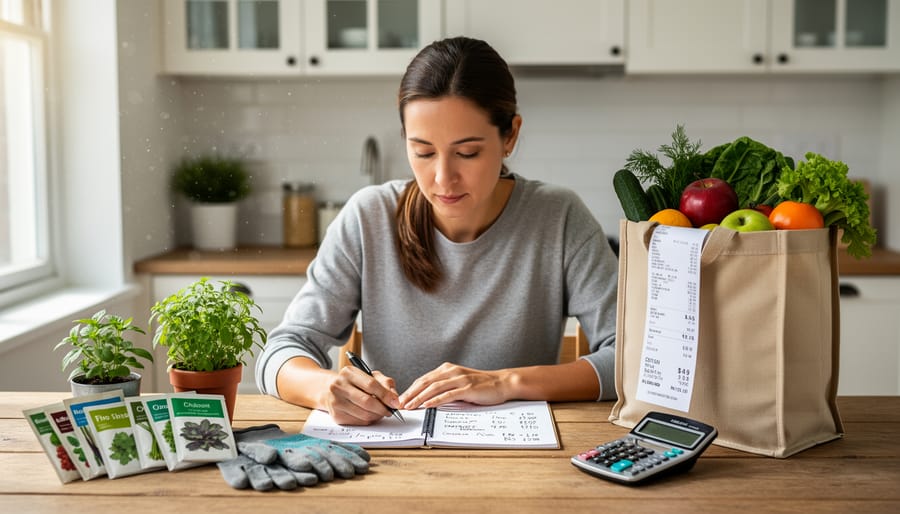
So, what’s the bottom line when it comes to growing your own cannabis versus buying from a dispensary? Honestly, there isn’t a one-size-fits-all answer, and that’s completely okay.
As we’ve explored throughout this comparison, growing at home can absolutely save you money in the long run if you’re a regular consumer and willing to invest the time and upfront costs. For someone using a few grams weekly, the break-even point typically arrives within the first year or two. On the other hand, buying from licensed retailers offers unmatched convenience, product variety, and zero learning curve, which makes it the perfect choice for occasional users or those without the space and interest in cultivation.
I’ve spoken with Canadians who’ve taken both routes, and what strikes me most is how personal this decision really is. One friend absolutely loves the ritual of tending her plants and takes pride in her harvest, while another simply prefers the ease of stopping by his local shop on the way home from work. Both are making the right choice for their circumstances.
The key is being honest with yourself about your consumption patterns, available space, time commitment, and genuine interest in the growing process. Crunch the numbers based on your specific situation rather than general assumptions.
What’s been your experience? Are you currently growing at home or purchasing from dispensaries? Drop your questions or stories in the comments below. Your insights might just help someone else make their decision.