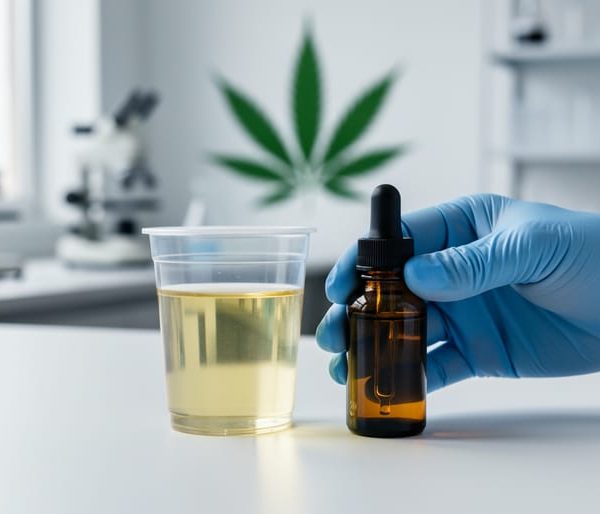
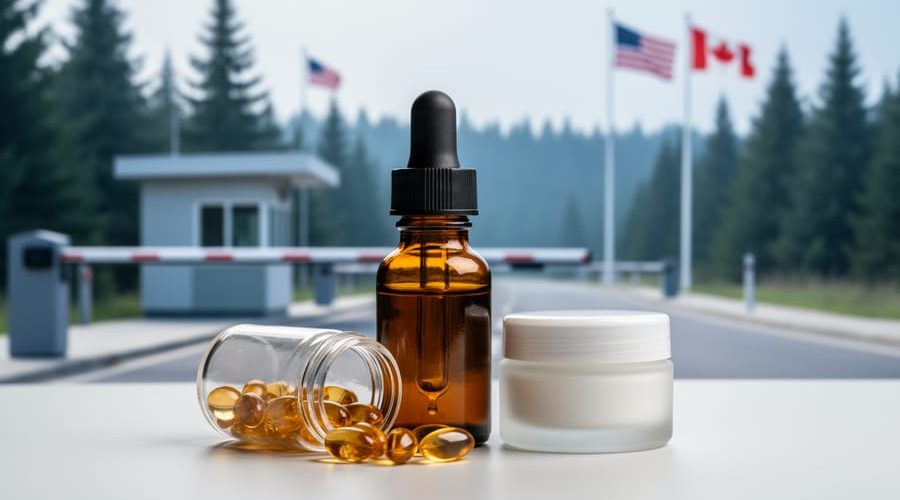
New Hampshire’s Therapeutic Cannabis Program operates as one of the more restrictive medical marijuana systems in the United States, prohibiting smokable flower and limiting access to oils, tinctures, capsules, and topicals. For Canadian readers researching this program—whether you’re considering relocation, have family in New Hampshire, or simply want to compare regulatory approaches—understanding these limitations is essential before making any assumptions about cross-border access or product availability.
The program serves approximately 7,000 registered patients through four licensed Alternative Treatment Centers, requiring qualifying conditions like cancer, PTSD, chronic pain, and epilepsy. Unlike Canada’s broader medical and recreational framework, New Hampshire maintains tight controls on who can access therapeutic cannabis and in what forms, with no reciprocity for out-of-state or international medical cannabis cards.
This distinction matters critically for Canadians: your legal medical authorization at home provides zero protection in New Hampshire, and transporting cannabis products across the US-Canada border remains a federal offense regardless of state-level programs. Even CBD products legal in Canada may present legal complications when crossing international boundaries.
This guide breaks down New Hampshire’s therapeutic cannabis program structure, available extract options, qualifying conditions, and registration requirements while addressing common questions from Canadian readers about legal considerations and how this state-level program compares to Canada’s national system. Whether you’re researching for personal knowledge or practical necessity, understanding these regulatory differences protects you from costly legal misunderstandings.
Why New Hampshire’s Program Matters (Even to Canadians)
You might be wondering why a program in New Hampshire matters when you’re sitting comfortably in Canada, where cannabis has been fully legal since 2018. The answer comes down to three key considerations that make understanding NH’s therapeutic cannabis program surprisingly relevant.
First, many Canadians have family members or close friends living in New Hampshire. If you’re helping a loved one navigate their medical cannabis options across the border, understanding how NH’s program works can be incredibly valuable. I’ve spoken with several readers who’ve reached out because their aging parents relocated to NH and needed guidance on accessing therapeutic cannabis extracts—something that feels quite different from our Canadian system.
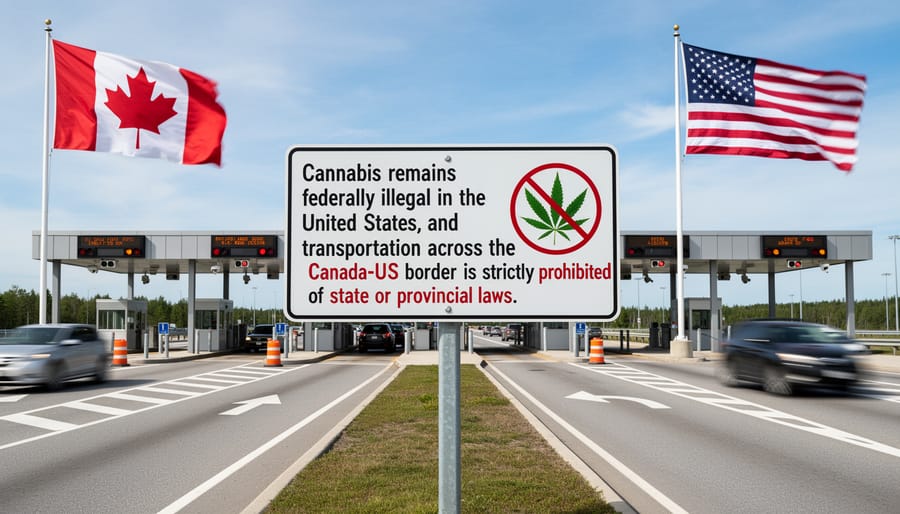
Second, there’s the cross-border medical tourism aspect to consider. While I need to be clear that transporting cannabis products across the Canadian-U.S. border remains federally illegal on both sides (regardless of state or provincial laws), some Canadians living near the border have wondered about accessing programs in nearby states. Understanding what NH offers helps you make informed decisions and, more importantly, understand the significant legal risks involved. The short answer: don’t do it. Even with valid medical documentation from either country, crossing international borders with cannabis can result in serious legal consequences.
Third, and perhaps most interesting from an educational standpoint, NH’s therapeutic cannabis program takes a notably different approach to extracts and concentrates compared to Canada’s medical system. New Hampshire emphasizes therapeutic cannabis extracts—tinctures, capsules, and topicals—over dried flower, which wasn’t even available in the program until 2020. This extract-focused approach offers valuable insights into alternative consumption methods that might better suit your own needs, even if you’re accessing products through Canada’s legal framework. Understanding how different jurisdictions structure their programs deepens your overall knowledge about medical cannabis options and helps you advocate for yourself more effectively within whichever system you’re navigating.
How New Hampshire’s Therapeutic Cannabis Program Works
Qualifying Conditions in New Hampshire
New Hampshire’s Therapeutic Cannabis Program approves patients with specific, documented medical conditions. Currently, the state recognizes conditions including chronic pain, PTSD, cancer, Crohn’s disease, multiple sclerosis, and several other serious ailments. Patients must also have qualifying conditions like epilepsy, muscular dystrophy, or Parkinson’s disease, among others listed in the state’s legislation. Importantly, a licensed healthcare provider must certify that the patient has one of these conditions and would benefit from therapeutic cannabis use.
The qualifying process in New Hampshire is notably more restrictive than what many Canadians might be familiar with. Here in Canada, our medical cannabis system operates quite differently—healthcare providers have broader discretion to recommend cannabis for various conditions based on their clinical judgment, rather than being limited to a predetermined list. This means Canadian patients often have easier access to medical cannabis for conditions that might not qualify in New Hampshire.
For those of you comparing systems or perhaps researching for family members in New Hampshire, it’s worth noting that NH requires substantial medical documentation. Patients need ongoing relationships with their healthcare providers and must renew their certifications annually. The state takes a conservative approach, periodically reviewing and potentially expanding the qualifying conditions list through legislative action.
If you’re a Canadian considering therapeutic cannabis, you’ll likely find our domestic system more accommodating and less restrictive than New Hampshire’s program, though NH’s structure does ensure rigorous medical oversight.
The Registration Process
Getting approved for New Hampshire’s Therapeutic Cannabis Program involves a straightforward process, though it differs from what many Canadians might be familiar with in their home provinces. First, you’ll need to establish care with a qualified New Hampshire physician who can certify that you have one of the approved qualifying conditions. This isn’t just any doctor—they must be licensed in NH and registered with the state’s program.
Once your physician determines you’re eligible, they’ll submit certification documentation directly to the state registry. You won’t handle this part yourself, which simplifies things considerably. After certification, you’ll receive instructions to complete your patient registration online through the NH Department of Health and Human Services portal. You’ll need to provide identification proving NH residency, which is an important distinction for Canadians considering this program—you must be an actual resident, not just visiting.
The state reviews applications typically within a few weeks, and if approved, you’ll receive your registry identification card by mail. This card is essential for purchasing therapeutic cannabis from any of NH’s licensed Alternative Treatment Centers. The registration fee is currently reasonable, and cards must be renewed annually along with physician recertification.
Accessing Products and Dispensaries
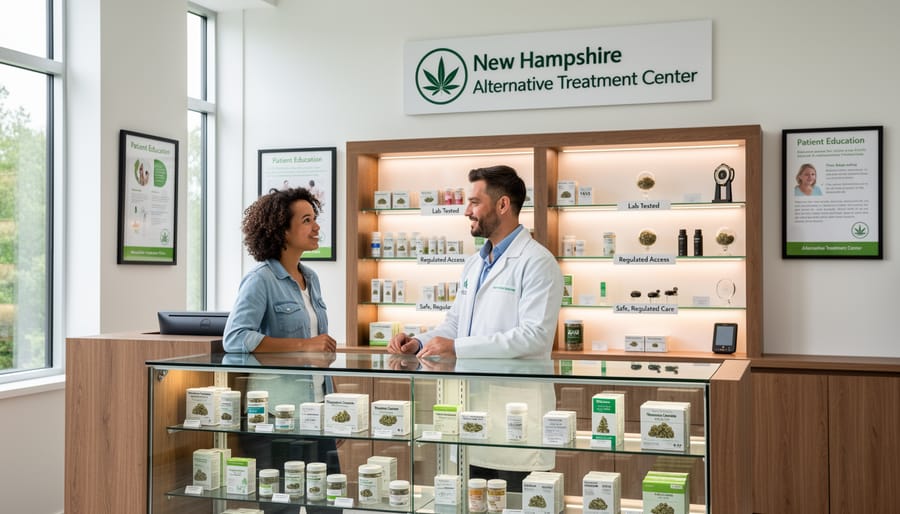
New Hampshire operates a controlled network of Alternative Treatment Centers (ATCs) that serve as the state’s licensed dispensaries for qualified patients. Currently, there are seven ATCs distributed across the state, making therapeutic cannabis reasonably accessible to residents throughout New Hampshire. Each ATC functions as both a cultivation facility and dispensary, ensuring quality control from seed to sale.
What’s particularly interesting about New Hampshire’s approach is the range of therapeutic cannabis extracts available. Patients can access various forms including tinctures, capsules, topicals, and vaporizable concentrates. The state’s program notably prohibits smoking raw flower, instead focusing on extract-based products designed for more precise dosing and cleaner consumption methods. This extract-focused model may appeal to patients seeking alternatives to traditional smoking.
For Canadians researching this program, it’s important to understand that you cannot legally transport cannabis across the US-Canada border in either direction, regardless of medical documentation. If you’re a Canadian with family in New Hampshire or considering relocation, you’d need to establish New Hampshire residency and go through the state’s qualification process independently. Each ATC maintains its own inventory and pricing, so patients often compare options between centers to find products that best suit their therapeutic needs and budget.
Understanding Therapeutic Cannabis Extracts in NH’s Program
Types of Extracts Available
New Hampshire’s Therapeutic Cannabis Program takes a notably cautious approach compared to what many Canadians might be familiar with—the program currently prohibits smoking cannabis flower entirely. Instead, patients can access therapeutic cannabis extracts in several approved forms designed for safer consumption.
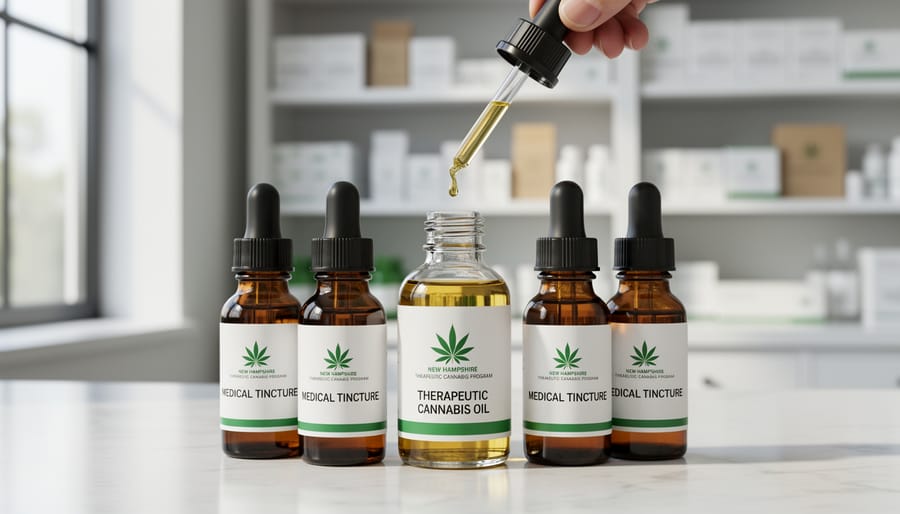
The primary options available through NH dispensaries include oral oils and tinctures, which patients can take sublingually (under the tongue) or mix into food and beverages. These products offer precise dosing and longer-lasting effects, making them ideal for managing chronic conditions like pain or anxiety throughout the day.
Vape cartridges represent another approved format, providing faster relief than oral products since cannabinoids absorb quickly through the lungs. Many patients appreciate this method for breakthrough pain or acute symptom management.
You’ll also find concentrated cannabis oils suitable for various administration methods, along with topical preparations like creams and balms for localized pain relief without psychoactive effects.
For Canadians researching this program, it’s worth noting that NH’s extract-only approach differs significantly from Canada’s more permissive system that includes dried flower. This restriction aims to reduce respiratory risks while still providing therapeutic benefits. The variety of extract forms ensures patients can find delivery methods matching their medical needs and lifestyle preferences, though the selection remains more limited than what Canadian medical cannabis patients typically access through their own healthcare providers.
Potency and Dosing Guidelines
New Hampshire’s therapeutic cannabis program sets specific potency limits to ensure patient safety. Products cannot exceed 30% THC concentration, though CBD products face no upper limit since they’re non-intoxicating. The state’s Alternative Treatment Centers must clearly label all THC and CBD ratios on product packaging, helping patients make informed choices about their medicine.
Unlike recreational programs, NH requires healthcare practitioners to provide initial dosing guidelines as part of the certification process. Patients typically start with low doses and gradually increase under medical supervision. Alternative Treatment Centers employ trained staff who can answer questions about consumption methods and timing, though they cannot provide medical advice.
From a Canadian perspective, this approach differs notably from our system. While Canadian medical cannabis patients receive guidance from healthcare providers, our Licensed Producers often provide more detailed dosing information directly. Canada also doesn’t impose the same 30% THC cap, allowing for higher-potency products when medically justified.
I’ve noticed through conversations with cross-border friends that NH’s mandatory medical oversight creates an additional safety layer that some Canadian patients wish they had. The structured guidance can be particularly valuable for cannabis newcomers navigating therapeutic extracts for the first time, ensuring they don’t feel overwhelmed by product choices.
Quality and Safety Standards
New Hampshire’s therapeutic cannabis program maintains rigorous quality control standards to ensure patient safety. All cannabis products, including extracts, must undergo mandatory third-party testing at state-licensed laboratories before reaching dispensaries. These tests screen for potency levels, heavy metals, pesticides, residual solvents, and microbial contaminants like mold and bacteria.
The cannabis oil extraction process is closely monitored, with Alternative Treatment Centers required to follow strict Good Manufacturing Practices. Each product batch receives a certificate of analysis detailing cannabinoid profiles and confirming it meets safety thresholds. This transparency helps patients make informed choices about their medicine.
For Canadians familiar with Health Canada’s regulations, NH’s standards follow similar principles of comprehensive testing and quality assurance. However, it’s important to remember that these products cannot legally cross international borders, regardless of your medical status in either country.

Key Differences Between NH and Canadian Cannabis Programs
For Canadians researching New Hampshire’s program—perhaps because of family connections or general curiosity—it’s helpful to understand how dramatically these two approaches differ. I remember when I first started comparing programs across North America, I was surprised by just how much variation exists even among jurisdictions with similar medical cannabis goals.
The most fundamental difference is access. New Hampshire operates a strictly medical-only program, while Canada has embraced both medical and recreational frameworks since legalization in 2018. In NH, you need a qualifying medical condition and physician certification to access any cannabis products. There’s no recreational pathway whatsoever. Canada’s medical cannabis system remains robust alongside recreational access, offering distinct advantages like higher possession limits and tax exemptions for registered patients.
Product availability also varies significantly. New Hampshire’s program specifically emphasizes therapeutic cannabis extracts—oils, tinctures, capsules, and topicals—though some dispensaries now carry flower. The state has historically favored non-smoking consumption methods. In Canada, medical patients can access an enormous range of products through licensed producers, from traditional flower to sophisticated formulations, edibles, concentrates, and topicals. The sheer variety in Canadian dispensaries would astound many NH patients.
Cost structures differ considerably too. New Hampshire patients pay out-of-pocket for everything since cannabis remains federally illegal in the United States, making insurance coverage impossible. Prices at NH dispensaries can be steep compared to some Canadian options, though they’re generally competitive with other northeastern U.S. states. Canadian medical patients also pay privately in most cases, but they benefit from GST/HST exemptions and can sometimes claim medical cannabis expenses on tax returns.
Regulatory philosophies reflect broader national attitudes. New Hampshire takes a cautious, controlled approach with limited dispensary locations and strict oversight. Canada has embraced a more open model with extensive retail networks, provincial variations, and ongoing regulatory refinement based on real-world experience.
For Canadians, understanding these differences matters if you’re considering travel or helping U.S. family members navigate their options. The programs serve similar medical needs but operate within vastly different legal landscapes.
What Canadians Should Know About Cross-Border Considerations
Before I dive into the legal complexities here, I want to be crystal clear about something I learned the hard way during my own research: even though cannabis is legal in Canada and New Hampshire has a therapeutic cannabis program, there’s a significant legal wall between the two that cannot be crossed.
Let’s start with the fundamental issue. While New Hampshire operates a state-sanctioned therapeutic cannabis program, cannabis remains illegal under United States federal law. This creates a critical problem at the border. Regardless of whether you have a valid Canadian medical cannabis authorization or prescription, attempting to bring any cannabis product across the U.S.-Canada border in either direction is a federal offense that can result in permanent entry bans, criminal charges, and serious legal consequences. U.S. Customs and Border Protection officers operate under federal jurisdiction, where cannabis possession remains prohibited.
Even if you’re thinking you might access New Hampshire’s program while visiting family or traveling in the state, that’s not legally possible. New Hampshire’s Therapeutic Cannabis Program does not offer reciprocity or temporary access for out-of-state medical cannabis patients, including Canadians. The program requires New Hampshire residency, proven through state-issued identification and utility bills. There’s no visitor provision, temporary authorization process, or recognition of Canadian medical documents within their system.
I’ve spoken with Canadians who assumed medical cannabis laws worked similarly across borders, but the reality is quite different. Each jurisdiction operates independently, and crossing international boundaries with cannabis products simply isn’t permissible under current laws, regardless of medical need or documentation.
If you’re researching New Hampshire’s program because you have connections to the state or are considering relocation, understanding these restrictions upfront is essential. While it’s valuable to learn how different programs operate for comparative purposes, Canadians should focus on accessing legal cannabis products within Canada’s regulatory framework rather than attempting any cross-border cannabis activities.
New Hampshire’s therapeutic cannabis program offers a thoughtful model worth understanding, particularly in its extract-focused approach that differs from many other jurisdictions. The program’s emphasis on non-smokable forms like oils, tinctures, and capsules reflects a medical-first philosophy that prioritizes patient health and diverse consumption methods. While this information is valuable for educational purposes, especially if you’re researching various approaches to medical cannabis, I want to remind my fellow Canadians that we’re fortunate to have our own comprehensive and well-regulated cannabis system right here at home.
Canada’s medical and recreational cannabis frameworks provide robust access, quality control, and consumer protections that serve us well. Learning about programs like New Hampshire’s can certainly broaden our understanding of how different regions approach therapeutic cannabis, but there’s no need to look beyond our borders for access. When I first started exploring CBD products years ago, understanding the Canadian system felt overwhelming, but taking time to learn our own laws and available products proved incredibly worthwhile.
Use insights from programs like NH’s to ask better questions and make more informed decisions within Canada’s legal framework, where you’re protected by strong regulations and have access to extensive product options tailored to your needs.