
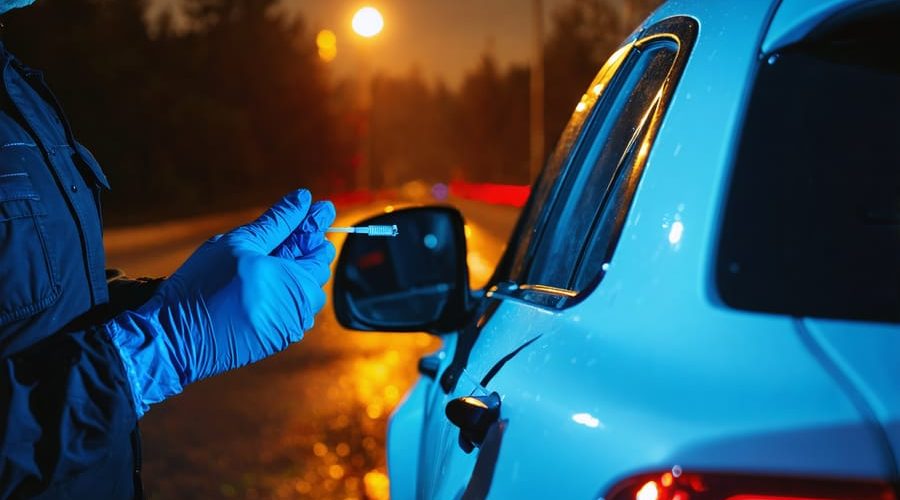
Understand that driving after consuming cannabis is illegal in Canada, regardless of how you feel. Police can charge you with impaired driving if THC is detected in your system above legal limits, even if you consumed days earlier. The law doesn’t distinguish between feeling high and having THC in your blood—detection equals potential criminal charges.
Since cannabis legalization in Canada, roadside testing has become standard. Officers use oral fluid devices that detect THC presence within minutes, and refusal to test carries the same penalties as impaired driving. Blood tests follow, measuring nanograms of THC per milliliter of blood. Two nanograms within two hours of driving results in a fine; five nanograms means criminal charges, license suspension, and possible jail time.
Here’s what complicates this: THC stays in your system long after impairment fades. Regular users may test positive days or weeks later, while occasional users typically clear THC within 24-48 hours. CBD products containing even trace THC (under 0.3% is legal) can accumulate with regular use and potentially trigger a positive test.
The stakes are serious—criminal records affect employment, travel, and insurance rates permanently. This guide breaks down exactly what Canadian law says, how testing works, when it’s safe to drive after consumption, and specific considerations for CBD users who want to stay completely legal behind the wheel.
What Canadian Law Actually Says About Driving and Cannabis
The THC Limits You Need to Know
Canada’s federal cannabis laws set clear blood THC concentration limits, and understanding these numbers is crucial for anyone who uses cannabis.
The **2 nanogram (ng) limit** applies to drivers with specific restrictions—those in the Graduated Driver’s Licensing (GDL) program, commercial drivers, and anyone operating vehicles like buses or taxis. At this level, you face a maximum fine of up to $1,000. Think of this as a zero-tolerance approach for professional and new drivers.
The **5ng limit** is the threshold for most drivers with full licenses. If you’re caught between 2ng and 5ng of THC per millilitre of blood, penalties include the same maximum $1,000 fine. However, exceeding 5ng moves you into more serious territory with mandatory minimum fines of $1,000 for first offenses, escalating to 30 days imprisonment for a second offense, and 120 days for a third.
Here’s where it gets particularly strict: **combining cannabis and alcohol**. If you have 2.5ng or more of THC *plus* a blood alcohol concentration of 0.05 or above, you face the harshest penalties—starting at a mandatory $1,000 fine for first-time offenders.
These limits apply regardless of what cannabinoid you’ve consumed. While CBD products shouldn’t cause impairment, some contain trace THC that could theoretically register. Just as with Delta 8 legal status, understanding what’s in your products matters legally.
Provincial penalties often add additional consequences including license suspensions, vehicle impoundment, and increased insurance costs—even before you reach court.
How Cannabis Impairment Laws Differ From Alcohol
Unlike alcohol, which your body metabolizes at a predictable rate of roughly one standard drink per hour, cannabis doesn’t follow the same rules. THC is fat-soluble, meaning it stores in your body’s fat cells and releases slowly over time. This is why there’s no “one joint per hour” guideline—your impairment doesn’t decrease in a linear, predictable way.
For occasional users, THC might clear your system within a few days, but regular consumers can test positive for weeks or even months after their last use. This creates a challenging situation: you might feel completely sober yet still fail a roadside test. The presence of THC in your system doesn’t necessarily indicate current impairment, but Canadian law enforcement doesn’t always distinguish between the two.
This complexity extends to CBD products as well. While pure CBD shouldn’t impair you, trace amounts of THC in full-spectrum products can accumulate in regular users. Understanding CBD legal limits is crucial, especially if you use CBD daily for wellness purposes.
The bottom line? Cannabis impairment is highly individualized, depending on your tolerance, consumption method, frequency of use, and body composition—factors that make creating universal safety guidelines far more complicated than with alcohol.

How Police Test for Cannabis Impairment
Roadside Sobriety Tests and What They Look For
If you’re pulled over and an officer suspects cannabis impairment, you’ll likely face a roadside sobriety test. Unlike alcohol breathalyzers that most of us have heard about, detecting cannabis impairment is more subjective and relies heavily on officer observation.
The most common test is the Standardized Field Sobriety Test (SFST), which includes three components: the horizontal gaze nystagmus (where officers watch your eye movements for involuntary jerking), the walk-and-turn test (requiring you to walk heel-to-toe in a straight line), and the one-leg stand (balancing on one foot while counting). Cannabis can affect coordination, balance, and smooth eye tracking—all things these tests aim to detect.
In Canada, officers receive specific training through the Drug Recognition Expert (DRE) program to identify cannabis impairment. A DRE-trained officer conducts a more thorough 12-step evaluation that includes checking pupil size, muscle tone, vital signs, and looking for other indicators like bloodshot eyes or the smell of cannabis.
Here’s something important to remember: these tests aren’t measuring THC levels in your system—they’re assessing whether cannabis is actually impairing your ability to drive safely right now. That’s a crucial distinction, especially for regular users or medical cannabis patients.
Blood and Saliva Testing: What Happens Next
If police suspect impairment, they’ll request a blood or saliva sample. In Canada, law enforcement primarily uses oral fluid drug screening devices at the roadside, which can detect THC presence within minutes. However, this initial test only indicates whether cannabis is in your system—not your actual impairment level.
If you test positive on the roadside screening, officers will likely demand a blood test at the station or hospital. Blood tests measure the exact nanograms of THC per millilitre of blood. Here’s what matters legally: having 2-5 ng of THC in your blood within two hours of driving results in a fine up to $1,000. Having 5 ng or more can lead to mandatory minimum penalties, including potential jail time for repeat offences.
Results typically take several weeks to process through lab analysis, though you may face immediate licence suspension pending results. The frustrating reality? These tests measure THC presence, not actual impairment. Regular cannabis users may have detectable THC levels days after use, even when completely sober. CBD-only users face lower risk since pure CBD products contain minimal THC, but contamination remains possible depending on product quality.
The Real Problem: How Long Cannabis Affects Your Driving
Impairment Window vs. Detection Window
Here’s something that confuses a lot of people: just because THC shows up in a test doesn’t mean you’re actually impaired. This distinction is incredibly important, especially in Canada where roadside testing is standard.
When you consume cannabis, the impairment window—the time when you actually feel high and your driving abilities are affected—typically lasts between 3 to 6 hours for most people. This is when your reaction time slows, your coordination suffers, and you shouldn’t be behind the wheel. During this period, you’d genuinely struggle with the tasks required for safe driving.
However, the detection window is an entirely different story. THC metabolites can remain in your system for days, weeks, or even longer if you’re a regular user. Standard drug tests, including some roadside oral fluid tests, can pick up these metabolites long after any impairment has worn off. This means you could test positive even though you haven’t consumed cannabis in several days and feel completely sober.
This gap creates a real challenge for cannabis users in Canada. You might responsibly wait a full day after using cannabis before driving, feel perfectly fine, yet still potentially test positive at a roadside check. For regular medical cannabis users, this becomes even more complicated since THC builds up in your system over time.
Unfortunately, Canadian law doesn’t currently distinguish well between recent use and residual THC presence. This is why understanding both windows matters—you need to protect yourself legally, not just ensure you’re genuinely sober.
What Research Shows About Cannabis and Driving Skills
Research consistently shows that cannabis affects the skills you need to drive safely, though the degree varies based on several factors.
Studies have found that THC impairs reaction time—meaning it takes longer to respond when something unexpected happens on the road. Canadian research from the Centre for Addiction and Mental Health indicates that cannabis users show decreased coordination and altered perception of time and distance, both critical for safe driving.
Decision-making abilities also take a hit. Research published in journals like *Drug and Alcohol Dependence* demonstrates that THC affects your ability to divide attention between multiple tasks—like monitoring your speed while watching for pedestrians and checking mirrors.
The good news? These impairments are dose-dependent. Higher THC concentrations create more significant impacts, while occasional users typically experience stronger effects than regular users due to tolerance differences.
It’s worth noting that pure CBD products without THC don’t show the same impairing effects in studies. However, many cannabis products in Canada contain both compounds, so understanding what you’re consuming matters tremendously for your safety and legal protection.
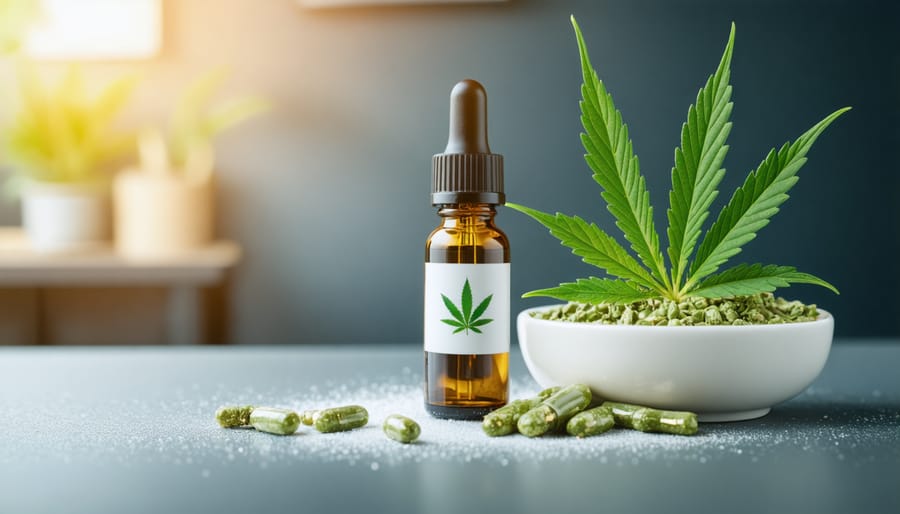
What About CBD? The Surprising Truth for CBD Users
Can CBD Products Make You Test Positive?
This is an important question I hear constantly from CBD users worried about roadside testing. Here’s the honest truth: full-spectrum CBD products contain trace amounts of THC (up to 0.3% legally in Canada), but the quantities are typically too low to cause impairment or trigger a positive roadside saliva test under normal use.
However, consuming extremely high doses of full-spectrum CBD—we’re talking hundreds of milligrams daily—could theoretically result in detectable THC levels. I’ve personally never failed a test using recommended CBD doses, but everyone metabolizes cannabinoids differently.
If you’re particularly concerned about any THC exposure, broad-spectrum or CBD isolate products contain zero THC and eliminate this worry entirely. These are excellent options for anyone who drives regularly or faces workplace testing.
It’s also worth understanding that CBD and driving regulations focus on impairment, not CBD presence. Since CBD doesn’t cause intoxication, using it responsibly shouldn’t affect your ability to drive safely. That said, always start with low doses to understand how any product affects you personally before getting behind the wheel.
Choosing CBD Products When You Need to Drive
If you’re a CBD user who drives regularly, selecting the right products is crucial for staying safe and legal. The key is choosing products that contain zero THC—Canada allows products labeled as THC-free to contain trace amounts (up to 0.3% THC in hemp-derived products), which could theoretically accumulate in your system with regular use.
Look for products specifically labeled as “broad-spectrum” or “CBD isolate” rather than “full-spectrum,” which contains THC. I always recommend checking third-party lab reports (often called Certificates of Analysis) that confirm the actual THC content. Reputable Canadian brands make these readily available on their websites.
When shopping, pay attention to licensing. Licensed producers following Health Canada regulations must clearly display cannabinoid content on labels. Understanding the CBD legal status in Canada helps you navigate product selection confidently.
Consider your consumption method too—CBD topicals applied to skin don’t enter your bloodstream the same way oils or capsules do, making them the safest choice before driving. Personally, when I know I’ll be driving, I stick to my trusted THC-free tincture from a licensed producer with verified lab testing, and I always keep the product packaging showing zero THC content.
Provincial Differences You Should Know About
While federal cannabis laws apply across Canada, each province has added its own layer of regulations that can affect you as a driver. Understanding these differences isn’t about memorizing legal codes—it’s about knowing what to expect if you’re pulled over in your province.
**Ontario** takes a particularly strict approach with immediate roadside licence suspensions for drivers who test positive, even on first offences. You’ll face an automatic 90-day suspension if you fail or refuse a drug test, plus vehicle impoundment. The province also uses oral fluid testing devices extensively at RIDE programs.
**British Columbia** focuses heavily on roadside testing and has some of Canada’s toughest penalties for repeat offenders. The province combines federal criminal charges with provincial driving penalties, meaning you could face both simultaneously. BC also has a lower THC threshold for novice drivers (those with a graduated licence).
**Alberta** emphasizes education alongside enforcement, but don’t let that fool you—penalties remain severe. The province requires mandatory impaired driving courses and uses ignition interlock devices for convicted drivers.
**Quebec** prohibits any detectable THC for drivers under 22 or those with learner’s or probationary licences—a complete zero-tolerance policy for younger drivers. The province also has unique administrative penalty structures separate from criminal proceedings.
The bottom line? Know your provincial rules, but remember that impaired driving is illegal everywhere in Canada. When in doubt about timing or THC levels, choose alternative transportation—it’s always the safest call.
Making Safe Decisions: Practical Guidelines
How Long Should You Actually Wait?
There’s no universal “safe” waiting period because cannabis affects everyone differently, but here’s what the evidence suggests.
**For smoking or vaping:** Most acute impairment peaks within the first 1-3 hours. While you might feel fine after 4-5 hours, THC remains detectable in your system far longer. Occasional users should wait at least 6-8 hours before driving, though 24 hours is safer if you consumed a high dose.
**For edibles:** This is trickier. Effects can take 30 minutes to 2 hours to kick in and last considerably longer—often 6-12 hours. Wait at least 12 hours, preferably 24, before getting behind the wheel.
**For regular users:** If you use cannabis daily, THC accumulates in your system, making it detectable for days or even weeks. This creates a legal gray area in Canada—you could test positive even when you’re not impaired. Regular users face higher risk of failing roadside tests even when sober.
Here’s my honest take: if you’re asking yourself “am I okay to drive?” the answer is probably no. The consequences of a cannabis DUI in Canada—including criminal records and licence suspensions—simply aren’t worth the risk. Plan ahead, arrange alternative transportation, or wait longer than you think necessary.
When in Doubt: Alternatives and Planning Ahead
Look, we all know life happens. You’re at a friend’s place, you consume cannabis, and suddenly you need to get somewhere. The best approach? Plan ahead before you’re in that situation.
**Smart strategies include:**
– **Designate a driver** before consuming, just like with alcohol
– **Use ride-sharing apps** like Uber or Lyft—they’re affordable and convenient
– **Stay put** and wait it out if you’re uncertain about your level of impairment
– **Schedule consumption** around your responsibilities, not the other way around
– **Keep emergency transit money** set aside specifically for these situations
From personal experience, I’ve learned that scheduling cannabis use for evenings when I’m home for the night removes any temptation or anxiety about driving. If you’re using CBD products with minimal THC, you’ll have fewer concerns, but it’s still wise to understand your body’s response.
Canadian winters make walking or waiting outside less appealing, so having a solid backup plan matters even more. Your safety and others’ safety always comes first—no appointment or errand is worth the risk.
Navigating cannabis use and driving in Canada doesn’t have to feel overwhelming, even though the laws are strict and the science is still catching up. The key takeaway? Canadian law enforcement takes impaired driving seriously—whether it’s alcohol, THC, or any other substance—and the consequences are real. But understanding how testing works, knowing your own body’s response, and planning ahead can help you make responsible decisions that keep you and others safe.
I’ll be honest—when I first started exploring CBD products, I worried constantly about trace THC showing up in a roadside test, even though I felt completely fine. That anxiety pushed me to learn everything I could about detection windows, impairment versus presence, and what my legal options were. What I discovered is that being informed is half the battle. The other half is being honest with yourself about your consumption and giving yourself adequate time before getting behind the wheel.
If you’re using cannabis recreationally or therapeutically, you’re not automatically excluded from driving—you just need to be smart about it. Wait the appropriate amount of time, know how your body processes THC, consider alternatives like rideshares when in doubt, and never assume you’re okay to drive just because you “feel fine.”
Your safety and the safety of others on the road should always come first. Stay informed, stay cautious, and make choices you can stand behind.


