Yes, cannabis edibles can affect your heart. THC, the compound that causes the “high,” can raise your heart rate and shift your blood pressure, and edibles tend to do it for longer than smoking or vaping because your body processes them slowly through digestion. For most healthy adults that’s a temporary, uncomfortable ripple. For someone with a heart condition, or anyone taking cardiovascular medication, it deserves a real conversation with a doctor or pharmacist first.
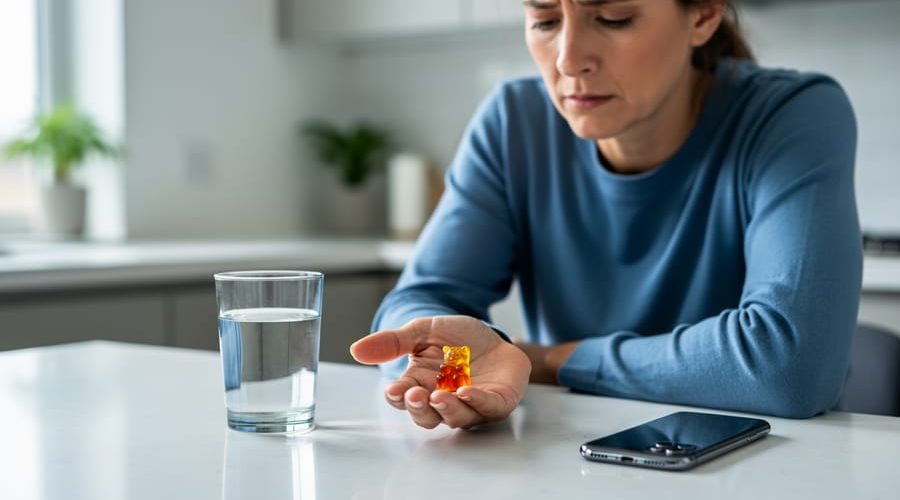
I learned this the hard way, in the mild sense. Years ago, I took a gummy that felt like nothing after 45 minutes, so I had a second one. Two hours later my heart was thumping in my chest and my mind was racing right alongside it. I was fine, but I remember how long it lasted. That delayed onset catches a lot of beginners off guard, and it’s why “racing heart” shows up so often in the stories people share online.
This article covers what edibles actually do in your body, who should be especially careful, what your rights and responsibilities are as a buyer under Canadian rules, and where to find official help. If you want the bigger picture first, our guide to the health risks explained is a good companion read. Nothing here replaces medical advice, but it should help you ask better questions.
What Cannabis Edibles Actually Do to Your Heart and Circulation
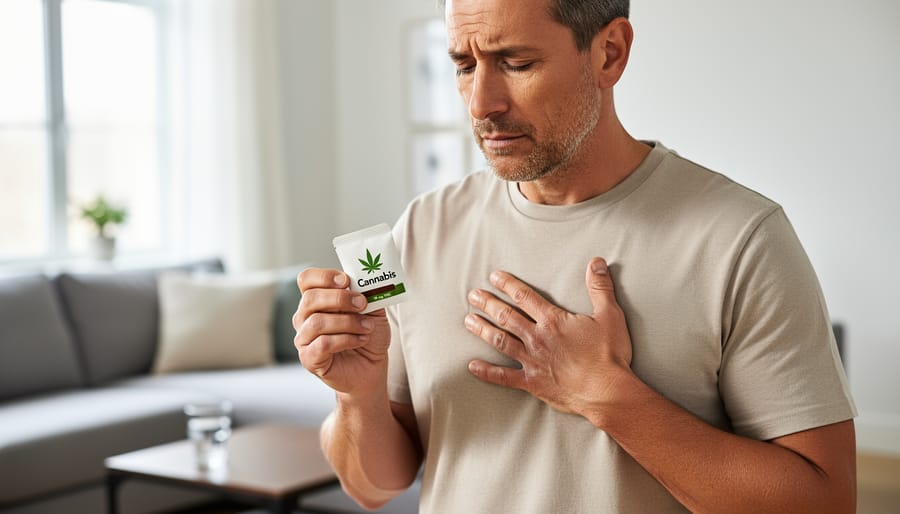
How Edibles Differ From Smoking or Vaping
When you smoke or vape cannabis, THC reaches your bloodstream through the lungs within minutes, so you feel it quickly and can adjust. Edibles work on a different clock. They have to be digested first, and then your liver processes the THC before it circulates. That’s why edible onset and duration look so different from inhaled cannabis: effects often take anywhere from 30 minutes to 2 hours to show up, then can last for many hours.
Why does this timing matter for your heart? Because the effects that tend to be reported, like a faster heartbeat or a flutter of lightheadedness, can build slowly and stick around longer than you’d expect. With a joint, you notice a racing pulse and stop. With an edible, the full effect may not have arrived yet when you decide whether to take more. And once it’s in your system, you can’t dial it back.
I see this mistake constantly, and I made it myself early on. I took a gummy, waited about 45 minutes, felt nothing, and figured the dose was too small. So I took another. An hour later, both hit at once, my heart was thumping, and I spent a long evening on the couch wishing I’d just been patient. Nothing was wrong, but it wasn’t a comfortable way to learn.
The takeaway is simple: give an edible plenty of time before you even think about a second dose, especially if you’re mindful of your cardiovascular health.
Short-Term Effects Worth Knowing About
Some effects are common enough that most people who use edibles will recognize at least one of them. The most frequently reported is a faster heartbeat. THC can raise your resting heart rate for a few hours, and with edibles that window can stretch longer than people expect. For many healthy adults it feels like a mild flutter or a thumping you only notice when you sit quietly.
Blood pressure can shift too. Some people see a temporary rise, while others notice a drop, which brings us to dizziness. If you stand up quickly and feel lightheaded, or the room seems to tilt for a moment, that’s often blood pressure dipping. Standing slowly, sitting back down, and sipping water usually helps.
Then there’s the anxiety piece, which is easy to underestimate. A racing heart can make you feel anxious, and feeling anxious can make your heart race even harder, so the two feed each other. If you’re curious about how that loop plays out, our guide on edibles for anxiety goes deeper. Often the best move is to remind yourself the feeling will pass, get comfortable, and wait.
Mild and temporary generally means a quicker pulse, brief lightheadedness, or nervousness that eases within a few hours.
Other symptoms are different. Chest pain or pressure, severe shortness of breath, fainting, a heartbeat that feels chaotic or won’t settle, or sudden weakness or confusion all need urgent medical attention. Don’t wait it out. Call 911 or your local emergency number right away.
What the Research Says (and Doesn’t Say) About Long-Term Heart Health
When people ask me whether edibles are bad for the heart over the long haul, the honest answer is that nobody can say for certain yet. The evidence is still taking shape, and anyone who sounds completely sure, in either direction, is getting ahead of the science.
One big reason is that edibles are hard to study. Researchers can’t easily control how much someone eats, how their body breaks it down, or when the effects peak. Products vary widely, and people often combine edibles with other ways of using cannabis. Smoked cannabis is easier to measure in comparison, so a lot of the research focuses on it.
That creates a real gap. Many findings about cannabis and the heart come from people who smoke or vape, and inhaling anything brings its own factors, like irritants and combustion byproducts. We can’t assume those results carry over neatly to a gummy or chocolate. Edibles are processed differently, so what we learn from inhaled cannabis is a starting point, not the final word.
The compounds matter too. If you’re curious about how the two main cannabinoids differ, our guide on CBD vs THC breaks it down. For the heart specifically, THC is the one most often linked to short-term changes in heart rate, while CBD appears to behave differently, though it’s far from risk-free.
Here’s a quick snapshot of where things stand:
| Format | Generally understood | Still uncertain |
|---|---|---|
| THC edibles | Can raise heart rate for a while, with slower onset and longer duration than inhaling | Long-term effects on heart health and how much dose and frequency matter |
| CBD edibles | Tends to have less effect on heart rate than THC | Long-term cardiovascular effects and how it behaves at different doses |
| Inhaled cannabis | Most of the existing research focuses here, with heart rate changes commonly reported | How much of the risk comes from cannabis itself versus smoke exposure |
One point I’d really like you to take away: CBD-only edibles aren’t automatically a safe choice for people on heart medications. CBD is processed by the liver, and it can interfere with how some medications are broken down. That can change how much of a drug stays in your system, which matters a great deal if you take blood thinners or other cardiac prescriptions.
So treat the headlines with some caution. A bold claim that edibles are harmless, or that they’re dangerous for everyone, usually says more than the research can support. The most reliable approach is a middle path: stay curious, stay cautious, and bring your questions to a health professional who knows your history.
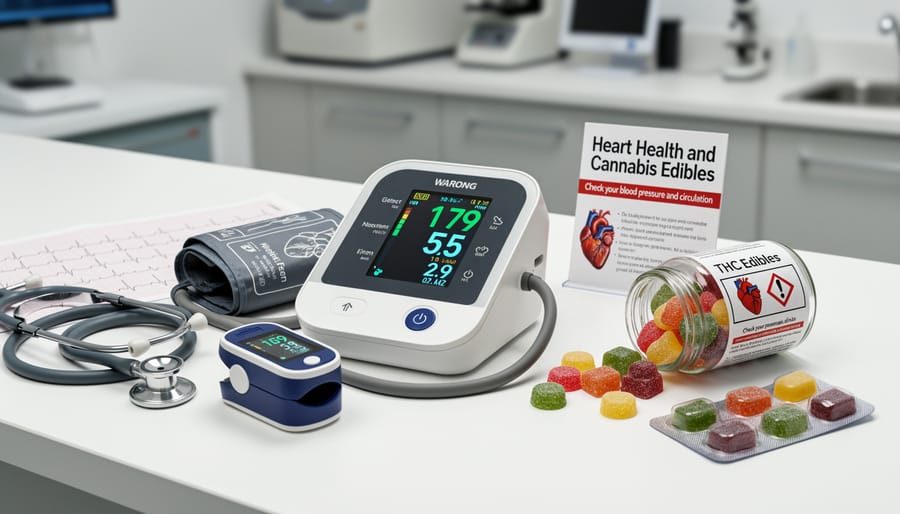
Who Should Be Most Careful: Heart-Related Eligibility and Risk Considerations
Medication Interactions Readers Often Overlook
Here’s something a lot of people miss: your liver does much of the work of breaking down cannabinoids, and it uses some of the same enzymes that process many common prescriptions. When those enzymes are busy with THC or CBD, certain medications can linger in your body longer or be cleared differently than expected. That includes some drugs used for heart rhythm, blood pressure, and clotting. If you’re curious about how this plays out with anticoagulants specifically, I’ve written about CBD and blood thinning in more detail.
This applies to CBD edibles too. “CBD-only” doesn’t mean “interaction-free,” and I hear that assumption more often than you’d think.
I can’t tell you how your particular medications will behave, and neither can a blog post. A pharmacist can, and the conversation is usually quick and judgment-free. Consider speaking with a doctor or pharmacist before trying edibles if any of these apply to you:
- You have an existing heart condition.
- You take cardiac or blood pressure medication.
- You’ve had a stroke.
- Past cannabis use brought on chest pain or palpitations.
- You’re pregnant or planning a pregnancy.
Bring your product label and your medication list. With both in hand, your pharmacist can give you advice that actually fits your situation.
Your Rights and Responsibilities as an Edible Buyer in Canada
Reading an Edible Label With Your Heart in Mind
Picking up an edible, the label is your best tool, and it’s worth reading before anything else. Canadian packaging is standardized, so once you know where to look, the same details show up on every product.
Start with the THC and CBD amounts. You’ll see them listed per serving and again for the whole package, and the difference matters. A single gummy might contain a small dose, while the full package holds far more. Canadian rules cap THC in an edible package, but that cap is a ceiling, not a recommendation. Check the serving size too, since a “serving” may be a quarter of a chocolate bar rather than the piece you’d naturally eat.
Next, read the ingredients with your heart in mind. Some edibles contain caffeine, guarana, or other stimulants, and these can raise your heart rate on their own, separate from anything the cannabis does. Pairing a stimulant with THC can make a racing heartbeat feel more intense. Finally, look for the licensed producer’s name and contact details, which tells you the product came from a regulated source.
I learned the “low and slow” lesson the hard way. Early on, I ate a full gummy because the label looked modest, then felt a pounding heartbeat that had me sitting very still on my couch for an hour. Now I always cut things down and wait. If you’re new, aim to start low dose wait at least two hours, and only then decide whether you need more.
Keeping a note of what you took and how it felt is also helpful if you later talk to a doctor or pharmacist about it.
Talking to Your Doctor and Where to Get Help in Canada

Bringing up cannabis with a health professional can feel awkward, but they hear about it far more often than you’d think. Your family doctor, nurse practitioner or pharmacist is there to keep you safe, not to judge you. Pharmacists are often the easiest starting point, since you can usually walk in without an appointment and ask about interactions with your current medications.
Open with something simple: “I’ve been thinking about trying edibles, or I already use them, and I want to make sure they’re safe with my heart.” It also helps to bring:
– The product label or a photo of it, showing THC and CBD per serving
– Your typical dose and how often you use it
– Any symptoms you’ve noticed, such as a racing heart or dizziness when standing
– A list of your medications and supplements
If you’re also curious about the bigger picture, including medical uses in Canada your clinician can talk through whether it makes sense for your situation.
Beyond your own care team, a few official resources are worth knowing about:
– Health Canada’s cannabis information pages, for current federal rules, labelling and safety guidance
– Your provincial or territorial health line, where a nurse can answer non-emergency questions
– Your regional poison control centre, if a child, a pet or anyone else eats an edible by accident
– Emergency services (911 in most areas) for chest pain, severe shortness of breath or fainting
If you’re worried that your use is becoming a problem, say so. Tell your doctor or call your provincial health line and ask about substance use support in your area. Many regions offer confidential counselling and treatment programs, and wanting help is not a failure.
Can edibles cause heart palpitations?
Yes, some people notice a fluttering or racing heartbeat, especially with higher THC doses or when anxiety kicks in. If it’s mild it usually passes, but get medical help if it’s severe or comes with chest pain.
Can I take edibles with blood pressure medication?
Cannabinoids, including CBD, can interact with some medications, so ask your pharmacist or doctor first. Don’t adjust or skip your medication on your own.
When should I go to emergency care?
Call 911 or go to the nearest emergency department for chest pain, severe shortness of breath, fainting, or a heartbeat that feels dangerously fast or irregular.
Do I need a prescription for edibles in Canada?
Not for adult-use products bought from licensed retailers, though the legal age varies by province and territory. Medical access works differently, so check Health Canada’s current guidance.
Whatever you decide, a short honest conversation now beats a scary surprise later.
So, where does that leave you? Cannabis edibles can change how your heart behaves, at least in the short term. A faster heartbeat, shifts in blood pressure, or a bout of anxiety that makes your chest feel like it’s pounding are all possible, and the slow, long-lasting nature of edibles can make those effects harder to predict than with smoking or vaping.
The longer-term picture is still being filled in. Researchers haven’t settled the question, and edibles are especially tricky to study, so it’s wise to be skeptical of anyone who promises either total safety or certain harm.
If you have a heart condition, high blood pressure, or take medication that your liver processes, bring a doctor, nurse practitioner, or pharmacist into the conversation first. That applies to CBD edibles too. Canada’s rules on licensed retailers, standardized labels, and THC limits per package are there to help you make safer choices, so use them. Read the label, start low, and wait it out.
From my own experience, the people who feel best about their choices are the ones who didn’t rush. Take your time, ask questions, and don’t let anyone pressure you into doing more than feels right. Your heart will thank you for the patience, and so will you.