Music and cannabis together create something greater than the sum of their parts. When used intentionally, cannabis can sharpen your perception of rhythm, deepen emotional connections to lyrics, and transform familiar songs into immersive sonic landscapes. The science behind this synergy lies in how cannabinoids interact with your brain’s reward and sensory processing centers, the same regions that light up when you hear music you love.
I’ll be honest: the first time I paired a low-dose edible with my favorite album, I thought I’d discovered some profound secret. Turns out, millions of people across Canada have been exploring this combination for decades, and there’s legitimate research explaining why it resonates so deeply. THC and CBD both influence dopamine release and alter temporal processing, which is a fancy way of saying they can make you more present with sound and amplify the pleasure music naturally provides.
But here’s what matters for anyone curious about trying this themselves: dosage, strain selection, and setting make the difference between a transcendent listening session and an overwhelming experience. Too much THC can tip into anxiety or sensory overload. The wrong environment can distract from the music entirely. And without understanding Canada’s legal landscape and product options available in 2026, you might waste money on products that don’t match your goals.
This guide breaks down the neuroscience without the jargon, walks you through choosing products specifically available to Canadian consumers, and offers practical advice for curating sessions that prioritize both safety and enjoyment. Whether you’re a longtime cannabis user looking to be more intentional or someone considering your first experience, the goal is the same: helping you understand how these two elements work together and how to optimize your own exploration.
The Science Behind Music, Mood, and Your Brain
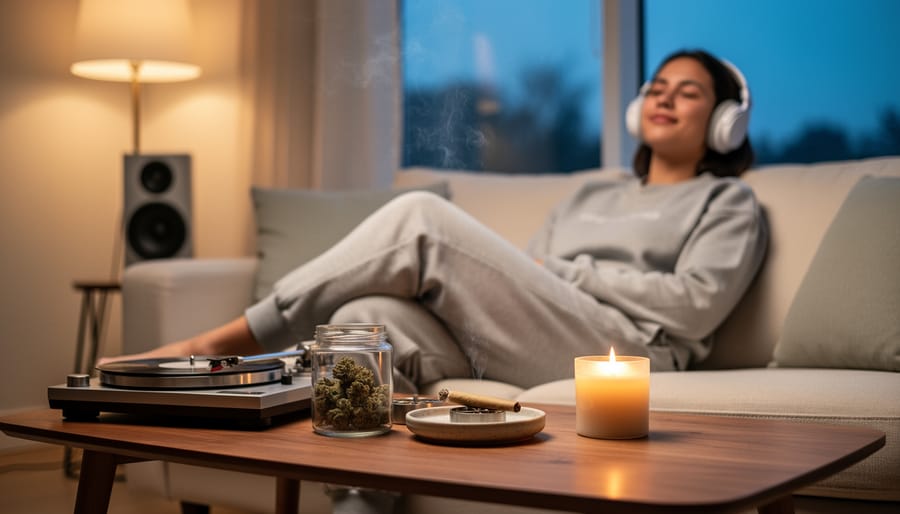
Your brain doesn’t just passively hear music, it transforms sound waves into one of the most reliable mood-boosters we have. When you listen to a song you love, your brain launches a cascade of chemical and electrical activity that quite literally creates happiness. Understanding this process reveals why music feels so good, and it sets the stage for grasping how cannabis can amplify these natural responses.
The star player in music’s happiness effect is dopamine, the neurotransmitter associated with pleasure and reward. Studies show that listening to music you enjoy triggers dopamine release in the brain’s reward centers, particularly through reward via mesolimbic dopamine pathways. This is the same system activated by food, social connection, and other pleasurable experiences. What’s fascinating is that your brain begins releasing dopamine even in anticipation of your favourite part of a song, that buildup before the chorus drop can generate pleasure before the moment actually arrives.
Music also engages your limbic system, the brain’s emotional processing center. The amygdala and hippocampus work together to connect sounds with memories and feelings, which explains why certain songs can instantly transport you to specific moments in your life or shift your mood within seconds. A upbeat rhythm can energize you before a workout, while a familiar melody can bring comfort during stress.
Beyond mood, music activates multiple brain regions simultaneously. Your auditory cortex processes the sounds, your motor cortex responds to rhythm (which is why you tap your foot), and your prefrontal cortex interprets patterns and lyrics. This whole-brain engagement creates what researchers call a “flow state”, that feeling of being completely absorbed in the experience.
The neurological pathways music activates overlap significantly with those affected by cannabinoids. Your endocannabinoid system, which regulates mood, memory, and sensory processing, naturally interacts with the same reward circuits that music stimulates. This shared territory in your brain is precisely why cannabis and music can combine to create experiences that feel greater than the sum of their parts. When you understand what’s happening in your brain during music listening, the potential for cannabis to enhance these processes becomes clearer.
How Cannabis Changes Your Musical Experience
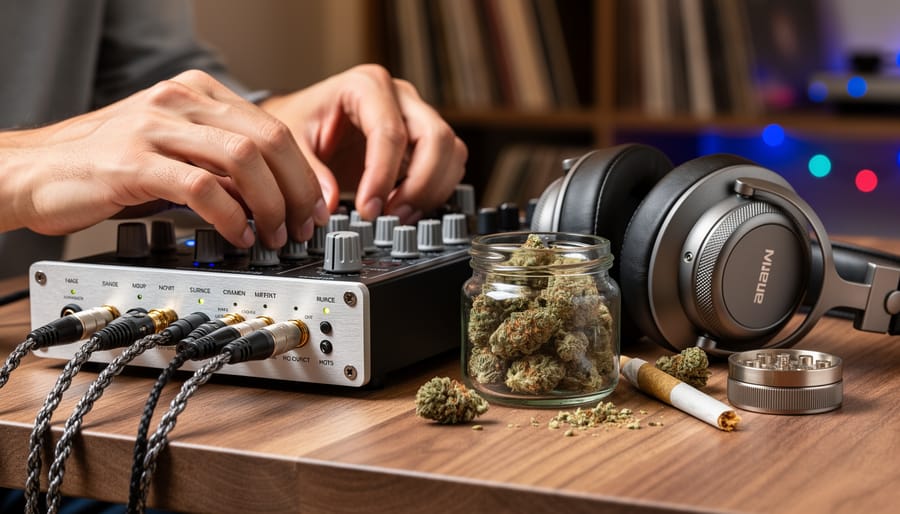
Enhanced Sound Perception and Audio Detail
Ever notice how your favorite song reveals entirely new layers when you’re using cannabis? That heightened awareness isn’t just in your head. Research suggests that cannabis improved hearing sensitivity in some users, potentially explaining why previously overlooked details suddenly stand out.
When cannabis interacts with your endocannabinoid system, many users report hearing individual instruments with startling clarity. That bassline you’ve heard a hundred times? Suddenly you’re catching every note, every subtle variation the bassist threw in. Background vocals emerge from the mix. The gentle cymbal wash that’s always been there becomes its own texture.
This isn’t about the music getting louder. It’s about your attention shifting. Cannabis often narrows focus while simultaneously making that focused attention more intense. You might find yourself following a single guitar track through an entire song, noticing how it weaves around the vocals, then listening again to catch what the keyboard was doing underneath.
Production choices become fascinating puzzles. You hear the reverb tail on a snare drum, the slight delay on a vocal phrase, the way the engineer panned instruments across the stereo field. Songs you’ve known for years suddenly feel three-dimensional, like you’re sitting in the studio watching the mix come together.
This enhanced perception works best with quality audio. Streaming at high bitrates, using decent headphones, or playing vinyl all deliver more detail for your heightened awareness to discover.
Deeper Emotional Connection
Cannabis has this remarkable ability to turn up the emotional volume on music. A song that normally makes you smile can suddenly feel like pure joy washing over you, while a melancholic melody might move you to tears in ways it never has before.
This happens because cannabis interacts with your brain’s endocannabinoid system, which plays a crucial role in regulating emotions. When THC binds to cannabinoid receptors, it can amplify your emotional processing centers. You’re not just hearing the music, you’re feeling it more deeply, more viscerally.
I remember the first time I really noticed this effect. I was listening to a favourite album I’d heard dozens of times, and suddenly I was picking up on emotional nuances in the vocalist’s delivery that I’d completely missed before. The vulnerability in their voice hit differently. It was like experiencing the song for the first time all over again.
CBD can enhance this connection too, though more subtly. By reducing anxiety and promoting relaxation, it helps you drop your emotional guard. You become more receptive, more present with the music. Those defensive walls we unconsciously put up? They soften, letting the music reach you more directly.
The key is that cannabis doesn’t create emotions that aren’t there, it amplifies what’s already present in both the music and in you, creating a more authentic, unfiltered emotional experience.
Time Perception and Musical Flow
Cannabis fundamentally alters how your brain processes time, and this shift creates a unique relationship with musical flow. When THC interacts with your endocannabinoid system, it affects the internal clock that normally helps you track seconds and minutes. What feels like a five-minute song might stretch into what seems like ten, allowing you to exist more fully within each moment of the music.
This time dilation means you’re not rushing ahead to anticipate the next verse or chorus. Instead, you’re suspended in the current note, the present beat. A drum fill that normally lasts three seconds can feel elaborate and detailed. Guitar solos seem to unfold with more space between each phrase, giving you time to appreciate the technique and emotion behind every bend and slide.
The phenomenon works particularly well with music that builds gradually or features extended instrumental passages. Progressive rock, ambient electronic music, and jazz improvisation become journeys rather than destinations. You stop checking how much time has passed and simply exist within the sonic landscape.
This altered temporal experience often triggers what psychologists call “flow state”, complete absorption in an activity where self-consciousness disappears. The music isn’t something you’re listening to anymore; it’s something you’re experiencing from the inside. Past and future concerns fade, leaving only the present moment and the sounds filling it.
Different Cannabis Products for Musical Enhancement
CBD-Dominant Options for Relaxed Listening
If you’re new to combining cannabis and music, or you want to enjoy enhanced listening without feeling overwhelmed, CBD-dominant products offer a gentle entry point. These options won’t produce the intense psychoactive effects associated with THC, but they can help you relax into the music more deeply by easing physical tension and quieting mental chatter.
Look for CBD oils or capsules with ratios of 20:1 or higher (CBD to THC). In Canada, products like Aurora CBD Drops or Solei Free oil contain minimal THC while delivering calming effects that let you settle into your listening session. The therapeutic index of CBD is particularly favorable, meaning it’s remarkably safe even at higher doses.
Start with 10-20mg of CBD about 30-45 minutes before listening. You won’t feel high, but you might notice yourself breathing more slowly, your shoulders dropping away from your ears, and subtle details in the music becoming more apparent. This relaxed state helps you appreciate nuances you’d normally miss when your mind is racing or your body is tense. CBD vapes work faster if you prefer quicker onset, though the effects won’t last quite as long as oils.
Balanced THC:CBD for Enhanced Experience
Balanced THC:CBD products offer what many consider the sweet spot for musical enjoyment. These formulas, typically 1:1 or 2:1 ratios, deliver noticeable enhancement without overwhelming your senses or triggering anxiety.
I’ve found that balanced products let you actually enjoy the music rather than getting lost in your own thoughts. The CBD moderates THC’s intensity while preserving the perceptual shifts that make melodies shimmer and bass lines pulse through you. You’re present, engaged, and emotionally responsive without feeling paranoid about whether you’re “too high.”
Look for oils, capsules, or vapes in 5-10mg THC combined with equal or higher CBD. Start with half a serving if you’re transitioning from CBD-only products. The effects typically feel clearer and more functional than THC alone, making balanced ratios ideal for social listening sessions or discovering new albums.
These products shine during afternoon or early evening sessions when you want enhancement but still need to interact normally with others. The anxiety-reducing properties of CBD mean you can fully surrender to the music without second-guessing the experience or worrying about being too impaired.
THC-Dominant for Deep Immersion
For seasoned cannabis users seeking profound musical experiences, THC-dominant products can create remarkable depth of immersion. These products typically contain 15-25mg THC per dose and deliver intense sensory enhancement, making every note feel dimensional and emotionally resonant.
Start conservatively even if you’re experienced, musical sessions require different dosing than other activities. Begin with 5-10mg THC and wait at least 90 minutes before considering more. The goal is enhanced appreciation, not overwhelming disorientation that pulls you out of the music.
THC-dominant strains or products can amplify every aspect of listening: basslines become physical sensations, vocal harmonies seem to occupy specific spaces around you, and emotional lyrics can feel profoundly personal. Some users report synesthesia-like experiences where music evokes colours or visual patterns.
Choose your setting carefully. Deep THC experiences work best in controlled, comfortable environments where you won’t need to interact with others or handle responsibilities. Have water nearby, familiar music queued up, and no time pressures.
If anxiety emerges, remember that CBD can moderate THC’s intensity. Keep a CBD product handy as a safety net, and focus on slower, calming music if the experience feels too intense.
Creating Your Perfect Music and Cannabis Session
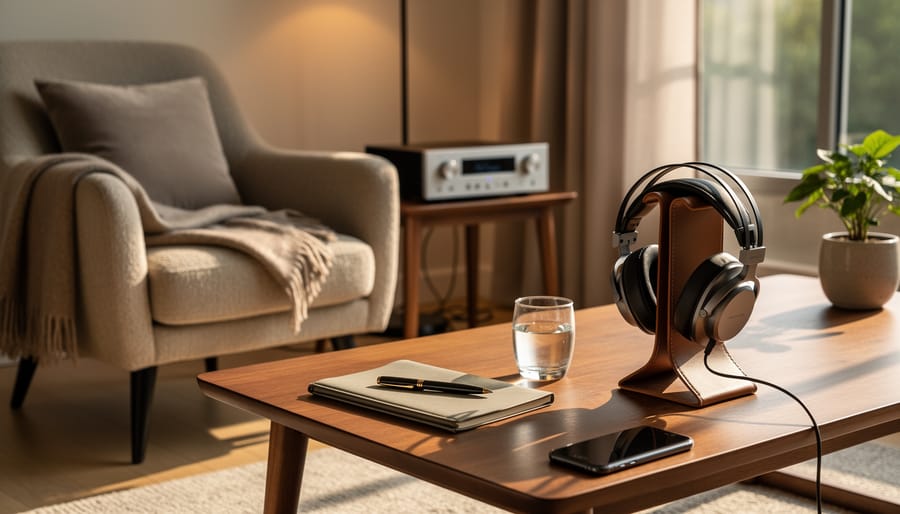
Setting up the right environment makes all the difference between a forgettable evening and a truly memorable musical journey. I’ve learned through plenty of trial and error that a bit of planning transforms the experience from haphazard to genuinely special.
Start with your consumption choice and timing. If you’re using edibles, check our edible dosage guide and consume 45 to 90 minutes before you want to start listening, since onset takes time. Vaping or smoking works better if you prefer to adjust your experience in real-time as the music plays. For beginners exploring THC, understanding 1mg THC effects helps set realistic expectations. If you’re sticking with CBD for a gentler experience, our CBD dosage chart provides solid starting points.
Here’s how I prepare my ideal session:
- Clear your schedule for at least two to three hours with no interruptions or responsibilities.
- Set up your listening space with comfortable seating, dim or coloured lighting, and good temperature control.
- Test your audio equipment beforehand, whether headphones or speakers, make sure everything works and sounds good.
- Prepare your playlist or queue ahead of time so you’re not fumbling with your phone mid-session.
- Have water and light snacks within easy reach.
- Put your phone on do-not-disturb mode to avoid jarring notifications.
Quality audio matters more than you’d expect. You don’t need expensive equipment, but decent headphones or a proper speaker setup reveal details you’ll miss through laptop speakers or cheap earbuds. Many people swear by over-ear headphones for intimate listening or quality bookshelf speakers for a fuller room experience.
Lighting shapes the mood significantly. Harsh overhead lights kill the vibe. Try salt lamps, string lights, smart bulbs with colour options, or even just candles if you’re staying alert enough to monitor them safely.
Create your playlist before you consume, not during. Trying to search for music while already feeling effects often leads to frustration or wasted time. I usually prepare multiple playlists for different potential moods, one upbeat and joyful, another mellow and introspective, maybe a third for something experimental. That way I can switch based on how I’m actually feeling without breaking the flow.
Temperature control seems minor until you’re uncomfortably hot or cold and it’s all you can think about. Set your space to slightly cool since cannabis often makes people feel warmer.
Finally, go in without rigid expectations. Some sessions will feel transcendent, others just pleasant. Both outcomes are perfectly fine, and trying to force a particular experience usually backfires.
Genres That Hit Different: Music Styles to Try
Musical preferences are deeply personal, but certain genres tend to resonate more powerfully when cannabis enhances your listening experience. The key isn’t the genre itself but rather the sonic characteristics that cannabis amplifies, complex layering, rich textures, dynamic range, and emotional depth.
Electronic music, particularly ambient, downtempo, and psychedelic trance, offers intricate production details that become mesmerizing under cannabis influence. The layered synths, evolving soundscapes, and rhythmic patterns create immersive environments that feel almost three-dimensional. Artists like Bonobo, Tycho, or Shpongle craft music where every listen reveals new details.
Jazz and neo-soul provide emotional complexity and improvisation that pairs beautifully with cannabis-enhanced perception. The interplay between instruments, unexpected chord progressions, and dynamic shifts become fascinating focal points. Miles Davis, Robert Glasper, or Kamasi Washington offer sophisticated listening experiences that reward attention.
Reggae and dub carry cultural connections to cannabis while delivering bass-heavy grooves that feel physically satisfying. The space between notes, echo effects, and rootsy vibrations create a full-body listening experience. Bob Marley remains the classic choice, but modern artists like Chronixx or Protoje bring fresh energy.
Classical music surprises many newcomers with how profoundly moving it becomes. The emotional arcs, orchestral depth, and compositional complexity offer journeys that can feel transcendent. Try Debussy’s impressionistic pieces or minimalist composers like Philip Glass for accessible entry points.
Hip-hop with conscious lyrics and creative production, artists like Kendrick Lamar, Anderson .Paak, or J. Cole, combines lyrical depth with sonic innovation. Cannabis can help you catch wordplay and production nuances you’ve missed before.
The best approach? Start with music you already love, then branch into genres with similar characteristics. Your enhanced perception will guide you toward what resonates most deeply with you personally.
Safety Considerations and Legal Context in Canada
Before you lose yourself in that perfect album, let’s talk about staying safe and legal while exploring music and cannabis together in Canada.
Start low and go slow remains the golden rule, especially if you’re combining cannabis with an activity that can intensify its effects. Music can make you less aware of how impaired you actually are because you’re so absorbed in the experience. What feels like clarity and heightened awareness might actually be significant intoxication. Give yourself at least two hours after consuming edibles before you can accurately assess how you feel, and remember that THC can remain in your system long after the high fades, important information if you’re subject to workplace testing (check our drug test info for details).
In Canada, adults can legally possess up to 30 grams of dried cannabis in public and consume it in private residences. However, cannabis use in public spaces remains restricted in most provinces and municipalities. You can’t smoke or vape cannabis in parks, on sidewalks, or in concert venues where tobacco smoking is prohibited. Some provinces have designated consumption areas, but these are rare. If you’re planning to enjoy music at a festival or outdoor event, check local bylaws first, fines for public consumption range from $100 to $1,000 depending on your location.
Home is your safest bet for combining music and cannabis. You control the environment, you’re not breaking any laws, and you won’t disturb others. If you rent, check your lease, landlords can prohibit smoking (though not edibles or vaping in most cases) even where it’s otherwise legal.
Watch for potential drawbacks too. Cannabis can increase anxiety in some people, especially with high-THC products, which might ruin rather than enhance your musical experience. Some users report that cannabis makes them overthink the music rather than simply enjoying it. If you find yourself analyzing every note instead of feeling the groove, you might have consumed too much or chosen the wrong product for your intention.
Respect your neighbours. Sound travels, and what feels like a reasonable volume when you’re high often isn’t. Use headphones for late-night sessions, and remember that cannabis can impair your judgment about appropriate behaviour in shared living spaces.
The connection between music and cannabis runs deep through our neurological pathways, our emotional landscapes, and our capacity for joy. When these two elements come together thoughtfully, they create opportunities for happiness that honor both the science behind the experience and the deeply personal nature of what brings us pleasure.
I’ve watched countless people discover their own version of this combination over the years, and what strikes me most is how individual it becomes. Some find their happiness in CBD and acoustic guitar on a Sunday morning. Others light up with balanced hybrids and dive into electronic soundscapes. There’s no universal formula because your brain, your musical taste, and your relationship with cannabis are entirely your own.
What matters isn’t finding the “perfect” pairing or following someone else’s playlist. It’s about approaching the experience with curiosity and respect, respect for the substances you’re using, for your own limits, and for the transformative power of music itself. Start small. Pay attention to how you feel. Adjust based on what brings you genuine happiness rather than what you think the experience “should” be like.
The goal here isn’t just enhanced listening. It’s enhanced wellbeing. When music and cannabis align in a way that works for you, they can unlock moments of pure contentment, creative insight, and emotional release that stay with you long after the song ends.