

Headaches disrupted my workdays for years until I discovered CBD oil could ease the throbbing pain without the grogginess of traditional medications. If you’re among the millions of Canadians dealing with tension headaches or migraines, you’ve likely wondered whether cannabidiol might offer relief—and more importantly, whether it actually works.
CBD interacts with your body’s endocannabinoid system to potentially reduce inflammation and pain signals that contribute to headaches. Unlike THC, it won’t get you high, and it’s completely legal across Canada when purchased from licensed sources. The challenge isn’t legality; it’s navigating the overwhelming product options and figuring out effective dosing for your specific headache type.
Start with full-spectrum CBD oil taken sublingually, holding it under your tongue for 60-90 seconds before swallowing. This method delivers faster relief than capsules, typically within 15-30 minutes. Begin with 10-15mg and increase gradually every few days until you find your sweet spot—most headache sufferers find relief between 20-40mg per dose.
Choose products with third-party lab testing certificates, clearly listing CBD concentration and confirming the absence of contaminants. Canadian retailers must comply with strict Health Canada regulations, but quality still varies significantly between brands.
This guide breaks down exactly how CBD addresses headache pain, which products work best for different headache types, and how to dose safely based on the latest Canadian research and my own trial-and-error experience.
Understanding Migraines vs. Regular Headaches
Before we explore how CBD might help with your head pain, it’s important to understand what type of headache you’re dealing with. Not all headaches are created equal, and identifying yours can make a real difference in finding effective relief.
Tension headaches are the most common type, affecting about 70% of Canadians at some point. They typically feel like a tight band wrapping around your forehead or the back of your head. The pain is usually dull and constant rather than throbbing. Common triggers include stress, poor posture, jaw clenching, and spending too much time staring at screens. Most people can function with a tension headache, though it’s certainly uncomfortable.
Cluster headaches are less common but significantly more intense. They come in cyclical patterns or “clusters,” often striking at the same time each day for weeks or months. The pain is severe and sharp, usually concentrated around one eye or on one side of the head. Many people describe them as excruciating, often accompanied by red or watery eyes and nasal congestion on the affected side.
Migraines are more than just bad headaches. They’re a neurological condition affecting roughly 3.5 million Canadians. Migraine pain is typically throbbing or pulsating, often on one side of the head, and can last anywhere from 4 to 72 hours. What sets migraines apart is the additional symptoms: sensitivity to light and sound, nausea, vomiting, and visual disturbances called auras. Triggers vary widely between individuals but commonly include hormonal changes, certain foods, weather changes, and stress.
Traditional treatments like over-the-counter pain relievers work well for some people, but many Canadians find they become less effective over time or cause unwanted side effects like stomach upset or medication-overuse headaches. This is why many are exploring alternatives like CBD, hoping to address their pain through different mechanisms that work with the body’s own systems rather than simply masking symptoms.

How CBD Actually Works for Headache Relief
The Science Behind CBD and Pain Management
If you’re wondering whether CBD can actually help with your headache or if it’s just hype, let’s look at what the research tells us. CBD, or cannabidiol, interacts with your body’s endocannabinoid system, which plays a role in regulating pain, inflammation, and various neurological functions. This system has receptors throughout your body, including in areas that process pain signals.
The science behind CBD’s potential for headache relief centers on two main properties: anti-inflammatory effects and neuroprotection. Inflammation is a key player in many types of headaches, particularly migraines and tension headaches. Studies suggest that CBD may help reduce inflammation by interacting with receptors in the immune system, potentially calming the inflammatory response that contributes to headache pain.
CBD’s neuroprotective qualities are equally interesting for headache sufferers. Research indicates that CBD may help regulate serotonin receptors, which is significant because serotonin imbalances are linked to migraines. By potentially stabilizing these pathways, CBD might help prevent the onset or reduce the severity of headaches.
It’s important to note that while preliminary research is promising, we’re still in the early stages of understanding exactly how effective CBD is specifically for headaches. Most existing studies focus on general pain management rather than headaches alone. Health Canada recognizes CBD as legal for therapeutic use, but clinical trials focused specifically on headache treatment are still limited. This means while many Canadians report positive experiences using CBD for headaches, individual results can vary considerably.

Why CBD Might Work When Other Treatments Failed
If you’ve tried over-the-counter pain relievers or prescription migraine medications without lasting relief, you’re not alone. Many Canadians find themselves cycling through treatments that either stop working over time or come with unwanted side effects. CBD might offer something different because it works through an entirely separate pathway in your body.
Unlike NSAIDs that reduce inflammation or triptans that constrict blood vessels, CBD interacts with your endocannabinoid system, a network of receptors that helps regulate pain perception, inflammation, and even stress responses. This system influences how your body processes pain signals, which is why CBD may help when conventional medications haven’t.
I’ve spoken with several people who found relief after years of frustration with traditional treatments. One friend described it as finally addressing the underlying tension rather than just masking symptoms. The anti-inflammatory properties of CBD also work differently than ibuprofen, potentially reducing the frequency of headaches rather than just treating them as they occur.
It’s worth noting that CBD won’t work for everyone, and it typically works best as part of a broader approach to headache management. But for those who haven’t found success with conventional options, its unique mechanism makes it worth exploring under proper guidance.
Choosing the Right CBD Product for Your Headaches
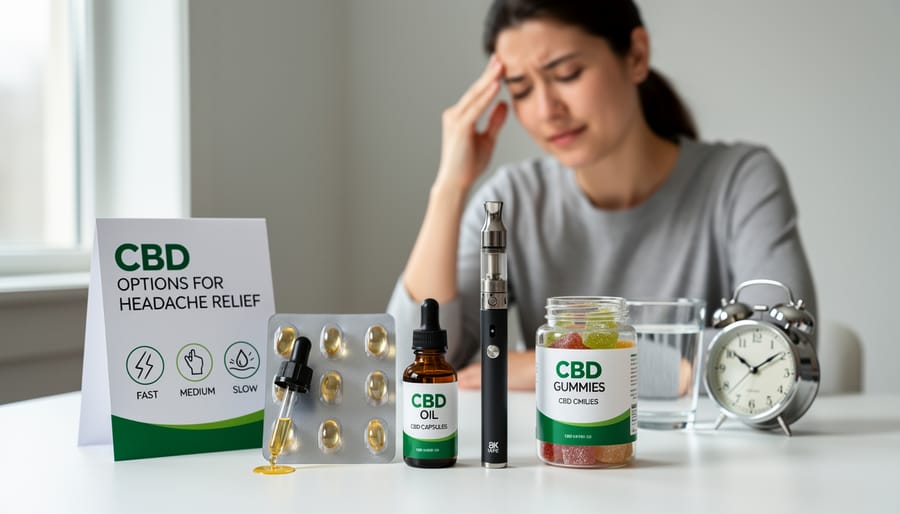
CBD Oil vs. Capsules vs. Vapes: What Works Best
When I first started exploring CBD for my headaches, I was overwhelmed by the options. Oils, capsules, vapes—each method delivers CBD differently, which affects how quickly you’ll feel relief.
CBD oil taken sublingually (under the tongue) typically kicks in within 15-30 minutes. You hold the drops under your tongue for 60-90 seconds before swallowing, allowing the CBD to absorb directly into your bloodstream. This method offers flexibility with dosing and is my go-to when I feel a headache building. The effects usually last 4-6 hours, making it ideal for managing pain throughout the day.
Capsules are the most convenient option if you’re looking for precise, consistent dosing without any taste or fuss. However, they take longer to work—usually 45-90 minutes—because they must pass through your digestive system first. I find capsules work better as a preventative measure rather than for acute headache relief.
Vaping CBD provides the fastest relief, often within 5-15 minutes, as the CBD enters your lungs and bloodstream almost immediately. However, the effects wear off more quickly, typically within 2-3 hours. While vaping is legal in Canada when using Health Canada-approved products, it’s worth noting that some people prefer not to inhale anything, especially if they have respiratory sensitivities.
For headaches specifically, I’ve found that sublingual oils offer the best balance between speed and duration of relief, though your preference may vary based on lifestyle and how quickly you need symptom management.
Full-Spectrum vs. Isolate for Migraine Relief
When choosing between full-spectrum CBD and CBD isolate for headache relief, understanding the entourage effect is key. Full-spectrum products contain all the naturally occurring compounds from the hemp plant, including other cannabinoids, terpenes, and trace amounts of THC (under 0.3% in Canada). These compounds work together synergistically, potentially enhancing CBD’s therapeutic effects. This is what researchers call the entourage effect.
CBD isolate, on the other hand, contains only pure CBD with all other plant compounds removed. It’s a great option if you want to avoid even trace THC or prefer a product with no hemp taste.
For migraines and headaches, many users report better results with full-spectrum CBD, likely due to that entourage effect. The additional cannabinoids and terpenes may provide enhanced anti-inflammatory and pain-relieving properties. However, isolate can still be effective, especially at higher doses.
I’ve personally found full-spectrum tinctures more helpful for my tension headaches, though everyone responds differently. If you’re subject to workplace drug testing, isolate might be the safer choice to avoid any THC concerns, even though Canadian full-spectrum products contain minimal amounts.
What to Look for in Canadian CBD Products
When I first started exploring CBD for my headaches, I quickly learned that not all products are created equal—especially in Canada’s evolving market. Health Canada requires CBD products to be sold through licensed retailers or the medical cannabis program, so avoid any unlicensed sources promising miracle cures at suspiciously low prices.
Look for products with clear THC and CBD content listed in milligrams, not just percentages. Third-party lab testing is your best friend here—reputable companies provide certificates of analysis (COAs) that verify cannabinoid content and screen for contaminants like pesticides, heavy metals, and mold. If a company won’t share their testing results, that’s a red flag.
I’ve learned to check for proper licensing numbers on packaging and company websites. Licensed producers must follow strict quality control standards, which gives me peace of mind when managing my headaches. Also, watch out for exaggerated health claims—Canadian regulations prohibit companies from making therapeutic promises beyond what’s approved. If something sounds too good to be true, it probably is.
How to Use CBD for Headaches and Migraines
Starting Doses and Finding Your Sweet Spot
When I first started using CBD for my tension headaches, I made the classic mistake of thinking more would work faster. Spoiler: it didn’t, and I wasted product in the process. Starting low and going slow isn’t just cautious advice, it’s genuinely the smartest approach.
Most experts recommend beginning with 5-10 mg of CBD for headache relief. Yes, that seems tiny, especially when you see products containing hundreds of milligrams, but your body needs time to respond. Take this dose once or twice daily for at least three to five days before making any changes. Keep a simple log noting your dosage, timing, and how your headaches respond.
If you’re not seeing improvement after that initial period, increase by small increments of 5 mg every few days. Some people find their sweet spot at 15 mg, while others need 40 mg or more. There’s no universal magic number because factors like your body weight, metabolism, headache severity, and the product’s bioavailability all play a role.
For acute headache relief, you might need a slightly higher dose than what works for prevention, but still start conservatively. I’ve found that 20 mg of a quality full-spectrum oil works for my tension headaches, but I know others who need less or more.
Pay attention to timing too. CBD can take 30 minutes to two hours to work depending on the delivery method, so plan accordingly. And remember, under Canada’s Cannabis Act, there are possession limits to keep in mind, though for personal CBD use, most people won’t approach these thresholds.
Using CBD Preventatively vs. For Active Relief
Your approach to CBD for headaches really depends on your headache pattern. If you deal with occasional tension headaches or the rare migraine, using CBD for active relief makes the most sense. In this case, you’d reach for CBD oil, capsules, or even a topical when you feel a headache coming on or once it’s started. Many Canadians I’ve spoken with keep a CBD tincture in their desk drawer or purse specifically for this purpose.
For chronic migraine sufferers or those with frequent tension headaches, a preventative strategy might be more effective. This involves taking CBD daily, even on headache-free days, to potentially reduce the frequency and intensity of episodes. Think of it like a maintenance approach rather than crisis management.
From my own experience with stress headaches, I found that taking a consistent daily dose of 15mg CBD oil helped reduce how often they occurred, while I’d sometimes add an extra 10mg dose if I felt one breaking through. This combined approach gave me both prevention and active relief when needed.
The preventative route requires patience, as it can take several weeks to notice a difference in headache patterns. Keep a headache diary to track frequency and severity so you can actually measure whether your preventative CBD routine is working for you.
Combining CBD With Other Treatments Safely
Many Canadians find CBD works well alongside their existing headache treatments, but it’s important to approach combination therapy thoughtfully. CBD can interact with certain medications by affecting how your liver processes them, particularly blood thinners, some antidepressants, and specific migraine medications.
If you’re currently taking prescription headache medication, don’t stop or reduce your dosage without medical guidance. Instead, talk to your doctor or pharmacist before adding CBD to your routine. I learned this the hard way when I started CBD while taking daily supplements—a quick consultation revealed a potential interaction I hadn’t considered.
Generally, CBD appears safe when combined with over-the-counter pain relievers like acetaminophen or ibuprofen, though some people find they need less of these medications once CBD becomes part of their regimen. However, avoid combining CBD with alcohol or sedatives, as this may increase drowsiness.
Watch for warning signs like unusual drowsiness, dizziness, or changes in how your regular medications seem to be working. Keep a symptom journal noting when you take CBD, other medications, and how you feel. This information is invaluable for healthcare providers helping you optimize your treatment plan.
Remember, Healthcare Canada doesn’t evaluate CBD products for treating specific conditions, so working with knowledgeable professionals ensures you’re making safe, informed choices.
Real Results: What to Expect When Using CBD
Let’s be honest: CBD isn’t a magic bullet, and anyone promising instant headache relief is overselling it. But that doesn’t mean it can’t be genuinely helpful when you understand what to realistically expect.
Most people don’t experience immediate results. In my own experience with tension headaches, I noticed subtle changes after about a week of consistent use—a slight reduction in intensity rather than headaches disappearing completely. For some community members I’ve connected with, it took two to three weeks before they could confidently say CBD was making a difference. This is pretty typical with CBD products since they work with your body’s endocannabinoid system, which needs time to adjust.
The effectiveness varies quite a bit from person to person. From what I’ve gathered talking with other Canadians using CBD for headaches, roughly 60-70% report some level of improvement. That might mean fewer headaches per month, less severe pain, or shorter duration. Complete elimination of headaches is less common, though some lucky folks do experience that.
One woman from our community in Ontario shared that CBD oil didn’t stop her migraines entirely, but it reduced their frequency from twice weekly to once every two weeks—a meaningful quality of life improvement for her. Another person mentioned that combining CBD with their usual tension headache management (staying hydrated, better sleep habits) seemed to boost the overall effectiveness.
It’s also worth noting that CBD seems to work better as a preventative tool rather than emergency relief. Taking it consistently appears more effective than only using it when a headache strikes, though some people do find acute relief with higher doses or faster-acting methods like vaping.
The key is patience and keeping a simple log of your headaches, dosage, and any changes you notice. This helps you determine whether CBD is genuinely working for you or if you need to adjust your approach. Remember, everyone’s body chemistry is different, especially when it comes to pain management.

Navigating CBD Legality and Access in Canada
In Canada, accessing CBD for headache relief is straightforward thanks to our federally regulated cannabis market. Since the Cannabis Act came into effect in 2018, CBD products are legal nationwide for adults 19 and older (18 in Alberta and Quebec). This means you have legitimate, safe options for purchasing quality CBD without the legal grey areas found in many other countries.
You can buy CBD products from provincially licensed cannabis retailers, both in physical stores and through authorized online platforms. Each province operates slightly differently. For instance, in Ontario, you’ll shop through the Ontario Cannabis Store website or licensed private retailers, while British Columbia residents can use the BC Cannabis Stores or approved private shops. I’ve found that online provincial retailers often provide the widest selection and detailed product information, which is incredibly helpful when you’re starting out.
It’s important to understand that CBD products sold through these legal channels have undergone quality testing and contain accurate labeling. This isn’t the case with CBD sold in some health food stores or gas stations, which may contain hemp seed oil rather than actual CBD, or worse, inaccurate cannabinoid levels.
When purchasing CBD for headaches, look for products that clearly display their CBD content in milligrams, ideally with third-party lab testing certificates. You’ll need a valid government-issued ID proving your age, and there are possession limits to be aware of, though these rarely affect typical CBD users since equivalency calculations heavily favor CBD products over THC.
Finding relief from headaches can feel like an uphill battle, but CBD offers a promising natural option worth exploring. Throughout this article, we’ve covered how CBD may help reduce headache pain through its interaction with your endocannabinoid system, the importance of choosing quality products that comply with Canadian regulations, and practical guidance on dosing and consumption methods. Remember, everyone’s experience with CBD is unique, so patience and experimentation are key to finding what works for you.
I’ve personally found that keeping a simple journal helped me identify which products and doses were most effective for my headaches. Start low, go slow, and give your body time to respond. Whether you’re dealing with occasional tension headaches or chronic migraines, CBD might be the missing piece in your wellness toolkit.
Ready to take the next step? Explore our detailed product reviews to find trusted Canadian brands, and check out our comprehensive dosage guides tailored specifically for headache relief. You’re not alone in this journey, and I’m here to help you navigate it with confidence.
Here’s to finding your relief,
Danielle