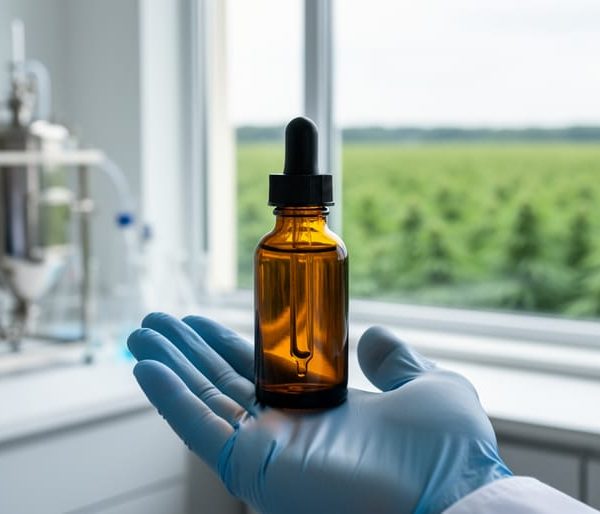

Check the Certificate of Analysis before buying any CBD product—this third-party lab document reveals cannabinoid levels, confirms THC content stays within Canada’s legal limits, and screens for contaminants like pesticides and heavy metals. Academic institutions like the UBC Seed Lab are pioneering research into cannabis traceability systems that track products from cultivation through retail, giving consumers unprecedented transparency about what’s actually in their bottles and tinctures.
Demand seed-to-shelf documentation from your CBD brand by asking where their hemp originated, which extraction methods they used, and whether they maintain batch-specific records. Companies partnering with university research programs typically maintain higher quality standards because academic oversight requires rigorous data collection and verification protocols that recreational-focused producers often skip.
Compare the cannabinoid profile on your product label against the COA’s actual test results—discrepancies signal either poor quality control or intentional misrepresentation. UBC’s research into cannabis genomics and supply chain verification provides the scientific framework that legitimate Canadian CBD producers use to validate their claims, transforming traceability from marketing buzzword into measurable reality.
Understand that traceability protects you from more than contaminated products—it ensures consistent dosing across bottles, verifies organic growing claims, and confirms your CBD came from legal Canadian sources rather than gray-market imports. When academic researchers track genetic markers from seed through final product, they’re essentially creating a passport for your CBD that documents every stop in its journey, giving you the confidence that what you’re putting in your body matches what you paid for.
This scientific approach to cannabis quality represents a fundamental shift in how Canadians can evaluate CBD products, moving beyond trusting brand promises to demanding verifiable proof backed by research institutions.
Understanding the UBC Seed Lab and Its Role in Cannabis Quality

What Makes University Research Different from Industry Claims
When I first started learning about CBD products, I noticed companies loved throwing around impressive-sounding claims. “Clinically proven!” “Laboratory tested!” “Scientifically formulated!” But here’s what I’ve learned: there’s a real difference between what a university research lab does and what a company’s marketing department says.
University research, like the work happening at institutions such as UBC, operates under strict academic standards. Researchers publish their findings in peer-reviewed journals, meaning other scientists scrutinize their methods and results before anything gets published. They’re not trying to sell you a product—they’re trying to understand how things actually work. Their funding often comes from government grants or academic institutions, not from companies with products to promote.
Industry claims, on the other hand, can sometimes be what I call “technically true but misleading.” A brand might say their product is “lab tested,” but that doesn’t tell you what standards the lab used, whether it was independent, or if they even published results that didn’t look favorable. Companies have a vested interest in making their products sound amazing because, well, they want you to buy them.
This doesn’t mean all industry research is bad or that all companies are dishonest. Many reputable Canadian CBD brands do invest in legitimate third-party testing. But understanding this distinction helps you ask better questions: Who conducted the research? Was it published independently? Can I see the actual data, not just a cherry-picked summary?
When academic institutions study cannabis and hemp, they’re building foundational knowledge that benefits everyone, not just one brand’s bottom line.
Seed-to-Shelf Traceability: Why Your CBD’s Journey Matters
The Seed Stage: Where Quality Actually Begins
Think of quality CBD like baking a cake—if you start with stale flour or cracked eggs, no amount of fancy technique will save the final product. The same principle applies to hemp cultivation, which is why seed quality matters so much.
Before a single hemp plant goes into the ground, reputable producers work with certified seeds that have undergone genetic testing. This testing verifies the plant’s genetic makeup to ensure it will produce the right cannabinoid profile—high in CBD and low in THC, staying within Canada’s legal limit of 0.3% THC. Without this testing, farmers are essentially gambling on what their crop will produce.
Seed certification goes beyond just genetics. Certified seeds are tested for germination rates, disease resistance, and purity. This means fewer pesticides are needed during growth, and the plants are more likely to produce consistent cannabinoid levels across the entire crop. When a CBD brand tells you they use certified seeds, they’re essentially showing you their quality control begins at step one, not step ten.
I learned this firsthand when interviewing a licensed cannabis producer in British Columbia. She explained that the small upfront investment in certified seeds saves massive headaches later—no surprise THC spikes that could make a batch illegal to sell, and far more predictable CBD concentrations that make product formulation reliable.
When you’re evaluating CBD products, brands that can trace their supply chain back to certified seed sources are demonstrating a commitment to quality that matters. It’s the foundation everything else builds upon.

From Growth to Your Shelf: Tracking Every Step
Once hemp seeds sprout, every step they take toward becoming the CBD product in your hand is governed by strict Canadian regulations—but the best brands go much further than just checking boxes.
Under Health Canada’s Cannabis Regulations, licensed cultivators must track plants from seed to harvest using detailed records. Every plant gets documented: when it was planted, what nutrients it received, and how it was grown. This isn’t optional—it’s the law. Processors who extract CBD from these plants must maintain equally rigorous documentation, recording batch numbers, extraction methods, and testing results. Distributors then carry this paperwork forward, creating an unbroken chain of custody.
But here’s where premium brands distinguish themselves. While regulations require basic tracking, quality-focused companies implement additional verification steps. They often conduct testing beyond Health Canada’s minimum requirements—checking not just for THC levels and contaminants, but also for terpene profiles, pesticide residues at lower thresholds, and heavy metals. Some voluntarily use blockchain technology or QR codes that let you trace your specific bottle back to the exact harvest date and field location.
I remember chatting with a small-batch producer in Ontario who showed me their tracking system. Beyond regulatory compliance, they documented soil health metrics and weather conditions for each growing season. Why? Because they genuinely wanted to understand what produced the best plants. That level of care isn’t legally required, but it speaks volumes about quality commitment.
When you’re shopping, ask brands about their tracking practices. Companies proud of their processes will happily share details. If they’re evasive or vague, that’s worth noting. Transparency in cultivation and processing often signals transparency in everything else—including what eventually ends up in your product.
Quality Assurance in CBD: What Lab Testing Actually Tells You

Reading a Certificate of Analysis Without a Science Degree
I’ll be honest—the first time someone handed me a Certificate of Analysis, I felt like I was looking at a chemistry exam I hadn’t studied for. But here’s the good news: you don’t need a science degree to understand the essentials. Think of a COA as a report card for your CBD product, and once you know what to look for, it becomes pretty straightforward.
Start at the top of the document. You should see the product name and batch number—make sure these match what’s on your actual product label. If they don’t, that’s a red flag. Next, look for the laboratory’s name and contact information. Accredited labs will proudly display their credentials, and you should be able to verify they’re a real, independent testing facility.
Now for the important stuff: the cannabinoid profile section. This typically appears as a table with percentages or milligrams. Look for CBD or cannabidiol—the number you see should be close to what the product claims on its label. You’ll also see THC listed, which in Canada must stay under legal limits. Don’t panic if you see trace amounts; that’s normal for full-spectrum products.
Scan down to the contaminants section. You’re looking for things like heavy metals, pesticides, and microbials. The key word you want to see is “pass” or “not detected” or “below detection limit.” If anything says “fail,” walk away from that product.
Finally, check the date. COAs should be recent—ideally from the same batch you’re purchasing. An old COA doesn’t tell you much about the product sitting in front of you today. Most reputable brands make these documents easily accessible on their websites, and if you need to dig too hard to find them, that tells you something too.
Red Flags That Signal Poor Quality Control
When I’m shopping for CBD products, I’ve learned to spot certain warning signs that suggest a brand might be cutting corners on quality control. These red flags have saved me from wasting money on questionable products more than once.
First, look at the product packaging itself. If the label is missing basic information like the batch number, production date, or expiry date, that’s a major concern. In Canada, legitimate CBD products should clearly display the cannabis tracking number and standardized cannabis symbol. Vague language like “hemp extract” without specifying CBD content in milligrams is another warning sign. I once bought a product that just said “contains CBD” with no actual numbers, and unsurprisingly, it had zero effect.
Check the Certificate of Analysis carefully. Red flags include COAs that are several months old, tests performed by in-house labs rather than independent third parties, or results that don’t match the batch number on your product. Some brands use generic COAs across multiple batches, which defeats the entire purpose of testing. If a company makes it difficult to access their COAs or requires you to email them repeatedly, I’d be suspicious about what they’re hiding.
Pay attention to pricing that seems too good to be true. Quality testing, proper extraction methods, and organic cultivation cost money. If a full-spectrum CBD oil costs significantly less than competitors, the brand might be skipping crucial quality control steps. Finally, inconsistent product experiences from batch to batch suggest inadequate quality assurance processes. Your CBD should work reliably every time you use it.
How UBC’s Research Protects Canadian CBD Consumers
Canadian Cannabis Regulations and Quality Standards
When I first started exploring CBD products in Canada, I remember feeling reassured knowing that Health Canada oversees cannabis regulation here. It gave me confidence that the products on shelves had to meet specific standards before reaching consumers like me.
Health Canada requires licensed cannabis producers to follow strict quality control measures throughout the entire production process. This includes testing for potency (to ensure the CBD and THC levels match what’s on the label), screening for contaminants like pesticides, heavy metals, and microbial impurities, and maintaining detailed records that track products from seed to sale. These regulations apply to all legal cannabis products in Canada, including CBD oils, capsules, and topicals.
This is where research institutions like the University of British Columbia become invaluable. While they don’t directly regulate the industry, academic researchers contribute significantly to developing the testing methods and quality standards that the industry relies on. Labs at universities conduct independent research into cannabis genetics, optimal growing conditions, extraction techniques, and analytical testing procedures. Their findings help establish best practices that licensed producers can adopt.
For you as a consumer, this multi-layered system means that legal CBD products have undergone rigorous testing before reaching you. The research happening at institutions like UBC helps refine these quality standards over time, making the products you purchase safer and more consistent. When you buy from a licensed retailer, you’re benefiting from both government oversight and ongoing academic research working together to protect your health.
What to Ask CBD Brands About Their Traceability Practices
When I first started exploring CBD products, I wish I’d known what questions to ask. I assumed all brands were equally transparent, but that’s definitely not the case. Here’s what you should be asking any CBD brand you’re considering, and what their answers actually reveal about their commitment to quality.
Start with the basics about their hemp source. Ask: “Where is your hemp grown, and can you trace it back to specific farms?” Genuine brands will provide specific locations and often have direct relationships with their growers. Vague answers like “from trusted sources” or “North American farms” are red flags. In Canada, you want to know if they’re using domestically-grown hemp or importing it, and either option should come with clear documentation.
Next, dig into their testing protocols. Ask: “Do you test at multiple stages of production, or just the final product?” Quality-focused brands test the raw hemp, intermediate extracts, and finished products. Also ask: “What specific contaminants do you test for, and what are your acceptable limits?” They should mention pesticides, heavy metals, residual solvents, and microbials. If they can’t answer this readily, that’s concerning.
Here’s a question that often separates serious brands from marketing-heavy ones: “Can you show me the full chain of custody documentation from seed to the product I’m buying?” This isn’t just about having a Certificate of Analysis. It means tracking every step—which farm, which extraction batch, which bottling run. Brands with genuine traceability systems can provide this information, even if it takes a day or two to compile.
Finally, ask about their relationship with testing labs: “Which third-party labs do you use, and how do you select them?” Reputable brands work with accredited labs and can explain why they chose them. Be wary if they only use in-house testing or can’t name their testing facilities.
At the end of the day, the quality of CBD products available in Canada improves when we, as consumers, ask the right questions. Research initiatives and partnerships with institutions like UBC demonstrate that the science behind traceability exists—now it’s up to us to demand that brands actually use it.
When I first started exploring CBD, I felt overwhelmed by marketing claims and didn’t know what to look for. Learning about lab testing and certificates of analysis changed everything for me. It gave me a framework to evaluate products beyond flashy packaging and feel-good language. You deserve that same confidence when making purchasing decisions.
Before buying your next CBD product, take a moment to check if the brand provides third-party lab results. Look at where their hemp comes from. Ask them directly about their testing protocols if the information isn’t readily available. Companies committed to quality will be transparent and even enthusiastic about sharing this information.
The Canadian CBD market is still maturing, and your choices as an informed consumer send a powerful message to the industry. By prioritizing traceability and lab testing, you’re not just protecting yourself—you’re helping raise the standard for everyone. That’s something worth feeling good about.