

Your body operates two profound communication networks that most people have never heard of, yet they quietly orchestrate everything from your stress response to your sleep quality. The endocannabinoid system—your body’s internal cannabinoid network—works in remarkable partnership with the vagus nerve, that wandering superhighway connecting your brain to nearly every major organ.
Think of the endocannabinoid system as your body’s dimmer switch, constantly fine-tuning inflammation, pain signals, mood, and sleep cycles. The vagus nerve acts as the master messenger, carrying bidirectional signals between your gut, heart, lungs, and brain. When these two systems communicate effectively, you experience better stress resilience, deeper sleep, reduced inflammation, and improved emotional regulation.
Here’s what makes this connection fascinating for Canadians exploring CBD: cannabinoids from hemp interact directly with your endocannabinoid system, potentially supporting vagal tone—the measure of how well your vagus nerve functions. Research suggests that when your endocannabinoid system is balanced, your vagus nerve operates more efficiently, creating a positive feedback loop that influences everything from digestive health to anxiety levels.
I’ve personally experienced how understanding this connection transformed my approach to wellness. After years of sleep struggles, learning how these systems work together helped me make informed decisions about natural support options, including CBD products legally available in Canada.
This article breaks down the science behind both systems in plain language, explores their interconnected relationship, and provides practical strategies—both CBD-related and lifestyle-based—that Canadians can implement immediately. Whether you’re new to cannabinoids or looking to deepen your understanding, you’ll discover how supporting these two networks might be the missing piece in your wellness routine.
What Is the Endocannabinoid System (And Why Should You Care)?
Think of your body as a smart home with an incredibly sophisticated thermostat system. Just like a thermostat constantly adjusts temperature to keep your home comfortable, the endocannabinoid system (ECS) works behind the scenes to keep your body balanced. It regulates everything from your mood and appetite to pain perception and sleep quality, often without you even noticing.
I’ll be honest—when I first learned about the ECS while researching CBD for my own sleep issues, I was shocked that something so fundamental to our health isn’t more widely discussed. Discovered in the 1990s, this system exists in all vertebrates and plays a crucial role in maintaining what scientists call homeostasis—basically, your body’s sweet spot where everything functions optimally.
The ECS has three main components. First, there are cannabinoid receptors scattered throughout your body. CB1 receptors are primarily found in your brain and nervous system, influencing things like memory, mood, and pain sensation. CB2 receptors hang out mainly in your immune system and peripheral organs, helping manage inflammation and immune responses.
Second, your body naturally produces endocannabinoids—chemical messengers that fit into these receptors like keys in locks. The two most important ones are anandamide (sometimes called the “bliss molecule”) and 2-AG. These molecules are produced on demand when your body needs to restore balance.
Third, enzymes break down endocannabinoids after they’ve done their job, ensuring the system doesn’t go into overdrive.
Here’s what makes this relevant for Canadians exploring CBD: cannabis compounds like CBD interact with this same system, potentially supporting areas where your natural endocannabinoid production might need a boost. Understanding this foundation helps you make informed decisions about whether CBD might work for your specific health goals.
Your Vagus Nerve: The Body’s Information Superhighway
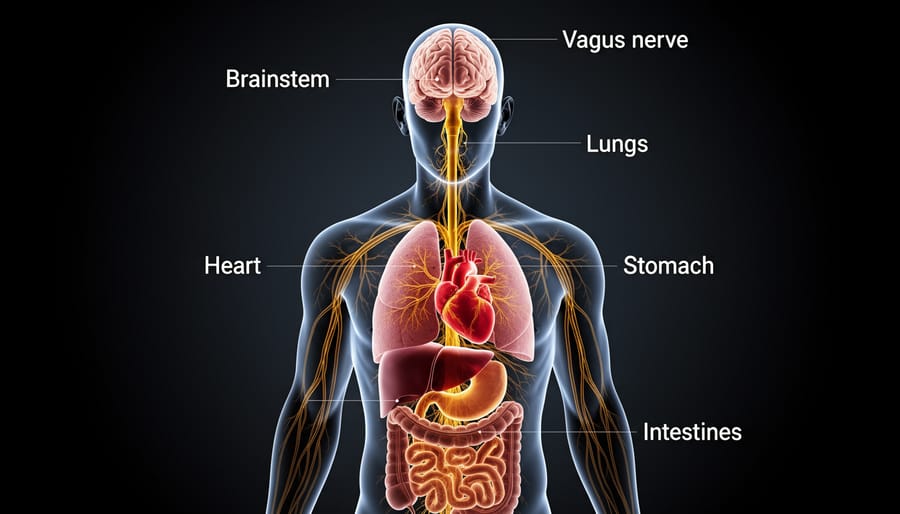
Think of your vagus nerve as the body’s longest highway system, carrying essential messages between your brain and nearly every major organ in your body. This remarkable nerve starts at the base of your brain and travels down through your neck, branching out to connect with your heart, lungs, digestive system, and more. In fact, about 80% of the signals traveling along this pathway move upward from your organs to your brain, meaning your body is constantly sending status updates to your control center.
The vagus nerve is responsible for managing what scientists call your parasympathetic nervous system, which is essentially your body’s “rest and digest” mode. When this nerve is functioning well, it helps slow your heart rate after exercise, stimulates digestion after meals, and even influences your immune response. It’s like having an incredibly sophisticated communication network that you never have to think about.
I find it fascinating that this single nerve pathway touches so many aspects of our daily health. When you take a deep breath and feel yourself relax, that’s your vagus nerve at work. When your stomach starts producing digestive enzymes because you smell dinner cooking, again, it’s the vagus nerve coordinating that response.
For Canadians exploring natural wellness approaches, understanding the vagus nerve helps explain why certain practices like deep breathing, meditation, or even cold exposure can have such profound effects on overall wellbeing. This nerve doesn’t work in isolation, though. It communicates extensively with other systems in your body, including the endocannabinoid system, creating an intricate web of internal regulation that keeps you balanced and functioning optimally.
The Surprising Partnership: How Your Vagus Nerve and ECS Communicate
Endocannabinoid Receptors Along the Vagus Nerve
CB1 receptors, the primary binding sites for endocannabinoids and cannabinoids like CBD, are abundantly distributed along the vagus nerve pathways. Think of these receptors as tiny docking stations positioned strategically throughout your body’s main communication highway. They’re found in vagal nerve fibers running from your brainstem down through your chest and abdomen, connecting to organs like your heart, lungs, and digestive system.
This distribution isn’t random. These CB1 receptors act as regulatory checkpoints, helping to modulate the signals traveling between your brain and body. When endocannabinoids bind to these receptors along vagal pathways, they can influence inflammation responses, digestive function, heart rate variability, and even mood regulation.
For Canadians exploring CBD use, understanding this connection is valuable. While CBD doesn’t directly activate CB1 receptors the same way THC does, it influences the endocannabinoid system by preventing the breakdown of your body’s natural endocannabinoids. This potentially allows your own endocannabinoids to work more effectively at these vagal CB1 receptor sites, supporting the body’s natural regulatory processes. It’s like giving your internal communication system a gentle boost rather than overriding it completely.
How This Partnership Affects Your Stress Response
When your endocannabinoid system and vagus nerve work together effectively, they create a powerful buffer against everyday stress. Think of it as having a built-in circuit breaker that prevents your nervous system from staying stuck in fight-or-flight mode.
Here’s what happens in practical terms: when you encounter a stressful situation, your vagus nerve communicates with your endocannabinoid system to help determine whether you stay anxious or begin to calm down. If this partnership is functioning well, your body can more easily shift from that panicky, heart-racing state back to a calm, balanced one.
I remember chatting with a friend who started paying attention to her vagal tone through breathing exercises. She noticed that over time, her anxiety responses became less intense and shorter-lived. While she wasn’t using CBD at the time, she was essentially supporting this natural partnership through lifestyle choices.
For Canadians exploring CBD, understanding this connection helps explain why some people report feeling less reactive to stress. CBD interacts with your endocannabinoid system, which in turn influences vagal tone and your overall stress resilience. However, it’s not magic. This partnership also responds to other inputs like deep breathing, cold exposure, meditation, and even humming or singing, all of which stimulate vagal activity.
The key takeaway? Supporting either system, whether through CBD or other wellness practices, can potentially influence how your body handles stress on a fundamental level.
Circadian Rhythms: Your Body’s Internal Clock Explained
Think of your body as having its own natural timekeeper—a built-in clock that knows when you should feel alert, when you should eat, and when it’s time to sleep. These patterns are called circadian rhythms, and they’re running quietly in the background of your life, influencing far more than you might realize.
Circadian rhythms are roughly 24-hour cycles that regulate essential biological processes. They’re controlled primarily by a small region in your brain called the suprachiasmatic nucleus, which responds to light and darkness detected by your eyes. When sunlight hits your retina in the morning, it signals your brain to reduce melatonin (the sleepy hormone) and increase cortisol (which helps you wake up). As evening approaches and light fades, this process reverses, preparing your body for rest.
But sleep isn’t the only thing your circadian rhythms control. These internal cycles also regulate when your body releases various hormones throughout the day, influence your body temperature, manage your appetite and digestion, and even determine when your liver is most active in processing substances. Your metabolism actually shifts efficiency based on the time of day, which is why eating late at night can feel harder on your system.
When I first learned about circadian rhythms, I was surprised to discover how deeply they influence our response to various substances, including cannabis and CBD. Your internal clock controls cannabis effectiveness because receptors in your endocannabinoid system fluctuate throughout the day.
Disruptions to these natural rhythms—whether from shift work, jet lag, irregular sleep schedules, or excessive screen time before bed—can throw off your entire system. This can lead to poor sleep quality, hormonal imbalances, digestive issues, and even mood changes. Understanding your circadian rhythms is the first step toward supporting them properly, which we’ll explore more as we connect these cycles to your endocannabinoid system.

How the Endocannabinoid System Regulates Your Sleep-Wake Cycle
Why Anandamide Levels Peak During the Day
Your body produces anandamide, often called the “bliss molecule,” on a natural schedule that follows your internal clock. Research shows that anandamide levels tend to be highest during daylight hours and gradually decline as evening approaches. This rhythm isn’t random—it’s deeply connected to your circadian system and plays a crucial role in keeping you alert and emotionally balanced throughout the day.
When anandamide peaks during morning and afternoon hours, it helps promote wakefulness, motivation, and positive mood. This endocannabinoid binds to the same receptors that CBD interacts with, which is why understanding this natural cycle matters for Canadians considering CBD use. If you’re taking CBD products, timing can influence how they work with your body’s own endocannabinoid production.
I’ve noticed that when my daily routine is consistent—regular wake times, exposure to morning light, and balanced meals—I feel more energized during the day. This likely reflects healthy anandamide rhythms at work. The vagus nerve helps coordinate this daily pattern by communicating between your gut (where much of your serotonin, a precursor to anandamide, originates) and your brain, ensuring your mood and energy align with the time of day.
How 2-AG Helps You Wind Down at Night
As evening approaches, your body naturally increases production of 2-arachidonoylglycerol (2-AG), the most abundant endocannabinoid in your system. Think of 2-AG as your internal “off switch” that helps transition your body from daytime alertness to nighttime rest mode.
This endocannabinoid works closely with your vagus nerve to dial down your nervous system activity. When 2-AG binds to CB1 receptors throughout your brain and body, it sends calming signals that reduce anxiety, lower your heart rate, and ease muscle tension. Many Canadians I’ve spoken with describe this natural evening shift as that pleasant “unwinding” feeling after a long day.
What makes 2-AG particularly important for sleep is its role in regulating body temperature. As 2-AG levels rise in the evening, your core temperature drops slightly, which is essential for falling asleep. It also helps quiet the mental chatter that often keeps us awake by reducing activity in brain regions associated with worry and rumination.
When your endocannabinoid system is functioning optimally, this natural 2-AG surge should help you feel genuinely sleepy as bedtime approaches, rather than wired and restless. Understanding this mechanism helps explain why supporting your endocannabinoid system through lifestyle choices or supplementation might improve your sleep quality.
The CB1 Receptor Connection to Your Circadian Clock
Your brain’s internal clock relies on CB1 receptors to stay synchronized. These receptors are densely concentrated in the suprachiasmatic nucleus, the tiny brain region that serves as your body’s master timekeeper. When you consume CBD or experience natural fluctuations in your endocannabinoids, CB1 receptors help signal whether it’s time to be alert or wind down for sleep.
Research shows that CB1 receptor activity follows a daily pattern, with higher levels during your active hours and lower levels at night. This natural rhythm supports healthy sleep-wake cycles. Understanding how circadian rhythms affect CBD can help you time your supplementation for maximum benefit. The vagus nerve also communicates with these circadian centers, creating a feedback loop between your gut, brain, and internal clock—all influenced by your endocannabinoid system.
The Vagus Nerve’s Role in Sleep and Circadian Health
Your vagus nerve acts like a master conductor for your sleep-wake cycle, constantly communicating between your brain and body to regulate everything from when you feel drowsy to how deeply you rest. This wandering nerve directly influences your sleep quality by controlling the parasympathetic nervous system, which is responsible for helping you shift from alert wakefulness into restful sleep states.
When your vagal tone is strong (meaning your vagus nerve is functioning optimally), your body can smoothly transition through different sleep stages, including the crucial REM cycles where memory consolidation and emotional processing occur. Higher vagal tone is associated with better sleep efficiency and fewer nighttime awakenings. Conversely, low vagal tone often correlates with insomnia, fragmented sleep, and difficulty falling asleep.
The vagus nerve also plays a significant role in synchronizing your circadian rhythm, that internal 24-hour clock that tells your body when to be alert and when to rest. It does this by communicating information about light exposure, meal timing, and stress levels to your brain’s suprachiasmatic nucleus, the control center for circadian regulation.
I’ve noticed in conversations with Canadians struggling with sleep issues that vagus nerve dysfunction often shows up in predictable patterns. You might experience racing thoughts at bedtime, difficulty “switching off” mentally, or waking frequently during the night feeling anxious. Some people describe feeling “tired but wired,” unable to relax despite physical exhaustion.
Common signs of vagus nerve dysfunction affecting sleep include elevated nighttime heart rate, shallow breathing during rest, digestive discomfort that worsens at night, and morning grogginess despite adequate sleep duration. When the vagus nerve isn’t functioning properly, your body struggles to activate the “rest and digest” state necessary for restorative sleep, leaving you caught in a cycle of poor rest and daytime fatigue that further compromises vagal function.
When This System Gets Out of Balance: Real-World Consequences
When your endocannabinoid system and vagus nerve fall out of sync with your natural rhythms, the effects ripple through your entire body. I learned this firsthand during my years working irregular shifts in healthcare, when my sleep became erratic and my anxiety spiked noticeably.
Shift workers face some of the most significant disruptions. When you’re awake during hours your body expects to be sleeping, your ECS can’t properly regulate the inflammatory response or stress hormones. This mismatch means circadian timing matters for everything from digestion to mood regulation. The vagus nerve, which normally downshifts your body into rest mode at night, gets confused signals, leading to poor sleep quality even when you finally get to bed.
Jet lag creates similar chaos, though typically shorter-lived. Your ECS and vagus nerve are still operating on your home timezone while your environment demands adjustment. Many Canadians traveling between coasts or internationally experience this disconnect, which can take several days to resolve naturally.
Chronic stress might be the most insidious disruptor. When your stress response stays activated long-term, your endocannabinoid tone becomes depleted, meaning you have fewer endocannabinoids available to maintain balance. Meanwhile, your vagus nerve loses its calming influence, creating a vicious cycle where your body struggles to shift out of fight-or-flight mode.
Sleep disorders like insomnia compound these issues. Without quality sleep, your body can’t produce adequate endocannabinoids or reset your vagus nerve function. You might notice increased inflammation, digestive problems, heightened anxiety, or difficulty concentrating.
Understanding these connections helps explain why addressing circadian disruption requires a comprehensive approach rather than quick fixes.

Can CBD Help Support This Natural System?
What the Research Shows About CBD and Sleep
Current research on CBD and sleep presents a mixed but increasingly promising picture. While we’re still in the early stages of understanding how CBD affects sleep quality, several studies have shown encouraging results that relate directly to the endocannabinoid system and vagus nerve connection.
A 2019 study published in The Permanente Journal found that 66.7% of participants experienced improved sleep scores within the first month of CBD use. Researchers believe this may be partly due to CBD’s interaction with serotonin receptors and its potential to reduce anxiety, which often interferes with sleep onset.
When it comes to circadian rhythm regulation, the science gets particularly interesting. Research suggests that the endocannabinoid system plays a role in maintaining our sleep-wake cycle, with endocannabinoid levels naturally fluctuating throughout the day. CBD appears to support this rhythm rather than forcing sedation, which might explain why some people report feeling more alert during the day while sleeping better at night.
I’ve personally noticed this balancing effect. When I started using CBD, I expected to feel drowsy, but instead, I experienced more consistent energy patterns and fell asleep more easily at my regular bedtime.
It’s important to note that Health Canada hasn’t approved CBD specifically as a sleep aid, and research is ongoing. Most studies have been relatively small, and optimal dosing remains unclear. The current evidence suggests CBD may help with sleep indirectly by addressing underlying issues like stress and pain, rather than acting as a traditional sleep medication.
CBD Dosage Timing for Circadian Support
Timing your CBD intake to support your body’s internal clock requires a personalized approach, as everyone’s endocannabinoid system responds differently. Generally, if you’re using CBD to promote relaxation and better sleep, taking it 30 to 60 minutes before bedtime allows it to interact with your system as your natural melatonin levels rise. For daytime circadian support, some Canadians find lower morning doses helpful for maintaining balance without drowsiness.
I always recommend starting low and going slow. Begin with 5-10mg and observe how your body responds over several days before adjusting. Keep a simple journal noting your dose, timing, and how you feel throughout the day and night. This helps you identify patterns and find your sweet spot.
Remember that CBD products legally available in Canada vary in potency and formulation. Full-spectrum oils may offer enhanced benefits through the entourage effect, while isolates provide pure CBD. Always purchase from licensed retailers to ensure quality and accurate labeling. Give your body at least two weeks of consistent use before making conclusions, as the endocannabinoid system needs time to adjust and respond effectively.
What to Look for in CBD Products in Canada
When choosing CBD products in Canada for sleep support, start by verifying that your product comes from a licensed producer and displays proper Health Canada approval. Look for full-spectrum or broad-spectrum CBD oils, as these contain additional beneficial cannabinoids and terpenes that work synergistically to support the endocannabinoid system and vagus nerve function.
I’ve found that products with third-party lab testing certificates provide the most transparency about cannabinoid content and purity. Canadian regulations require clear labeling of CBD and THC content, which helps you dose accurately for sleep purposes. For beginners, oils and capsules offer the easiest dosing consistency, while experienced users might explore tinctures for faster absorption.
Consider starting with 10-25mg of CBD taken 30-60 minutes before bedtime. Products containing complementary ingredients like melatonin or calming terpenes such as linalool can enhance sleep benefits. Remember that legally, recreational cannabis products in Canada may contain up to 10mg of THC per package, so read labels carefully if you’re sensitive to THC or prefer CBD-only formulations available through licensed medical channels.
Natural Ways to Support Your ECS, Vagus Nerve, and Circadian Rhythms
Light Exposure Strategies That Actually Work
Getting the right light at the right time can significantly support your endocannabinoid system and vagus nerve function. Start your day with 10-15 minutes of bright morning light, ideally outside within an hour of waking. This exposure helps set your internal clock and influences your cannabis response timing if you use CBD products.
During Canadian winters when natural light is scarce, consider a 10,000 lux light therapy lamp in the morning. Position it at eye level while having breakfast or checking emails. In the evening, dim household lights after sunset and use warm-toned bulbs. If you’re using screens, enable blue light filters or wear blue-blocking glasses at least two hours before bed.
I’ve noticed that my own sleep quality improved dramatically when I started prioritizing morning light exposure during Toronto’s darker months. Even on cloudy days, outdoor light provides more beneficial intensity than indoor lighting alone.
Vagal Tone Exercises You Can Do in 5 Minutes
You don’t need fancy equipment or hours of free time to stimulate your vagus nerve. Here are three simple techniques you can practice almost anywhere:
Deep breathing is one of the most effective vagal exercises. Try the 4-7-8 technique: breathe in through your nose for four counts, hold for seven, then exhale slowly through your mouth for eight counts. Repeat this five times. The extended exhale is key, as it directly activates your vagus nerve and signals your body to relax.
Cold exposure provides a quick vagal boost. Splash cold water on your face, hold a cold compress to your neck, or finish your shower with 30 seconds of cold water. I’ll admit, when I first tried the cold shower method, I could barely last 10 seconds. But even brief cold exposure can stimulate your vagus nerve and improve its tone over time.
Humming or singing creates vibrations that directly stimulate the vagus nerve as it passes through your throat. Spend a few minutes humming your favourite tune, chanting “om,” or even just gargling water. It sounds simple, but these vibrations genuinely activate vagal pathways and promote that rest-and-digest state your body needs for optimal health.

Foods That Support Your Endocannabinoid System
Your diet plays a surprisingly important role in supporting your endocannabinoid system. Foods rich in omega-3 fatty acids, like wild-caught salmon, sardines, hemp seeds, and walnuts, provide the building blocks your body needs to produce endocannabinoids. I’ve personally noticed that when I prioritize these foods, I feel more balanced overall.
Beta-caryophyllene, a dietary cannabinoid found in black pepper, cloves, cinnamon, and dark leafy greens, directly activates CB2 receptors in your ECS. Adding freshly ground black pepper to meals is an easy way to incorporate this compound daily.
Other ECS-supporting foods include dark chocolate (70% cocoa or higher), eggs, and fermented foods like sauerkraut and kimchi. These provide essential fatty acids and support gut health, which is closely connected to both your ECS and vagus nerve function. For Canadians navigating wellness through diet, these accessible options offer a foundation for endocannabinoid support without requiring supplements or CBD products, though combining nutritional approaches with CBD may provide additional benefits for some individuals.
Understanding how your endocannabinoid system, vagus nerve, and circadian rhythms work together opens up exciting possibilities for better sleep and overall wellness. These three systems don’t operate in isolation—they’re constantly communicating, influencing everything from when you feel sleepy to how well your body recovers overnight.
The beauty of this interconnected approach is that you don’t need to tackle everything at once. Small, consistent changes can create meaningful improvements. Whether you’re considering CBD products or focusing on lifestyle adjustments like meal timing, light exposure, or breathwork, you’re supporting these systems in tandem.
I’ve personally found that combining vagal toning exercises with mindful CBD use before bed has made a noticeable difference in my sleep quality. But I’ll be honest—it took some experimentation to find what worked for me. What helps one person might not be ideal for another, which is why paying attention to your body’s responses is so important.
For Canadians exploring CBD as part of this wellness puzzle, remember that navigating product quality and legality matters. Always purchase from licensed retailers and look for third-party lab testing to ensure you’re getting what the label promises.
Most importantly, if you’re dealing with chronic sleep issues or health conditions, please consult with a healthcare provider before making significant changes. They can help you create a personalized approach that safely incorporates these insights into your routine. Your journey to better sleep deserves professional guidance alongside your own informed choices.