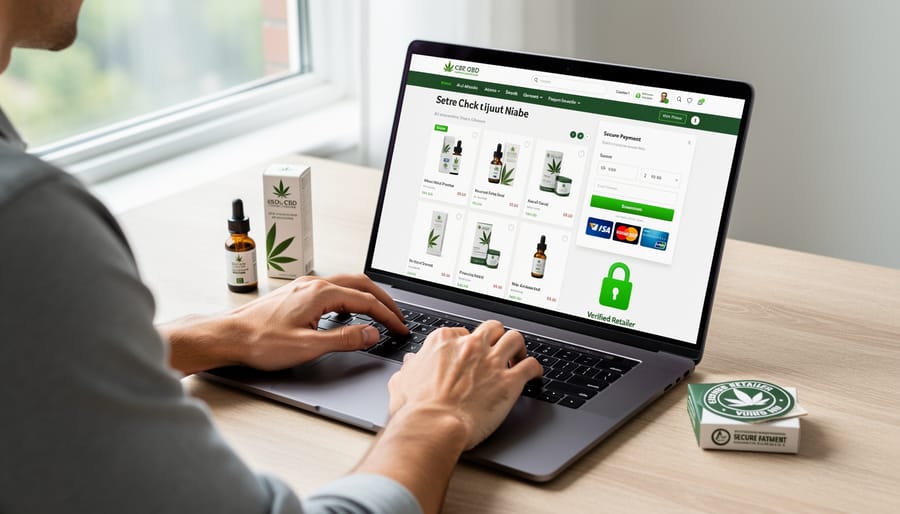
Verify your CBD retailer accepts credit cards, e-transfer, or digital wallets before adding products to your cart—many legitimate Canadian CBD shops still struggle with traditional payment processing due to banking restrictions. Check the payment options page during checkout to avoid frustration and abandoned purchases.
Understand that limited payment methods don’t signal an illegitimate business. Canada’s CBD industry faces unique merchant processing challenges because financial institutions categorize CBD as high-risk, even though it’s federally legal. Banks often decline merchant accounts or charge prohibitively high fees, forcing reputable retailers to rely on alternative payment solutions like Interac e-Transfer or specialized high-risk processors.
Look for transparency indicators beyond payment options when evaluating online CBD retailers. Legitimate businesses display current licenses, provide third-party lab results, list clear return policies, and maintain responsive customer service—regardless of which payment methods they accept. A retailer offering only e-Transfer but showing Health Canada licensing and detailed product information is typically more trustworthy than one accepting all major credit cards without proper documentation.
Expect to pay processing fees when shopping with smaller CBD retailers. Some businesses pass along the 3-6% premium charged by high-risk payment processors to offset costs. While this might seem unusual compared to mainstream shopping experiences, it reflects the genuine financial burden these companies face, not an attempt to overcharge customers. Supporting CBD retailers often means accepting these minor inconveniences as part of purchasing from an emerging, still-stigmatized industry.
The Payment Processing Problem for CBD Retailers
Why Banks and Processors Say No
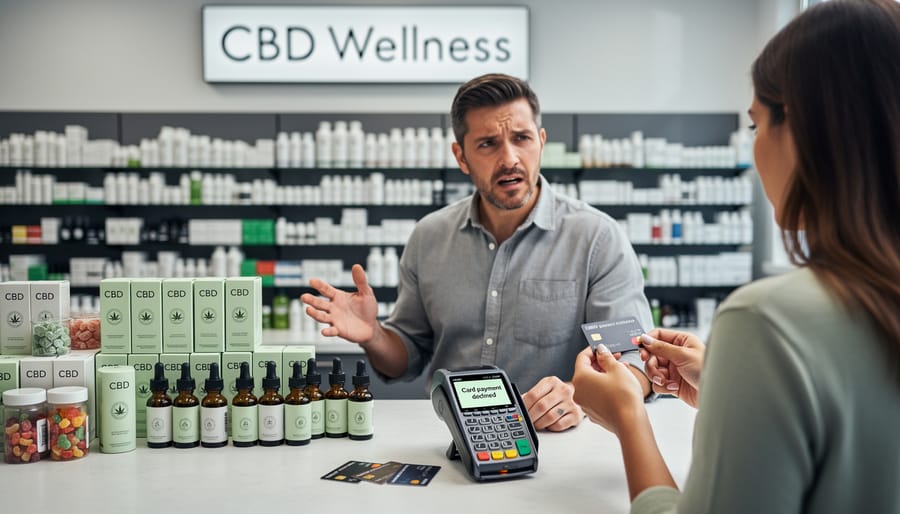
When you’re shopping for CBD products online in Canada and notice limited payment options—sometimes only e-transfers or cryptocurrency—you might wonder what’s going on. The reality is that many financial institutions treat CBD businesses as high-risk clients, which creates significant challenges for legitimate retailers trying to serve Canadian consumers.
Understanding why banks refuse CBD payments helps explain why your favorite CBD shop might have unusual checkout processes. Despite CBD being legal in Canada since 2018, several factors keep banks and payment processors hesitant.
First, there’s regulatory uncertainty. While Health Canada oversees CBD regulations, the rules around licensing, product formats, and THC limits continue evolving. Financial institutions prefer stable, predictable regulatory environments, and many remain cautious about potential future changes or enforcement actions.
Chargebacks present another concern. In any emerging industry, consumers sometimes dispute charges, claiming they didn’t receive products or that items didn’t meet expectations. High chargeback rates cost processors money and create administrative headaches, making them wary of CBD merchants.
Reputational concerns also play a role. Some banks worry that processing CBD payments might affect their corporate image or relationships with other clients, even though CBD is federally legal. This conservative approach stems from decades of cannabis prohibition and lingering stigma.
Finally, U.S. banking influence affects Canadian processors significantly. Many payment processing systems and networks originated in the United States, where cannabis remains federally illegal. Canadian processors using American banking infrastructure or partnerships often face restrictions, creating a ripple effect that limits options for Canadian CBD businesses—and ultimately affects your shopping experience as a consumer.
How This Affects Your Shopping Experience
If you’ve ever wondered why your favorite CBD store doesn’t accept your credit card or why that online CBD shop you love only offers e-transfer, you’re experiencing firsthand the payment processing challenges I’ve been discussing.
Here in Canada, these banking limitations directly impact how you can shop for CBD products. Many brick-and-mortar retailers operate as cash-only businesses, which means you’ll need to plan ahead before visiting. I’ve personally shown up to a store excited to try a new product, only to realize I didn’t have enough cash on hand. It’s frustrating, but understanding why this happens makes it a bit easier to navigate.
For online shopping, the experience can feel equally restrictive. You might find that legitimate retailers offer payment options like Interac e-transfer, cryptocurrency, or money orders instead of the convenient credit card checkout you’re used to. While these alternatives work, they often require extra steps and don’t offer the same purchase protection or reward points your credit card provides.
There’s also the security consideration. When retailers can’t access mainstream payment processors, you need to be extra vigilant about where you’re sending your money. Legitimate Canadian retailers will have proper business registration and transparent contact information, but the limited payment options can sometimes make it harder to distinguish reputable businesses from questionable ones.
The good news? Once you understand these limitations exist and why they’re there, you can shop more confidently by preparing cash for in-store visits and researching retailers thoroughly before making online purchases.
CBD Merchant Processors That Actually Work in Canada
Specialized High-Risk Processors
If you’re wondering why your favorite CBD retailer insists on e-transfer or asks you to call with credit card details, it’s because they’re likely working with specialized high-risk processors who understand the unique challenges of the cannabis industry.
These specialized processors operate differently from the payment companies handling transactions at your local grocery store. Companies like PaymentCloud and Maverick Bankcard have built their entire business model around serving industries that traditional banks consider too risky, including CBD retailers. What sets them apart is their willingness to work with CBD businesses despite the regulatory complexity and their established relationships with banks that will actually approve these accounts.
Here’s what makes these processors different: they conduct thorough compliance reviews, require extensive documentation about product sourcing and THC levels, and implement additional monitoring to ensure businesses stay within legal boundaries. For Canadian CBD retailers, this often means working with processors who understand both provincial regulations and the nuances of Canada’s Cannabis Act.
The trade-off for this specialized service comes in the fee structure. While a typical Canadian retailer might pay 1.5-2.5% per transaction, CBD businesses often face rates between 3-6%, plus higher monthly fees and sometimes rolling reserves where the processor holds back a percentage of sales as a safety buffer. These reserves can range from 5-10% of monthly sales, held for several months.
From a consumer perspective, understanding these challenges helps explain why some legitimate retailers have limited payment options or slightly higher prices. When you’re paying via e-transfer or encountering minimum purchase requirements, it’s often because your retailer is navigating these expensive processing solutions to serve you legally and safely. Retailers absorbing these costs are actually demonstrating their commitment to operating within proper channels rather than taking shortcuts that could put your personal information at risk.
Canadian-Specific Solutions
Finding a CBD merchant processor in Canada presents unique challenges compared to other industries, but several specialized payment solutions have emerged to serve this market. Unlike the United States, where CBD exists in a more complex legal gray area, Canada’s federally legal status for CBD actually creates a clearer pathway for payment processing—though obstacles still remain.
Several Canadian-specific payment processors now work with CBD merchants, including companies like PayGate and Payfirma, which have developed programs specifically for cannabis and CBD retailers. These processors understand Health Canada’s regulatory framework and can navigate the compliance requirements that traditional banks often find too complicated to handle. When you’re shopping online and see these payment options at checkout, it’s actually a good sign that the retailer has invested in legitimate processing solutions.
One thing I’ve noticed while researching CBD retailers across Canada is that payment options can vary significantly by province. This isn’t because of provincial payment laws, but rather because some processors are more comfortable working with retailers in provinces with established brick-and-mortar cannabis stores. Ontario and British Columbia merchants, for example, often have more processing options available simply due to market size and processor familiarity with these regions.
From a consumer perspective, you’ll typically see CBD retailers offering Interac e-Transfer, direct bank transfers, or specialized credit card processing. Some exclusively online CBD shops still rely on Interac e-Transfer because it bypasses the high fees and approval challenges of traditional merchant accounts. While this might seem unconventional if you’re used to instant checkout experiences, it’s a legitimate workaround that many reputable Canadian CBD businesses use. Just ensure you’re dealing with established retailers with verifiable business credentials before sending payment.
Alternative Payment Methods
Given the banking challenges CBD retailers face, many have turned to alternative payment methods that work outside traditional credit card systems. If you’ve noticed your favorite CBD shop asking for unusual payment options, here’s what you need to know about these alternatives and how they affect your shopping experience.
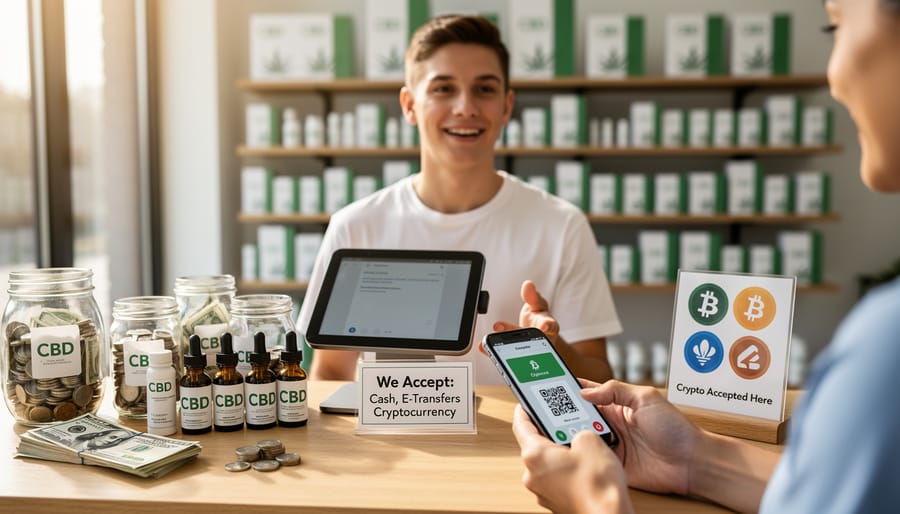
Cryptocurrency, particularly Bitcoin and Ethereum, has gained traction among some CBD retailers. These digital currencies bypass traditional banking entirely, offering privacy and lower transaction fees. However, crypto payments require you to set up a digital wallet and navigate price volatility—not ideal if you’re just starting your CBD journey and want a straightforward purchase.
E-transfers through services like Interac are incredibly popular among Canadian CBD retailers, especially for online orders. You’ll simply send money directly from your bank account using your email or phone number. This method feels familiar to most Canadians and doesn’t require special apps or accounts. The downside? There’s less purchase protection compared to credit cards, and transactions can take longer to process, delaying your order.
Digital wallets and payment apps occasionally work with CBD retailers, though policies change frequently. Some businesses accept PayPal alternatives or proprietary prepaid card systems. Cash alternatives like money orders remain options for mail orders, though they’re increasingly rare.
My advice? Stick with e-transfers when shopping online from licensed Canadian retailers—they’re secure, familiar, and widely accepted. Just ensure you’re dealing with legitimate businesses by verifying their provincial licenses before sending payment, as these alternative methods offer fewer consumer protections than traditional credit cards.
What This Means for Online CBD Shopping
Red Flags vs. Legitimate Payment Practices
When I first started buying CBD online, I’ll admit I felt a bit nervous seeing unfamiliar payment options at checkout. Why couldn’t I just use my regular credit card like on any other site? Understanding what’s normal in the CBD industry versus what should raise concerns has helped me shop confidently.
Legitimate CBD retailers in Canada often use secure payment alternatives like Interac e-Transfer, direct bank transfers, or specialized payment processors. These aren’t red flags—they’re adaptations to banking restrictions. What you should look for is transparency: reputable retailers clearly explain their payment process, provide order confirmation emails, and maintain secure websites with SSL certificates (look for the padlock icon in your browser).
Red flags include retailers requesting payment through unusual channels like gift cards, personal PayPal accounts, or cryptocurrency without explanation. Be wary of sites without clear contact information, physical addresses, or customer service options. Legitimate businesses will also provide detailed product information, lab testing results, and straightforward refund policies.
I always check if a retailer is licensed through their provincial cannabis authority. In Ontario, for example, the Alcohol and Gaming Commission maintains a public list of authorized retailers. If you’re uncomfortable with a payment method, reach out to customer service—legitimate companies are happy to explain their processes. Remember, alternative payment methods are industry-standard for CBD in Canada, but transparency and security measures should never be compromised.
Provincial Differences in Retailer Access
If you’ve noticed that your favorite CBD retailer suddenly stopped accepting credit cards or that certain online shops aren’t available in your province, you’re witnessing the ripple effects of payment processing challenges across Canada. These issues don’t affect all provinces equally, creating a patchwork of retailer availability and payment options depending on where you live.
In provinces with more established cannabis frameworks like British Columbia and Ontario, you’ll often find CBD retailers who’ve navigated the payment processing maze more successfully. They’ve typically secured dedicated merchant accounts or established relationships with processors willing to work within the grey areas of CBD commerce. This means more storefront options and somewhat smoother online checkout experiences, though you’ll still encounter limitations.
Meanwhile, provinces with stricter regulations or smaller markets face additional hurdles. Retailers in these regions may rely more heavily on cash transactions or e-transfer payments, which can make online ordering particularly cumbersome. I’ve spoken with shoppers in Atlantic Canada who’ve experienced frustration when trying to order from local retailers, only to discover they need to coordinate email money transfers rather than complete a standard checkout process.
The situation becomes even more complex when you’re ordering across provincial lines. Some CBD retailers restrict shipping to specific provinces not because of legal limitations, but because their payment processor only covers certain regions. Others may accept orders nationwide but offer different payment methods depending on your delivery address.
This provincial variation means you might need to maintain relationships with multiple retailers or adjust your expectations about payment convenience. The good news is that as the industry matures and payment solutions evolve, we’re seeing gradual improvements in accessibility across all provinces, though progress remains uneven.
How CBD Retailers Are Adapting
Hybrid Business Models
As a consumer shopping for CBD products in Canada, you’ve probably noticed that your favorite retailers often offer creative payment combinations rather than straightforward credit card processing. This isn’t a red flag—it’s actually smart business adaptation to the payment processing challenges facing the CBD industry.
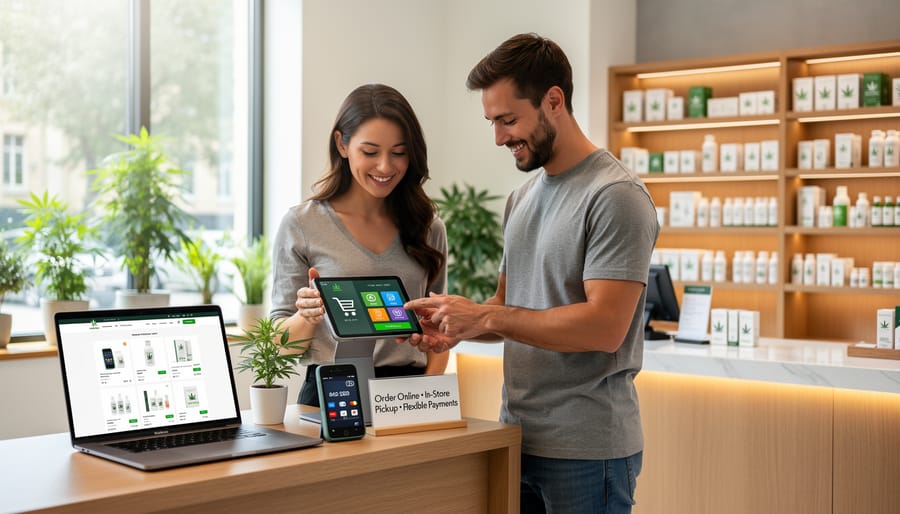
Many legitimate Canadian CBD retailers now operate hybrid models that blend multiple payment methods. You might find an online store that accepts e-transfers for delivery orders but also operates a physical location where debit cards work perfectly fine. I’ve personally used this exact setup when ordering from a Toronto-based retailer—I browsed their selection online, paid via Interac e-transfer, and had my products shipped within days.
Subscription services have also emerged as a popular workaround. Some retailers offer monthly CBD boxes or auto-replenishment programs that process through specialized merchant accounts designed for recurring payments. These subscription models can sometimes access payment processors that won’t handle one-time CBD purchases, giving you more payment flexibility while ensuring you never run out of your favorite products.
You might also encounter split-transaction models where the CBD portion of your order processes separately from non-CBD wellness items, or retailers who partner with third-party payment platforms specifically built for cannabis-adjacent industries. These creative solutions demonstrate what actually works in today’s regulatory environment while keeping everything above board. As long as your retailer clearly explains their payment process and operates transparently, these hybrid approaches simply reflect the current reality of CBD commerce in Canada.
The Cost Being Passed to Consumers
Here’s something I learned while chatting with a CBD shop owner in Vancouver last year: she told me that processing fees for her business were sometimes triple what a regular retail store would pay. When I asked if that affected her pricing, she nodded and said, “We have to stay competitive, but those costs do get factored in somewhere.”
This is the reality Canadian CBD consumers face. Because payment processors classify CBD as high-risk, the increased fees and limited options often translate to slightly higher retail prices. Some retailers absorb these costs to remain competitive, while others need to pass portions along to customers. You might also notice fewer payment options at checkout compared to other online stores, limited to credit cards or e-transfers rather than convenient options like PayPal or Stripe.
The availability issue extends beyond pricing too. Some excellent CBD brands struggle to secure reliable payment processing, which can limit their distribution channels. This means certain products might only be available through select retailers who’ve established solid processor relationships, or you might find your favourite online shop suddenly changes payment methods.
Understanding these behind-the-scenes challenges helps explain why CBD shopping in Canada sometimes feels less streamlined than buying other wellness products. It’s not poor business practices, it’s navigating a complex payment landscape that’s still catching up to the legal CBD market.
Tips for Finding Reliable CBD Retailers
Questions to Ask Before Purchasing
Before making a purchase from any CBD retailer in Canada, asking the right questions can help you shop with confidence and avoid potential headaches. Start by confirming the retailer’s legitimacy—ask yourself if they display proper licensing information and Health Canada compliance details on their website. Legitimate Canadian CBD sellers should be transparent about their business registration and product sourcing.
When it comes to payment options, pay attention to what methods are available. If a retailer only accepts e-transfers or cryptocurrency, this isn’t necessarily a red flag—many legitimate businesses face banking challenges—but it should prompt you to do additional research. Look for customer reviews and verify their contact information actually works.
I’ve learned from personal experience that asking about return policies and customer service responsiveness before purchasing saves frustration later. Reach out with a simple question through their contact form or email. How quickly they respond and the helpfulness of their answer tells you a lot about their operations.
Finally, consider whether the retailer clearly explains their payment limitations. Transparent businesses often address why they can’t accept credit cards directly on their FAQ pages, which demonstrates honesty about the payment processing challenges Canadian CBD companies face.
Navigating CBD payment processing in Canada can feel frustrating, but understanding why these challenges exist helps you shop more confidently. The banking restrictions aren’t going away overnight, but legitimate retailers have adapted with secure solutions that protect both their businesses and your personal information.
As you explore online CBD shopping, remember that limited payment options don’t necessarily signal a sketchy operation. Many reputable Canadian retailers use e-transfers, specialized payment gateways, or cryptocurrency precisely because traditional processors won’t work with them. The key is verifying the retailer’s legitimacy through licensing information, customer reviews, and transparent business practices before sharing any payment details.
Personally, I’ve watched this landscape improve significantly over the past few years. When I first started researching CBD options for Canadians, payment processing felt like the Wild West. Today, while challenges remain, established retailers have found reliable solutions and clearer regulatory guidance has emerged. The situation isn’t perfect, but it’s stabilizing.
When ordering CBD products online, prioritize security over convenience every time. A few extra steps to verify a retailer’s credentials or complete an e-transfer is always worth protecting your financial information and ensuring you’re purchasing from a legal, quality-focused source.