Recognize the craving when it hits, label the belief driving it (“I need this to feel normal”), then question that belief with evidence from your own experience (“I’ve felt normal without using before”). This three-step CBQ method has helped countless people in recovery interrupt the automatic pattern between wanting and using, and emerging Canadian research suggests CBD may strengthen this cognitive technique by reducing the physical intensity of cravings themselves.
The CBQ method works because cravings aren’t just physical sensations—they’re wrapped in thoughts that give them power. When you experience a craving, your brain typically attaches a belief like “I can’t handle this discomfort” or “Just one won’t hurt.” These beliefs feel true in the moment, but questioning them creates a pause where choice becomes possible. That pause is where recovery lives.
What makes this approach particularly relevant for Canadians is the legal access to CBD products that may complement the psychological work of CBQ. While CBD won’t eliminate cravings entirely, studies indicate it may reduce their intensity and the anxiety that often accompanies them, making the questioning process more manageable. You’re essentially giving yourself both mental tools and potential physical support.
Whether you’re newly sober, working on harm reduction, or supporting someone in recovery, understanding how CBQ works—and how CBD might fit into your personal strategy—can transform those difficult moments from overwhelming to navigable. The method is simple, but its effectiveness comes from consistent practice and honest self-reflection.
What Is the CBQ Method? (And Why It Works for Cravings)

The Three Steps Explained
The CBQ method breaks down into three manageable steps that you can practice whenever a craving hits. Think of it as a mental pause button that gives you space between the urge and your response.
Step one is recognizing the craving itself. This sounds simple, but it requires honest awareness. When I first learned about this technique, I realized I’d been on autopilot for years, acting on cravings before I even acknowledged them. The key here is to notice the physical sensations, like tension in your chest, restlessness, or that familiar mental pull. You might say to yourself, “I’m having a craving right now.” Just naming it creates a small but powerful distance.
Step two involves identifying the belief driving that craving. This is where things get interesting. Cravings don’t exist in a vacuum; they’re fueled by thoughts. Common beliefs include “I can’t handle this stress without using,” “I deserve a break,” or “Just one won’t hurt.” In my conversations with people in recovery across Canada, I’ve heard countless variations, but they usually boil down to thinking that the substance will solve an immediate problem or provide necessary relief.
Step three is questioning that belief. Here’s where you become a detective of your own thoughts. Ask yourself: Is this belief actually true? What evidence do I have? The person who thinks they can’t handle stress without using might remember times they did cope differently. Someone believing “just one won’t hurt” can recall past experiences proving otherwise.
For example, if your craving comes with the belief “I need this to sleep,” you might question whether that’s genuinely the only option available, considering alternatives like CBD, which many Canadians use for sleep support without intoxicating effects.
Where CBD Fits Into Craving Management
The Science Behind CBD and Cravings
While research into CBD and cravings is still in its early stages, emerging evidence suggests promising applications for those managing addiction recovery. Let me break down what Canadian researchers and international studies have discovered so far.
The current body of research indicates that CBD may influence the brain’s endocannabinoid system, which plays a role in regulating stress, anxiety, and reward-seeking behaviors. A 2019 study published in the American Journal of Psychiatry found that CBD reduced cue-induced cravings and anxiety in individuals with heroin use disorder. Participants who received CBD showed significantly fewer cravings when exposed to drug-related cues compared to those who received a placebo.
Here in Canada, researchers at the Centre for Addiction and Mental Health (CAMH) in Toronto are actively investigating CBD’s potential therapeutic applications. Their work focuses on understanding how CBD might help reduce the anxiety and stress that often trigger relapse during recovery.
What makes CBD particularly interesting for craving management is its apparent ability to reduce anxiety without the intoxicating effects of THC. When you’re working through the CBQ method and questioning your cravings, having a calmer nervous system can make it easier to engage with those cognitive techniques meaningfully.
It’s important to note that CBD isn’t a magic solution or approved treatment for addiction in Canada. Health Canada doesn’t currently recognize CBD as a therapeutic treatment for substance use disorders, though research continues. Additionally, if you’re taking medications as part of your recovery plan, understanding CBD medication interactions is essential for your safety.
The research landscape is evolving rapidly. What we know today suggests CBD may offer support as part of a comprehensive approach to managing cravings, particularly when combined with evidence-based behavioral techniques like the CBQ method. However, more clinical trials specific to various types of addiction are needed before we can make definitive claims about its effectiveness.
Combining CBQ Method with CBD: A Practical Approach
When to Use CBD in Your CBQ Practice
Timing is everything when combining CBD with your CBQ practice. Based on my experience working with clients and my own experimentation, there are two main approaches: preventative use and in-the-moment intervention.
For preventative use, taking CBD oils sublingually about 30-60 minutes before situations where you typically experience cravings can be incredibly effective. This gives the CBD time to build up in your system, potentially reducing the intensity of cravings before they even start. I’ve found this approach particularly helpful when I know I’m heading into a stressful meeting or social situation that might trigger old patterns. Daily maintenance doses can also create a baseline level of calm that makes the CBQ method easier to implement consistently.
When cravings hit unexpectedly, fast-acting options become your best friend. Vapes and tinctures work quickest, typically within 5-15 minutes. This rapid onset can provide that crucial window of calm you need to work through the Craving, Belief, and Question steps without feeling overwhelmed. I keep a CBD vape in my bag for these moments, though I know vaping isn’t everyone’s preference.
Edibles like gummies or capsules take longer to kick in (45-90 minutes), so they’re less ideal for acute craving management. However, they can be excellent for evening use if you notice cravings intensify at certain times of day. Many Canadians I’ve spoken with use edibles as part of their nighttime routine to prevent late-night cravings.
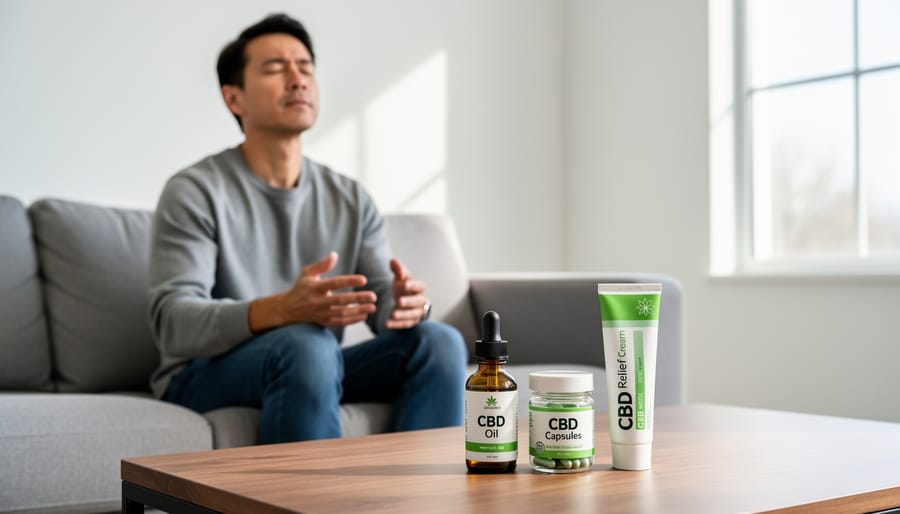
Product choice also depends on your setting. Oils and capsules are discreet for work environments, while vapes offer portability. Experiment with different formats during lower-stress periods to discover what works best for your unique craving patterns and lifestyle.
Starting Doses and What to Expect
If you’re new to using CBD for craving management, the golden rule is simple: start low and go slow. Most Canadian CBD products provide clear dosing information on their labels, but finding your personal sweet spot takes patience and observation.
For beginners, I typically suggest starting with 5-10mg of CBD once or twice daily. This might seem conservative, but it allows your body to adjust and helps you notice subtle changes in your response to cravings. Many people don’t realize that CBD works cumulatively in your system, meaning effects often become more noticeable after several days of consistent use rather than immediately after your first dose.
When I first started using CBD for my own recovery journey, I made the mistake of expecting instant results. I’d take my dose and wait for some dramatic shift in my cravings. What I learned is that CBD’s effects on craving management are often subtle and build over time. You might notice that intrusive thoughts about substances feel less urgent, or that the physical tension accompanying cravings feels more manageable. These small shifts matter.
Canadian products I’ve found helpful for beginners include oil tinctures from brands like Solei Free, which offers precise dosing with a dropper, making it easy to track your intake. Capsules from companies like Redecan provide consistent dosing if you prefer not to measure. Always check that products are purchased from licensed retailers and display Health Canada licensing information.
It’s essential to consult healthcare providers, especially if you’re taking other medications or have underlying health conditions. CBD can interact with certain medications, and your healthcare team should be part of your recovery support system.
Give any new dose at least one week before increasing. If you’re not noticing benefits after two weeks at your starting dose, try increasing by 5mg increments. Most people find their effective dose somewhere between 10-40mg daily, though this varies considerably based on individual factors like body weight, metabolism, and the severity of cravings.
Real-Life Application: Walking Through a Craving Episode
Let me walk you through what this looks like in real life. Picture Sarah, a composite based on several stories I’ve heard from readers navigating recovery here in Canada.
It’s 8 p.m. on a Friday evening. Sarah’s scrolling through social media when she sees photos from a friend’s birthday party at a bar she used to frequent. Suddenly, she’s hit with an intense craving for alcohol, accompanied by a tight feeling in her chest and restless energy in her limbs.
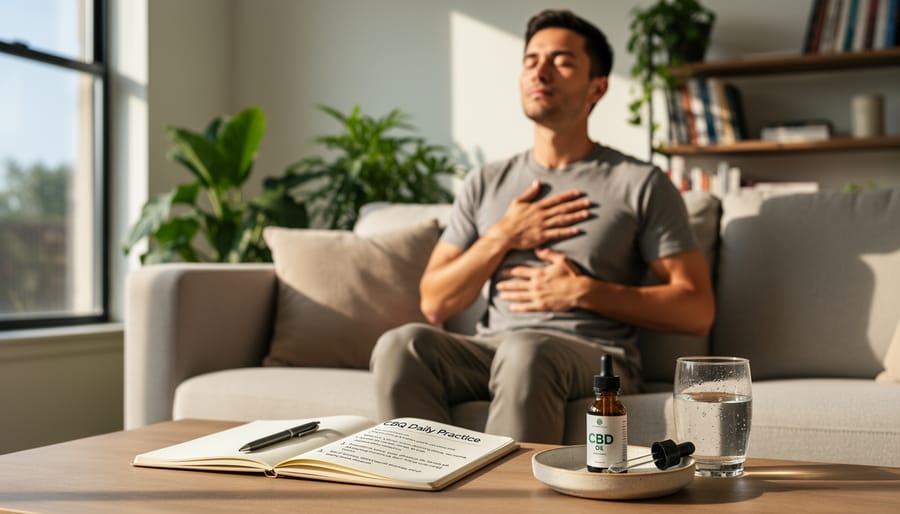
Instead of white-knuckling through it or distracting herself and hoping it passes, Sarah pulls out her journal and a CBD oil tincture she keeps handy. She takes her usual dose of 15mg CBD under her tongue, sets a timer for the sublingual hold, then begins the CBQ process.
First, she names the Craving. She writes: “I want a glass of wine. I’m feeling FOMO and lonely. The craving intensity is about 7 out of 10.” This acknowledgment alone brings her anxiety down slightly.
While the CBD begins working through her system, she moves to the Belief stage. She asks herself what story she’s telling about this craving. Her belief surfaces: “Everyone else is having fun and I’m missing out. I can’t enjoy social situations without drinking.”
Now comes the Question phase. Sarah challenges this belief: “Is this absolutely true? Have I enjoyed sober activities before? What about last weekend’s hiking trip?” She recalls several enjoyable alcohol-free experiences. She writes alternative thoughts: “I can connect with friends in different ways. This feeling will pass.”
By now, about fifteen minutes have elapsed. Sarah notices her physical anxiety has decreased. The CBD seems to have taken the edge off her nervous system’s fight-or-flight response, making it easier to think clearly through the CBQ steps. Her craving has dropped to about a 4 out of 10.
She texts a sober friend, makes herself herbal tea, and puts on a favourite show. The craving continues fading. By combining the cognitive work of CBQ with CBD’s calming properties, Sarah moved through a challenging moment without relapsing.
Important Considerations for Canadian Users
In Canada, CBD is legal and regulated under the Cannabis Act, which means you need to purchase products from licensed retailers or authorized online stores. This ensures you’re getting quality-tested products that meet federal standards for safety and potency. I learned this the hard way early in my own journey when I bought CBD from an unlicensed source and ended up with a product that did nothing for my cravings. Now, I always stick with licensed provincial retailers or federally approved online sources like the Ontario Cannabis Store or BC Cannabis Store.
Quality matters significantly when using CBD to support craving management. Licensed retailers in Canada are required to test products for contaminants, verify CBD content, and ensure THC levels don’t exceed 10mg per unit for CBD-dominant products. Look for products with clear labeling that shows CBD content per dose, extraction method, and a batch number you can trace. Third-party lab testing results, often available through QR codes or company websites, provide additional confidence.
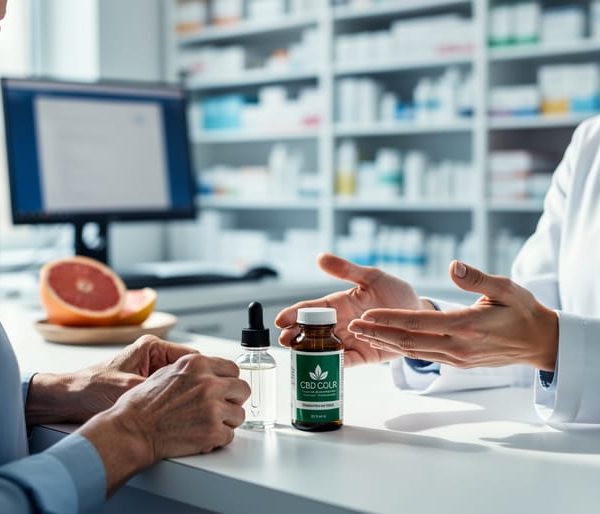
Before starting CBD for craving management, especially if you’re using the CBQ method as part of recovery, speaking with a healthcare provider is essential. CBD can have interactions with other medications, particularly those metabolized by liver enzymes. This includes some antidepressants, anxiety medications, and other substances commonly used in recovery settings. Your doctor or pharmacist can review your current medications and help you determine safe dosing.
Start with lower doses, typically 10-20mg of CBD, and increase gradually while monitoring your response. Keep a journal tracking your craving intensity, CBD timing and dosage, and any side effects. This information is valuable for both your own assessment and discussions with healthcare providers.
If you’re in active recovery or working with addiction counselors, inform them about your interest in CBD. Many Canadian treatment centers are becoming more open to complementary approaches, and transparency helps ensure your entire support team is coordinated. Remember, CBD is a tool that works best alongside proven methods like the CBQ technique, not as a replacement for professional treatment or support programs.
Here’s the truth I’ve learned through my own journey and from countless conversations with readers: the CBQ method isn’t something you master overnight. It’s a skill, much like learning to play an instrument or speak a new language. Some days you’ll catch those cravings early and work through them smoothly. Other days, you might feel like you’re starting from square one. That’s completely normal and expected.
CBD can be a valuable companion in this process, but let’s be clear about what it is and isn’t. It’s not a magic pill that erases cravings or replaces the mental work required in recovery. What it can do is take the edge off anxiety, help you feel more grounded during challenging moments, and potentially make it easier to engage with cognitive techniques when your nervous system is calmer. Think of it as one tool in your recovery toolbox, not the entire kit.
Whether you’re working toward complete abstinence or practicing harm reduction, both the CBQ method and CBD work best within a broader support system. This might include therapy, support groups, trusted friends or family, and healthcare providers who understand your specific situation. Speaking of which, if you’re taking other medications, be sure to check out our medication safety information before adding CBD to your routine.
You’re doing important work by exploring these options. Keep learning, stay curious, and don’t hesitate to consult with your healthcare provider about whether this approach makes sense for your unique circumstances.