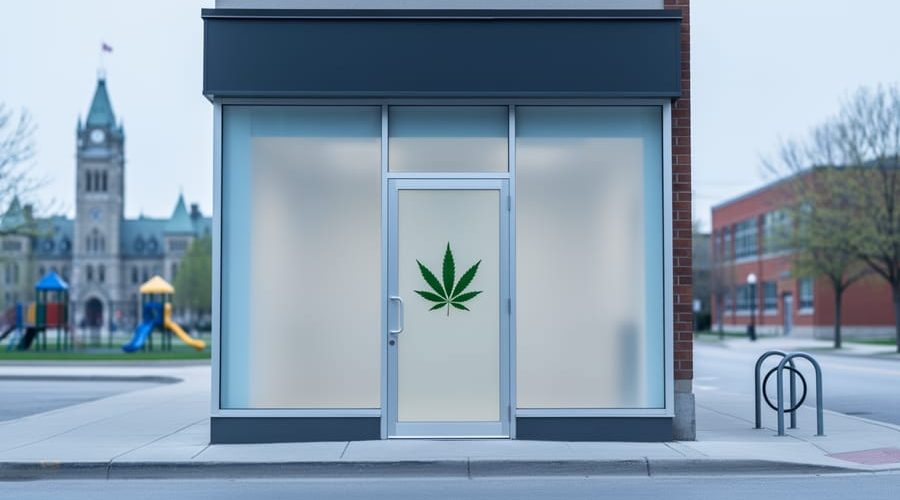
Understand that “CBD zone” refers to designated areas within Canadian provinces where CBD and cannabis retailers can legally operate under strict municipal bylaws. These zones exist because provinces like Ontario, British Columbia, and Alberta have granted municipalities the power to control where cannabis stores can open through distance restrictions from schools, community centers, and other retailers.
Check your local municipality’s official zoning map or planning department website to determine if you live within a CBD zone, as this directly affects which stores can serve you and whether new retailers might open nearby. Provincial regulations vary significantly—Ontario requires 150 meters from schools, while some BC municipalities enforce 300-meter buffer zones that create large areas where no CBD retailers can exist.
Recognize that CBD zone restrictions apply equally to stores selling low-THC CBD products and full-spectrum cannabis retailers, even though Health Canada permits CBD products with less than 0.3% THC to be sold through different channels. This regulatory overlap confuses many Canadians who assume CBD’s lower psychoactive profile would exempt retailers from strict zoning requirements.
Verify whether your intended purchase location operates within compliance by checking if the store displays a valid provincial retail license, as operating outside designated CBD zones can result in immediate closure and leaves you without recourse for product quality issues. Understanding these geographic limitations helps you plan purchases effectively and explains why convenient CBD access remains inconsistent across Canadian neighborhoods despite federal legalization.
Decoding ‘CBD Zone’ in Provincial Regulations
Geographic Zoning vs. Product Categorization
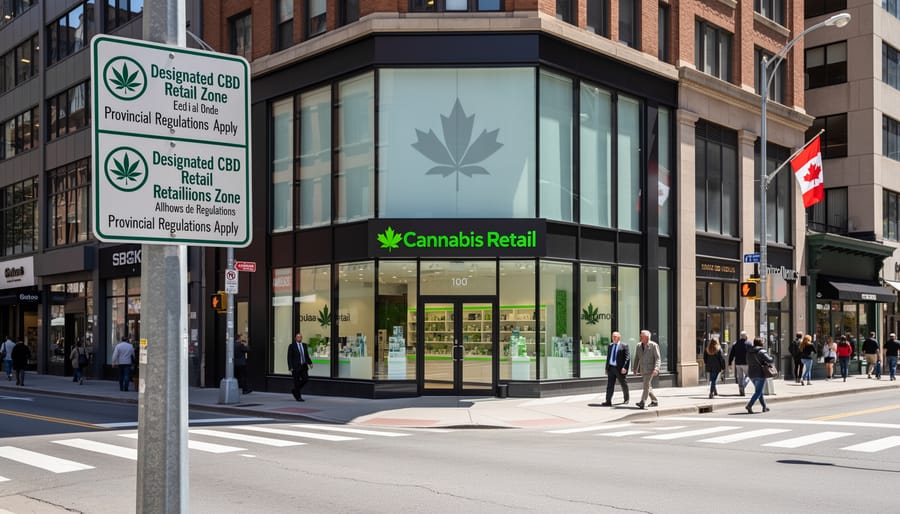
When you encounter the term “CBD zone” in Canadian cannabis regulations, it typically refers to one of two distinct concepts, and understanding the difference is crucial for navigating your local market.
The first interpretation is geographic zoning, which designates specific physical areas where CBD and cannabis retail stores can legally operate. Similar to how cities zone areas for residential or commercial use, municipalities create these zones to control where cannabis retailers can set up shop. You might see these zones on municipal maps or referenced in local bylaws, often with distance requirements from schools, parks, or other sensitive locations. If you’re wondering why there’s a cannabis store on one street corner but not another nearby, geographic zoning is likely the reason.
The second meaning relates to product categorization within provincial regulatory frameworks. Some provinces use “CBD zone” terminology to classify products based on their cannabinoid content, particularly the ratio of CBD to THC. This categorization helps determine licensing requirements, taxation rates, and where products can be sold. For instance, products with high CBD and minimal THC might fall into a different regulatory category than balanced or THC-dominant products.
When I first started researching CBD regulations in Canada, I found this dual meaning confusing. The key is context. If you’re reading municipal documents or retail licenses, it’s probably about geographic zones. If it’s in product labeling discussions or licensing requirements, it likely refers to product categories. This distinction matters because it affects both where you can shop and what products you’ll find available in your area.
Why This Term Causes So Much Confusion
Here’s the honest truth: “CBD zone” isn’t a standardized term across Canada, and that’s exactly what makes it so confusing. Each province has developed its own framework for CBD provisions in Canada, meaning the terminology you encounter in Ontario might look completely different from what you see in British Columbia or Alberta.
I remember chatting with a reader from Saskatchewan who was baffled when she moved to Ontario and couldn’t find familiar retail terminology anywhere. She wasn’t alone. The inconsistency stems from how cannabis regulation works in Canada: while Health Canada sets federal guidelines, provinces handle retail and distribution independently. This creates a patchwork of terms like “designated areas,” “cannabis retail zones,” and “CBD zones” that all essentially refer to where and how you can legally purchase CBD products.
For retailers, this means navigating different municipal bylaws and zoning restrictions. For consumers like us, it means doing a bit of homework to understand what these terms actually mean in our specific province.
How Each Province Defines CBD Retail Zones
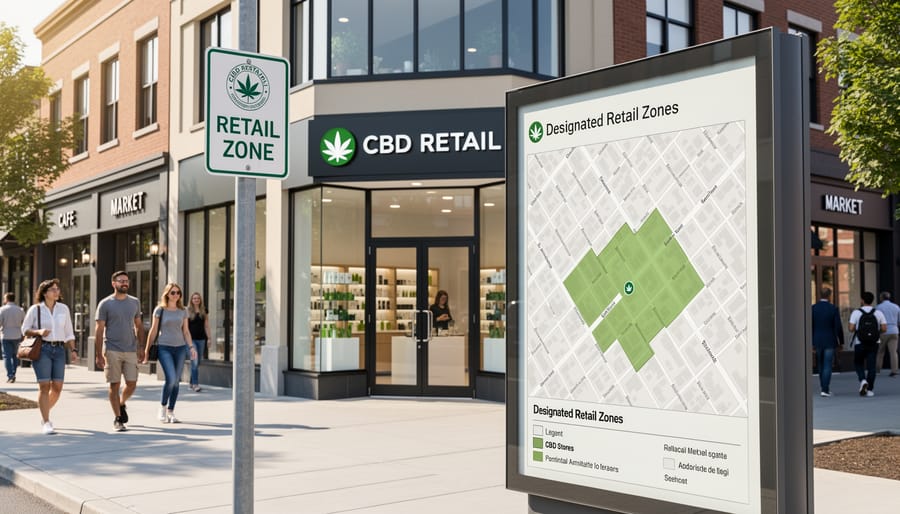
Ontario’s Approach to CBD Retail Zoning
In Ontario, municipal zoning bylaws determine where cannabis retail stores can operate, building upon federal cannabis regulations. While CBD products are available both in licensed cannabis stores and through various retailers depending on their THC content, the term “CBD zone” isn’t an official designation in Ontario’s regulatory framework. Instead, municipalities establish specific zoning categories like “cannabis retail store” zones with distance requirements from schools, community centres, and other cannabis stores.
I’ve noticed confusion among readers about where they can legally purchase CBD in Ontario. Here’s the reality: CBD products containing over 0.3 percent THC must be sold through Ontario Cannabis Store or authorized retailers in areas zoned for cannabis sales. However, CBD products below this threshold can be sold in health stores, pharmacies, and online retailers without the same zoning restrictions.
Each Ontario municipality sets its own rules about cannabis retail locations. Some cities create designated commercial zones, while others implement minimum separation distances. Toronto, for example, requires 150 metres between cannabis stores and schools. Understanding your local municipality’s approach helps you locate legitimate CBD retailers in your area.
British Columbia’s Retail Location Rules
In British Columbia, retail location rules for CBD products follow the same framework as other cannabis products under provincial law. The BC Liquor Distribution Branch oversees cannabis retail licensing, and stores selling CBD must comply with strict location restrictions designed to protect youth and maintain community standards.
Licensed cannabis retailers in BC cannot be located within 300 meters of schools, including elementary, secondary, and post-secondary institutions. This distance requirement also applies to community centers and recreation facilities frequented by minors. The province uses straight-line measurements from property line to property line when calculating these distances, not walking routes.
Interestingly, BC allows both government-run and private cannabis stores, giving consumers more options for purchasing CBD products compared to some other provinces. However, each municipality can establish additional location restrictions through local zoning bylaws. For example, some cities have created specific cannabis retail zones or imposed density limits on how many stores can operate within certain areas.
When I first started shopping for CBD in Vancouver, I noticed clusters of stores in commercial districts but none near residential neighborhoods with schools. This wasn’t coincidental—it’s by regulatory design. These location rules mean you’ll typically find CBD retailers in downtown cores, industrial areas, or commercial strips rather than suburban locations near community amenities.
Alberta and Prairie Provinces
In the Prairie provinces, CBD retail zoning takes on some interesting regional variations. Alberta tends to follow a more business-friendly approach, with municipalities like Calgary and Edmonton allowing CBD retailers in general commercial zones, though you’ll still see restrictions near schools and playgrounds. When I visited a CBD shop in Calgary last year, the owner mentioned how straightforward their permitting process was compared to other provinces.
Saskatchewan operates similarly, with most cities permitting CBD stores in commercial areas without excessive red tape. However, smaller towns may have stricter location requirements, so it’s worth checking with your local municipal office if you’re planning to visit a CBD retailer outside major centers.
Manitoba takes a slightly more cautious stance. Winnipeg and other municipalities often require specific distance requirements from sensitive areas, and retailers must obtain both provincial and municipal licenses. Some areas designate certain commercial districts where CBD shops can cluster, making it easier for consumers to know where to find products.
Across all three provinces, CBD products derived from hemp (containing less than 0.3% THC) face fewer restrictions than cannabis-derived CBD, which must be sold through provincially regulated channels. Always verify whether the store you’re visiting operates under hemp or cannabis regulations, as this affects product selection and zoning compliance.
Quebec’s Unique Regulatory Framework
Quebec stands apart from other Canadian provinces with its government-controlled approach to cannabis retail. The Société québécoise du cannabis (SQDC) operates as the province’s sole legal retailer for recreational cannabis and CBD products containing THC. This means you won’t find privately-owned CBD shops like you might in Ontario or Alberta. When you see references to CBD zones in Quebec, they typically relate to where SQDC stores can legally operate under municipal bylaws.
Many Quebec municipalities have established specific distance requirements between SQDC locations and schools, daycares, or other sensitive areas. These restrictions effectively create “zones” where cannabis retail is permitted or prohibited. If you’re shopping for CBD in Quebec, your options are more straightforward than in other provinces—visit an SQDC store or order through their official website. While hemp-derived CBD products with minimal THC (under 0.3%) can sometimes be found in health stores, anything with higher cannabinoid content must come through the SQDC system, making Quebec’s retail landscape uniquely centralized.
Atlantic Canada’s Regional Variations
Atlantic Canada takes a notably relaxed approach to CBD retail zoning compared to larger provinces. In Nova Scotia and New Brunswick, CBD products are primarily available through licensed cannabis retailers, which follow provincial spacing requirements similar to liquor stores. However, these provinces tend to have fewer location restrictions in smaller communities where retail space is limited.
Prince Edward Island operates a government-run cannabis retail system, meaning CBD zones are determined by the provincial Cannabis Management Corporation rather than municipal bylaws. You’ll find their stores strategically located but not subject to the same proximity restrictions as other provinces.
Newfoundland and Labrador stands out by allowing private cannabis retailers with relatively flexible zoning, particularly outside St. John’s. Many municipalities here don’t have specific CBD zoning bylaws, defaulting instead to general commercial retail regulations.
The key takeaway? If you’re shopping for CBD in Atlantic Canada, you’ll likely encounter fewer zoning barriers than in Ontario or Quebec, though product selection may vary based on the smaller market size and retail infrastructure in these provinces.
Recent Policy Updates That Changed CBD Retail Rules
2023-2024 Regulatory Shifts
The past two years have brought meaningful changes to how provinces regulate CBD retail across Canada, and I’ve watched these shifts unfold with a mix of excitement and careful attention to detail.
Several provinces expanded retail access between 2023 and 2024, particularly in areas that previously had limited CBD availability. Ontario introduced amendments allowing more flexibility in municipal zoning bylaws, which meant communities could adjust minimum distance requirements between cannabis retailers and schools or community centres. This gave local councils more control while potentially opening up new retail locations in underserved neighbourhoods.
British Columbia updated its regulations around co-location, making it easier for CBD retailers to operate near other businesses. The province also streamlined its application process for new retail licenses, reducing wait times from several months to just weeks in some cases.
Alberta took a different approach, focusing on clarifying existing rules rather than introducing sweeping changes. The province issued detailed guidance documents helping both retailers and municipalities understand zoning requirements more clearly, which reduced confusion around where CBD stores could legally operate.
Saskatchewan and Manitoba both adjusted their provincial frameworks to give municipalities more say in local zoning decisions. This meant that CBD zones could look quite different from one city to another within the same province, reflecting local community preferences.
One consistent theme I noticed across provinces was increased transparency. Regulatory bodies started publishing clearer maps showing approved retail zones and providing better online resources explaining the rules. This has made it significantly easier for consumers like us to understand where we can legally shop for CBD products.
What These Changes Mean for CBD Shoppers
Recent policy updates across Canadian provinces have made CBD shopping significantly easier and more accessible than even a year ago. If you’ve been tracking these changes, you’ve likely noticed CBD zones expanding and product selection improving at both brick-and-mortar stores and online retailers.
The most immediate benefit? You’ll find more authorized retail locations in your community. Provinces have been gradually increasing the number of cannabis retail licenses, which means CBD products are now available at more convenient locations. This is particularly helpful if you live outside major urban centers, where access was previously limited.
Online shopping has also become more streamlined. Provincial online retailers have improved their platforms, offering better product descriptions, customer reviews, and delivery options. Many provinces now provide same-day or next-day delivery in certain areas, making it easier to restock your favorite CBD oils or try new products without visiting a physical store.
You’ll also notice broader product availability changes as regulations evolve. More product formats are entering the market, including topicals, edibles, and sublingual strips that weren’t widely available when cannabis was first legalized. Dosage options have expanded too, giving you more control over finding the right strength for your needs.
From my experience helping readers navigate these changes, the key takeaway is this: legal CBD shopping in Canada is becoming more consumer-friendly. Whether you prefer browsing in-store or ordering from home, you have more options and better access than ever before.
What This Means for You as a CBD Consumer
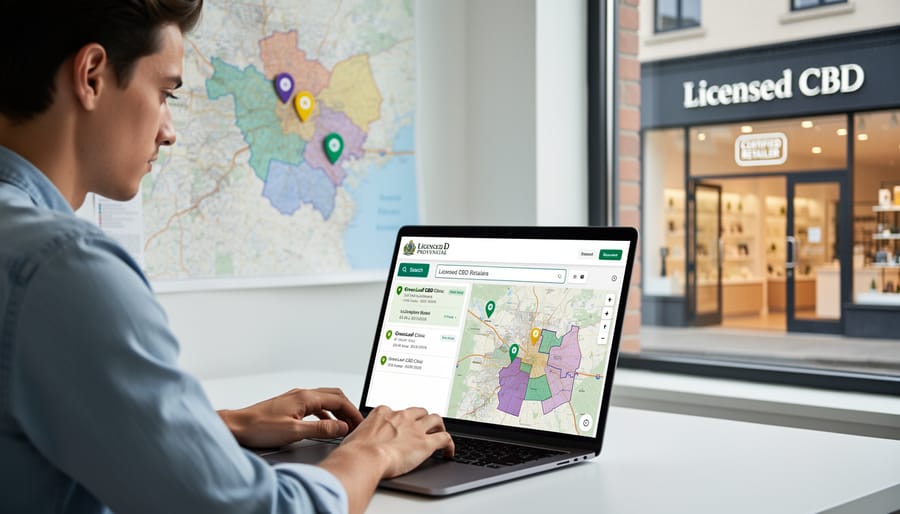
Finding Legal CBD Retailers in Your Area
Finding a reputable CBD retailer in your area starts with understanding your province’s regulatory framework. Each province maintains public databases of licensed cannabis retailers, which should be your first stop when searching for legal CBD products.
In Ontario, check the Alcohol and Gaming Commission’s website for authorized retailers. British Columbia maintains a similar list through the Liquor and Cannabis Regulation Branch. Alberta residents can search through the Alberta Gaming, Liquor and Cannabis directory. Quebec’s SQDC website provides locations for their government-operated stores. I’ve found these official resources incredibly helpful when traveling across provinces, as they eliminate any guesswork about legitimacy.
Beyond provincial databases, many legitimate retailers display their licenses prominently in-store and online. Look for clear license numbers and don’t hesitate to ask staff for verification. When shopping online, ensure the retailer operates within Canada and ships only to provinces where they’re authorized.
Local municipal websites often publish zoning maps showing where cannabis retailers can operate, which helps explain why you might find clusters of stores in certain areas while other neighborhoods have none. This information clarifies those “CBD zones” you may have heard about in your community.
I always recommend calling ahead to confirm a store carries the specific CBD products you’re seeking, as inventory varies significantly between retailers. Some specialize in wellness products while others focus on recreational cannabis.
Understanding Product Availability by Location
The zone designation in your area directly influences which CBD products you’ll find on store shelves. Provincial CBD product regulations determine whether retailers can stock higher-THC cannabis products alongside CBD-only options, or if they’re restricted to selling low-THC health products exclusively.
In recreational zones, you’ll typically find the full spectrum of CBD products, including those with trace amounts of THC. These stores operate under cannabis retail licenses and can offer oils, edibles, topicals, and flower containing CBD. Health product zones, however, limit retailers to CBD items with virtually no THC content, often sold in pharmacies or health food stores.
I’ve noticed this creates interesting shopping patterns across provinces. For instance, someone in downtown Toronto might walk past three cannabis retailers carrying diverse CBD selections, while a friend in a smaller municipality might only access CBD through online provincial stores or specially designated locations.
This zoning approach also explains why certain innovative CBD products launch in specific regions first. Manufacturers often target recreational zones for initial releases, as these areas have established distribution networks and consumer familiarity with cannabis retail environments. Understanding your local zone helps set realistic expectations about product variety and availability.
Common Questions About CBD Retail Zones
Here are answers to the most common questions I hear from readers navigating CBD retail regulations:
Can any store sell CBD products in Canada?
Not exactly. Only licensed cannabis retailers can legally sell CBD products containing more than trace amounts of THC. This is why you’ll find CBD in both licensed dispensaries and some health stores, depending on the product formulation. The distinction matters because products sold outside licensed retailers must meet strict THC limits.
What does a CBD zone actually control?
CBD zones typically regulate where licensed cannabis retailers can operate. This includes distance requirements from schools, community centers, and other retailers. These zones don’t prevent you from purchasing CBD, they just determine where physical stores can be located in your municipality.
Are online CBD purchases affected by zoning rules?
No. Municipal zoning only applies to physical retail locations. You can order CBD products online from licensed retailers regardless of local zoning restrictions, as long as the retailer is authorized to ship to your province. This makes shopping legally in Canada more accessible for those in areas with limited retail options.
How do I know if a retailer is in a proper CBD zone?
Licensed retailers display their provincial authorization prominently. If a store is operating openly and holds proper licensing, they’ve already met zoning requirements. When in doubt, check your provincial cannabis authority’s website for a list of authorized retailers.
Do CBD zoning rules change frequently?
Municipalities review and adjust zoning periodically, but changes typically happen gradually with public consultation periods.