
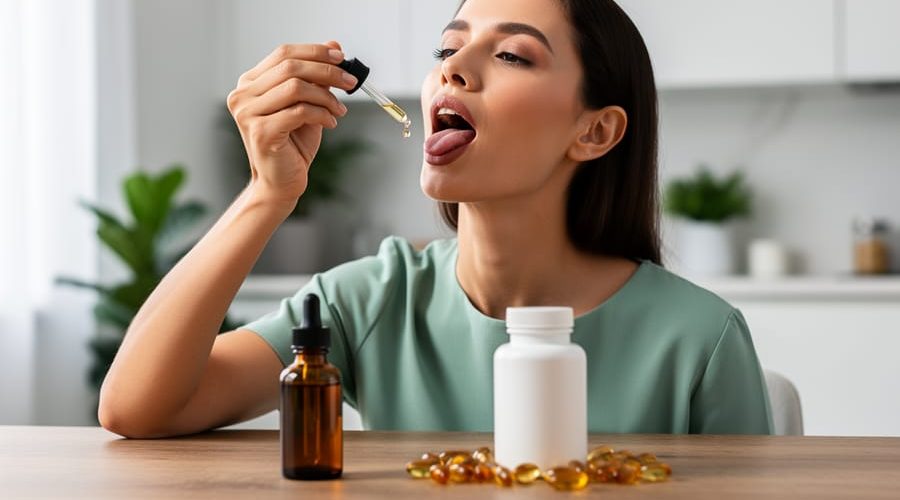
Understand that the same 25mg CBD oil you swallow delivers vastly different effects than 25mg you vape—and bioavailability explains exactly why. When you consume CBD, your body doesn’t absorb the full dose you take. Bioavailability measures the percentage that actually reaches your bloodstream to produce effects, while pharmacokinetics describes how quickly it gets there, how long it stays, and how your body processes it. These two factors determine whether your CBD works in 5 minutes or 2 hours, lasts 30 minutes or 8 hours, and why products with identical CBD content can feel completely different.
Consider this real scenario I encountered: a friend switched from CBD capsules to sublingual oil and suddenly felt effects she’d never experienced before—not because the product was stronger, but because she jumped from roughly 6% bioavailability with oral capsules to potentially 35% with properly administered sublingual drops. She was effectively getting five times more CBD into her system from the same dose.
Canadian consumers face unique challenges navigating this landscape. With Health Canada’s regulations distinguishing between natural health products and cannabis-derived CBD, understanding absorption rates becomes essential for making informed purchases. Whether you’re managing chronic pain, anxiety, or sleep issues, knowing how your chosen consumption method affects CBD’s journey through your body transforms guesswork into strategic wellness decisions. This guide breaks down exactly what happens from the moment CBD enters your body until it leaves.
What Bioavailability Really Means (And Why You Should Care)
Think of bioavailability like this: imagine you’re mailing a package, and bioavailability is the percentage of that package that actually arrives at its destination intact. When it comes to CBD, bioavailability refers to how much of the CBD you consume actually makes it into your bloodstream where it can do its job.
Here’s what surprised me when I first started researching CBD products: I assumed that taking 25mg of CBD would give me the same effects regardless of whether I swallowed a capsule, used a tincture under my tongue, or vaped it. I was completely wrong. The delivery method dramatically changes how much CBD your body can actually use.
This is where many Canadians get frustrated with CBD. You might take a dropper of oil and feel minimal effects, then wonder if CBD even works for you. But the reality is that with standard oral consumption, only about 6-15% of that CBD enters your bloodstream. The rest gets broken down by your digestive system and liver before it ever gets a chance to work. That’s a huge difference from what research shows is possible with other delivery methods.
Understanding bioavailability matters because it directly impacts dosing and cost-effectiveness. If you’re taking 50mg via an oil capsule with 10% bioavailability, you’re only getting about 5mg into your system. This explains why someone might need significantly different doses depending on their chosen product format. It’s not that one product is necessarily better than another, but recognizing these differences helps you make informed choices about what works best for your needs and budget.

The Journey CBD Takes Through Your Body
When you take CBD—whether it’s a gummy, tincture, or topical cream—it goes on quite a journey through your body. Understanding this journey helps explain why your friend raves about sublingual oils while you prefer capsules, or why the effects seem to kick in faster some days than others.
Scientists use the term “pharmacokinetics” to describe this journey, but you can think of it simply as CBD’s path through your body. This process happens in four main stages.
First comes absorption—the moment CBD actually enters your bloodstream. This is where the route you choose really matters. When you swallow a CBD capsule, it travels through your digestive system before absorption happens in your intestines. Place drops under your tongue, though, and CBD can absorb directly through the mucous membranes into your blood, bypassing your stomach entirely.
Next is distribution, where your blood carries CBD throughout your body to various tissues and organs. Because CBD is fat-soluble, it tends to accumulate in fatty tissues rather than staying in your bloodstream. This explains why CBD doesn’t flood your system all at once but gets delivered gradually to where it’s needed.
The third stage, metabolism, is where your body breaks CBD down into other compounds. Your liver does most of this work, transforming CBD into metabolites—some of which may actually be active and contribute to the effects you feel. This is also where that “first-pass effect” happens with edibles, significantly reducing how much CBD makes it into circulation.
Finally, elimination is when your body removes CBD and its metabolites, primarily through urine and feces. This entire process—from that first dose to complete elimination—typically takes several days, which is why regular CBD users often experience more consistent effects than first-timers.
Understanding these four stages sets the foundation for why different consumption methods produce such different experiences.

How Different Methods Change What You Actually Get
Swallowing CBD Oils and Edibles: The Scenic Route
If you’re taking CBD oil by swallowing it directly, using capsules, or enjoying edibles like gummies and baked goods, you’re choosing what I call the scenic route. It works, but it takes its time getting there.
When you swallow CBD, it travels through your digestive system and liver before reaching your bloodstream. This journey significantly reduces how much CBD actually makes it into circulation. The bioavailability of swallowed CBD typically ranges from just 6-15%, meaning if you consume a 30mg gummy, only about 2-4.5mg might actually become available to your body.
Why so low? The culprit is something called first-pass metabolism. Your liver contains enzymes that break down CBD before it can circulate throughout your body. It’s like paying a hefty toll before your CBD can get to work.
Danielle tried CBD capsules for her morning routine and noticed something important: nothing happened for at least an hour, sometimes closer to two. This delayed onset is typical for oral ingestion. Your body needs time to digest, absorb, and metabolize the CBD. The upside? Once it kicks in, the effects typically last longer, often 6-8 hours or more, making this method ideal for sustained relief throughout the day.
Here’s a practical tip that makes a real difference: take your CBD with fatty foods. Since CBD is fat-soluble, consuming it alongside foods like avocado, nuts, or full-fat yogurt can significantly improve absorption. Some Canadian users report better results when they take their CBD oil or capsules with breakfast rather than on an empty stomach.
The trade-off is clear: lower bioavailability and slower onset, but extended duration. If you’re looking for all-day management rather than quick relief, swallowed CBD might be your best option.
Under Your Tongue: The Fast Track Method
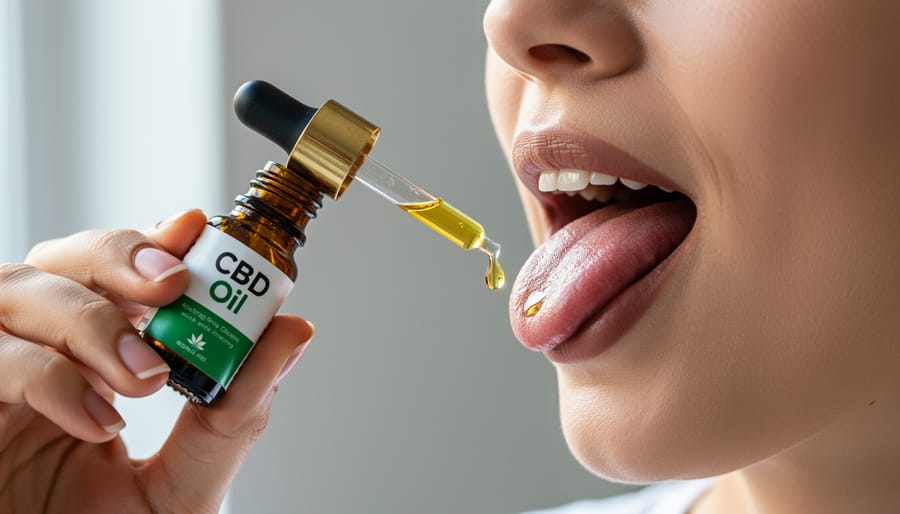
If you’ve ever wondered why your CBD oil bottle instructs you to hold the liquid under your tongue for 60-90 seconds, there’s solid science behind that suggestion. Sublingual administration, the fancy term for under-the-tongue delivery, offers a significant advantage over simply swallowing your dose.
When you place CBD oil beneath your tongue, it absorbs directly through the mucous membranes into your bloodstream, bypassing your digestive system entirely. This shortcut means bioavailability jumps to approximately 12-35%, compared to just 4-20% when swallowed. You’re essentially getting two to three times more active CBD from the same dose.
The speed difference is equally impressive. While edibles take 1-2 hours to kick in, sublingual CBD typically starts working within 15-45 minutes. I remember when my neighbour Sarah switched from CBD capsules to tinctures for her morning routine. She was amazed that she could actually feel the calming effects before her commute rather than waiting until she arrived at work.
Here’s the proper technique: dispense your measured dose under your tongue, keep it there for at least 60 seconds (90 is better), then swallow. Resist the urge to swallow immediately, as this is the most common mistake I see Canadians make. Many people hold it for only 10-20 seconds, thinking that’s enough, but you need that full minute for adequate absorption.
Another tip: avoid eating or drinking for 5-10 minutes after administration. This gives the remaining CBD time to absorb through your mouth’s tissues. Also, don’t talk during the holding period, as this can cause premature swallowing and reduce effectiveness.
Vaping and Smoking: The Express Lane
If you’re looking for the most efficient way to get CBD into your system, inhalation methods take the crown. Whether you’re vaping CBD oil or smoking high-CBD cannabis flower, you’re using what I call the express lane of bioavailability.
Here’s why this method stands out: when you inhale CBD, it enters your lungs and passes directly into your bloodstream through tiny air sacs called alveoli. This bypasses the digestive system entirely, meaning no first-pass metabolism in the liver. The result? Bioavailability ranges from 25-45%, significantly higher than oral methods. You’ll typically feel effects within 2-5 minutes, making inhalation ideal for managing acute symptoms like sudden anxiety or breakthrough pain.
The trade-off is duration. While effects hit quickly, they also fade faster, usually within 2-4 hours compared to the 6-8 hours you might get from edibles.
Now, let’s talk about the Canadian legal landscape. If you’re vaping CBD derived from hemp (containing less than 0.3% THC), these products exist in a regulatory grey area and aren’t officially approved for vaping in Canada. Cannabis-derived CBD vape products, however, are legal and available through licensed retailers, both online and in physical stores. Always purchase from licensed sources to ensure product safety and quality.
Health considerations matter here. While vaping is generally considered less harmful than smoking due to lower combustion temperatures, the CBD safety profile of long-term inhalation isn’t fully established. Some vape cartridges have been found to contain harmful additives like vitamin E acetate, which is why sourcing from reputable, licensed producers is critical.
This method works best for experienced cannabis users comfortable with inhalation, those needing immediate relief, or anyone who has difficulty swallowing pills. If you have respiratory conditions, consider alternative methods.
Topicals: A Different Kind of Delivery
Topicals represent a unique category in the CBD world because they work fundamentally differently from anything you swallow or inhale. When you apply a CBD cream, balm, or lotion to your skin, you’re opting for localized relief rather than systemic effects throughout your body.
Here’s what makes topicals special: they’re designed to interact with cannabinoid receptors in your skin without entering your bloodstream in significant amounts. Think of it as treating the problem right where it exists. That sore shoulder or arthritic knee gets direct attention from the CBD molecules penetrating the outer layers of skin.
The bioavailability question becomes almost irrelevant with regular topicals because we’re not measuring how much CBD reaches your bloodstream—we’re measuring how effectively it reaches the localized area. This is why you won’t feel the calming effects some people experience with oils or edibles, but you might notice targeted relief in the specific area you’ve applied the product.
Now, here’s where confusion often creeps in: transdermal patches work completely differently than your typical CBD lotion. Patches are specifically engineered to deliver CBD through your skin and into your bloodstream for systemic effects. They use special penetration enhancers and technology to accomplish what regular topicals cannot.
When I first started exploring CBD, I assumed any topical product would eventually make its way into my system. Understanding this distinction helped me choose the right product for my needs—sometimes I want localized relief, other times I’m looking for broader effects.
Newer Options: Nano-CBD and Water-Soluble Formulations
You’ve likely noticed products claiming “nano-CBD” or “water-soluble CBD” on Canadian shelves, often at premium prices. These formulations use technology to break CBD into microscopic particles or coat them to mix better with water, theoretically improving absorption since our bodies are largely water-based.
The science is promising but still developing. Some clinical research on CBD suggests these formulations can increase bioavailability by 2-5 times compared to standard oils, with faster onset times. However, independent studies specifically on commercially available Canadian products are limited.
Are they worth the extra cost? It depends on your priorities. If you need faster effects or have trouble absorbing standard CBD oils, these options might justify the premium. But for many users, regular CBD oil at appropriate doses works perfectly well. I’ve tried both and noticed quicker onset with water-soluble products, though the overall effect wasn’t dramatically different for me. Consider starting with conventional options first unless you have specific absorption concerns.
What Affects Your Personal CBD Absorption
Here’s something I’ve learned through my own CBD journey and conversations with countless Canadians: what works beautifully for your friend might feel underwhelming for you, and that’s completely normal. Your personal bioavailability isn’t just about how you take CBD—it’s also shaped by factors unique to your body.
Your body composition plays a significant role. Since CBD is fat-soluble, people with higher body fat percentages may store more CBD in fatty tissues, potentially affecting how quickly it works and how long it stays active. Similarly, your metabolism speed determines how fast your body processes and eliminates CBD. Someone with a faster metabolism might notice effects wear off more quickly than someone whose body processes compounds more slowly.
What you’ve eaten recently matters too. Taking CBD with fatty foods can actually increase absorption for some methods, particularly oral products. I’ve noticed that my CBD oil seems more effective when I take it with my morning avocado toast rather than on an empty stomach.
Your current medications can significantly impact CBD absorption and effectiveness. Some medications affect the enzymes responsible for breaking down CBD, while CBD itself may influence how your body processes certain drugs. If you’re taking prescription medications, discussing CBD interactions with your healthcare provider is essential.
Genetic variations in your endocannabinoid system and liver enzymes can also explain why you might need different doses than others. Additionally, regular CBD users may develop some tolerance over time, requiring adjustments to maintain desired effects.
This individual variation is precisely why experimentation is often necessary. Start with lower doses, keep notes about what you notice, and give yourself permission to adjust your approach based on your unique response.

Making Smarter Choices With Your CBD Products
Understanding bioavailability can genuinely transform how you shop for CBD products in Canada. When I first grasped that a 30mg sublingual dose might deliver similar effects to a 100mg edible, my entire approach to purchasing shifted—and my wallet thanked me.
Start by matching the delivery method to your specific needs. If you’re dealing with acute anxiety or sudden discomfort, vaping or sublingual oils offer relief within 15-30 minutes but wear off faster. For ongoing wellness support or sleep throughout the night, capsules or edibles might be your better choice despite their lower bioavailability, because they provide sustained effects for 4-8 hours.
When calculating your actual dose, factor in bioavailability percentages. If you need 20mg of active CBD and you’re using an oil with roughly 15-20% bioavailability, you’ll want to take 100-130mg of the product. For edibles with 6-15% bioavailability, that same 20mg effective dose requires 130-330mg of product. This explains why effective edible doses seem so much higher—you’re compensating for what’s lost during digestion.
Canadian product labels show total CBD content, not what reaches your bloodstream. Look for products from licensed producers who provide clear dosing information and third-party testing results. Health Canada’s licensed retailers must meet specific quality standards, giving you an additional safety layer.
I’ve learned to keep a simple journal tracking which products, doses, and methods work best for different situations. Your individual metabolism, body composition, and even what you’ve eaten recently affect absorption. Following evidence-based guidance while paying attention to your personal response helps you refine your approach over time.
Remember, starting low and adjusting gradually based on your experience—not just the label—is the smartest strategy for any consumption method.
Understanding how bioavailability and pharmacokinetics work gives you real power when it comes to CBD. Instead of wondering why a product isn’t meeting your expectations or why your friend swears by something that doesn’t work for you, you now have the knowledge to make informed choices about consumption methods, timing, and dosing.
The key takeaway? There’s no single “best” way to use CBD. Sublingual oils offer a balance of bioavailability and convenience for many people. Vaping works fastest but requires more frequent dosing. Edibles last longer despite lower absorption. Topicals serve a completely different purpose. Your ideal method depends on what you’re hoping to achieve, your lifestyle, and how your individual body responds.
I’ll be honest about my own journey: it took me several months of experimenting with different products and methods before I found what worked consistently for me. I started with oils, tried capsules when I wanted something more discreet, and eventually discovered that combining methods for different times of day gave me the best results. That trial period felt frustrating sometimes, but it taught me to pay attention to my body’s signals and adjust accordingly.
Give yourself permission to experiment mindfully. Start with one method, track your experience, and adjust as needed. Finding your optimal CBD routine is a process, not an instant solution, and that’s completely normal.
Ready to put this knowledge into action? Explore our detailed product reviews and dosing guides to find Canadian options that align with your needs and preferences.

