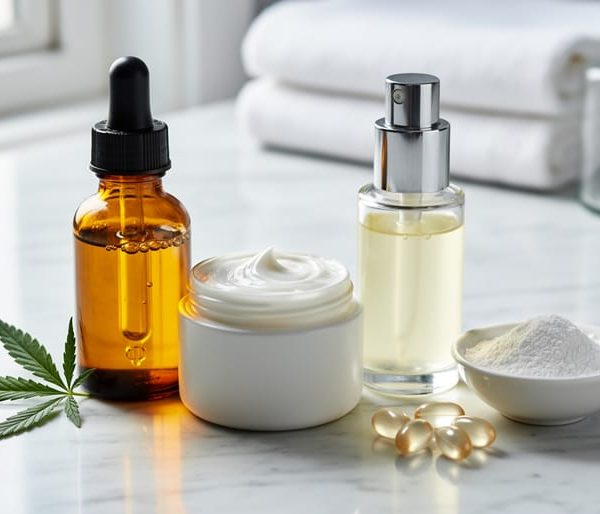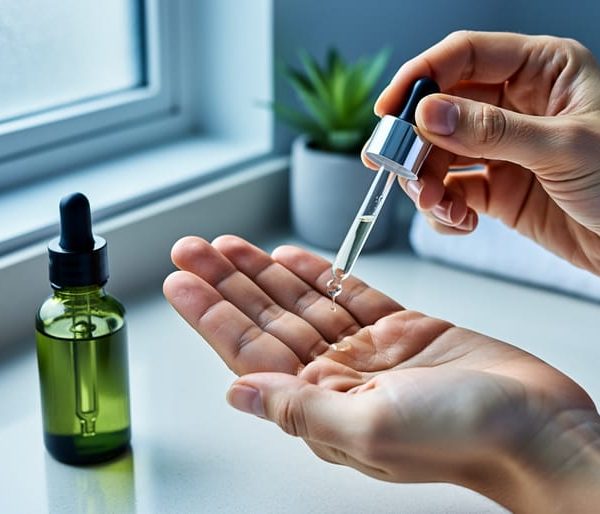
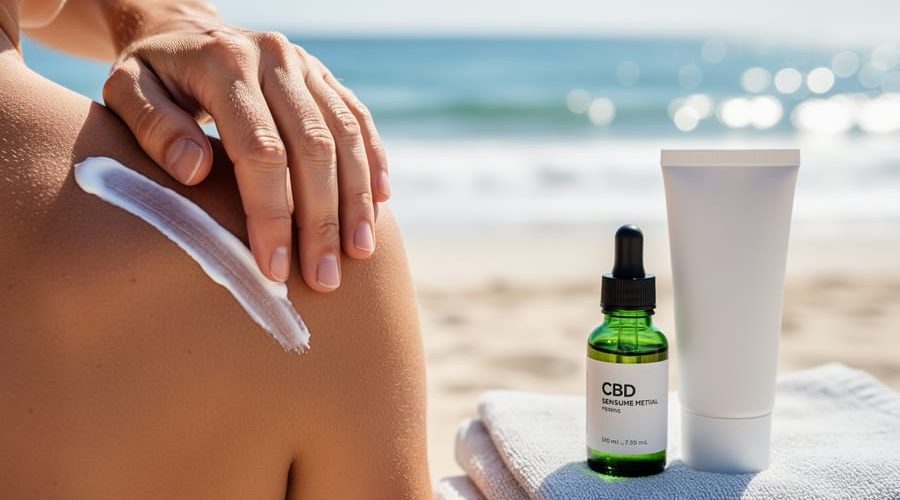
Stop before you buy that 8 SPF CBD sunscreen—dermatologists agree that anything below SPF 30 provides dangerously inadequate protection against skin cancer and premature aging. An 8 SPF product blocks only about 87% of UVB rays, leaving your skin vulnerable to 13% of harmful radiation, while SPF 30 blocks 97%. The math matters: that seemingly small difference translates to nearly double the UV exposure reaching your skin.
I’ve watched the CBD skincare market explode in Canada over the past few years, and I’ve noticed a troubling trend. Many CBD-infused sunscreens feature embarrassingly low SPF ratings, often marketed as “daily moisturizers with light protection” rather than true sun protection. Here’s the reality: manufacturers sometimes prioritize CBD concentration and product texture over adequate sun protection, assuming customers will layer additional sunscreen on top. They rarely make this expectation clear on the label.
The good news? CBD does offer legitimate anti-inflammatory and antioxidant benefits for your skin. Research suggests it may help with redness, irritation, and environmental stress. But these benefits mean nothing if you’re simultaneously damaging your skin with insufficient sun protection.
You don’t have to choose between CBD skincare and proper sun protection. The solution is straightforward: use a separate, high-quality SPF 30-50 sunscreen as your final skincare step, and apply your CBD products underneath as serums or moisturizers. Alternatively, seek out the growing number of CBD brands now formulating products with adequate SPF ratings—they exist, though they require more careful shopping.
Understanding Canadian regulations around both CBD products and sunscreen claims will help you make safer choices while still enjoying the benefits you’re seeking.
The Hard Truth About 8 SPF Sunscreen
Let me be straight with you: SPF 8 is offering you minimal sun protection. I know the number might sound reasonable, but when you look at what it actually means, it’s a different story.
Here’s the reality. SPF 8 blocks approximately 87% of UVB rays, which are the rays primarily responsible for sunburn. That sounds pretty good until you compare it to higher ratings. SPF 30, which Health Canada and dermatologists across the country recommend as the minimum, blocks about 97% of UVB rays. SPF 50 blocks around 98%.
Think of it this way: if you’re spending an afternoon at a Toronto beach or hiking in Banff, that 10% difference between SPF 8 and SPF 30 translates to significantly more UV exposure on your skin. Over time, that additional exposure accumulates, potentially leading to premature aging, dark spots, and increased skin cancer risk.
The SPF number also tells you how much longer you can theoretically stay in the sun before burning compared to unprotected skin. So if your skin would normally burn after 10 minutes, SPF 8 extends that to about 80 minutes. However, this calculation assumes you’re applying the full recommended amount (about a shot glass worth for your body), which most people don’t do. In real-world conditions, you’re likely getting even less protection than the label suggests.
Health Canada’s position is clear: SPF 30 is the baseline for adequate protection. While SPF 8 products are legally sold in Canada, they don’t meet the recommended standard for daily sun protection. This is especially important to understand when you’re looking at CBD sunscreen products, many of which feature lower SPF ratings. The CBD benefits shouldn’t come at the expense of proper sun protection, and fortunately, you don’t have to choose between the two.
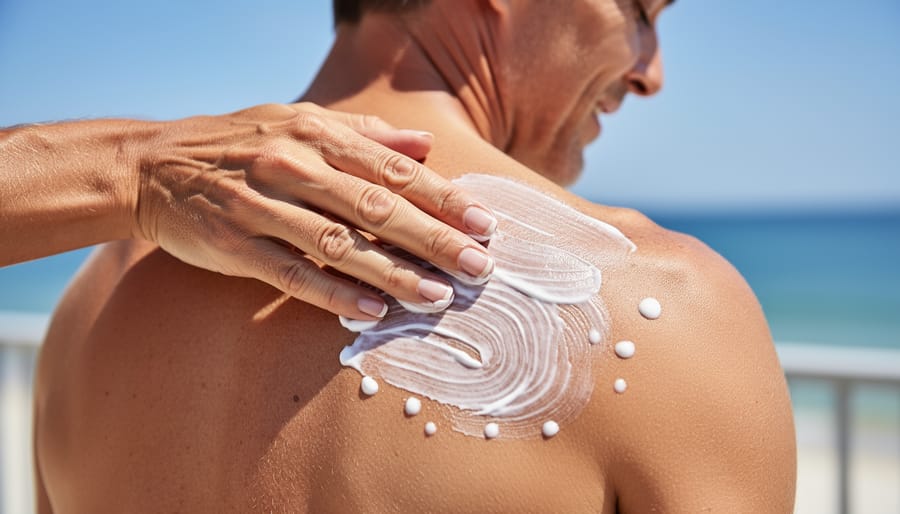
Why CBD Sunscreen Products Often Have Low SPF Ratings
The Formulation Challenge
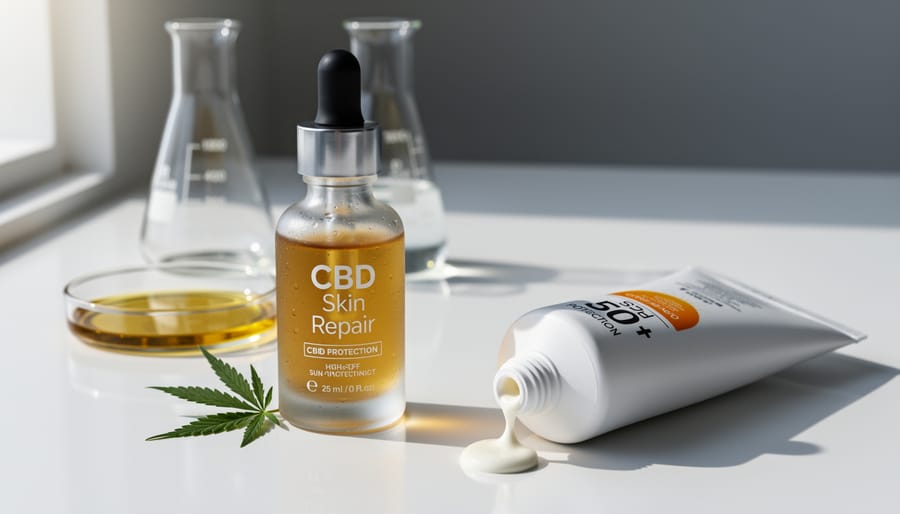
Here’s the reality about combining CBD oil with sunscreen: it’s surprisingly tricky from a formulation perspective. CBD oils are typically thick, occlusive ingredients that can create a barrier on your skin. While that sounds beneficial, it actually interferes with how sunscreen ingredients distribute and adhere to your skin’s surface.
When I first learned about CBD skincare formulation, I discovered that the oil base commonly used to carry CBD doesn’t play nicely with the chemical filters or mineral blockers that create sun protection. The oils can dilute the protective film sunscreen needs to form, reducing its effectiveness.
There’s also a testing challenge. Official SPF ratings require rigorous lab testing that examines how much UV radiation penetrates the product. When CBD oils are added to the formula, they can alter viscosity and absorption rates, making it harder to achieve and maintain higher SPF numbers consistently across batches.
This is why many CBD sunscreens top out at surprisingly low SPF ratings like 8. It’s not necessarily that manufacturers aren’t trying to create better protection, but rather that the chemistry between CBD oil and sunscreen actives creates genuine formulation obstacles. The result is products that might feel luxurious but fall dramatically short of providing adequate sun protection for Canadian summers.
Canadian Regulatory Landscape
Navigating sunscreen regulations in Canada can feel complicated, and adding CBD to the mix creates an extra layer of complexity. Here’s what you need to know about how these products are regulated north of the border.
Health Canada treats sunscreens as Natural Health Products (NHPs) or drugs, depending on their SPF level and claims. Products must meet specific requirements for SPF testing, labelling, and active ingredient concentrations. This is why you’ll see Drug Identification Numbers (DINs) or Natural Product Numbers (NPNs) on legitimate sunscreens sold in Canada.
CBD products fall under different regulations entirely. Since cannabis legalization, CBD-infused topicals are generally legal, but they face restrictions on health claims and must comply with Cannabis Act requirements. The challenge? When you combine CBD with sunscreen claims, the product needs to satisfy both regulatory frameworks simultaneously.
This dual regulation explains why many CBD sunscreens available online might not actually be authorized for sale in Canada, or why their SPF claims haven’t been verified by Health Canada. Some brands simply add minimal sun protection to CBD lotions without proper testing, resulting in those inadequate 8 SPF products we’ve been discussing.
From my experience researching these products, I’ve found that Canadian retailers are often cautious about stocking CBD sunscreens due to these regulatory hurdles. It’s frustrating but ultimately protects consumers from unverified protection claims.
What CBD Actually Does for Your Skin in Sun Exposure
CBD’s Anti-Inflammatory Benefits
CBD has gained attention for its potential anti-inflammatory properties, and this is one reason why manufacturers add it to sunscreen products. Let me share what the research actually tells us about CBD and sun-exposed skin.
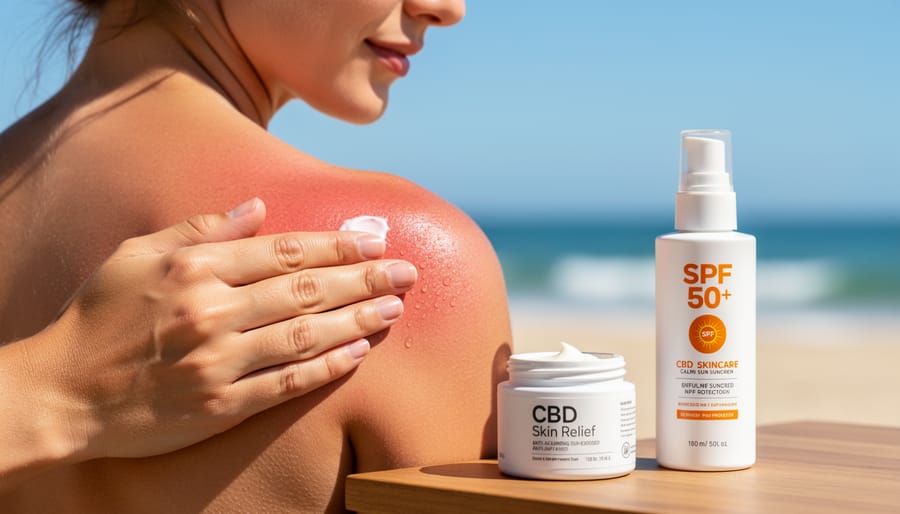
CBD contains compounds that may help reduce inflammation and soothe irritated skin. When your skin gets red or uncomfortable after sun exposure, that’s an inflammatory response. Laboratory studies suggest CBD can interact with receptors in your skin to potentially calm this reaction. Some CBD skincare benefits include helping with general redness and supporting your skin’s recovery process.
However, it’s important to set realistic expectations. CBD is not a substitute for adequate sun protection. Think of it as a supportive ingredient rather than your primary defense. The anti-inflammatory effects might help your skin feel more comfortable if you’ve had mild sun exposure, but they won’t prevent UV damage or sunburn.
In Canada, CBD skincare products are regulated by Health Canada, but specific claims about treating conditions require approved health claims. Most products position CBD as a wellness ingredient rather than a medical treatment.
If you’re interested in getting both proper sun protection and potential CBD benefits, consider using a high SPF sunscreen first, then applying a CBD serum or moisturizer afterward. This layering approach gives you the protection you need while still incorporating CBD into your routine. The anti-inflammatory properties work best as part of prevention and recovery, not as standalone protection.
Antioxidant Properties and Skin Recovery
One of the legitimate benefits CBD brings to skincare is its antioxidant properties, which can genuinely help your skin, even when dealing with products that have inadequate SPF like 8 SPF sunscreens.
When UV rays hit your skin, they trigger the production of free radicals, which are unstable molecules that damage healthy skin cells. This process contributes to premature aging, wrinkles, and uneven skin tone. CBD acts as an antioxidant that helps neutralize these free radicals, potentially reducing some of the oxidative stress your skin experiences.
I’ve noticed that my skin feels calmer after using CBD-infused products following sun exposure, though I’m always careful to use proper sun protection first. CBD’s anti-inflammatory properties may also support your skin’s natural recovery process after UV exposure, helping to soothe redness and irritation.
However, here’s the important distinction: CBD’s antioxidant benefits work best as a complement to adequate sun protection, not as a replacement. Think of it like this: proper sunscreen is your first line of defense, preventing much of the damage before it happens. CBD works more as a supporting player, helping to address some of the oxidative stress that occurs despite protection.
For Canadians looking to maximize both sun protection and CBD’s skin benefits, the solution is straightforward: use a separate broad-spectrum sunscreen with SPF 30 or higher, then layer your CBD skincare products over top or use them as part of your evening routine when your skin naturally repairs itself.
Smart Photoprotection Strategies: Layering CBD with Proper SPF
The Layering Method That Actually Works
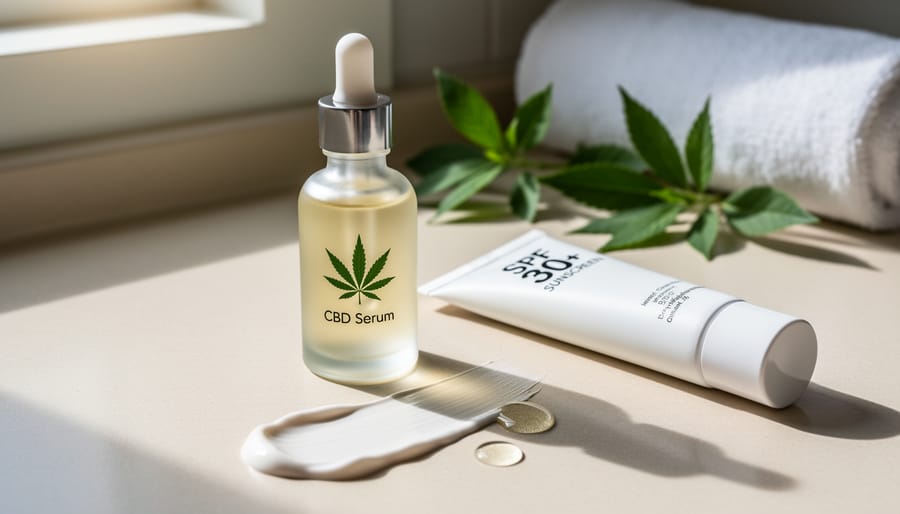
Here’s the good news: you can absolutely enjoy your CBD skincare while getting proper sun protection. The trick is knowing the right order to apply everything. When I first started layering CBD products, I made the mistake of slapping on sunscreen first, which basically created a barrier that prevented my CBD serum from doing anything useful.
Start with freshly cleansed skin. This is non-negotiable because you want your CBD products to penetrate properly. Apply your CBD serum or oil first, giving it time to absorb. I usually wait about two to three minutes while I brush my teeth or make coffee. The key here is patience – rushing this step means you’ll end up with a pilled mess on your face.
Next comes your CBD moisturizer if you’re using one. Again, wait a minute or two for it to sink in. I know this sounds tedious, but trust me, the results are worth the extra few minutes in your morning routine.
Now for the crucial part: your SPF 30 or higher sunscreen goes on last, and you need to be generous with it. Health Canada recommends about a nickel-sized amount for your face alone. Don’t skimp here just because you’ve already applied other products. Your sunscreen needs to form a proper protective layer on top of everything else.
One thing I learned through trial and error – if your CBD product is oil-based, choose a mineral sunscreen rather than a chemical one. They play better together and you’ll avoid that greasy, sliding-off-your-face feeling. Chemical sunscreens can sometimes interact weirdly with oils, creating a less effective barrier.
Morning vs. Evening CBD Application
Understanding when to apply CBD products in relation to sun exposure can significantly impact both your skin’s protection and its ability to benefit from cannabidiol’s properties. Here’s what Canadian CBD users need to know about timing their application.
Morning CBD application should focus on protection and preparation. If you’re using a CBD-infused product in your morning routine, apply it before your proper SPF 30+ sunscreen. CBD’s anti-inflammatory properties may help prepare your skin for the day ahead, potentially reducing irritation from environmental stressors. However, never rely on CBD products alone for sun protection during daytime hours. The proper product layering sequence matters: cleanse, apply CBD serum or moisturizer, wait a few minutes for absorption, then finish with adequate broad-spectrum sunscreen.
Evening application is when CBD truly shines for sun-related skin concerns. After sun exposure, your skin enters recovery mode, and this is the optimal time to harness CBD’s potential benefits. Apply CBD products after cleansing at night to support your skin’s natural repair processes. The anti-inflammatory and antioxidant properties of CBD may help address any mild redness or discomfort from daytime sun exposure.
I’ve personally found that incorporating CBD into my nighttime routine feels more effective than morning use. There’s something reassuring about giving my skin those potential recovery benefits overnight, without worrying about sun protection conflicts.
For Canadians spending time outdoors, consider keeping your CBD routine primarily for evening use during summer months. This approach eliminates any confusion about SPF levels and ensures you’re applying proper sun protection during daylight hours while still enjoying CBD’s skincare benefits when your skin needs recovery support most.
Shopping for CBD Sunscreen Products in Canada
When shopping for CBD sunscreen in Canada, you need to be particularly careful because these products exist in a regulatory grey area. Health Canada doesn’t currently approve CBD-infused sunscreens, so any product claiming both CBD content and SPF protection requires extra scrutiny.
First, check if the product has a Natural Product Number (NPN) or Drug Identification Number (DIN) for its sunscreen claims. These eight-digit codes indicate Health Canada has reviewed the sun protection ingredients. The CBD component won’t be regulated under these numbers, but at least you’ll know the SPF claims have been verified. If a product claims SPF protection without an NPN or DIN, that’s a significant red flag.
Look for broad-spectrum protection on the label, which means the product guards against both UVA and UVB rays. Remember, even if you’re buying a CBD product primarily for skincare benefits, the sunscreen component needs to actually protect your skin. Don’t compromise on this just to get CBD in your routine.
When it comes to CBD concentration, be skeptical of vague claims. Legitimate products should clearly state how much CBD they contain, typically in milligrams. Phrases like “infused with hemp” or “contains cannabis extracts” without specific amounts often indicate minimal active ingredients. You deserve to know what you’re paying for.
I’ve learned through experience that reputable Canadian CBD retailers will provide third-party lab testing results, often accessible through QR codes on packaging or their websites. These certificates of analysis verify CBD content and confirm the absence of contaminants like heavy metals or pesticides. If a company won’t share this information, shop elsewhere.
Consider buying your sunscreen and CBD products separately instead. You’ll have more control over quality and can choose effective CBD skincare that doesn’t compromise on sun protection. Apply a proper SPF 30+ sunscreen first, then layer your CBD serum or moisturizer over it.
Finally, watch for unrealistic health claims. Canadian advertising laws prohibit making therapeutic claims about CBD products without proper authorization. If a sunscreen promises that CBD will treat specific skin conditions or provide medical benefits, that’s both a legal violation and a warning sign about the company’s credibility.
Beyond Sunscreen: Complete Photoprotection for CBD Users
Protecting your skin from the sun goes far beyond what you put on it. When I first started incorporating CBD into my skincare routine, I learned quickly that a complete photoprotection strategy involves multiple layers of defense, especially during those beautiful Canadian summers.
Physical barriers remain your first line of defense. Wide-brimmed hats (at least 7 centimeters all around), UV-blocking sunglasses, and tightly-woven clothing create shade for your skin before UV rays even reach it. I keep a lightweight sun shirt in my car year-round because even winter sun reflecting off snow can be intense in Canada. Many outdoor clothing brands now offer UPF-rated fabrics that block UV rays more effectively than regular clothing.
Timing matters significantly too. UV radiation peaks between 11 AM and 3 PM, so scheduling outdoor activities outside these hours reduces your exposure considerably. If you’re applying CBD skincare products in the morning, consider doing your gardening or dog walks before 10 AM or after 4 PM when the sun’s rays are less intense.
Seeking shade is another simple yet effective strategy. Whether you’re at the beach or a park, positioning yourself under trees, umbrellas, or canopies reduces direct sun exposure by up to 75 percent. This doesn’t replace sunscreen, but it significantly reduces the UV load your skin faces.
Remember that windows block UVB rays but not UVA rays, meaning you’re still getting sun exposure while driving or sitting near windows. This is particularly relevant if you’re using CBD products for their anti-inflammatory properties, as UVA exposure can still trigger inflammation despite being indoors.
Combining these approaches with proper SPF 30 or higher sunscreen creates comprehensive protection that allows your CBD skincare routine to work as intended without sun damage undermining those benefits.
Here’s the bottom line: 8 SPF sunscreen simply doesn’t cut it, whether it contains CBD or not. I know it’s tempting to reach for a product that promises both the soothing benefits of CBD and sun protection in one bottle, but protecting your skin from UV damage requires a proper SPF 30 or higher product. This isn’t about being a buzzkill about CBD skincare, trust me. I’m a huge advocate for CBD’s anti-inflammatory and antioxidant properties. But sun protection is one area where we can’t compromise.
The good news? You absolutely can enjoy the benefits of CBD skincare while keeping your skin properly protected. Apply your favourite CBD moisturizer or serum as part of your regular routine, then layer a broad-spectrum SPF 30+ sunscreen on top. It’s that simple. Your skin gets the calming, nourishing effects of CBD and the reliable protection it needs from harmful UV rays.
As Canadians, we’re fortunate to have access to well-regulated CBD skincare products and plenty of information to make informed choices. Take the time to read labels, understand what you’re buying, and remember that sun protection is a year-round commitment, even during our long winters.
Your skin deserves both the wellness benefits of CBD and serious sun protection. Don’t settle for products that promise one at the expense of the other. Choose both, layer them thoughtfully, and enjoy your CBD skincare journey with confidence and safety.