Consult your healthcare provider before combining hydroxyzine and CBD, as both substances affect your central nervous system and can amplify sedation when used together. This interaction occurs because hydroxyzine, an antihistamine commonly prescribed for anxiety and itching, and CBD both influence similar pathways in your brain that regulate alertness and relaxation.
Stop driving or operating machinery if you’re using both substances, since the combined sedative effects can significantly impair your coordination, reaction time, and decision-making abilities. Many Canadians don’t realize that even legal CBD products can intensify the drowsiness caused by prescription medications like hydroxyzine.
Start with the lowest possible CBD dose if your doctor approves concurrent use, and monitor yourself closely for excessive sleepiness, dizziness, confusion, or difficulty concentrating. Space out your dosing times by several hours to minimize peak concentration overlap in your system.
Document any side effects you experience and share them with your healthcare provider at your next appointment. Since Health Canada doesn’t require the same rigorous drug interaction testing for CBD products as it does for prescription medications, real-world data from patients like you helps medical professionals understand these combinations better.
The good news? Most interactions between hydroxyzine and CBD are manageable with proper precautions and medical supervision. Understanding how these substances work together empowers you to make informed decisions about your wellness routine while prioritizing your safety. Let’s explore exactly what happens in your body when you combine these two substances and how to protect yourself.
Understanding Hydroxyzine: What It Is and How It Works

Common Uses and Prescriptions in Canada
In Canada, hydroxyzine is commonly prescribed under brand names like Atarax and Vistaril for several conditions. Healthcare providers most frequently recommend it for managing generalized anxiety disorder and short-term anxiety symptoms, particularly when patients need relief without the dependency risks associated with benzodiazepines. It’s also regularly prescribed for chronic hives and other allergic skin reactions that cause persistent itching.
Many Canadians receive hydroxyzine prescriptions specifically for sleep disturbances, as its sedating properties help with insomnia related to anxiety. Doctors also use it as a pre-surgery medication to calm nerves and reduce nausea.
Typical dosages vary considerably based on the condition being treated. For anxiety, adults usually take 50-100 mg divided throughout the day, while sleep-related prescriptions often range from 25-50 mg taken at bedtime. Allergy relief typically requires 25 mg three to four times daily.
It’s worth noting that hydroxyzine has become increasingly popular in Canadian healthcare as physicians seek alternatives to habit-forming anti-anxiety medications. If you’re currently taking hydroxyzine for any of these conditions and considering adding CBD to your wellness routine, understanding how these substances interact becomes essential for your safety and treatment effectiveness.
How Hydroxyzine Affects Your System
Hydroxyzine is an antihistamine that many Canadians use for anxiety relief and sleep support. Once you take it, the medication works as a sedative, calming your nervous system and making you feel drowsy. You’ll typically feel its effects within 15 to 30 minutes, and they can last anywhere from four to six hours, though this varies from person to person.
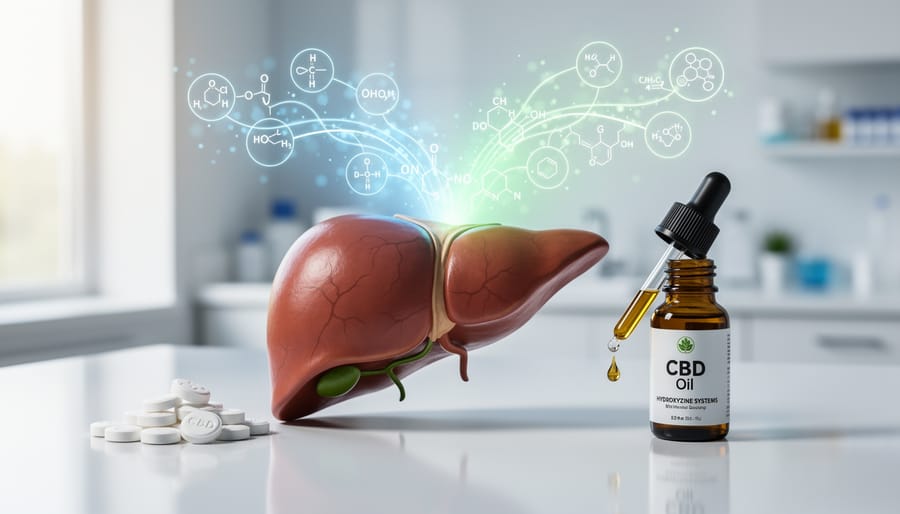
Here’s where things get important for our CBD discussion: your liver processes hydroxyzine using special enzymes called CYP450 enzymes. Think of these enzymes as your body’s cleanup crew—they break down medications so your system can eliminate them. Specifically, hydroxyzine relies heavily on an enzyme called CYP3A4 to do this job.
The reason this matters is that CBD also interacts with these same liver enzymes. When two substances compete for the same processing system, it can affect how long medications stay in your body and how strongly they work. In my conversations with readers across Canada, I’ve noticed many people don’t realize that even natural supplements like CBD can influence how prescription medications behave in your system. Understanding this basic process helps you make informed decisions about combining hydroxyzine with CBD safely.
The Science Behind Hydroxyzine and CBD Interaction
How CBD Affects Drug Metabolism
To understand how CBD and hydroxyzine might interact, it helps to know a bit about how your liver processes medications. Your liver contains a family of enzymes called cytochrome P450 (or CYP450 for short), which act like little workers breaking down substances in your body, including most medications and CBD itself.
Think of these enzymes as checkout lanes at a grocery store. When everything’s running normally, medications move through these lanes at a predictable pace, getting processed and eventually leaving your system. Your doctor prescribes hydroxyzine based on how quickly they expect these enzymes to process it.
Here’s where CBD comes in. CBD can temporarily slow down certain CYP450 enzymes, particularly ones called CYP3A4 and CYP2D6. It’s often compared to the grapefruit juice effect, which you might have seen warnings about on medication labels. Just like grapefruit juice, CBD can create a bottleneck at these checkout lanes.
When hydroxyzine can’t get processed as quickly as usual, it stays in your system longer and at higher concentrations than your doctor intended. This doesn’t mean the interaction will definitely cause problems, but it does mean the effects of hydroxyzine could be stronger or last longer than expected.
I learned about this mechanism when I first started researching CBD interactions for Canadian users. The grapefruit comparison really clicked for me because most people have seen those warnings before and understand the basic concept, even if they don’t know the scientific details behind it.
The Sedation Amplification Effect
Here’s what you need to know about the sedation amplification effect: both hydroxyzine and CBD can make you drowsy on their own, and when you combine them, that drowsiness can intensify significantly.
Hydroxyzine is an antihistamine that’s specifically prescribed for anxiety and sleep issues because of its sedating properties. Meanwhile, CBD, while not as consistently sedating, can promote relaxation and drowsiness in many users, especially at higher doses. When you take them together, you’re essentially stacking two substances that slow down your central nervous system.
I’ve heard from several readers who didn’t realize how powerful this combination could be. One person shared that they took their regular hydroxyzine dose before bed and added CBD oil to help with muscle tension. They woke up feeling extremely groggy and disoriented the next morning, well beyond their usual experience with hydroxyzine alone.
This additive effect means the combined impact isn’t just hydroxyzine plus CBD—it can feel exponentially stronger. You might experience excessive daytime sleepiness, difficulty concentrating, impaired coordination, or that “heavy” feeling that makes even simple tasks challenging. This is particularly concerning if you need to drive, operate machinery, or make important decisions.
What Current Research Shows
Here’s the honest truth: we don’t have extensive research specifically examining hydroxyzine and CBD together. Most of what we understand comes from how each substance works individually and general principles about drug interactions.
Current research tells us that both hydroxyzine and CBD are metabolized by similar liver enzymes (particularly CYP3A4 and CYP2D6). This creates a theoretical concern that CBD might slow down how quickly your body processes hydroxyzine, potentially increasing its effects and side effects. However, we’re missing direct clinical trials that measure exactly what happens when people take them together.
A few small observational studies have looked at CBD’s interaction with various medications, suggesting it can indeed affect drug metabolism, but hydroxyzine specifically hasn’t been the focus. Canadian researchers have called for more investigation into CBD-medication interactions, recognizing this gap.
What we do know is that both substances can cause drowsiness independently, and combining them could amplify this sedative effect. Healthcare providers typically approach this combination cautiously based on known pharmacology rather than definitive studies.
The reality is that your doctor is working with limited data when advising you about this combination. That’s why personalized medical guidance matters so much here, rather than one-size-fits-all recommendations.
Potential Risks and Side Effects of Combining Hydroxyzine and CBD
Increased Drowsiness and Cognitive Effects
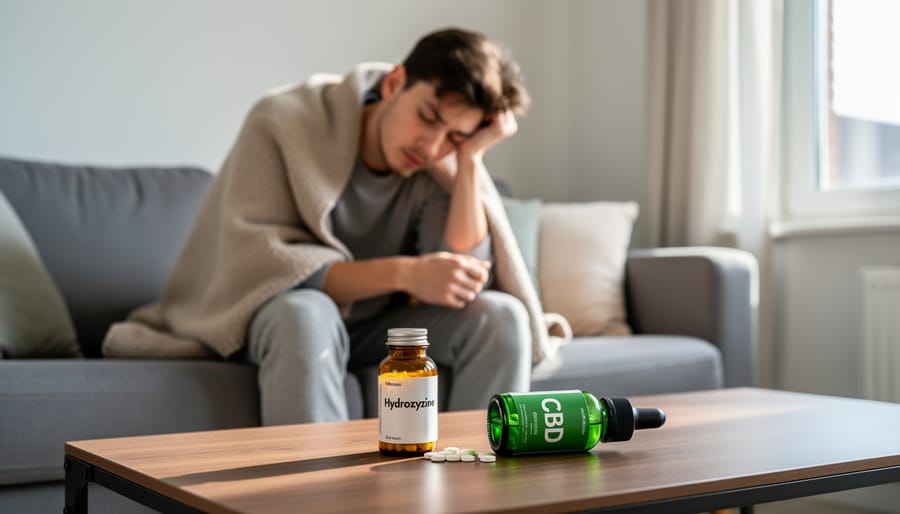
When you combine hydroxyzine with CBD, the most noticeable effect many people experience is increased drowsiness. Both substances work on your central nervous system to promote relaxation, so taking them together can amplify that sedative effect significantly.
I’ve spoken with several Canadians who didn’t realize how tired they’d become after mixing these two. One person told me they felt “completely zoned out” during a work meeting, struggling to follow conversations they’d normally handle easily. This excessive sedation isn’t just about feeling sleepy—it can seriously impact your coordination and concentration throughout the day.
Think about activities that require your full attention, like driving to work or operating machinery. The combined effect can slow your reaction times and cloud your judgment, making these everyday tasks potentially dangerous. Even simple things like cooking or going up stairs might feel more challenging when you’re dealing with this level of impairment.
The timing matters too. Since both hydroxyzine and CBD stay in your system for several hours, you might feel these effects longer than expected. If you’re currently taking both, it’s important to avoid driving or making important decisions until you understand how they affect you personally.
Changes in Medication Effectiveness
When you take CBD alongside hydroxyzine, you’re essentially creating a traffic jam in your liver. Here’s what happens: both substances rely on the same liver enzymes (particularly CYP3A4 and CYP2D6) for metabolism. When CBD enters the picture, it competes for these enzymes, potentially slowing down how quickly your body breaks down hydroxyzine.
This metabolic slowdown can lead to higher concentrations of hydroxyzine circulating in your bloodstream for longer periods than intended. Think of it like this – if your body normally processes and eliminates a certain amount of hydroxyzine within a few hours, CBD might extend that timeframe, causing the medication to accumulate.
The practical concern? You might experience intensified effects from your prescribed hydroxyzine dose. What should feel like mild drowsiness could become excessive sedation. The anti-anxiety benefits you’re seeking might be overshadowed by unwanted side effects like extreme fatigue, dizziness, or cognitive fog.
From my conversations with Canadians managing anxiety, I’ve heard stories of people feeling “knocked out” after adding CBD to their routine without adjusting their hydroxyzine dose. One reader described feeling unusually groggy for an entire day after taking their normal medications together.
This doesn’t mean the combination is impossible, but it does require careful monitoring and likely dosage adjustments under medical supervision.
Less Common but Serious Concerns
While most people won’t experience severe complications, there are some serious concerns worth understanding. Respiratory depression, though rare, is theoretically possible when combining hydroxyzine and CBD, especially at higher doses or when other sedatives are involved. This means your breathing could become dangerously slow or shallow. If you notice extremely slow breathing, bluish lips or fingertips, or difficulty staying awake, seek emergency medical attention immediately.
Confusion and disorientation are other red flags that shouldn’t be ignored. If you feel unusually foggy, can’t think clearly, or experience memory problems beyond typical drowsiness, this could indicate the combination is affecting you too strongly. Older adults are particularly vulnerable to these cognitive effects.
I’ve heard from readers who brushed off concerning symptoms thinking they’d “sleep it off,” only to realize later they needed medical help. Trust your instincts here. Contact your healthcare provider if you experience severe dizziness that prevents you from standing safely, extreme sedation where you can’t stay alert during normal activities, or any reaction that feels abnormal for you.
In Canada, you can always call your provincial poison control centre or visit a walk-in clinic if you’re uncertain whether your symptoms warrant concern. It’s better to check and be reassured than to wait when something feels wrong.
Real-World Experiences: What Users Report
When I talk with readers who’ve combined hydroxyzine and CBD, the experiences vary quite a bit—which really highlights how individual our bodies’ responses can be.
Several people have shared that they use both without noticing any concerning effects. One reader from Ontario mentioned using a low-dose CBD oil for general wellness while taking hydroxyzine occasionally for sleep, reporting no issues over several months. Another person noted they felt slightly more drowsy than usual when first combining them, but that the effect diminished after their body adjusted.
On the flip side, I’ve heard from folks who experienced more pronounced sedation. A reader from British Columbia described feeling “foggy” and unusually tired when taking their regular hydroxyzine dose alongside CBD gummies. After spacing them out by several hours, they found a better balance.
Online health communities echo this mixed picture. Some users report successful combinations when they’re mindful about timing and dosage, while others find the increased drowsiness problematic for daily activities. A common theme is that people who start with very low CBD doses and gradually increase tend to manage the interaction better.
It’s worth noting that most of these reports come from people using CBD products without medical supervision, so the quality and actual CBD content of their products varied widely—something particularly relevant in Canada where unregulated products still circulate despite legalization.
What stands out across these anecdotes is that individual factors matter tremendously. Your metabolism, the specific doses you’re taking, whether you’ve eaten recently, and even your baseline sensitivity to sedation all play roles. This is why anecdotal evidence, while interesting and sometimes reassuring, can’t replace personalized medical advice about your specific situation.
If You’re Already Taking Both: Safety Guidelines
Timing and Dosage Considerations
If you’re considering using CBD while taking hydroxyzine, a cautious and gradual approach is your best strategy. Start by spacing out your doses significantly. I’d recommend taking them at least 4-6 hours apart initially, which allows you to better monitor how each substance affects you individually and reduces the likelihood of overlapping peak effects.
When introducing CBD, begin with the lowest possible dose, even if you’ve used CBD before. This might mean starting with just 5-10mg and staying at that level for several days while you observe how your body responds. Pay close attention to any increased drowsiness, dizziness, or other side effects. Keep a simple journal noting the times you take each substance and any effects you notice throughout the day.
From my conversations with Canadians navigating similar situations, many find success by taking hydroxyzine in the evening (as it’s often prescribed for sleep or nighttime anxiety) and using CBD earlier in the day. This natural separation can minimize interaction risks while still allowing you to benefit from both substances.
Remember that everyone’s response is different based on factors like metabolism, body weight, and individual sensitivity. Never adjust your hydroxyzine dose without consulting your prescribing doctor, and always inform them that you’re using CBD alongside your medication.
Warning Signs to Watch For
If you’re combining hydroxyzine and CBD, stay alert for signs that the interaction is becoming problematic. Excessive drowsiness that goes beyond normal tiredness is the most common red flag—if you’re struggling to stay awake during the day or feel unusually groggy, that’s your body signaling the combination may be too sedating. Watch for mental fog, confusion, or difficulty concentrating on simple tasks. Dizziness, especially when standing up, and impaired coordination are also concerning symptoms.
More serious warning signs include slowed or shallow breathing, extreme disorientation, or difficulty waking someone who’s taken both substances. These require immediate medical attention. From my conversations with Canadians managing anxiety, I’ve learned that many initially dismiss mild drowsiness as normal, but it’s important to track how you’re feeling. If symptoms interfere with work, driving, or daily activities, reduce your CBD dose or temporarily stop using it altogether. Always consult your healthcare provider before making changes to prescribed hydroxyzine. When in doubt, err on the side of caution—your safety matters more than maintaining your current CBD routine.
Working With Your Healthcare Provider
Open communication with your healthcare provider is essential when considering CBD alongside hydroxyzine. Before your appointment, write down all supplements and medications you’re currently taking, including CBD products with their dosages and frequency. Be specific about why you’re using CBD, whether for sleep, anxiety, or other concerns.
Your doctor needs to know the CBD product type you’re using since oils, edibles, and vapes can affect your body differently. Don’t worry about judgment—Canadian healthcare providers are increasingly familiar with CBD use and prioritize your safety over personal opinions about cannabis products.
Ask your doctor about timing your doses separately or adjusting hydroxyzine dosage if you choose to use both substances. Request guidance on warning signs that might indicate problematic interactions, like excessive drowsiness or coordination issues.
Medical supervision becomes particularly important if you’re taking other medications, have liver conditions, or experience side effects. Your pharmacist can also be a valuable resource for interaction questions. Remember, healthcare providers in Canada work within a legal framework where CBD is regulated, so they can offer informed, practical advice tailored to your situation.

Alternatives and Complementary Approaches
If you’re concerned about potential interactions between hydroxyzine and CBD but still want natural support for anxiety, you have several options worth exploring.
One straightforward approach is strategic timing. Some people find success by spacing out their hydroxyzine and CBD use by several hours. For instance, taking hydroxyzine at bedtime and using CBD earlier in the day can potentially reduce the overlap in your system. However, this isn’t foolproof since both substances can remain active for extended periods, so it’s essential to discuss this strategy with your healthcare provider first.
Alternative cannabinoids offer another avenue. CBG (cannabigerol) and CBN (cannabinol) are gaining attention in the Canadian market, though research is still emerging. These cannabinoids work differently than CBD in your body and may present fewer interaction concerns, though we need more studies to say this definitively. CBG is being explored for its potential calming properties without the sedation associated with CBD, while CBN is often marketed for sleep support. Remember that Health Canada regulates these cannabinoids similarly to CBD, so purchase from licensed retailers.
From my conversations with readers across Canada, I’ve heard positive feedback about non-cannabinoid approaches too. Magnesium supplements, particularly magnesium glycinate, have helped many people manage anxiety symptoms. L-theanine, an amino acid found in green tea, is another option that promotes relaxation without significant sedation. Herbal teas like chamomile or passionflower are gentle choices that rarely interact with medications.
Lifestyle modifications shouldn’t be overlooked either. Regular exercise, even just 20-minute daily walks, can significantly impact anxiety levels. Mindfulness meditation apps have become incredibly popular among Canadians, and many offer free trials to help you get started.
Whatever path you choose, keeping your doctor informed is crucial. They can help you monitor for any unexpected effects and adjust your treatment plan as needed. Your safety comes first, and there’s no one-size-fits-all solution for managing anxiety.
The Canadian Legal and Medical Landscape
Since cannabis legalization in 2018, Canadians have found themselves in a unique position when it comes to discussing CBD with their healthcare providers. Unlike many other countries, having an open conversation about CBD use isn’t just legally acceptable here—it’s actually encouraged as part of comprehensive medical care.
That said, the reality can feel a bit more complicated. I’ve spoken with many readers who hesitate to bring up CBD with their doctors, worried about being judged or dismissed. Here’s the thing: if you’re taking hydroxyzine or any prescription medication, your healthcare provider genuinely needs to know about all substances you’re using, including CBD. This isn’t about getting permission—it’s about ensuring your safety.
In Canada, physicians and pharmacists are increasingly educated about cannabis products, though knowledge levels still vary considerably. Some practitioners have pursued additional training in cannabinoid medicine, while others may have limited familiarity beyond basic pharmacology. Don’t be discouraged if your first conversation doesn’t yield all the answers you need.
When discussing CBD and hydroxyzine together, come prepared. Bring the actual CBD product you’re using (or clear photos of the labels), note the dosage and frequency, and be specific about why you’re interested in using both substances. Ask directly about interaction risks, timing of doses, and what symptoms might signal a problem.
If your current healthcare provider seems dismissive or uninformed about CBD, you have options. Look for practitioners who list cannabinoid medicine or integrative health as part of their practice. Many pharmacists, particularly those in cannabis-focused dispensaries, have become surprisingly knowledgeable resources. The Canadian Consortium for the Investigation of Cannabinoids also maintains directories of informed healthcare professionals across provinces, making it easier to find someone who can provide evidence-based guidance specific to your situation.
If you’re feeling anxious about mixing hydroxyzine and CBD, you’re not alone—and honestly, your caution is completely justified. The interaction between these two substances is real, but here’s the reassuring part: it’s manageable when you approach it thoughtfully.
Throughout this article, we’ve explored how both hydroxyzine and CBD can increase sedation and affect your central nervous system when used together. We’ve also discussed how they’re both metabolized by similar liver enzymes, which can potentially alter how each substance works in your body. This doesn’t mean you absolutely can’t use them together, but it does mean you need to be strategic and careful.
The most important takeaway? Don’t go it alone. Before combining hydroxyzine with CBD—or making any changes to your medication routine—have an honest conversation with your healthcare provider. I know it can feel intimidating to bring up CBD use with your doctor, especially given how new it still is in the Canadian medical landscape. But most healthcare professionals would much rather know what you’re taking so they can help you stay safe.
Your doctor can help you determine appropriate dosing, monitor for side effects, and adjust your treatment plan if needed. They might recommend starting with lower doses of CBD, timing your doses differently, or choosing specific CBD products that are less likely to cause problems.
Remember, being informed is your best tool for making safe decisions about your health. If you’re currently using both substances or considering it, schedule that appointment with your healthcare provider. It’s not about getting permission—it’s about getting guidance to use these substances as safely and effectively as possible.