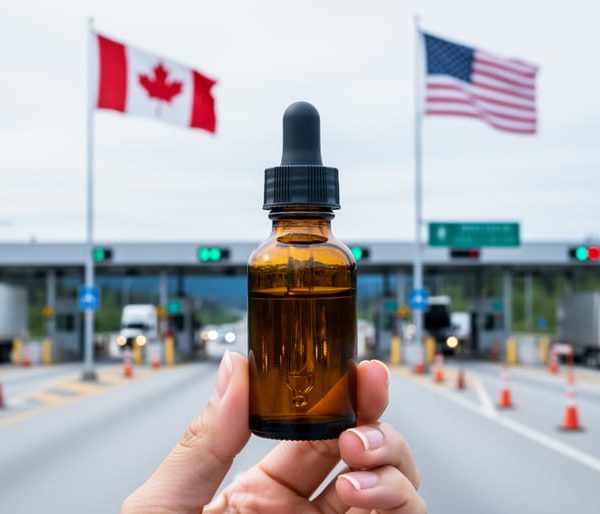

Canada’s CBD market depends heavily on ingredients and manufacturing components from China, making the relationship between these two trading partners a direct factor in what products reach your local dispensary and at what price. When trade tensions escalate or new tariffs emerge, Canadian CBD consumers experience real consequences: delayed product launches, increased prices, and sometimes empty shelves where your favorite tincture used to sit.
Understanding this connection matters because China supplies approximately 60% of the raw hemp extracts and CBD isolates used in products sold across Canada. The country also manufactures much of the packaging, laboratory equipment, and extraction machinery that Canadian CBD companies rely on. When diplomatic relations shift or import regulations tighten, these supply chain disruptions ripple through to everyday Canadians trying to access consistent, affordable CBD products.
Recent trade developments have created uncertainty for both consumers and business owners. New inspection requirements at Canadian borders mean longer wait times for shipments. Currency fluctuations between the Canadian dollar and Chinese yuan affect pricing structures. Evolving quality standards between the two nations sometimes result in rejected shipments, creating temporary shortages.
This complex trade relationship doesn’t just affect large corporations. Small Canadian CBD entrepreneurs sourcing ingredients, consumers managing chronic pain with daily CBD routines, and investors evaluating market stability all need clarity on how international trade policies translate into practical, local impacts. Understanding these connections empowers you to make informed decisions about product purchases, anticipate market changes, and navigate Canada’s CBD landscape with confidence.

The Current State of Canada-China Trade Relations
Recent Trade Tensions and Their Origins
Over the past few years, Canada-China trade relations have experienced significant strain, and understanding these tensions helps explain why certain products, including CBD and hemp-derived goods, face uncertainty in our market.
The relationship began deteriorating in December 2018 following the arrest of Huawei executive Meng Wanzhou in Vancouver at the request of the United States. Shortly after, China detained two Canadian citizens, Michael Kovrig and Michael Spavor, in what many viewed as retaliatory action. This diplomatic standoff created a ripple effect across various trade sectors.
In early 2019, China suspended canola seed imports from major Canadian exporters, citing pest concerns. While officially framed as a food safety issue, many observers connected this trade action to the broader diplomatic dispute. The canola ban alone cost Canadian farmers an estimated $1 billion annually. Similar restrictions affected Canadian meat exports, with Chinese authorities revoking permits for pork and beef shipments.
These trade disruptions matter for CBD consumers because they illustrate how quickly political tensions can impact product availability and pricing. Hemp and CBD products often rely on international supply chains for everything from raw materials to packaging components. When trade relationships become strained, Canadian businesses face challenges importing ingredients, equipment, and even CBD isolates used in various products.
The tensions have gradually eased since 2021, but they serve as an important reminder that international relations directly affect what appears on Canadian store shelves. For CBD users, understanding these dynamics helps explain potential price fluctuations and occasional product shortages.
What This Means for Canadian Agricultural Exports
Canada’s agricultural sector has felt the ripple effects of trade tensions with China, particularly following the 2019 disputes that saw restrictions on canola, beef, and pork exports. These challenges cost Canadian farmers billions in lost revenue and forced many to seek alternative markets. However, this disruption has created unexpected opportunities for hemp and CBD producers.
As traditional agricultural exports faced barriers, Canadian hemp cultivation expanded significantly. Hemp thrives in Canada’s climate, and our country is already a global leader in hemp production. The shift away from Chinese market dependence has encouraged domestic investment in hemp processing and CBD extraction facilities right here at home.
For Canadian CBD consumers, this means greater product availability from locally-sourced hemp. You’re seeing more “grown and processed in Canada” labels on CBD products, which wasn’t always the case. This domestic focus has improved supply chain reliability, meaning the CBD products you depend on are less vulnerable to international trade disruptions.
The experience has taught the industry valuable lessons about diversification. Canadian hemp producers now actively pursue markets in Europe, the United States, and emerging Asian markets beyond China. This strategic shift creates a more stable foundation for the CBD products available to you, reducing the risk of sudden shortages or price spikes caused by geopolitical tensions.
Canada’s CBD and Hemp Export Landscape
Why Canada Is Positioned as a Global CBD Leader
Canada has emerged as an unexpected frontrunner in the global CBD market, and it’s not just by chance. When the country legalized cannabis in 2018, it didn’t just open the door for recreational use. It created one of the world’s most sophisticated regulatory frameworks for cannabis production, including CBD products.
Here’s what sets Canada apart: our Health Canada oversight system ensures rigorous testing standards that many other countries simply don’t require. Every licensed producer must follow Good Production Practices, similar to pharmaceutical manufacturing standards. This means Canadian CBD products undergo multiple quality checks, from seed to sale, tracking pesticides, heavy metals, and cannabinoid content with precision.
I remember speaking with a licensed producer in British Columbia who explained how their facility’s cleanliness standards rival those of hospital operating rooms. That level of commitment to quality makes Canadian CBD attractive to international buyers who want certainty about what they’re purchasing.
Canada’s climate and agricultural expertise also play crucial roles. We’ve developed cold-hardy hemp strains and indoor cultivation technologies that maximize CBD extraction efficiency. Our producers can scale operations while maintaining consistent quality, something essential for international trade partnerships.
The regulatory clarity is perhaps our biggest advantage. Unlike markets where CBD exists in legal gray zones, Canada provides clear licensing pathways, defined THC limits, and transparent compliance requirements. This predictability reduces risk for international trade partners, including those exploring opportunities with countries like China, where regulatory certainty matters immensely for business relationships.

Current CBD Export Markets for Canadian Producers
Right now, Canadian CBD producers have carved out solid export pathways to several international markets, though China isn’t among them. Understanding where our CBD actually goes helps put the China trade conversation into perspective.
The United States remains the primary destination for Canadian CBD exports. Thanks to proximity and the 2018 US Farm Bill legalizing hemp-derived CBD federally, cross-border trade flows relatively smoothly, though state-by-state variations still create some complexity. Many Canadian producers have established partnerships with American distributors, capitalizing on the massive US market demand.
Europe represents another significant opportunity. The European Union has clear regulatory frameworks governing CBD, though individual countries maintain different THC thresholds and product categories. Countries like Switzerland, the UK, and Germany have become attractive markets for Canadian exporters who can navigate the varying national regulations within the broader EU guidelines. These markets value quality and traceability, areas where Canadian producers often excel due to our stringent domestic standards.
Emerging markets are gradually opening up as well. Australia, for instance, has created pathways for CBD imports under therapeutic goods regulations, though the process remains relatively restrictive. Some Latin American countries are developing frameworks that could welcome Canadian exports in coming years.
What makes these exports possible? Canada’s Cannabis Act and the licensing system overseen by Health Canada provide the legal foundation. Producers need specific licenses for cultivation, processing, and sale for medical purposes, which extends to exports. These exports must comply with both Canadian regulations and the importing country’s requirements, creating a complex but manageable compliance landscape.
The key takeaway for Canadian consumers and entrepreneurs: our CBD industry has established legitimate international trade channels, even without access to certain large markets like China. This diversification actually provides some stability and reduces dependence on any single trading partner.
The China Factor: Opportunities and Obstacles for CBD Exports
China’s CBD Regulations and Market Potential
Understanding China’s position on CBD and hemp is essential for grasping the bigger picture of Canada-China trade dynamics. Currently, China maintains strict regulations around CBD products. While the country is actually the world’s largest producer of industrial hemp, primarily for textiles and seeds, Chinese law prohibits CBD in food, beverages, and health supplements for domestic consumption. This creates an interesting paradox where China grows the raw materials but doesn’t have a domestic CBD consumer market like Canada’s.
However, this doesn’t mean there’s no opportunity. China’s regulatory landscape is evolving, and the government has shown interest in hemp’s industrial applications. For Canadian CBD companies, China represents a complex scenario. While you can’t currently export finished CBD products for retail sale in China, there’s potential in the industrial hemp supply chain and pharmaceutical research sectors.
The real market potential lies in the future. As a Canadian CBD consumer, you might wonder why this matters to you. Here’s the practical connection: if China eventually relaxes its CBD regulations, the sheer size of its population (1.4 billion people) could dramatically shift global CBD markets. This could affect pricing, product availability, and innovation in Canada.
For now, Canadian CBD entrepreneurs looking at China should focus on B2B opportunities in hemp cultivation technology, extraction equipment, or pharmaceutical-grade CBD research partnerships rather than direct consumer products. It’s a long-term play that requires patience and careful attention to regulatory changes.
How Trade Tensions Affect CBD Export Pathways
If you’re a Canadian CBD business owner eyeing export opportunities, or a consumer wondering why certain products aren’t available here, trade tensions between Canada and China create real roadblocks worth understanding.
The tariff landscape presents the first major challenge. When diplomatic relations cool, both countries may impose additional duties on imported goods. For CBD products specifically, these tariffs can add 10-25% to costs, making Canadian exports less competitive in Chinese markets. This directly affects whether your favorite Canadian brand can afford to expand internationally, which in turn influences their domestic pricing and product development budgets.
Regulatory hurdles compound these financial barriers. China maintains strict controls over hemp-derived products, requiring extensive documentation, third-party testing, and compliance certifications that differ significantly from Canadian standards. When trade relations are strained, approval processes slow considerably. What might take three months during cooperative periods can stretch to a year or more when tensions rise.
I’ve spoken with several Canadian CBD entrepreneurs who’ve navigated these waters. One shared how their export application sat in regulatory limbo for eight months during a particularly frosty diplomatic period, costing them projected revenue and forcing difficult decisions about staff retention.
Diplomatic barriers also affect banking and payment processing. Financial institutions become cautious during trade disputes, sometimes refusing to process international transactions or freezing accounts pending additional scrutiny. For small CBD businesses operating on thin margins, these delays can prove devastating.
Understanding these challenges helps explain why Canadian CBD companies often prioritize domestic markets or look toward the United States and Europe instead, ultimately shaping what products and innovations reach your local dispensary.
Competition from Chinese Hemp Production
China dominates global hemp production, cultivating approximately 50% of the world’s industrial hemp supply. This massive scale gives Chinese producers significant cost advantages when manufacturing CBD and hemp-derived products. For Canadian consumers, this means you’ll often see competitively priced CBD items sourced from Chinese hemp on store shelves.
However, there’s an important distinction to understand. While China excels at growing raw hemp fiber and seeds, Canadian producers have carved out their niche through premium CBD extraction methods and stringent quality controls. Many Canadian CBD brands emphasize domestic cultivation and processing, which offers greater transparency and adherence to Health Canada’s regulations.
The practical impact? You’re likely encountering a mixed marketplace where budget-friendly options may contain Chinese-sourced hemp, while premium Canadian products command higher prices but offer locally verified quality assurance. This competition has actually created more choices for consumers at different price points, though it underscores the importance of checking product origins and third-party lab testing when making your purchasing decisions.


What These Trade Developments Mean for Canadian CBD Consumers
Product Availability and Pricing Implications
If you’ve noticed changes in your favorite CBD products lately—whether that’s price increases, different packaging, or even certain items becoming harder to find—trade dynamics between Canada and China might be playing a role behind the scenes.
Here’s the reality: many CBD products available in Canada contain components sourced from China, even if the final product is manufactured domestically or in the United States. We’re talking about things like packaging materials, extraction equipment parts, glass bottles, and even some raw hemp materials. When tariffs increase or trade agreements shift, these costs often get passed along the supply chain, eventually reaching your shopping cart.
I’ve personally watched the price of my go-to CBD tincture climb about 15% over the past year, and after chatting with the manufacturer, they explained that increased costs for their imported dropper bottles and packaging were significant factors. It’s not just about the CBD oil itself—it’s everything that goes into getting that product safely to you.
For Canadian consumers, trade tensions could mean a few different scenarios. You might see prices rise as companies absorb higher import costs. Alternatively, some brands may reformulate products or switch suppliers to maintain affordability, which could affect quality or consistency. There’s also the possibility of temporary shortages if supply chains experience disruptions.
The good news? Canadian CBD companies are increasingly looking to diversify their supply chains and source components from multiple countries, including domestic suppliers where possible. This resilience-building helps protect against future trade uncertainties, though it takes time to implement fully.
Quality and Safety Considerations
When Canada diversifies its trade relationships and brings more production home, it creates real opportunities to strengthen quality standards for CBD products. I’ve noticed this shift firsthand as a long-time CBD user in Canada. We’re seeing more domestically grown hemp and Canadian-manufactured CBD products, which means shorter supply chains and more transparency about what goes into the products we use.
The trade tensions with China have prompted many Canadian CBD companies to reconsider their sourcing strategies. While China has been a major supplier of hemp-derived ingredients and packaging materials, shifting away from heavy reliance on any single international supplier can actually enhance consumer safety. When products travel through fewer hands and cross fewer borders, there’s simply less room for contamination or quality degradation.
From a regulatory perspective, Health Canada maintains strict standards for CBD products regardless of where ingredients originate. However, domestically produced hemp and CBD oils undergo more consistent oversight throughout the entire production process. Canadian growers must comply with federal cultivation licenses, and manufacturers face regular inspections. This built-in accountability offers peace of mind that’s harder to guarantee with imported raw materials.
That said, trade diversification doesn’t automatically mean better quality. The key is that Canadian companies are increasingly investing in domestic infrastructure and forming partnerships with other countries that share similar quality standards, like those in the European Union. This creates a more resilient supply chain where quality isn’t compromised by geopolitical uncertainties. As consumers, we benefit from knowing our CBD products meet consistent, verifiable Canadian standards rather than navigating varying international requirements.
Looking Ahead: Future Trade Scenarios for Canadian CBD
Emerging Export Markets Beyond China
While China has historically been a manufacturing hub for many products, Canadian CBD companies are increasingly looking toward other international markets that offer promising opportunities with potentially fewer regulatory complications. The European Union stands out as a particularly attractive destination, especially as member countries continue refining their hemp and CBD regulations. Several EU nations have established clearer frameworks for CBD products, making them appealing partners for Canadian exporters who value regulatory transparency.
Latin American countries are also emerging as significant players in the hemp industry. Nations like Colombia and Uruguay have developed progressive cannabis policies, creating potential for bilateral trade relationships with Canada. These markets appreciate Canada’s reputation for quality standards and regulatory oversight, which can be a competitive advantage.
For everyday Canadian CBD consumers, this diversification means something practical: a more resilient supply chain. When Canadian companies aren’t dependent on a single trade relationship, you’re less likely to experience sudden product shortages or price spikes due to international tensions. Think of it like not putting all your eggs in one basket—if challenges arise with one trading partner, alternatives exist to keep products flowing to Canadian shelves. This growing network of international relationships ultimately supports market stability and consistent access to the CBD products you rely on.
Domestic Industry Implications
Here’s something I’ve noticed in my conversations with Canadian CBD producers: international trade dynamics are actually creating unexpected opportunities for our domestic industry. When trade tensions arise between Canada and China, or when supply chains face disruptions, Canadian consumers and businesses often turn to locally-sourced alternatives. This shift benefits our homegrown CBD producers who’ve been working hard to establish quality standards and reliable cultivation practices.
The increased scrutiny on imported CBD products means Canadian-made options become more attractive. Our domestic producers aren’t dealing with the same tariff uncertainties or border delays that can affect imported goods. Plus, they’re subject to Health Canada’s regulatory framework, which provides consistency and transparency that many consumers value.
I’ve spoken with several local growers who’ve told me that questions about international trade have actually boosted interest in their products. Consumers want to know where their CBD comes from, and “grown in Canada” offers peace of mind during uncertain times. This doesn’t mean imported products disappear, but rather that our domestic industry gets a chance to strengthen its position, invest in better extraction technologies, and compete more effectively. For Canadian CBD users, this competition ultimately means more choices, better quality control, and potentially more stable pricing regardless of what’s happening with international trade agreements.
Navigating the intersection of international trade and CBD can feel overwhelming, but here’s what matters most: Canada’s CBD market remains resilient and well-positioned, regardless of shifting trade dynamics with China. While raw material sourcing and manufacturing costs may fluctuate based on broader economic relations, Canadian producers have proven adaptable, increasingly turning to domestic hemp cultivation and North American supply chains.
For consumers, this means your access to quality CBD products isn’t in jeopardy. What you should focus on is making informed purchasing decisions based on product quality, third-party testing, and company transparency rather than worrying about geopolitical headlines. Look for Canadian-made products or those from reputable suppliers who clearly communicate their sourcing practices. Price fluctuations might occur, but competition in the market generally keeps costs reasonable.
I’ve found that staying informed doesn’t mean tracking every trade negotiation. Instead, I check in quarterly with trusted Canadian CBD news sources and follow Health Canada updates. This keeps me grounded in facts without getting lost in speculation. The practical takeaway? Build relationships with reliable CBD retailers, diversify the brands you trust, and remember that Canada’s regulatory framework provides strong consumer protections regardless of where ingredients originate.
The Canada-China trade relationship will continue evolving, but your ability to access safe, effective CBD products remains secure. Focus your energy on understanding what’s in your CBD products and how they work for you rather than international trade tensions beyond your control.