Understand that CBD doesn’t work like traditional anti-anxiety medications that flood your system with synthetic chemicals. Instead, it operates as a gentle modulator within your body’s existing endocannabinoid system—a complex network of receptors that regulate mood, stress response, and emotional balance. This system has been part of your biology since birth, waiting to be supported by the right compounds.
Think of your endocannabinoid system as a dimmer switch rather than an on-off button for anxiety. CBD interacts primarily with CB1 and CB2 receptors throughout your brain and nervous system, but here’s what makes it unique: it doesn’t directly bind to these receptors like THC does. Instead, it influences how your body produces and breaks down its own natural cannabinoids, particularly anandamide—often called the “bliss molecule.” By preventing anandamide’s breakdown, CBD allows this naturally calming compound to remain active in your system longer.
The science gets even more interesting when you examine serotonin pathways. CBD acts on 5-HT1A receptors, the same targets that many prescription anti-anxiety medications aim for, but without the dependency risks or severe side effects. It also reduces inflammation in brain tissue and promotes neurogenesis in the hippocampus, the region responsible for memory and emotional regulation.
For Canadians exploring CBD as an anxiety management tool, this understanding transforms your approach from guesswork to informed decision-making. You’re not just taking a trendy supplement—you’re supporting an intricate biological system designed to maintain emotional equilibrium. The mechanism explains why CBD often works subtly over time rather than providing immediate sedation, and why consistent use typically yields better results than sporadic dosing.
What Actually Happens in Your Brain When You Feel Anxious
Before we dive into how CBD might help with anxiety, it’s worth understanding what’s actually happening in your brain when those anxious feelings take over. I remember the first time I learned about this – it made my own anxiety feel less like a personal failing and more like a biological process I could actually work with.
When you experience anxiety, your brain’s fear response kicks into high gear. Think of it as your internal alarm system becoming a bit too sensitive. This system evolved to keep us safe from genuine threats, but sometimes it starts treating everyday stressors like they’re actual emergencies.
Three key brain regions play starring roles in this process. The amygdala acts like your brain’s smoke detector, constantly scanning for potential threats. When it perceives danger – whether real or imagined – it triggers the fight-or-flight response. That’s why your heart races and your palms get sweaty before a presentation, even though you’re not actually in physical danger.
Next, we have the hippocampus, which handles memory and context. It helps you remember past experiences and assess whether a situation is truly threatening. When anxiety becomes chronic, the hippocampus can get overwhelmed, making it harder to distinguish between real threats and false alarms.
Finally, the prefrontal cortex is your brain’s rational decision-maker. It’s supposed to regulate the amygdala’s alarm bells, basically saying “hold on, we don’t need to panic here.” But when you’re anxious, this communication breaks down – the emotion centres overpower the logical ones.
Behind all this is a delicate balance of neurotransmitters – chemical messengers that neurons use to communicate. When anxiety strikes, neurotransmitters like serotonin, GABA, and glutamate can become imbalanced. Too much excitatory signaling and not enough calming influence creates that persistent sense of unease.
Understanding these mechanisms is crucial because it reveals exactly where CBD might step in to help restore balance.
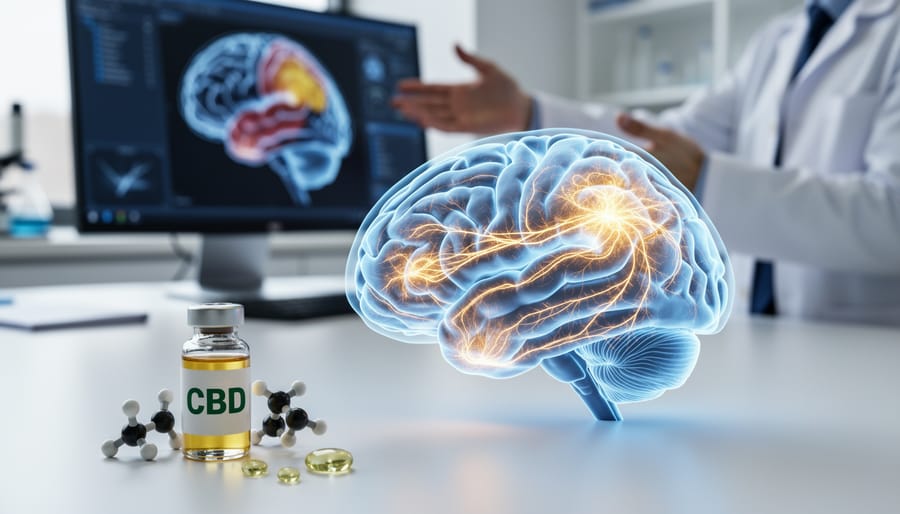
The Endocannabinoid System: Your Body’s Natural Calm-Down Network
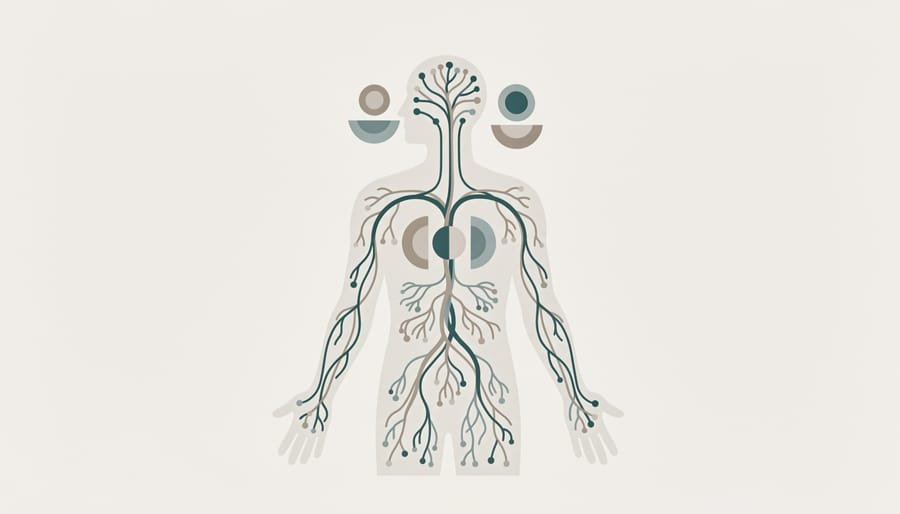
CB1 and CB2 Receptors: The Switches CBD Interacts With
Think of your body’s endocannabinoid system as having two main types of switches: CB1 and CB2 receptors. These receptors are proteins that sit on your cells, waiting for chemical messengers to activate them and trigger various responses throughout your body.
CB1 receptors are primarily found in your brain and central nervous system, particularly in areas that control mood, memory, and stress responses. They’re like the command center for regulating how you feel emotionally. CB2 receptors, on the other hand, are mostly located in your immune system and peripheral tissues, playing a bigger role in inflammation and immune responses.
Here’s where it gets interesting for anxiety management: while THC directly binds to these receptors (especially CB1, which is why it creates that “high” feeling), CBD takes a more indirect approach. It doesn’t actually fit into these receptor switches like a key in a lock. Instead, CBD modulates how these receptors work and influences the availability of your body’s own natural cannabinoids, called endocannabinoids.
This gentler interaction is one reason why CBD doesn’t produce intoxicating effects while still potentially supporting your body’s natural anxiety regulation processes.
Anandamide: Your Brain’s Built-In Bliss Molecule
Your brain produces its own cannabis-like compounds, and one of the most fascinating is anandamide. Named after the Sanskrit word “ananda” meaning bliss or joy, this naturally occurring endocannabinoid plays a crucial role in regulating your mood, memory, appetite, and pain perception.
Here’s the thing: anandamide doesn’t stick around long. Your body has an enzyme called FAAH (fatty acid amide hydrolase) that breaks it down pretty quickly, limiting its feel-good effects. This is where CBD enters the picture.
Research suggests that CBD may inhibit FAAH, essentially slowing down the breakdown of anandamide. When anandamide levels remain elevated in your system for longer periods, you may experience enhanced mood regulation and a greater sense of calm. Think of CBD as helping your brain hold onto its natural bliss molecule a bit longer.
I remember learning about this mechanism and finally understanding why some days I felt more balanced after taking CBD. It wasn’t introducing something foreign to my body, it was supporting what was already there, working with my endocannabinoid system rather than against it. This interaction is one reason researchers in Canada and worldwide are studying CBD’s potential for mood-related concerns.
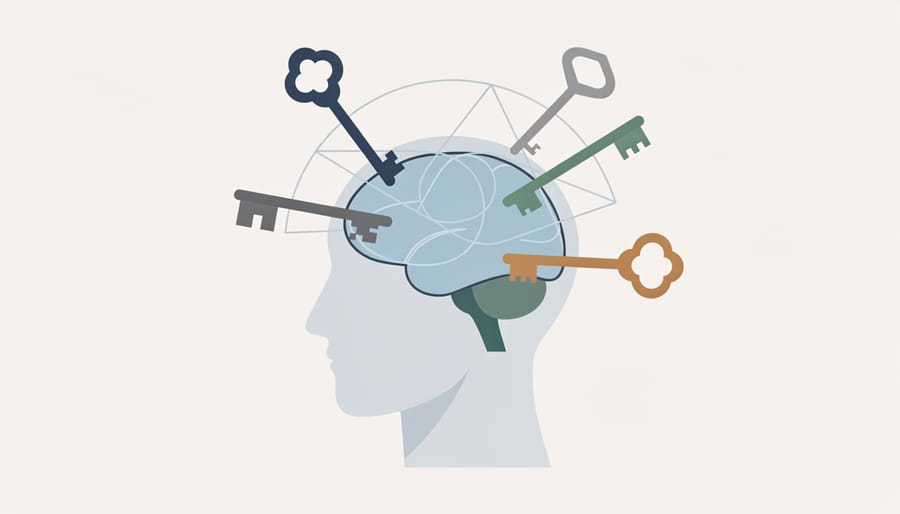
Five Ways CBD Interacts With Your Brain to Reduce Anxiety
Boosting Serotonin Signaling (Without Being an Antidepressant)
CBD interacts directly with your body’s serotonin system, specifically by activating 5-HT1A receptors in the brain. Think of these receptors as docking stations that help regulate mood, anxiety, and stress responses. When CBD binds to them, it triggers a calming effect that can help reduce anxious feelings without altering your brain chemistry in the way traditional antidepressants do.
Here’s what makes this mechanism particularly interesting: unlike SSRIs (selective serotonin reuptake inhibitors), which work by preventing serotonin breakdown and keeping more of it circulating in your system, CBD acts more like a temporary visitor. It activates the receptor, produces its effect, and moves on. This means you’re not fundamentally changing your serotonin levels or creating long-term dependency on the substance to maintain normal function.
Research from Canadian institutions, including studies at the University of Calgary, has shown this 5-HT1A activation contributes significantly to CBD’s anti-anxiety properties. The effect tends to be more subtle and fast-acting compared to SSRIs, which typically require weeks to build up in your system.
That said, because both CBD and SSRIs work within the serotonin system, there are important considerations about mixing CBD with anxiety medications. The interaction isn’t necessarily dangerous, but it warrants careful monitoring and professional guidance.
Slowing Down Anandamide Breakdown
One of CBD’s most interesting mechanisms involves a naturally-occurring compound in your body called anandamide, often referred to as the “bliss molecule.” Anandamide is an endocannabinoid that helps regulate mood, memory, and stress response. Under normal circumstances, your body produces anandamide when needed, but it doesn’t stick around very long. An enzyme called FAAH (fatty acid amide hydrolase) quickly breaks it down, limiting its calming effects.
Here’s where CBD steps in. Research shows that CBD inhibits FAAH, essentially slowing down the breakdown process. When FAAH can’t work as efficiently, anandamide remains active in your system for longer periods. Think of it like this: if anandamide is a helpful messenger delivering calm throughout your body, CBD is giving that messenger more time to complete its rounds before being recalled.
This extended presence of anandamide may contribute to CBD’s anxiety-reducing effects. While CBD doesn’t directly create euphoria or intoxication like THC, this gentle preservation of your body’s own calming compounds offers a more subtle, sustained sense of balance. For Canadians exploring CBD for anxiety management, understanding this mechanism helps explain why effects might feel natural rather than dramatic—you’re essentially supporting what your body already does, just allowing it to work more effectively.
Promoting Neurogenesis in the Hippocampus
Here’s something that genuinely excites researchers: CBD may actually help grow new brain cells in the hippocampus, a region crucial for memory formation and emotional regulation. This process, called neurogenesis, tends to decline when we’re dealing with chronic stress and anxiety.
When I first learned about this, I’ll admit I was skeptical. New brain cells? It sounded too good to be true. But studies, including research conducted at Canadian institutions, show that CBD can promote the birth and survival of neurons in this critical brain area. Think of it as maintaining your brain’s ability to adapt and heal itself.
This is particularly important for anxiety sufferers because chronic stress actually shrinks the hippocampus over time. It’s like your brain’s emotional control centre getting smaller and less effective. By supporting neurogenesis, CBD may help reverse some of this damage, potentially explaining why some people notice improvements in both mood and cognitive function after consistent use.
While we’re still learning the exact mechanisms, scientists believe CBD’s interaction with serotonin receptors and its anti-inflammatory properties both play roles in stimulating this cell growth. It’s a slower process than immediate anxiety relief, which is why consistency matters when using CBD for long-term mental health support.
Modulating the Stress Response System
When you’re feeling overwhelmed, your body’s stress response system kicks into high gear. The hypothalamic-pituitary-adrenal (HPA) axis – essentially your body’s stress control centre – triggers the release of cortisol, often called the stress hormone. While this response is helpful in short bursts, chronic activation can lead to anxiety, sleep problems, and other health issues.
CBD appears to help regulate this system, acting like a volume dial that turns down an overactive stress response. Research suggests CBD can influence how much cortisol your body releases during stressful situations. Instead of experiencing those intense cortisol spikes that leave you feeling jittery and anxious, CBD may help maintain more balanced levels.
I’ve heard from many Canadians who describe feeling less “reactive” to daily stressors after incorporating CBD into their routines – that overwhelming sense of panic when facing a deadline or difficult conversation becomes more manageable.
The mechanism involves CBD’s interaction with receptors in the hypothalamus and pituitary gland, potentially reducing the signals that trigger excessive cortisol production. Think of it as helping your stress thermostat recalibrate to a healthier set point. This doesn’t mean CBD eliminates stress entirely (some stress is actually beneficial), but rather helps prevent the overreaction that characterizes anxiety disorders.
Reducing Inflammation in the Brain
Chronic inflammation in the brain, known as neuroinflammation, has emerged as a significant contributor to anxiety disorders. When your brain experiences ongoing inflammatory responses, it can disrupt neurotransmitter balance and affect how your nervous system regulates mood and stress responses. Think of it like having a persistent low-grade irritation that makes your neural pathways more reactive to everyday stressors.
CBD demonstrates notable anti-inflammatory properties specifically in neural tissue. It works by interacting with immune cells in the brain called microglia, which are responsible for inflammatory responses. When these cells become overactive, they release pro-inflammatory molecules that can worsen anxiety symptoms. CBD appears to calm this overactivity, reducing the production of these inflammatory signals.
Research from Canadian institutions has shown promising results in this area. CBD’s ability to reduce neuroinflammation may explain why some people experience not just temporary symptom relief, but improvements that build over time with consistent use. I’ve spoken with several Canadians who noticed their anxiety responses became less intense after weeks of regular CBD use, which aligns with this anti-inflammatory mechanism rather than just immediate neurotransmitter effects.
This inflammation-reducing action provides another layer to understanding how CBD addresses anxiety at its root causes.
What the Research Actually Shows (Canadian Context)
The research on CBD for anxiety is evolving, and here in Canada, it’s important to understand what studies actually demonstrate versus what marketing might suggest.
Most human trials investigating CBD’s anxiolytic effects have used single, relatively high doses in controlled settings. A frequently cited Brazilian study from 2011 gave participants with social anxiety disorder 600mg of CBD before a simulated public speaking test, showing reduced anxiety compared to placebo. Another study from 2019 examined 72 adults with anxiety or sleep concerns using 25-75mg daily doses, with mixed results over three months.
What’s notable is the gap between research dosages and what many Canadians actually use. Clinical studies often employ 300-600mg per dose, while commercially available products typically contain 10-50mg per serving. This discrepancy makes direct comparison challenging.
Health Canada has approved Epidiolex, a CBD medication for specific epilepsy conditions, but hasn’t authorized CBD products for anxiety treatment specifically. The agency acknowledges CBD’s interaction with serotonin receptors and other systems, but stops short of endorsing anxiety-related health claims. This regulatory position reflects the current evidence: promising preliminary findings that require more robust, long-term human trials.
When I speak with readers about research interpretation, I always emphasize context. Many studies are small, short-term, or conducted under conditions quite different from daily CBD use. A single 600mg dose before a stressful event isn’t equivalent to taking 20mg daily in your morning coffee. We need more research examining typical consumer usage patterns.
It’s also worth considering individual variation. Some studies show significant anxiety reduction, others find minimal effects, and researchers are still working to understand why CBD helps some people but not others. Factors like genetics, specific anxiety type, and concurrent medications (which is why understanding CBD and anxiety medications is crucial) all likely play roles.
My perspective after reviewing available research? CBD shows genuine potential for anxiety management, but we’re still in early chapters of understanding optimal dosing, who benefits most, and long-term effects. The mechanism of action research provides plausible biological explanations, but plausibility isn’t the same as proven efficacy across diverse populations and real-world conditions.
Why This Matters for Your CBD Choices
Full-Spectrum vs. Isolate: The Entourage Effect Connection
Understanding CBD’s mechanisms reveals why full-spectrum products often differ from isolates when addressing anxiety. Full-spectrum CBD contains multiple cannabinoids, terpenes, and flavonoids working together, while CBD isolate is pure cannabidiol with nothing else.
When I first tried both types, I noticed the full-spectrum version had a more pronounced calming effect. The science backs this up through what researchers call the “entourage effect.” Since CBD’s anxiolytic properties rely on interactions with various receptors, having additional compounds present can enhance or modulate these interactions. For instance, minor cannabinoids like CBG may influence GABA receptors differently than CBD alone, while terpenes like linalool have their own anxiety-reducing properties.
Think of it like an orchestra versus a solo performance. CBD isolate is one instrument playing beautifully, but full-spectrum is the entire ensemble creating a richer, more complex sound. The multiple compounds may work synergistically at serotonin receptors, enhance endocannabinoid system function, and provide additional anti-inflammatory benefits.
In Canada, both options are legally available, so your choice depends on personal preference, desired effects, and whether you need to avoid even trace amounts of THC (under 0.3% in full-spectrum products). Many users report better anxiety relief with full-spectrum, though individual responses vary considerably.
Why Timing and Consistency Matter
Understanding CBD’s mechanisms helps explain why consistency matters more than you might think. Unlike medications that work immediately, CBD influences your endocannabinoid system gradually, building up its regulatory effects over time. Think of it like taking a probiotic—one dose won’t transform your gut health, but regular use supports your body’s natural balance.
When I first started using CBD for my own anxiety, I expected instant results. What I discovered instead was that taking it at the same time daily created a baseline level of support. This consistency allows CBD to maintain steady interaction with your serotonin and GABA receptors, rather than creating peaks and valleys in your system.
Timing also connects to CBD’s interaction with your body’s natural rhythms. Many Canadians find morning doses helpful for daytime anxiety, while evening use supports the sleep-related benefits we discussed earlier. Because CBD can have potential drug interactions, maintaining a consistent schedule also makes it easier to coordinate with other medications you’re taking.
Understanding how CBD works in your brain isn’t just about satisfying curiosity—it’s about empowering yourself to make informed decisions about your wellness. As we’ve explored, CBD takes a truly multi-faceted approach, interacting with serotonin receptors, modulating the endocannabinoid system, influencing GABA activity, and even protecting your brain cells from oxidative stress. It’s not a simple on-off switch, but rather a complex orchestration of different pathways working together.
My personal takeaway after diving deep into these mechanisms? Knowledge really is power when it comes to CBD use. When I understood that CBD works gradually through multiple systems rather than providing instant relief like a pharmaceutical, I adjusted my expectations and found much better results. I learned patience, tracked my responses more carefully, and recognized that consistency matters.
That said, this complexity is exactly why it’s so important to consult with healthcare providers before starting CBD, especially if you’re taking other medications. Understanding potential CBD and hydroxyzine interactions or similar concerns can prevent unwanted effects and optimize your experience.
Remember too that in Canada, you have access to regulated, quality-tested CBD products—an advantage that supports safer experimentation. Armed with this understanding of how CBD works, you’re better positioned to choose appropriate products, dosages, and timing. Your journey with CBD can be both scientifically grounded and personally meaningful when approached with knowledge and professional guidance.