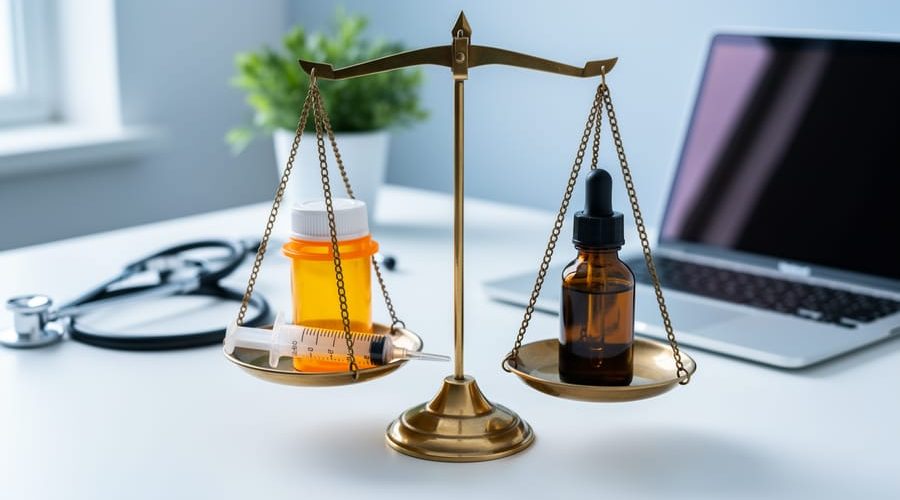
Understand that converting Epidiolex to over-the-counter CBD isn’t a simple math problem. Epidiolex contains 100mg of CBD per milliliter in a pharmaceutical-grade formulation designed for maximum absorption, while standard CBD oils vary wildly in bioavailability—meaning your body might absorb only 6-15% of the CBD in a typical oil compared to 30-40% from Epidiolex. This difference means a 10mg Epidiolex dose doesn’t equal 10mg of CBD oil; you’ll likely need 2-4 times more CBD from an over-the-counter product to achieve similar effects.
Calculate your baseline by determining your current Epidiolex dose in total daily milligrams. If you’re taking 5ml twice daily of Epidiolex (100mg/ml), that’s 1000mg of CBD per day. To approximate this with standard CBD oil, multiply by 2.5 as a conservative starting factor, suggesting you’d need roughly 2500mg daily from a quality full-spectrum CBD oil—though this varies significantly based on the product’s formulation and your individual metabolism.
Here’s the reality I’ve learned through years of helping Canadians navigate CBD transitions: this isn’t a precise science. Epidiolex underwent rigorous clinical trials and FDA approval for specific seizure disorders, while Health Canada regulates over-the-counter CBD products differently. No commercial calculator can account for the dramatic variations in absorption between pharmaceutical-grade Epidiolex and the CBD oils available at your local dispensary or health food store.
Start any transition under medical supervision, particularly if you’re managing epilepsy or another serious condition. Your neurologist needs to monitor seizure frequency and adjust dosing based on your response, not theoretical calculations. Many Canadians attempt these conversions due to Epidiolex’s cost—often exceeding $2000 monthly even with insurance—but safety must remain the priority throughout any medication change.
What Is Epidiolex and Why Use It as a Baseline?
The Pharmaceutical Standard
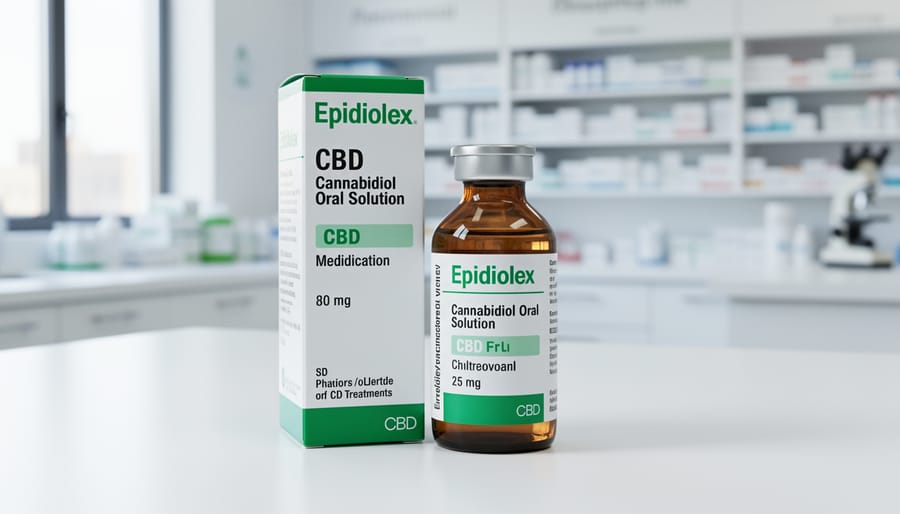
Epidiolex stands apart from the CBD oil you’ll find at your local dispensary or health food store in Canada, and understanding these differences is crucial before attempting any dose calculations. As someone prescribed Epidiolex, you’re receiving a pharmaceutical-grade medication that has undergone rigorous clinical trials and received approval from Health Canada. Each bottle contains exactly what the label promises: a precise concentration of cannabidiol that’s been tested for purity, potency, and consistency.
Over-the-counter CBD products, while legal in Canada, don’t face the same stringent requirements. A bottle labeled as containing 1000mg of CBD might actually contain more or less than stated, and quality can vary significantly between batches and brands. Epidiolex has been tested in controlled clinical environments specifically for seizure disorders, with dosing protocols established through years of research. This standardization means your doctor can confidently prescribe a specific milligram amount knowing exactly what you’re receiving.
When patients come to me asking about switching to over-the-counter alternatives to save money, I always emphasize this fundamental difference. You’re not just comparing CBD to CBD; you’re comparing a regulated pharmaceutical product to supplements with variable quality control.
Epidiolex in Canada: What You Need to Know
In Canada, Epidiolex isn’t as readily available as you might hope. Health Canada approved Epidiolex in 2020, but it’s designated as a prescription medication specifically for two rare forms of epilepsy: Lennox-Gastaut syndrome and Dravet syndrome. This means your doctor can’t simply prescribe it for general anxiety or sleep issues, even though CBD might help with those conditions.
I learned this the hard way when a friend asked me about getting Epidiolex for her migraines. Her neurologist explained that because it’s not approved for that condition, insurance wouldn’t cover it, and the out-of-pocket cost would be astronomical—we’re talking thousands of dollars monthly.
If you’ve been prescribed Epidiolex and are exploring alternatives due to cost or availability challenges, you’re not alone. Many Canadians in this situation consider transitioning to legal CBD oils available through licensed retailers or the medical cannabis system. However, this requires careful consideration because over-the-counter CBD products haven’t undergone the same rigorous pharmaceutical testing as Epidiolex.
Health Canada distinguishes between pharmaceutical-grade CBD like Epidiolex and cannabis-derived CBD products. The regulatory standards differ significantly, which is why working with your healthcare provider during any transition is essential for maintaining therapeutic benefits safely.
Understanding CBD Bioavailability: The Missing Piece
What Bioavailability Actually Means
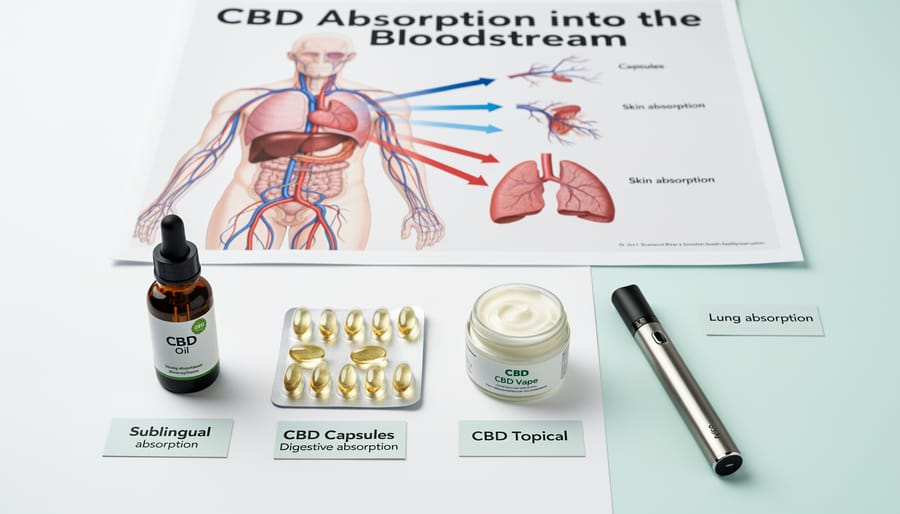
Bioavailability is simply the percentage of CBD that actually makes it into your bloodstream where it can work in your body. When you take CBD, not all of it gets absorbed. Think of it like this: if you consume 100mg of CBD, depending on how you take it, only a portion might actually reach your system to provide therapeutic effects.
Epidiolex, the prescription CBD medication approved in Canada, has been specifically formulated for consistent absorption. When you take Epidiolex orally, approximately 6-19% of the CBD reaches your bloodstream. This might sound low, but pharmaceutical companies have optimized the formula to ensure predictable results.
Over-the-counter CBD products vary significantly in bioavailability. CBD oils taken under the tongue might have 12-35% bioavailability, while edibles might be as low as 4-12% because they must pass through your digestive system first. Vaping offers higher bioavailability but comes with different considerations.
This is why you cannot simply match the milligram amount on an Epidiolex prescription to a CBD oil bottle and expect the same results. The actual amount entering your bloodstream differs dramatically. To calculate your real dose, you need to account for these bioavailability differences, which is exactly what proper dose conversion helps you understand.
Why Different CBD Products Have Different Bioavailability
Not all CBD products deliver the same amount of cannabidiol to your bloodstream, even when the label shows identical milligram amounts. Understanding CBD bioavailability is essential when trying to match an Epidiolex dose with over-the-counter alternatives.
The delivery method makes the biggest difference. When you swallow CBD oil or capsules, they pass through your digestive system and liver before reaching your bloodstream—a process called the first-pass effect that reduces absorption significantly. Epidiolex, which is swallowed, has a bioavailability of roughly 13-19% when taken with food. In contrast, products placed under your tongue bypass some of this filtering, while inhaled CBD enters your bloodstream most directly.
Your individual metabolism also plays a role. Factors like body weight, digestive health, what you’ve eaten recently, and even your unique genetic makeup affect how efficiently your body processes CBD.
The formulation matters too. CBD mixed with certain fats or oils absorbs better than products without these carriers. This is why Epidiolex contains sesame oil and why many Canadian CBD products use MCT oil as a base—these fats help your body absorb the cannabidiol more effectively.
Bioavailability by CBD Product Type
Understanding bioavailability is essential when comparing Epidiolex to other CBD products. Bioavailability refers to how much CBD actually enters your bloodstream and becomes available for your body to use.
Here’s how different product types compare:
Epidiolex (oral solution with food): 13-19% bioavailability. This pharmaceutical formulation is specifically designed to be taken with high-fat meals, which significantly increases absorption.
CBD oils and tinctures (swallowed): 6-15% bioavailability. When you swallow CBD oil directly, much of it breaks down in your digestive system before reaching your bloodstream.
Sublingual oils (held under tongue): 12-35% bioavailability. Holding oil under your tongue for 60-90 seconds allows CBD to absorb through mucous membranes, bypassing digestion.
Capsules and edibles: 4-20% bioavailability. These pass through your entire digestive system, resulting in lower and more variable absorption.
Vaporized products: 25-40% bioavailability. Inhaling delivers CBD directly to your lungs for rapid absorption, though this method isn’t common in Canada for medical CBD use.
Topical products: Less than 1% systemic bioavailability. These work locally on skin and don’t enter the bloodstream significantly.
This wide variation explains why you can’t simply match milligram-for-milligram when switching between products. A 100mg dose of one product type may not equal 100mg of another in terms of actual CBD absorbed.
How to Calculate Epidiolex-Equivalent Doses
The Basic Formula Explained
Understanding how to convert Epidiolex doses to other CBD products starts with grasping one essential concept: bioavailability. This term describes how much of a substance actually enters your bloodstream and becomes available to your body. When it comes to calculating CBD doses, bioavailability makes all the difference.
The basic conversion formula looks like this: Target Dose × Epidiolex Bioavailability ÷ Product Bioavailability = Equivalent Dose.
Let me break down each component for you. Your target dose is the amount of Epidiolex your doctor prescribed, typically measured in milligrams of CBD. Epidiolex bioavailability refers to how efficiently this pharmaceutical-grade product delivers CBD to your system. Since it’s an oral solution designed for maximum absorption, Epidiolex has relatively high bioavailability compared to many over-the-counter options.
Product bioavailability is where things get interesting. Different CBD products have vastly different absorption rates. CBD oil drops, capsules, edibles, and sublingual tinctures all deliver CBD differently. A tincture held under your tongue absorbs more efficiently than a gummy you swallow, for instance.
Here’s why this matters: if you’re taking 100mg of Epidiolex and want to switch to a CBD oil with lower bioavailability, you’ll actually need more than 100mg of that oil to achieve the same therapeutic effect. The formula accounts for this difference, ensuring you’re getting equivalent therapeutic CBD amounts regardless of the delivery method you choose.
Worked Examples with Common CBD Products
Let me walk you through three realistic scenarios to help you understand how Epidiolex doses translate to common CBD products available in Canada.
Example 1: Converting to CBD Oil Tincture
Sarah’s neurologist prescribed 300mg of Epidiolex daily (150mg twice per day). She’s interested in trying a more affordable alternative. She finds a Canadian CBD oil tincture with 30mg CBD per mL.
First, we account for bioavailability differences. Epidiolex has roughly 13-19% bioavailability when taken with food, while most oil tinctures have around 6-15%. To be conservative, Sarah calculates she needs approximately 350-400mg of CBD from the tincture to match her Epidiolex dose.
Using a product with 30mg/mL, she’d need about 12-13mL daily, divided into two doses. However, understanding the actual CBD content in her chosen product is essential before making this switch.
Example 2: Converting to CBD Capsules
Michael takes 200mg of Epidiolex daily and prefers the convenience of capsules. He finds capsules containing 25mg CBD each.
Accounting for similar bioavailability challenges, he’d need approximately 240-280mg from capsules. This means taking 10-11 capsules daily, which becomes expensive and impractical. This example shows why capsules may not always be the best Epidiolex alternative despite their convenience.
Example 3: Converting to Sublingual Strips
Jennifer uses 100mg Epidiolex daily and discovers sublingual strips with 10mg CBD each. Sublingual products have higher bioavailability (up to 20-30%), potentially making them more efficient than oils.
She might need only 80-120mg from sublingual strips, meaning 8-12 strips daily. The improved absorption partially offsets the cost difference.
Remember, these are educational examples only. Always consult your healthcare provider before making any changes to prescribed medications.
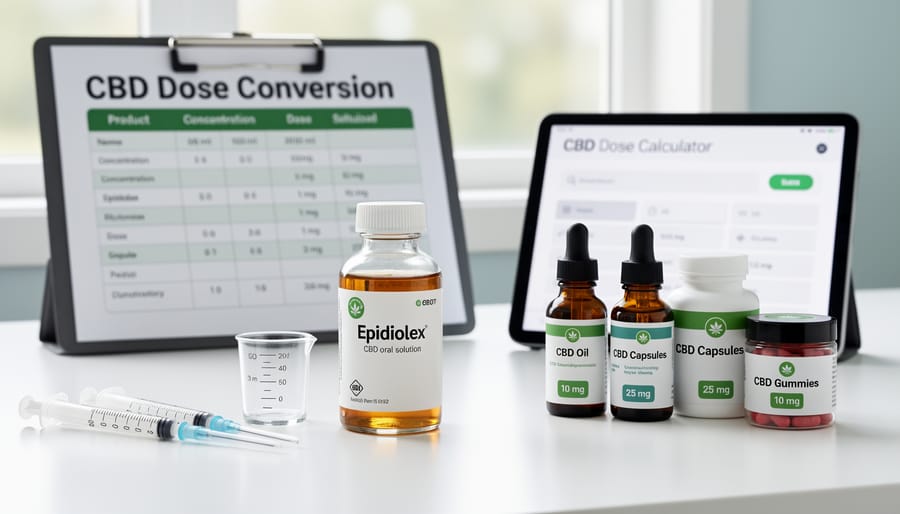
Important Factors That Affect Your Personal Calculation
Your personal dosing needs depend on several key factors that make simple conversions tricky. Body weight plays a significant role, as Epidiolex prescriptions are typically calculated in milligrams per kilogram. A 50kg person will require a different dose than someone who weighs 90kg.
Metabolism also matters considerably. Some people process CBD quickly, needing higher or more frequent doses, while others metabolize it slowly. This varies based on genetics, liver function, and other medications you’re taking.
Taking CBD with food significantly increases absorption, sometimes doubling bioavailability. Epidiolex studies showed better results when taken with high-fat meals. This means your timing and eating habits directly impact how much CBD actually reaches your system, making consistent routines important for predictable results.
Using a CBD Bioavailability Calculator: Practical Tips
What Information You’ll Need
Before you start working with any dose calculator, it’s helpful to gather a few key pieces of information. Having these details ready will make the process much smoother and help ensure you get accurate results.
First, you’ll need your current Epidiolex dose. This should be the amount prescribed by your doctor, typically measured in milligrams (mg) per day. If you’re taking it twice daily, you’ll want the total daily amount.
Next, identify what type of CBD product you’re considering switching to or comparing. Are you looking at CBD oils, capsules, or another format? Different product types have different absorption rates, which affects CBD dose calculations.
You’ll also need to know the CBD concentration of your target product. This is usually listed on the label as milligrams per milliliter for oils, or milligrams per capsule for other formats. Canadian products must display this information clearly.
Finally, consider timing factors. Think about when you currently take Epidiolex and whether your new product needs to fit a similar schedule. Some CBD products work better with food, while others don’t, which can impact absorption and effectiveness.
Interpreting Your Results
When you use a dose calculator, remember that the results are starting points, not exact prescriptions. Think of them as educated suggestions rather than medical directives. The calculator provides an estimate based on typical bioavailability differences between Epidiolex and standard CBD oils, but your body’s unique response might vary considerably.
I’ve seen many people new to CBD conversion expect immediate one-to-one equivalency, but it simply doesn’t work that way. Your age, metabolism, body weight, diet, and even the specific CBD product you choose all influence how much actually reaches your bloodstream. This is why doctors emphasize the “start low and go slow” approach.
The calculator output should represent your starting dose, typically at the lower end of the suggested range. From there, you’ll need to monitor your response over several days or weeks before making adjustments. Keep detailed notes about your dosing schedule, any effects you notice, and how you’re feeling overall. This record becomes invaluable when working with your healthcare provider to fine-tune your regimen.
Never adjust your Epidiolex prescription or switch to over-the-counter CBD products without your doctor’s guidance. In Canada, while CBD is legal and accessible, transitioning from prescription medication requires medical supervision to ensure safety and effectiveness.
Real-World Application: Danielle’s Experience
I’ve worked with dozens of Canadians trying to figure out CBD dosing after being prescribed Epidiolex or considering it as an option, and I can tell you the most common mistake I see: assuming all CBD products work the same way. Just last month, I helped a reader named Sarah who was spending nearly $800 monthly on her son’s Epidiolex prescription. She’d bought a high-strength CBD oil from a local dispensary, figured out the mg-to-mg math, and assumed she could make a direct switch. Within days, she noticed the seizure control wasn’t the same.
The problem? She’d purchased a full-spectrum oil when her calculations were based on pure CBD isolate content. We had to backtrack and account for not just the THC content (which matters under Canadian regulations) but also the difference in absorption rates between pharmaceutical-grade Epidiolex and her over-the-counter product.
Here’s what I’ve learned from our community: start with about 4 to 5 times the Epidiolex dose when using standard CBD oils, but treat that as your starting point, not your destination. Keep a detailed symptom diary for at least two weeks. One reader discovered her particular product required closer to a 6:1 ratio to achieve similar results, while another found success at 3.5:1 with a liposomal formula.
Another mistake? Forgetting to check with your prescribing doctor. In Canada, many neurologists are surprisingly open to these conversations, especially when cost is a barrier. Some will even help monitor your transition, which is invaluable for safety. Never make these switches alone, particularly if you’re managing epilepsy or another serious condition.
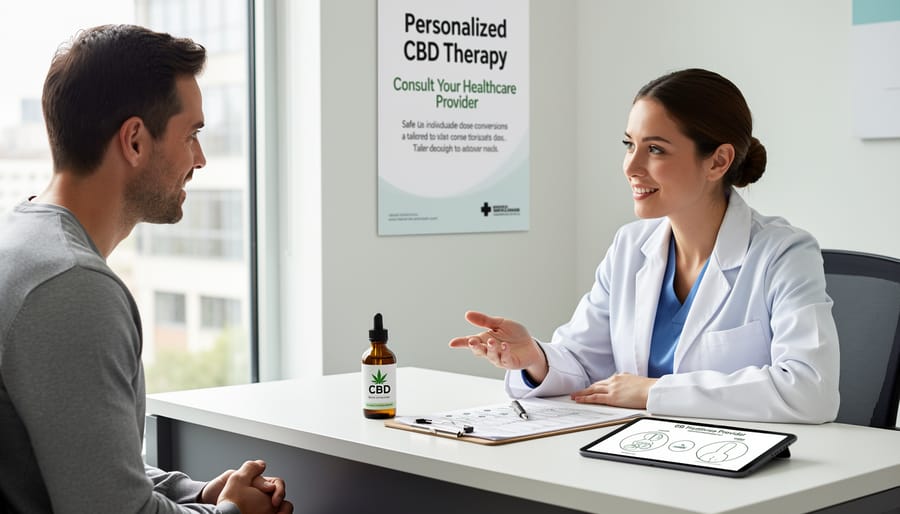
Safety Considerations and When to Consult a Healthcare Provider
Red Flags That Require Medical Guidance
While I’m all for empowering people to make informed decisions about their CBD use, there are situations where attempting dose conversions on your own simply isn’t safe. If you’re currently taking Epidiolex for epilepsy or any seizure disorder, please don’t try to switch to over-the-counter CBD products without your neurologist’s guidance. Seizure management is too critical to experiment with, and your doctor needs to monitor any medication changes closely.
Similarly, if you’re pregnant or breastfeeding, children requiring treatment, or anyone taking multiple medications, professional medical supervision is essential. Drug interactions with CBD can be significant, particularly with blood thinners, certain antidepressants, and other seizure medications. High-dose CBD therapy (above 20mg/kg/day) also requires medical oversight to monitor liver function and watch for potential side effects.
I understand that cost and accessibility issues drive many Canadians to consider alternatives, but your safety comes first. If Epidiolex costs are a concern, talk with your doctor about compassionate access programs or alternative treatment plans rather than self-substituting. Some situations genuinely require pharmaceutical-grade precision and medical monitoring, and this is definitely one of them.
Finding CBD-Knowledgeable Healthcare Providers in Canada
Finding a healthcare provider who understands CBD can feel challenging, but it’s an important step when you’re considering CBD as an alternative to prescription medications like Epidiolex. I’ve learned through my own journey that not all doctors are equally informed about cannabinoid therapies, and that’s okay – it’s still an evolving field.
When approaching your doctor about CBD, come prepared with specific questions. Bring information about the product you’re considering, including the CBD concentration, carrier oil, and third-party lab results. Be honest about your reasons for exploring CBD, whether it’s due to cost concerns with Epidiolex or accessibility issues.
If your current doctor isn’t knowledgeable about CBD, don’t be discouraged. In Canada, you can look for healthcare providers who list cannabis or cannabinoid medicine as part of their practice. The Canadian Consortium for the Investigation of Cannabinoids has a directory of clinicians with cannabinoid expertise. Medical cannabis clinics across Canada often employ doctors familiar with CBD dosing, even for non-THC products.
Pharmacists can also be valuable resources. Many Canadian pharmacists have taken additional training in cannabinoid therapies and can help you understand product labels and potential drug interactions. Building a relationship with a knowledgeable healthcare provider ensures you’re making informed, safe decisions about CBD use.
Understanding bioavailability and dose conversion between Epidiolex and other CBD products is ultimately about setting yourself up for success. I’ve walked many people through this process, and the most important thing I’ve learned is that these calculations are your starting point, not your final destination. Think of them as educational guideposts rather than rigid prescriptions.
The math behind converting doses based on bioavailability differences might seem daunting at first, but remember that you’re simply accounting for how efficiently different products deliver CBD to your bloodstream. Epidiolex’s pharmaceutical-grade oral solution has a known bioavailability that differs significantly from oils, capsules, or other CBD formats you might find in Canadian stores. That’s why a direct milligram-to-milligram swap rarely works as expected.
What I always tell people is this: approach your conversion methodically. Start with the calculated equivalent dose, then be prepared to adjust based on your personal response. Your body’s unique metabolism, the specific product you choose, and even factors like when you take it with food can all influence your results. This isn’t a reflection of doing something wrong; it’s simply the reality of working with a compound that affects everyone differently.
Keep detailed notes during your transition period, work closely with your healthcare provider, and give yourself permission to fine-tune as needed. You’re not alone in this process, and taking it slowly is always the smarter, safer choice.