
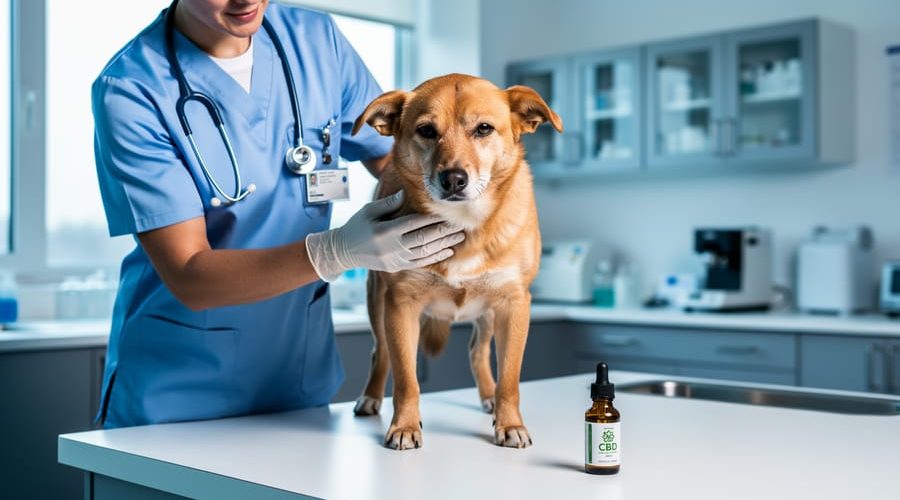
Understand that evidence-based veterinary medicine means your pet’s CBD treatment should rely on peer-reviewed research, not testimonials from your neighbour or Instagram influencers. Veterinarians trained in this approach systematically evaluate scientific studies to determine what actually works, examining data from controlled trials rather than marketing claims or isolated success stories.
Recognize the current reality: CBD research in veterinary medicine remains limited compared to human studies, with most rigorous trials focusing on dogs rather than cats or other companion animals. The studies that do exist typically involve small sample sizes and short durations, meaning your veterinarian is working with incomplete information when making dosing recommendations.
Expect your vet to discuss specific dosing ranges derived from published research—typically 1-5 mg of CBD per kilogram of your pet’s body weight, administered once or twice daily. These numbers come from actual clinical trials measuring outcomes like pain reduction and seizure frequency, not from product manufacturers suggesting doses that happen to align with their bottle sizes.
Prepare for honest conversations about what science doesn’t yet know. Your veterinarian should acknowledge research gaps around long-term safety, optimal dosing for specific conditions, drug interactions, and whether the CBD product you’re considering contains what its label claims. In Canada, where veterinary CBD products exist in a regulatory grey zone, this evidence-based approach becomes even more critical for protecting your pet’s health while navigating an unregulated market filled with inconsistent products.
What Evidence-Based Veterinary Medicine Actually Means
When I first started researching CBD for my anxious rescue dog, I was overwhelmed by conflicting advice. One website swore by doses that another claimed were dangerous. Friends shared what worked for their pets, but nothing seemed grounded in actual science. That’s when I discovered evidence-based veterinary medicine, and it changed everything.
Evidence-based veterinary medicine means making treatment decisions based on the best available scientific research, combined with clinical expertise and individual patient needs. Instead of relying on “what everyone says works” or “how we’ve always done things,” this approach demands actual data from controlled studies. For something as new as CBD for pets, this distinction is crucial.
Think of it this way: your neighbour might genuinely believe CBD cured their cat’s arthritis, but without controlled conditions, we can’t know if it was the CBD, a change in weather, natural improvement, or something else entirely. Evidence-based medicine removes these variables through rigorous testing.
In veterinary research, evidence exists on a hierarchy. At the top sit randomized controlled clinical trials, where animals are randomly assigned to receive either CBD or a placebo, and researchers measure specific outcomes without knowing which animals received what. These studies provide the most reliable data. Next come peer-reviewed studies published in scientific journals, where other experts scrutinize the methodology before publication. Lower on the hierarchy are case reports describing individual animals and case series tracking small groups, which offer insights but less certainty.
For CBD specifically, this hierarchy matters enormously. The pet CBD market is flooded with products making bold claims based on testimonials alone. In Canada, where Health Canada doesn’t currently approve CBD products for animal use, understanding what’s actually proven versus what’s marketed becomes even more important for responsible pet owners.
When veterinarians discuss evidence-based dosing, they’re referring to amounts tested in these controlled studies, not guesswork or manufacturer recommendations designed to sell more product.

The Current State of CBD Research for Dogs and Cats
What the Clinical Trials Tell Us
When I first started researching CBD for my own dog, I was shocked at how few rigorous clinical trials actually existed. But the good news is that veterinary research has grown significantly in recent years, giving us some solid data to work with.
The most frequently cited study comes from Cornell University, published in 2018, which examined CBD for osteoarthritis pain in dogs. Researchers used 2 mg/kg twice daily and found significant pain reduction with increased activity levels. Dogs in the study showed noticeable improvement in their pain scores, and the dosage was generally well-tolerated. This study is often referenced because it used proper placebo controls and objective measurements.
For seizure management, a 2019 Colorado State University study tested CBD as an add-on treatment for epileptic dogs. They used 2.5 mg/kg twice daily and found that 89 percent of dogs experienced reduced seizure frequency. While these results are promising, researchers noted that CBD worked best alongside traditional anti-seizure medications rather than as a standalone treatment.
Research on anxiety in pets remains limited but emerging. A 2020 study examining CBD for noise phobia and anxiety-related behaviors tested doses ranging from 1.4 to 4 mg/kg. Results showed modest improvements in stress behaviors, though researchers acknowledged that measuring anxiety objectively in animals presents unique challenges.
For cats, the research landscape is even sparser. A 2022 pharmacokinetic study established that cats metabolize CBD differently than dogs, suggesting they may need different dosing approaches. However, specific efficacy studies for feline conditions are still in early stages.
The consistent theme across these studies is that doses typically ranged from 1 to 5 mg/kg of body weight, given once or twice daily. Importantly, most trials lasted only a few weeks, so we still lack long-term safety data beyond a couple of months.

Why Most Vets Can’t Give You a Definitive Answer
If you’ve asked your veterinarian about CBD dosing for your pet and received a frustratingly vague response, you’re not alone. Most Canadian vets genuinely want to help, but they’re navigating a regulatory minefield that severely limits what vets can’t say about cannabis products.
In Canada, CBD products for pets exist in a legal grey area. Health Canada hasn’t approved any veterinary CBD products, which means vets risk professional sanctions if they prescribe or even recommend specific products or doses. Provincial veterinary colleges have issued cautious guidance that essentially tells vets to tread carefully or stay silent altogether.
Beyond the legal restrictions, there’s the research gap. While human CBD studies have expanded significantly, veterinary research remains limited. Most existing studies involve small sample sizes, and long-term safety data is practically non-existent. Your vet isn’t being difficult when they say they can’t give you a definitive answer—they’re being honest about the current state of the science.
This puts vets in an impossible position. They see the potential benefits based on emerging research and client reports, but they can’t ethically recommend something without solid evidence or regulatory approval. They also worry about liability if something goes wrong.
The result? Many vets offer general information about CBD but stop short of specific recommendations, leaving pet owners to navigate dosing decisions largely on their own while trying to interpret limited research.
Evidence-Based Dosing Guidelines: What Science Currently Supports
Dosing for Dogs: The Research-Backed Ranges
When I first started researching CBD dosing for my own dog, I was frustrated by how often I’d see “start low and go slow” without any actual numbers. Let me share what the published veterinary studies actually say about dosing ranges.
For arthritis and pain management, the most cited research comes from Cornell University and Colorado State University studies. These trials used 2 mg/kg twice daily as their standard dose. In practical terms, that means a 10 kg (22 lb) dog would receive 20 mg per dose, while a 30 kg (66 lb) dog would get 60 mg per dose. Some studies have explored up to 8 mg/kg daily (split into two doses) for more severe pain, though most veterinarians recommend starting at the lower end.
Anxiety-related dosing tends to be slightly lower. Published research typically uses 1-2 mg/kg once or twice daily for situational anxiety. For a 15 kg (33 lb) dog experiencing separation anxiety or noise phobias, this translates to 15-30 mg per dose. One study on noise aversion in dogs used a single 4 mg/kg dose given before the stressful event.
Seizure management represents the highest dosing range in current research. A 2019 Colorado State study used 2.5 mg/kg twice daily as their treatment dose for epileptic dogs, while some clinical trials have explored up to 5 mg/kg twice daily. This means a 20 kg (44 lb) dog with seizures might receive 50-100 mg per dose under veterinary supervision.
It’s important to understand that these are research doses used in controlled studies, not necessarily starting recommendations. Most Canadian veterinarians familiar with CBD suggest beginning at the lower end of these ranges and gradually increasing based on response. Also worth noting: these studies used full-spectrum hemp extracts with consistent CBD concentrations, not treats with variable dosing or unverified products.
Always calculate dosing based on your dog’s weight and the CBD concentration in your specific product to ensure accuracy.
Dosing for Cats: What We Know (And Don’t Know)
If dosing research for dogs is limited, the picture for cats is even more sparse. This is frustrating for cat owners, but it’s important to acknowledge where the science currently stands rather than make assumptions based on canine data.
Cats metabolize substances quite differently from dogs. Their unique liver metabolism and smaller body size mean we can’t simply scale down dog doses and expect safe, effective results. Unfortunately, very few published studies have specifically examined CBD dosing in cats.
The limited feline research that does exist has explored doses ranging from approximately 2 mg/kg to 4 mg/kg given twice daily for conditions like osteoarthritis. A 2022 study looking at CBD for feline osteoarthritis used 2 mg/kg twice daily and found it generally well-tolerated, though the study was small. Other preliminary research has examined similar ranges for various conditions, but the evidence base remains quite thin.
Given this research gap, many veterinarians recommend starting conservatively if pursuing CBD for cats. A common starting point mentioned in veterinary literature is 1-2 mg/kg once or twice daily, with careful monitoring for both effects and side effects. This cautious approach makes sense when working with limited data.
I’ve spoken with cat owners in Canada who’ve felt stuck between wanting to help their arthritic senior cats and feeling uncertain about dosing without solid research. That hesitation is completely reasonable. The responsible path forward involves working closely with a veterinarian willing to monitor your cat’s response, starting at the lowest end of suggested ranges, and watching carefully for any adverse reactions.
The reality is that veterinary CBD research for cats needs significant expansion. Until that happens, any feline CBD use requires extra caution, individualized veterinary guidance, and realistic expectations about the uncertainty involved.
Bioavailability Matters: Why Delivery Method Changes Everything
Here’s something many pet owners don’t realize: the CBD product you choose dramatically affects how much actually reaches your pet’s bloodstream. This concept is called bioavailability, and it’s crucial for effective dosing.
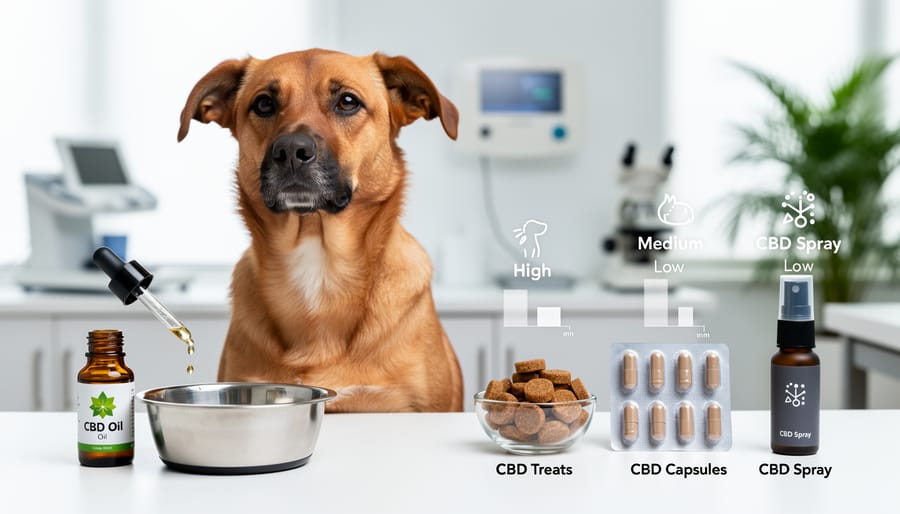
Research shows CBD oils administered under the tongue have significantly higher bioavailability than treats or capsules. A 2018 veterinary pharmacokinetics study found that oral CBD oil absorbed sublingually reached peak blood levels in dogs within 1-2 hours, while treats took longer and delivered less CBD to the system. This happens because sublingual absorption bypasses some digestive breakdown.
Treats and baked products face the “first-pass effect”—your pet’s liver metabolizes much of the CBD before it circulates throughout the body. Studies suggest bioavailability for CBD treats may be as low as 13-19% in dogs, meaning a 10mg treat might deliver only 1.3-1.9mg of usable CBD.
Transdermal products (applied to skin) show promise but currently have limited veterinary research. The evidence suggests they work best on hairless areas with thinner skin.
What does this mean practically? If research recommends 2mg per kilogram of body weight, you’ll need to adjust based on your delivery method. Oil tinctures require less product than treats to achieve the same blood concentration, which affects both effectiveness and your budget.
Safety and Side Effects: What the Studies Show
When I first started researching CBD for my own dog, I was most concerned about safety. Like many pet owners, I’d heard the marketing claims but wanted to know what the actual research showed about side effects and risks.
The good news from clinical trials is that CBD appears remarkably well-tolerated in dogs and cats. The most commonly reported side effects across multiple studies are mild and include sedation or drowsiness, occasional gastrointestinal upset like diarrhea, and increased appetite. In one comprehensive study at Colorado State University involving dogs with osteoarthritis, these side effects occurred in fewer than 20% of participants and were typically transient, resolving within the first week of treatment.
However, there’s one important monitoring consideration that emerges consistently from the research: liver enzyme elevation. Multiple studies have documented temporary increases in alkaline phosphatase (ALP) levels in some dogs receiving CBD. In most cases, these elevations remained within clinically acceptable ranges and didn’t indicate liver damage, but they highlight why veterinary oversight matters. Researchers recommend baseline bloodwork before starting CBD and follow-up testing after 4-6 weeks, particularly for pets on higher doses or those with pre-existing liver conditions.
Safety margins from toxicity studies are reassuring. Research shows dogs can tolerate doses far higher than therapeutic recommendations without serious adverse effects, though this doesn’t mean higher doses are beneficial. The studies used for conditions like epilepsy and arthritis employed doses between 2-10 mg/kg twice daily without significant safety concerns.
The drug interactions question deserves serious attention. CBD is metabolized by the same liver enzymes that process many common veterinary medications, potentially affecting blood levels of drugs like NSAIDs, seizure medications, and certain antibiotics. This is why working with your veterinarian is essential rather than optional.
When should you be concerned? Contact your veterinarian if your pet experiences severe lethargy that doesn’t improve after a few days, persistent vomiting or diarrhea, loss of appetite lasting more than 24 hours, or any unusual behavioral changes. These symptoms are rare in research settings but warrant professional evaluation.
The research consistently shows that when used appropriately and with veterinary guidance, CBD has a favorable safety profile. That said, every pet is unique, and individual responses can vary.
How to Apply Evidence-Based Dosing at Home
Starting with evidence-based dosing at home doesn’t need to feel overwhelming. Think of it as a methodical process where you’re both observer and advocate for your pet’s wellbeing.
Begin with the lowest effective dose from published research. For most conditions in dogs, studies suggest starting at 2 mg/kg twice daily. Cats typically start lower, around 1-2 mg/kg daily, since feline research is still emerging. Your vet can help calculate this based on your pet’s exact weight—a 20 kg dog would start at 40 mg twice daily, for example.
Next comes observation. Before starting CBD, establish baseline measurements. How many times does your arthritic dog hesitate before jumping on the couch? How long can your anxious cat stay calm during thunderstorms? Write these down. When I started tracking my own pet’s responses years ago, having concrete numbers instead of vague impressions made all the difference in recognizing genuine improvement versus wishful thinking.
Follow proper titration schedules by maintaining each dose level for at least one week before adjusting. This waiting period allows CBD to reach steady-state levels in your pet’s system. Too many pet owners increase doses after just two days, making it impossible to know what’s actually working.
Document everything in a simple journal: dose amount, timing, observed behaviours, appetite changes, and any side effects like drowsiness or digestive upset. Canadian veterinarians appreciate clients who bring data rather than impressions to follow-up appointments.
Adjust doses based on clear criteria. If you see no improvement after one week at the starting dose, increase by 25-50 percent. If side effects appear, reduce by half. If your pet shows improvement but it’s incomplete, small upward adjustments are appropriate.
Remember that evidence-based dosing means being willing to stop if there’s no benefit after reaching research-supported dose ranges. Not every pet responds to CBD, and that’s valuable information too. Always loop your veterinarian into dosing decisions, especially when considering increases beyond published study ranges.

Danielle’s Experience: Bridging Research and Real Life
When my elderly cat Luna developed arthritis pain that didn’t respond well to traditional medications, I found myself in the same position as many pet owners—overwhelmed by conflicting CBD information and desperate for reliable guidance. As someone who values evidence-based approaches, I was frustrated by the endless marketing claims and anecdotal success stories that offered no real scientific foundation.
I started by diving into veterinary research databases, searching for actual clinical studies on CBD dosing for cats. What I discovered was both enlightening and sobering. The available research was limited, particularly for feline patients, and the studies that did exist showed wide dosing ranges—anywhere from 1 to 5 mg per kilogram of body weight. For Luna, who weighed about 4 kilograms, this translated to a potential range of 4 to 20 mg daily, which felt uncomfortably broad.
The real challenge came in translating these research findings into practical application. Most studies used pharmaceutical-grade CBD isolates under controlled conditions, but I was working with commercially available products that varied in quality and concentration. I learned to look for third-party lab testing certificates and opted for products specifically formulated for pets rather than human products.
I started Luna on the lowest possible dose and maintained a detailed symptom journal, tracking her mobility, appetite, and behaviour over several weeks. This systematic approach allowed me to gradually find an effective dose while monitoring for any adverse effects. The process taught me that evidence-based medicine isn’t just about following published numbers—it’s about thoughtfully applying scientific principles to individual circumstances while maintaining realistic expectations about what current research can and cannot tell us.
The Canadian Context: Legal and Practical Considerations
If you’re a Canadian pet owner exploring CBD options for your furry companion, understanding the legal landscape here is essential. Canada has unique regulations that differ significantly from other countries, and navigating them can feel confusing at times.
In Canada, cannabis products for animals fall under federal regulations, but there’s a significant catch: veterinarians face strict limitations when it comes to discussing or prescribing cannabis-derived products. The veterinary cannabis regulations prevent most vets from legally prescribing these products, even though they may have helpful information to share. This puts pet owners in a challenging position where they must research independently while their vet remains largely silent on the topic.
When it comes to THC content, Canadian pet products must contain less than 0.3% THC to be sold legally as hemp-derived products. This is crucial because THC can be toxic to pets, particularly dogs. Always verify the THC content on any product you’re considering, and look for clear labeling that confirms compliance with Canadian standards.
Finding quality-tested products requires some detective work. Look for companies that provide third-party lab testing results, often called Certificates of Analysis or COAs. These documents confirm that the product contains what the label claims and is free from contaminants like heavy metals, pesticides, and excessive THC. Reputable Canadian retailers should make these documents readily available, either on their website or upon request.
I’ve learned through my own experience that asking questions upfront saves headaches later. Don’t hesitate to contact companies directly about their testing procedures, sourcing practices, and manufacturing standards. Quality producers are transparent and eager to share this information. Remember, when it comes to your pet’s health, thorough research isn’t being overly cautious; it’s being a responsible pet parent navigating an evolving regulatory landscape.
Navigating CBD dosing for your pet can feel overwhelming, especially when you’re trying to make evidence-based decisions with the research that’s currently available. The truth is, veterinary CBD research is still in its early stages, and while we have some solid foundational studies to guide us—particularly the 2-5 mg/kg range used in many clinical trials—we don’t yet have the comprehensive body of evidence that exists for many conventional medications.
But here’s the reassuring part: you don’t need perfect information to make good decisions for your pet. By starting with conservative, research-informed doses, monitoring your pet’s response carefully, and working with a veterinary professional who’s open to discussing CBD, you’re already taking a responsible, evidence-based approach.
I’ve personally found that many Canadian pet owners feel caught between wanting to help their pets and worrying about doing something wrong. Remember that even with limitations in the research, the studies we do have suggest CBD is generally well-tolerated when used appropriately, and serious adverse effects are rare.
The landscape of veterinary CBD is evolving rapidly. More research is being conducted, and our understanding continues to grow. In the meantime, focus on quality products, careful observation, and open communication with your vet. You’re not expected to be a researcher yourself—you’re simply gathering the best available information and making thoughtful choices based on what we know today. That’s exactly what evidence-based medicine is about, and it’s more than enough to guide you toward supporting your pet’s wellbeing.

