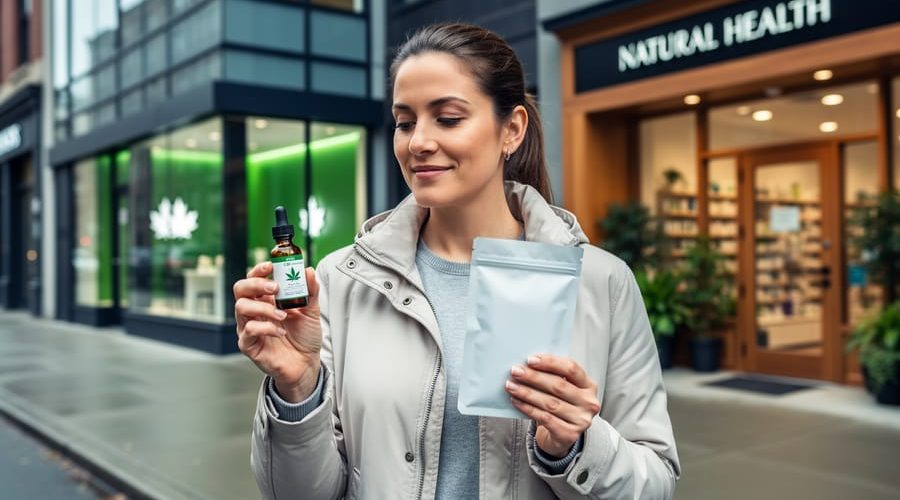
Understand CBD provision by checking your province’s specific regulations on cannabidiol content limits, which typically dictate whether a product requires purchase from a licensed cannabis retailer or can be sold in general stores like health food shops. In most Canadian provinces, products containing less than 10 mg of CBD per package can be sold as natural health products outside the regulated cannabis system, while anything above this threshold falls under provincial cannabis frameworks requiring age verification and licensed vendor sales.
Check your product labels for CBD concentration per serving and total package content before purchasing. This distinction matters because CBD provisions directly impact where you can legally buy products, what identification you need, and whether online shipping to your address is permitted. For instance, a bottle containing 300 mg total CBD distributed across 30 capsules of 10 mg each may fall under different rules than a single-dose product exceeding the threshold.
Review recent amendments to Health Canada’s regulations affecting CBD provision, as several provinces updated their frameworks in 2023-2024 to accommodate therapeutic CBD products differently than recreational cannabis. These changes created confusion about which stores can legally stock CBD items and what documentation retailers must maintain.
Navigate provincial cannabis retail websites and authorized natural health product retailers to identify compliant purchasing options in your area. Understanding CBD provision terminology transforms regulatory confusion into informed shopping decisions, ensuring you access products legally while avoiding inadvertent violations of provincial cannabis laws.
Understanding CBD Provision in Canadian Law
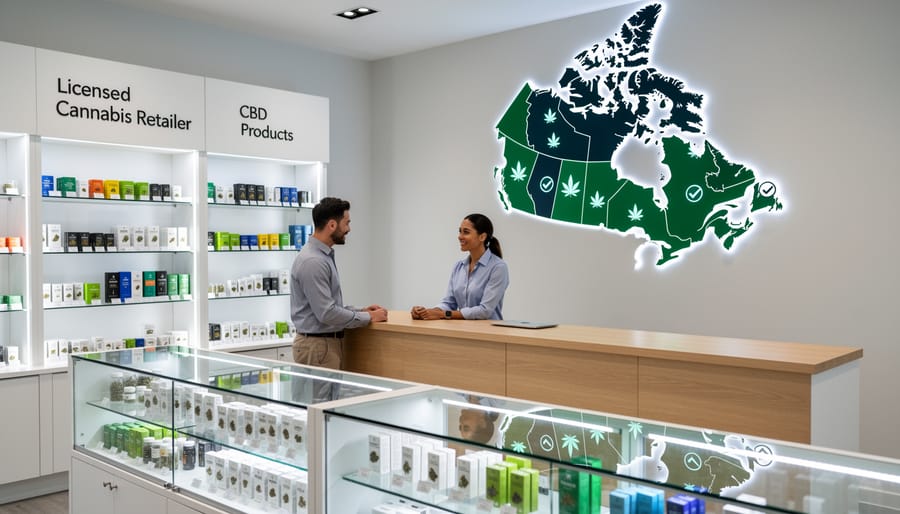
What CBD Provision Actually Covers
CBD provision regulations in Canada apply to a specific category of products that contain cannabidiol but fall below certain THC thresholds. When I first started exploring CBD products, I was surprised to learn that not everything labeled “CBD” is treated the same way under provincial rules.
The provision primarily covers CBD products derived from hemp that contain less than 0.3% THC. This includes CBD oils, tinctures, capsules, softgels, and topical creams sold through licensed retailers. You’ll find these products in health stores, pharmacies, and specialized CBD shops across most provinces, though availability varies by location.
Edible CBD products like gummies, beverages, and baked goods also fall under CBD provision regulations, but they face additional restrictions in some provinces. The format matters because ingestible products are often subject to stricter labeling and potency limits than topicals or oils.
Retail channels matter too. CBD provision distinguishes between products sold in cannabis dispensaries (which follow recreational cannabis rules) and those sold in general retail stores. Hemp-derived CBD products meeting federal standards can be sold outside the cannabis retail system in many provinces, which is why you might see CBD face creams at your local pharmacy but not full-spectrum cannabis products.
It’s worth noting that veterinary CBD products and cosmetics containing CBD also fall under these provisions, though they may have additional requirements from Health Canada. The key takeaway is that CBD provision creates a separate pathway for lower-THC hemp products, making them more accessible than recreational cannabis items.
Federal vs. Provincial Authority
In Canada, CBD regulation is genuinely a shared responsibility, and understanding who controls what can save you a lot of confusion at checkout. The federal regulations under the Cannabis Act set the baseline rules for CBD production, testing standards, and labeling requirements. Health Canada oversees these national standards, ensuring products meet safety thresholds regardless of where you live.
However, provinces hold significant power over how CBD reaches consumers. They decide where you can buy CBD products, whether that’s through government-run stores, private retailers, or online platforms. Provincial governments also set age restrictions, store hours, and even marketing rules. This is why your experience buying CBD in Ontario might look completely different from purchasing in Alberta or Quebec.
When I first started exploring CBD, I assumed one set of rules applied everywhere. Wrong. This division matters because a product legally sold in your province still must meet federal safety standards, giving you double-layer protection. It also explains why availability varies so dramatically across provincial borders. Understanding this split helps you know who to contact with questions and where to look for reliable information about accessing CBD in your specific location.
How Provincial CBD Provisions Differ Across Canada
Ontario’s CBD Retail Provisions
Ontario maintains a structured retail framework for CBD products that depends on their THC content. If you’re shopping for CBD in Ontario, you’ll find two distinct pathways: products with THC levels above 0.3% must be purchased through licensed cannabis retailers operated by the Ontario Cannabis Store (OCS) or authorized private retailers, while CBD products containing 0.3% THC or less can be sold through regular health stores, pharmacies, and online vendors without cannabis licensing requirements.
Licensed cannabis stores follow strict regulations including age verification (minimum 19 years), product tracking systems, and standardized packaging. These stores offer full-spectrum CBD products that may provide enhanced benefits through the entourage effect, though they require you to visit a physical location or order through the OCS website.
For lower-THC CBD products like isolates and many topicals, you’ll have considerably more flexibility. These can be purchased both in-store and online from various retailers without needing government-run channels. When I first started exploring CBD options in Ontario, I appreciated having local health stores where I could ask questions face-to-face, but I also valued the convenience of ordering specialized products online that weren’t available locally.
Whichever route you choose, always verify that retailers provide third-party lab testing results and proper product labeling to ensure quality and compliance.
British Columbia’s Approach
British Columbia takes a notably different approach to CBD compared to other provinces. While BC allows CBD products in both licensed cannabis retailers and some health stores, the key distinction lies in concentration thresholds. Products containing less than 0.3% THC can be sold outside the provincial cannabis framework, which means you might find certain CBD oils, topicals, and edibles in health food stores or pharmacies.
However, here’s where it gets interesting from my perspective—BC’s regulations around labeling and product claims are particularly strict. Retailers cannot make therapeutic health claims about CBD products unless they have proper Health Canada approval, which keeps the market more transparent but can make shopping feel overwhelming when you’re trying to understand what a product actually does.
BC also permits online sales through both government-approved retailers and private licensees, giving residents more purchasing options than some other provinces. This flexibility has made BC one of the more accessible provinces for CBD users, though navigating which retailer is right for your needs still requires some homework.
Quebec’s Stricter Provisions
Quebec takes a notably stricter approach to CBD retail than most other provinces. While CBD products are legal across Canada, Quebec’s provincial regulations significantly limit where and how you can purchase them.
Here’s what makes Quebec different: CBD products containing any amount of THC can only be sold through the government-run Société québécoise du cannabis (SQDC) stores. This means you won’t find CBD oils, capsules, or edibles with even trace amounts of THC in your local health food store or pharmacy like you might in Ontario or British Columbia.
Zero-THC CBD products can technically be sold in retail stores, but Quebec’s regulations create additional hurdles for retailers. Many businesses find the compliance requirements too complex, resulting in limited retail availability overall.
I’ve spoken with Quebec residents who find these restrictions frustrating, especially when traveling to other provinces where CBD shopping feels much simpler. If you’re in Quebec, your most reliable option is visiting an SQDC location or ordering from their website, where you’ll find a curated selection of government-approved CBD products with clear labeling and guaranteed quality.
Prairie and Atlantic Provinces
Moving across Canada, the Prairie and Atlantic provinces follow federal CBD guidelines with some regional nuances. In Alberta, Saskatchewan, and Manitoba, CBD products under 0.3% THC are widely available in health stores and online, though Alberta has particularly streamlined access through both retail channels and provincial cannabis stores. When I visited family in Saskatchewan last year, I was pleased to find CBD products readily available in pharmacies alongside traditional supplements, making them accessible even in smaller communities.
The Atlantic provinces—Newfoundland and Labrador, Prince Edward Island, Nova Scotia, and New Brunswick—similarly permit CBD sales under federal regulations. These provinces tend to have fewer dedicated CBD retailers compared to larger provinces, but online shopping fills this gap effectively. Local independent health shops often carry curated CBD selections, and staff typically provide helpful guidance for beginners navigating their options for the first time.
Recent Policy Updates That Affect CBD Access
2023-2024 Regulatory Changes
The past year has brought some important shifts to how CBD products are regulated and sold across Canada, and I want to walk you through what’s changed so you can shop with confidence.
One of the biggest updates came through Health Canada’s continued refinement of how CBD products are classified and sold. In late 2023, regulators clarified labeling requirements for over-the-counter CBD products, particularly around health claims. Retailers now face stricter enforcement when it comes to making therapeutic promises without proper evidence. What this means for you is that you’ll see more standardized, accurate product labels, though some of your favorite brands may have updated their packaging to comply.
Cannabis retail licenses also saw modifications across several provinces. Ontario, for example, streamlined their application process for CBD-focused retailers, which has led to more specialized shops opening their doors. British Columbia introduced additional testing requirements for CBD isolates and full-spectrum products, ensuring better quality control but occasionally causing temporary supply hiccups.
The international trade landscape has also influenced domestic provisions, particularly around ingredient sourcing and product availability.
Perhaps most notably, Health Canada updated guidance on CBD concentration limits for certain product categories in early 2024. While recreational cannabis products maintain their THC-focused regulations, CBD-dominant items now have clearer pathways for market entry, especially in the wellness and cosmetics sectors.
From my conversations with local retailers, these changes have generally improved product consistency and transparency. Yes, there’s been some adjustment period, but the end result is a more reliable shopping experience for consumers like us who want safe, effective CBD products.
What’s Coming Next
Health Canada continues to review its CBD framework, and we’re likely to see refinements in the coming years that could make shopping easier for Canadians. Industry advocates are pushing for clearer labelling requirements and simplified approval processes for new products, which would give you more transparency about what you’re buying and potentially faster access to innovative formulations.
There’s growing conversation around harmonizing provincial regulations too. Right now, navigating different rules across provinces can feel overwhelming, but momentum is building toward more consistent approaches. This doesn’t mean identical systems everywhere, but clearer guidelines that respect provincial autonomy while reducing confusion for consumers who travel or shop online.
International developments matter as well. Changes to CBD exports and global regulatory trends often influence domestic policy. As more countries establish their own frameworks, Canada may adjust its approach based on what works elsewhere.
For you as a shopper, these potential changes likely mean more product choices, better information, and simpler purchasing processes. My advice? Stay informed through reliable Canadian sources, keep your receipts and product documentation, and don’t hesitate to ask retailers about compliance. The regulatory landscape is evolving in your favour, even if progress feels gradual.
What These Provisions Mean for Your CBD Shopping
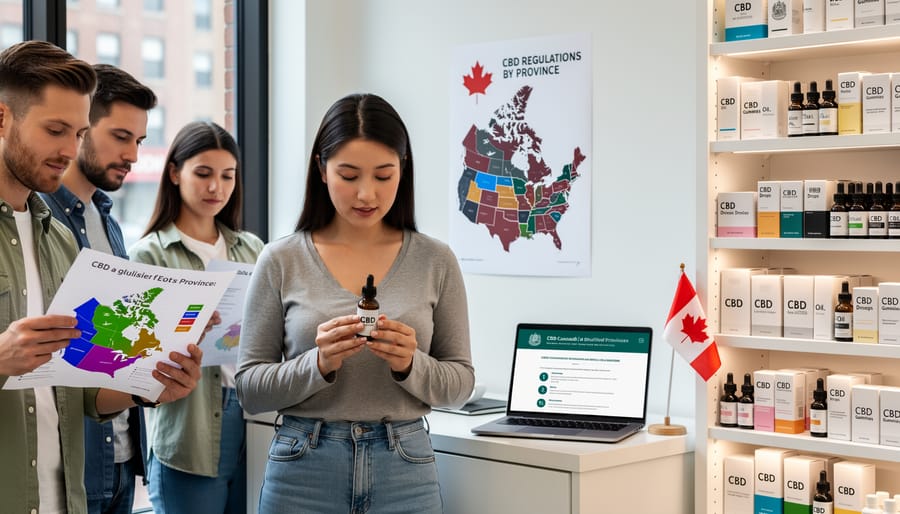
Finding Legal CBD Retailers in Your Province
Finding a legitimate CBD retailer in Canada doesn’t have to feel overwhelming once you know what to look for. The good news is that legal retailers are required to follow specific guidelines that make them fairly easy to identify.
Your safest bet is always starting with your province’s official list of authorized retailers. Most provincial cannabis regulators maintain online directories where you can search by location or retailer name. For instance, if you’re in Ontario, the OCS website lists all licensed stores. BC residents can check the BC Liquor Distribution Branch’s registry. These directories are regularly updated and take the guesswork out of the equation.
When visiting a physical store, look for visible licensing displayed near the entrance or checkout area. Licensed retailers are required to post their authorization, and staff should be able to show you their credentials if asked. The store should also only sell products with proper Health Canada labeling, including lot numbers, THC and CBD content, and standardized cannabis symbols.
I remember feeling uncertain about my first CBD purchase, wondering if I was even in the right place. Now I always check for these telltale signs: professional labeling, knowledgeable staff who can explain product details without making exaggerated health claims, and transparent testing information.
Avoid purchasing CBD from convenience stores, gas stations, or online marketplaces that aren’t provincially authorized. These sources often sell products that haven’t undergone required testing or may contain inaccurate labeling. While they might seem convenient or cheaper, the risks simply aren’t worth it. Stick with licensed retailers, and you’ll have peace of mind knowing your CBD products meet Canadian safety standards.
How Provisions Affect Product Selection and Price
Canada’s provincial CBD regulations create a patchwork of availability that directly impacts what you can buy and how much you’ll pay. Each province operates under federal cannabis laws but adds its own layer of rules, resulting in different product selections across the country.
In provinces with government-run retail systems like Ontario and Quebec, you’ll find a more limited but carefully vetted selection of CBD products. These provinces typically have stricter quality control measures, which can mean higher prices but more consistent product standards. Private retail provinces like Alberta and Saskatchewan often offer wider variety and more competitive pricing due to market competition.
The restrictions get even more specific with product formats. Some provinces limit CBD edibles to certain milligram strengths or restrict topical products altogether. For example, a CBD oil available in British Columbia might not meet the packaging requirements in Manitoba, keeping it off shelves there entirely.
Pricing variations stem from several factors. Provincial markup rates differ significantly, with some adding substantial taxes to cannabis products including CBD. Distribution costs also vary, especially in remote or northern communities where shipping adds considerable expense. When you factor in trade regulations affecting imported hemp-derived ingredients, prices can fluctuate further.
I’ve noticed prices for identical CBD products can differ by 20-30% between provinces. Understanding your province’s specific regulatory framework helps you anticipate what’s available locally versus what you might need to explore through interprovincial options, though shipping cannabis products across provincial lines remains legally complex.
Common Questions About CBD Provisions
Navigating provincial CBD regulations can feel overwhelming, especially when you’re trying to figure out what’s allowed when you travel or shop online. Let me address some of the questions I hear most often.
Can I buy CBD in one province and bring it to another? Yes, you can legally transport CBD products between provinces as long as they’re legal in both locations. I’ve traveled from Ontario to Quebec with my CBD oil countless times without issue. Just keep products in their original packaging with labels intact, and be prepared to show that THC levels comply with federal limits (0.3% or less for most products). Think of it like traveling with any other regulated product – transparency is your friend.
What about ordering CBD online from another province? This is where things get trickier. While Health Canada regulates CBD at the federal level, provinces control retail sales. Some provinces allow interprovincial online orders, while others restrict purchases to local retailers only. Saskatchewan and Alberta tend to have more flexible online shopping rules, whereas provinces like Quebec have stricter local-purchase requirements. Always check your province’s specific regulations before clicking “buy” on an out-of-province website.
Can I travel internationally with CBD? This is a definite no for most destinations. Even though CBD is legal in Canada, other countries have vastly different laws. Taking CBD across international borders, including into the United States, can result in serious legal consequences. Leave your products at home when traveling abroad.
What if regulations change while I’m using a product? You’re generally fine continuing to use products you purchased legally before regulation changes. However, retailers must comply immediately with new rules, which might affect product availability.
Understanding your province’s CBD provisions might seem overwhelming at first, but I promise it gets significantly easier once you grasp the basics. Think of it like learning to navigate any new system—whether it’s filing your taxes or understanding your phone plan. The terminology feels confusing initially, but with a bit of knowledge, you’ll find yourself shopping for CBD products with confidence.
The most important takeaway? CBD regulations in Canada aren’t static. Provinces update their policies as they gather more data and respond to consumer needs. I make it a habit to check Health Canada’s website and my provincial cannabis authority’s announcements every few months, and I encourage you to do the same. Setting a simple calendar reminder can help you stay ahead of any changes that might affect where and how you purchase your favourite products.
What I’ve learned through my own journey with CBD is that knowledge truly is empowering. When I first started exploring CBD for my anxiety, the legal landscape felt like an impossible maze. Now, I can walk into a retailer or browse online knowing exactly what to look for, what questions to ask, and what my rights are as a consumer. You’ll get there too.
Remember, understanding these provisions isn’t just about following rules—it’s about protecting yourself, ensuring product quality, and making informed choices about your wellness. You’ve already taken the first step by educating yourself. Keep asking questions, stay curious, and don’t hesitate to reach out to retailers or regulatory bodies when you need clarity.