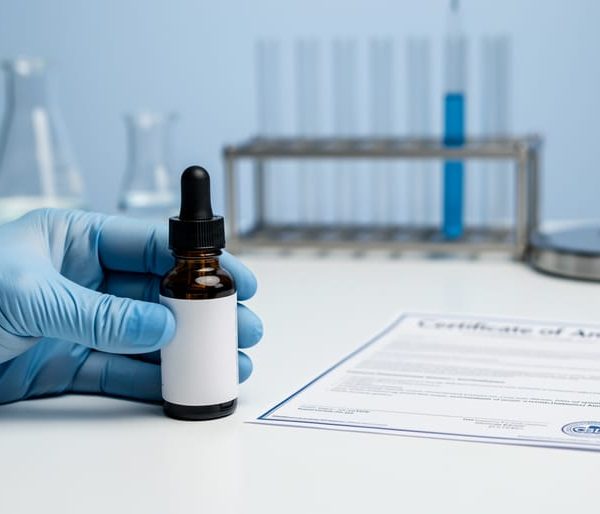

Request a Certificate of Analysis before purchasing any CBD product and verify it comes from an ISO-accredited laboratory—this single document reveals whether your product contains harmful pesticides, heavy metals, or mold that could compromise your health. Check that the lab listed on the COA is independent from the manufacturer by searching the laboratory’s name alongside “ISO 17025 accreditation” to confirm they meet international testing standards.
Look for specific contaminant test results including pesticide screening (which should show “ND” or “not detected” for harmful chemicals), heavy metal analysis (arsenic, lead, cadmium, and mercury should all be below 0.5 parts per million), and microbial testing that confirms absence of E. coli, salmonella, and dangerous mold species. These three categories represent the most common safety threats in CBD products, and reputable Canadian brands test for all of them.
Verify COA authenticity by matching the batch number on your product label to the batch number listed on the certificate—mismatched numbers mean you’re looking at testing results from a different product entirely. Contact the testing laboratory directly using their publicly listed phone number to confirm they actually tested that specific batch, as fraudulent COAs circulate more frequently than most consumers realize.
I learned this verification process after a friend experienced severe headaches from a CBD oil later found to contain undisclosed pesticide residues. The product had a COA posted online, but the batch numbers didn’t match her bottle. That experience taught me that reading testing documentation isn’t optional paranoia—it’s essential consumer protection in an industry still establishing quality standards across Canada.
What Contaminant Testing Actually Means for Your CBD
When I first started exploring CBD products, I assumed that if a company listed CBD content on their label, that was all I needed to know. I quickly learned I was missing a huge piece of the puzzle: contaminant testing. Understanding what this actually means is essential for anyone using CBD in Canada.
Contaminant testing is the process of analyzing CBD products for harmful substances that can end up in your bottle through growing, extraction, or manufacturing. Think of it as a safety inspection that goes far beyond checking how much CBD is actually in the product.
Here’s where many people get confused: there’s a significant difference between potency testing and safety testing. Potency testing tells you if the product contains the amount of CBD (and THC) advertised on the label. Safety testing, which includes contaminant testing, checks for dangerous substances like heavy metals, pesticides, residual solvents from extraction, microbial contamination (bacteria, mold, fungi), and mycotoxins.
Both types of testing matter, but contaminant testing is truly non-negotiable for safe use. You could have a product with accurate CBD levels that’s still contaminated with lead or pesticide residues. Since CBD products aren’t regulated the same way as pharmaceuticals in Canada, third-party contaminant testing becomes your primary safeguard.
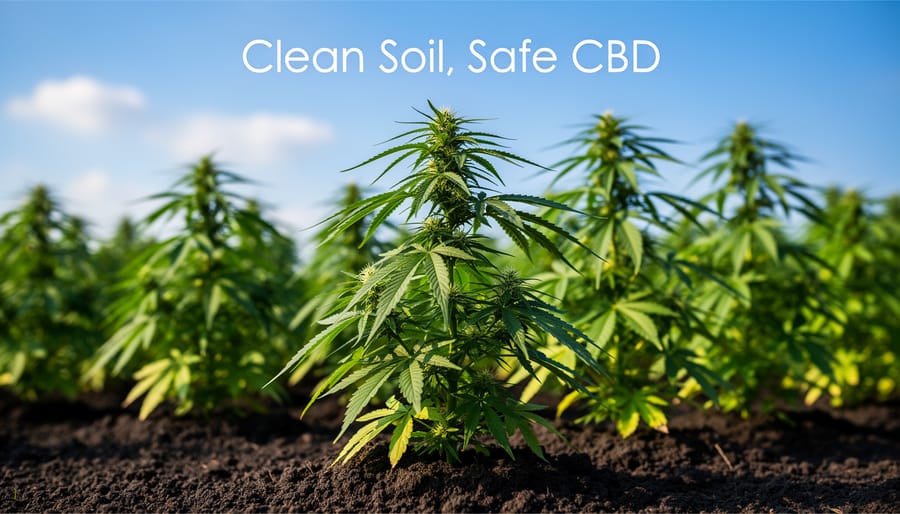
The hemp plant itself is what’s called a bioaccumulator, meaning it absorbs whatever is in the soil, including heavy metals and pesticides. Without proper testing, these contaminants travel from the soil directly into the CBD oil you’re consuming. This is why knowing a product has undergone comprehensive contaminant testing isn’t just a nice-to-have feature. It’s the foundation of choosing safe CBD products that support your wellness rather than compromise it.

The Hidden Dangers: What Labs Test For
Heavy Metals (The Soil Absorbers)
Hemp is what we call a “bioaccumulator,” which basically means it acts like a sponge for whatever’s in the soil it grows in. While this makes hemp fantastic for cleaning up contaminated land, it’s a serious concern when that hemp becomes your CBD oil.
The heavy metals you need to watch for include lead, arsenic, mercury, and cadmium. These aren’t just unpleasant additions—they’re genuinely dangerous. Lead can damage your nervous system and kidneys. Arsenic is a known carcinogen linked to skin, lung, and bladder cancers. Mercury affects brain function and development, while cadmium harms your kidneys and bones over time.
Here’s what worries me: these metals accumulate in your body over time. Unlike contaminants your body can flush out, heavy metals stick around, building up with repeated exposure. This is why I’m so passionate about checking certificates of analysis before buying any CBD product. A reputable company tests for these specific metals and posts the results openly, because they understand what’s at stake—your long-term health.
Pesticides and Herbicides
Pesticide residues in CBD products are a genuine concern, especially since many of us use CBD daily for wellness support. Cannabis plants are bioaccumulators, meaning they absorb everything from the soil they grow in—including pesticides and herbicides used during cultivation. When these chemicals aren’t properly managed, they end up concentrated in the final product you’re consuming or applying to your skin.
Health Canada regulates pesticide use in cannabis cultivation through strict guidelines, but enforcement varies between licensed producers. Some pesticides approved for other crops aren’t permitted for cannabis at all, while others have maximum residue limits that must be met. The challenge? Not all companies test rigorously enough to catch these contaminants.
I’ve personally seen COAs flagging pesticide levels that exceeded safe thresholds, which honestly shocked me considering these were products sitting on store shelves. Chronic exposure to certain pesticides has been linked to neurological issues, hormonal disruption, and other health concerns—definitely not what you’re looking for when trying to improve your wellbeing. Always verify that your CBD product includes pesticide testing on its COA, with results showing either “non-detect” or levels well below regulatory limits.
Residual Solvents
During extraction, manufacturers use solvents like butane, propane, or ethanol to pull cannabinoids from the plant material. While these processes are standard in the industry, they require careful purging to remove all chemical traces. If products aren’t properly processed, residual solvents can remain at potentially harmful levels.
I learned this the hard way when a friend experienced headaches and throat irritation from a poorly purged concentrate. That experience taught me to always check COAs for residual solvent testing before purchasing any CBD product.
Health Canada doesn’t currently set specific residual solvent limits for CBD products, but reputable manufacturers follow international standards that typically measure solvents in parts per million (ppm). Testing should show levels well below safety thresholds, or ideally, none detected. Common solvents to watch for include butane, propane, ethanol, and hexane. Any product showing high residual solvent levels should be avoided completely.
Microbial Contaminants (Molds, Bacteria, and Fungi)
Biological contaminants are some of the trickiest problems in CBD products because you can’t always see or smell them. Think mold, bacteria like E. coli and salmonella, and various fungi that can sneak in during cultivation or if products aren’t stored correctly afterward.
I remember chatting with a budding CBD user in Toronto who developed a persistent cough after using a discount tincture. Turns out, mold contamination was the culprit. This stuff isn’t just unpleasant—it can trigger allergic reactions, respiratory issues, or serious infections, especially for anyone with a compromised immune system.
These contaminants typically enter the picture when cannabis plants are grown in unclean conditions, dried improperly, or exposed to moisture during storage. Canada’s licensed producers must follow strict microbial testing protocols under Health Canada regulations, but that’s exactly why checking for these tests on your Certificate of Analysis matters so much.
Look for total yeast and mold counts, plus specific pathogen testing for E. coli, salmonella, and other harmful bacteria. These should show “not detected” or fall well below regulatory limits. And remember, maintaining proper storage conditions at home helps prevent contamination after purchase.
Mycotoxins
Mycotoxins are toxic compounds produced by certain types of mold that can grow on hemp plants during cultivation or storage, particularly in humid conditions. These toxins—including aflatoxins and ochratoxins—pose serious health risks when consumed, potentially affecting your liver, kidneys, and immune system. When I first learned about mycotoxins in CBD products, I was surprised at how common mold contamination could be, especially in products that weren’t stored properly. In Canada, while Health Canada doesn’t currently mandate mycotoxin testing for CBD products, reputable manufacturers test for these contaminants anyway. A quality Certificate of Analysis should list specific mycotoxins tested and show “non-detect” or levels below established safety thresholds. If you notice any musty smell or discoloration in your CBD product, it’s best to discard it and contact the manufacturer.

Understanding Your COA: A Real Document Walkthrough
Essential Elements Every COA Should Have
When I first started examining COAs, I felt overwhelmed by all the numbers and terminology. But once I learned what to look for, it became second nature. Here’s your essential checklist for any legitimate Certificate of Analysis:
First, verify the testing laboratory’s name and contact information. The lab should be independent, third-party, and ideally ISO-accredited. If the company tests their own products in-house, that’s a red flag.
Next, check for clear identification details including the product name, batch or lot number, and manufacturing date. These numbers allow you to match the COA directly to your specific product. Without them, you can’t be certain the results apply to what you’re actually buying.
Test dates matter too. Look for both the sample collection date and the analysis completion date. COAs shouldn’t be more than a year old, as formulations and manufacturing processes can change. This relates directly to CBD shelf-life testing considerations.
The COA must list cannabinoid profiles showing CBD, THC, and other cannabinoids present. In Canada, THC levels must stay within legal limits.
Finally, ensure contaminant testing results appear for pesticides, heavy metals, microbial contamination, and residual solvents. Each category should show specific compounds tested and their pass/fail status or concentration levels.
How to Read the Results Section
When I first started reviewing Certificates of Analysis, I’ll admit the abbreviations looked like alphabet soup. Let me break down what you’re actually looking at.
ND means “not detected”—this is what you want to see for things like heavy metals, pesticides, and microbial contaminants. It means the testing equipment couldn’t find any trace of that substance, or at least not enough to measure. Think of it like a metal detector that doesn’t beep—nothing concerning showed up.
LOQ stands for “limit of quantification.” This is the lowest amount the lab equipment can accurately measure. If something tests below the LOQ, it’ll usually show as ND or with a less-than symbol. For example, you might see “<0.5 ppm" for a heavy metal, meaning if there's any present, it's less than 0.5 parts per million. Pass/fail indicators are straightforward—they compare test results against Health Canada's safety standards. A "pass" means the product meets Canadian regulations for that specific contaminant category. Some COAs colour-code these (green for pass, red for fail), while others simply state the result. Here's what matters: you want to see "ND" or "pass" across the board for contaminants. If you see actual numbers listed for things like lead or E. coli, compare them against the acceptable limits shown on the certificate.
Red Flags That Should Make You Walk Away
Not all certificates of analysis are created equal, and I learned this the hard way when I discovered a brand I’d been recommending had suspiciously consistent test results across multiple batches—down to the exact decimal point. That’s just not how nature works.
Here’s what should make you pause: COAs missing batch numbers or lot codes that you can’t match to your product packaging are major red flags. If the testing date is more than six months old, that certificate might not reflect what’s actually in your bottle today. Watch for incomplete panels that conveniently skip expensive tests like pesticides or heavy metals—comprehensive testing isn’t optional for quality brands.
Be wary of labs you can’t verify independently. Legitimate testing facilities in Canada should have accreditation you can confirm online. If a company refuses to provide COAs altogether or only shows them after persistent requests, that’s your cue to shop elsewhere.
Another suspicious pattern? Perfect results every single time. Real cannabis products show natural variation between batches. When numbers look too clean or round (like exactly 25.0% CBD), question whether those tests are genuine. Canadian consumers deserve transparency, and reputable companies know this. If something feels off about their documentation, trust that instinct—plenty of honest brands will gladly share detailed, verifiable testing results.
How to Verify a COA is Legitimate
I learned this lesson the hard way when I once received a COA that looked professional but had inconsistencies I couldn’t quite explain. After some digging, I discovered the document had been altered. Since then, I’ve developed a system for verifying COAs that I want to share with you.
Start by checking if the lab listed on the COA actually exists. A quick online search should reveal their website, contact information, and business registration. Legitimate testing facilities in Canada will have a physical address and transparent information about their accreditation. If you can’t find basic information about the lab, that’s a red flag.
Next, contact the lab directly. Don’t use contact information from the COA itself, as fraudulent suppliers could list fake numbers. Instead, find the lab’s phone number or email through their official website. When you reach out, provide the batch number and date from your COA. Ask them to confirm they conducted testing for that specific product and if the results match what’s on your document. Most reputable labs keep detailed records and can verify this information within a day or two.
Ask your CBD supplier specific questions about their testing process. When do they test their products? Do they test every batch or just periodically? How do they handle products that fail testing? A trustworthy company will answer these questions confidently and may even provide additional documentation. They should also conduct stability testing to ensure product quality over time.
Look for consistency between the COA and product labeling. The cannabinoid percentages, batch numbers, and testing dates should align. If your product label claims 1000mg of CBD but the COA shows 500mg, something’s wrong.
Finally, watch for COAs that seem too perfect. Real testing results typically show trace amounts of various cannabinoids, not just perfectly round numbers. While variation doesn’t automatically mean fraud, it’s worth investigating further if everything looks suspiciously uniform.
Canadian Standards: What’s Required vs. What’s Best Practice
Here’s the reality of contaminant testing in Canada: the rules depend on where your CBD comes from. If you’re buying from a licensed cannabis producer, Health Canada requires rigorous testing for pesticides, heavy metals, mycotoxins, and microbial contaminants before products hit shelves. These producers must follow Good Production Practices and submit to regular inspections. It’s one of the most tightly regulated systems in the world.
But here’s where it gets tricky. Many CBD products sold in Canada come from hemp, not cannabis, and fall into a regulatory grey zone. Hemp-derived CBD products marketed as natural health products or cosmetics aren’t subject to the same mandatory testing requirements. Some retailers import CBD oils, topicals, and edibles that have never been tested for contaminants at all.
I learned this the hard way when a friend showed me a CBD tincture she’d purchased online. The label looked professional, but there was no COA available, no license number, and when we dug deeper, we discovered the company wasn’t licensed by Health Canada. She’d been using it for weeks without knowing what might be in the bottle beyond CBD.
So what’s a Canadian consumer to do? First, look for products from licensed producers whenever possible. These will have a license number you can verify through Health Canada’s database. Second, even when buying hemp-derived products, insist on seeing recent COAs that include comprehensive testing results. Reputable companies test voluntarily because they understand consumer safety matters, whether legally required or not. Third, be cautious with rock-bottom prices. Quality testing costs money, and legitimate producers factor this into their pricing. If a deal seems too good to be true, the product probably hasn’t undergone proper safety verification.
When I Learned This the Hard Way
I’ll be honest with you—I used to think all CBD products were basically the same. A few years ago, when I first started exploring CBD for my anxiety, I bought what seemed like a great deal from an online retailer. The price was fantastic, the packaging looked professional, and they even had a certificate of analysis available on their website.
But here’s where things went wrong. I didn’t actually look at that COA closely. I just saw it existed and assumed that meant the product was safe. After about two weeks of using the oil, I started getting persistent headaches and feeling nauseous. At first, I didn’t connect it to the CBD—I thought maybe I was coming down with something.
It wasn’t until I mentioned it to a friend who works in natural health that she suggested I actually read through that certificate. When I finally did, I realized the testing was over a year old, and it didn’t include any pesticide or heavy metal screening. I reached out to the company asking for more recent, comprehensive testing results, and they stopped responding to my emails entirely.
That experience taught me something crucial: having a COA isn’t enough. You need to know what you’re looking at and verify it’s legitimate. I ended up tossing that entire bottle, which hurt my wallet, but potentially saved my health. Now I never skip the verification step, and I’m sharing this with you so you don’t have to learn this lesson the expensive, uncomfortable way I did.
Your Action Plan: Questions to Ask Before You Buy
Before you hand over your money, arm yourself with these essential questions. Reputable CBD vendors should welcome your inquiries and provide clear answers without hesitation.
Start by asking: “Can I see your most recent Certificate of Analysis?” They should provide COAs dated within the last few months for the specific batch you’re purchasing. If they point you to generic test results or seem evasive, that’s a red flag.
Next, verify their testing frequency: “How often do you test your products?” Quality brands test every single batch. Some companies try to save money by testing only occasionally, which means you might receive an untested product between testing cycles.
Dig deeper with: “Which lab conducts your testing, and are they ISO-certified?” The testing facility should be independent (not owned by the CBD company) and accredited to Canadian or international standards. You can usually verify this information on the lab’s website.
Don’t forget to ask about the full testing panel: “What contaminants do you test for?” At minimum, they should screen for heavy metals, pesticides, residual solvents, microbial contaminants, and mycotoxins. Some brands only test for potency and cannabinoids, which tells you nothing about safety.
Finally, request access to their product testing documentation storage system: “Where can I access historical COAs?” The best companies maintain online databases where you can look up any batch number.
I learned this the hard way after purchasing a supposedly premium product that made me feel off. When I finally tracked down their COA, it was six months old and missing critical pesticide testing. Now I ask every question upfront, and you should too.
Here’s the truth I wish someone had told me when I first started exploring CBD: checking for contaminant testing isn’t being overly cautious or paranoid. It’s simply smart consumer behaviour. In Canada, where regulations are still evolving and enforcement isn’t always consistent, you have every right to demand transparency from the companies you’re supporting with your hard-earned money.
Think of contaminant testing the same way you’d think about checking expiry dates on food or verifying ingredients in supplements. It’s basic due diligence that protects your health and ensures you’re getting what you’re actually paying for. When a company invests in third-party testing and makes those results easily accessible, they’re showing respect for their customers. When they don’t, that tells you something too.
As you navigate the Canadian CBD market, remember that asking questions doesn’t make you difficult—it makes you informed. You deserve products that are safe, accurately labelled, and free from harmful contaminants. Don’t settle for vague promises or marketing hype. Request those COAs, verify them directly with the labs, and choose brands that prioritize your wellbeing over their bottom line. Your health is worth that extra five minutes of research.